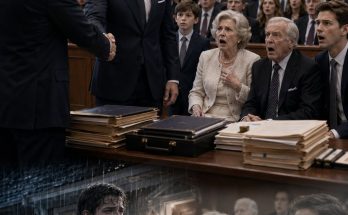
It started with a simple request.
After Grandpa passed, we all assumed his wishes were clear.
My sister, always the favorite, didn’t think twice before she said:
“It’s all mine.”
The family dinner became a legal battle.
At fifty, I thought I’d seen it all.
I gave her the documents, but she just gave them back to her lawyer.
I froze.
“This is for you to sign,” she smirked.
“Oh, what would I do with it? I have the life I deserve.”
That was the last time I tried reasoning with her.
She never cared, and soon, she stopped calling.
I grew up, but the resentment stayed.
Then, years later, I found a secret box.
Inside was a hidden journal.
Grandma, who I always believed knew nothing, wrote everything down.
But just days later, there was a knock at my door.
It was my sister.
She didn’t know I knew.
She said:
“Please don’t make me ask you for what belongs to me.”
I stared at her.
Because now I knew something she didn’t.
Nothing had ever belonged to her.
Not the way she thought.
And the journal had been waiting nearly twenty years to prove it.
My name is Daniel Carter.
I’m sixty-seven now.
But when this story began, I was fifty.
My grandfather, Arthur Bennett, was the kind of man people remembered.
He wasn’t famous.
He wasn’t particularly wealthy by the standards of the people who measure everything in numbers.
But he owned land.
A lot of it.
There was the old farmhouse outside town.
A small commercial building downtown.
Three rental properties.
A parcel of wooded land near the river.
And, most importantly, the family business.
Bennett Hardware had been operating for nearly sixty years.
Grandpa had started it with his own hands.
He had worked there until his late seventies.
Even after retiring, he still went in every morning.
“Businesses die when owners stop listening,” he’d say.
My grandmother, Eleanor, was different.
She was quiet.
Gentle.
She rarely raised her voice.
If Grandpa was the engine of the family, Grandma was the foundation.
She remembered everyone’s birthdays.
Everyone’s favorite meal.
Every childhood injury.
Every embarrassing story.
She had a way of looking at you that made you feel like she already knew what you were about to say.
My sister, Rebecca, was Grandpa’s favorite.
Everyone knew it.
Nobody said it aloud.
But everyone knew.
Rebecca was beautiful, outgoing, confident, and ambitious.
Grandpa adored those qualities.
When she was eight, he called her “my little businesswoman.”
When she was sixteen, he started taking her to the hardware store.
When she was twenty-two, he gave her a management position.
When she was thirty, he told everyone she would one day run the company.
I was never jealous of her.
At least that’s what I told myself.
I had my own life.
I became a teacher.
I married.
I had two children.
I bought a modest house.
I didn’t need Grandpa’s money.
But I did want something from him.
His respect.
And I thought I had it.
Until the funeral.
Grandpa died on a cold November morning.
His heart had finally given up.
He was eighty-three.
I was the one who received the call.
Grandma had passed away years earlier.
So when Grandpa died, the family felt suddenly hollow.
Rebecca arrived at the hospital twenty minutes after I did.
She was crying.
At least I thought she was.
She hugged me.
“We lost Dad.”
“He was your grandfather.”
She pulled away.
“That’s not what I meant.”
I didn’t understand then.
I do now.
Rebecca had already started thinking about the estate.
She wasn’t grieving.
Not entirely.
She was calculating.
At the funeral, she stood beside Grandpa’s casket.
She cried.
She kissed his forehead.
Then she whispered something.
I couldn’t hear it.
Later, I asked what she’d said.
She replied:
“I told him I’d take care of everything.”
I believed her.
That was my first mistake.
The will reading happened ten days later.
Grandpa’s attorney, Mr. Walsh, asked everyone to gather at his office.
Rebecca arrived early.
She wore a black suit.
I remember thinking she looked like she was going to a job interview.
Not a funeral.
Mr. Walsh placed a folder on the table.
“There are several provisions.”
Rebecca leaned forward.
“I already know what Grandpa wanted.”
Mr. Walsh looked at her.
“You may be surprised.”
She smiled.
“I won’t be.”
I sat quietly.
The first pages dealt with personal belongings.
A watch to me.
A collection of books to my children.
A painting to one of Grandpa’s longtime employees.
Then came the business.
Mr. Walsh cleared his throat.
“The controlling interest in Bennett Hardware will be placed into a family trust.”
Rebecca frowned.
“What?”
“The trust will be managed by an independent trustee for the first five years.”
“Why?”
Mr. Walsh continued.
“During that period, neither Daniel nor Rebecca may sell, transfer, or liquidate the business.”
Rebecca looked at me.
“What does that mean?”
“It means exactly what he said.”
She looked at Mr. Walsh.
“Who gets the business?”
“Both of you have equal beneficial interests.”
Her face went white.
“No.”
I looked at her.
“Rebecca.”
“No.”
Mr. Walsh continued.
“The remaining real estate will also be divided equally.”
Rebecca stood.
“That’s not what Grandpa told me.”
Mr. Walsh remained calm.
“I can only read the document.”
“He promised me the business.”
“Perhaps he changed his mind.”
“He wouldn’t.”
I said nothing.
Then she looked at me.
“You knew.”
“No.”
“You knew.”
“I didn’t.”
She pointed at the folder.
“You’re taking half.”
“It’s Grandpa’s decision.”
She laughed.
“Of course.”
That was the beginning.
Two weeks later, Rebecca came to my house.
She had a lawyer with her.
She placed a document on my dining table.
“This is for you to sign.”
I read it.
It was a transfer agreement.
She wanted me to surrender my interest in the family trust.
In exchange, she offered me a fraction of what my share was worth.
I looked up.
“No.”
She smiled.
“Daniel.”
“No.”
“You don’t understand how complicated this is.”
“I understand perfectly.”
“You don’t want to run a hardware business.”
“No.”
“Then why are you holding onto it?”
“Because Grandpa left it to me.”
“He left it to both of us.”
“Exactly.”
She leaned closer.
“You don’t need it.”
“That’s irrelevant.”
She sighed.
“You’ve always been stubborn.”
I pushed the document back.
“I’m not signing.”
She picked it up.
“Fine.”
She smiled.
“Then we’ll do this legally.”
I thought she was bluffing.
She wasn’t.
The next two years were a nightmare.
Rebecca challenged the trust.
She claimed Grandpa had been mentally incompetent.
She claimed the documents had been improperly prepared.
She claimed I had manipulated him.
She claimed the business couldn’t survive without her.
None of it worked.
The trust remained.
The court confirmed the validity of the will.
Rebecca lost.
But she didn’t stop.
She filed another claim.
Then another.
Legal fees drained money from both of us.
Eventually, I told her:
“Stop.”
She looked at me across the conference table.
“Give me what Grandpa promised.”
“He didn’t promise you.”
“You don’t know that.”
“I know what the will says.”
She leaned back.
Then she said the words that stayed with me for years.
“It’s all mine.”
I stared at her.
“No, Rebecca.”
“It should have been.”
“Maybe.”
She smiled.
“Finally, you admit it.”
“No.”
I stood.
“I admit only that you believed it.”
Eventually, the court battle ended.
The trust remained.
The business continued.
Rebecca stopped speaking to me.
She moved across the state.
I heard things through relatives.
She had gotten divorced.
She had remarried.
She had bought an expensive house.
She had started another business.
She had lost that business.
Then I heard nothing.
Years passed.
I stopped thinking about her.
Or tried to.
Resentment is strange.
It doesn’t require daily attention.
It can live quietly inside you.
Waiting.
Then, eighteen years after Grandpa’s death, I received a call from an attorney.
His name was Samuel Price.
He said:
“Mr. Carter, I believe you may have something belonging to your family.”
“What?”
“Your grandmother’s personal papers.”
I sat up.
“Grandma?”
“Yes.”
“Where did you find them?”
“That’s complicated.”
He explained that an elderly client of his had recently passed away.
During the settlement of that estate, a box had been discovered.
The box contained documents belonging to Eleanor Bennett.
My grandmother.
I drove to his office the next morning.
The box was small.
Wooden.
Old.
There was a brass latch.
And my name was written on a piece of paper inside.
Daniel.
I stared at it.
“Why would my name be there?”
Mr. Price shook his head.
“I don’t know.”
I opened the box.
Inside was a journal.
Brown leather.
Worn around the edges.
I recognized it.
Grandma had used it for years.
I had seen her writing in it.
But I thought it was a recipe book.
Or perhaps a diary.
I had never asked.
Mr. Price said:
“I haven’t read it.”
“Why not?”
“It wasn’t my place.”
I opened the first page.
The handwriting was unmistakable.
November 12, 1998.
My hands started shaking.
I turned the page.
And began to read.
Grandma had written about Grandpa.
About the business.
About Rebecca.
About me.
But the first thing that shocked me wasn’t what she wrote about the inheritance.
It was what she wrote about Grandpa’s decision.
Arthur has told Rebecca for years that she will inherit the business.
I stopped.
That was true.
Everyone knew it.
Then I read the next line.
But he has never meant that she would own it alone.
I frowned.
I turned the page.
Arthur believes Rebecca needs to learn responsibility. Daniel needs to learn confidence. Neither lesson can be taught through money alone.
I stared at the page.
The journal continued.
Arthur plans to create a trust that will force them to work together.
I sat back.
That meant Grandpa had never changed his mind.
He had been planning the trust for years.
Rebecca had simply refused to believe it.
But there was more.
I kept reading.
The journal described a conversation between Grandpa and Grandma.
Arthur told me tonight that Rebecca has become obsessed with the idea of owning everything.
I asked him why he encouraged her.
He said, “Because one day she will have to learn that being chosen is not the same as being entitled.”
I closed my eyes.
That sounded exactly like Grandpa.
Then I read:
Daniel thinks Rebecca is favored. He doesn’t know how often Arthur talks about him when he isn’t around.
I froze.
I had spent my entire life believing Grandpa loved Rebecca more.
But Grandma had written:
Arthur worries Daniel will mistake Rebecca’s confidence for superiority. He worries Daniel will spend his life believing he is less important.
I put the journal down.
I couldn’t breathe.
Then I noticed something.
There was an envelope taped to the back cover.
My name was written on it.
For Daniel — when you are old enough to understand.
I opened it.
Inside was a letter.
Daniel,
If you’re reading this, then your grandfather is gone, and you are probably angry.
I laughed through my tears.
She knew me too well.
You may believe Rebecca received more because she was loved more.
That is not true.
Your grandfather was proud of you in a different way.
You were thoughtful. She was fearless.
You listened. She spoke.
You built quietly. She wanted the room to notice her.
Neither was better.
But Arthur knew that Rebecca would one day confuse attention with entitlement.
That is why he created the trust.
I stopped.
My hands were trembling.
Then came the sentence that changed everything.
There is another reason.
I read it twice.
Your grandfather discovered that Rebecca had been secretly borrowing money from the business.
I stared.
“No.”
I kept reading.
She has already taken nearly $80,000.
The room seemed to tilt.
I sat back.
Eighteen years.
Eighteen years I’d believed the inheritance battle was simply about greed.
It wasn’t.
There had been theft.
And Grandpa knew.
I read the entire journal that night.
Page after page.
Year after year.
Grandma documented everything.
The money Rebecca took.
The lies she told.
The arguments between her and Grandpa.
The reason Grandpa never confronted her publicly.
He wanted to give her a chance to change.
She didn’t.
Instead, she became more secretive.
There was another revelation.
Rebecca hadn’t simply wanted the business.
She had been planning to sell it.
Years before Grandpa died.
She had already contacted a buyer.
She had a preliminary agreement.
Grandpa discovered it.
That’s when he created the trust.
Not because he didn’t trust the family.
Because he didn’t trust Rebecca.
Then I found one final entry.
It was dated three days before Grandpa died.
Arthur knows his time is short.
He asked me whether I thought Daniel would understand.
I told him Daniel would.
He asked me whether Rebecca would forgive him.
I told him forgiveness wasn’t the point.
Sometimes the truth has to survive the people who are afraid of it.
I closed the journal.
I sat in silence.
Then my phone rang.
It was my sister.
I hadn’t spoken to Rebecca in eleven years.
I stared at her name.
She called again.
I answered.
“Hello?”
Her voice sounded different.
Older.
Tired.
“Daniel?”
“Yes.”
“Can we talk?”
“About what?”
“Grandpa.”
My heart stopped.
“Why?”
“I need something.”
I closed my eyes.
Of course.
“What do you need?”
“The trust.”
I said nothing.
She continued.
“I know you still have your share.”
“Yes.”
“I need you to transfer it.”
“No.”
“You haven’t even heard why.”
“I don’t need to.”
“You don’t understand.”
“I understand enough.”
She was quiet.
Then she said:
“Please.”
That word shocked me more than anything.
Rebecca had never said please to me.
“What happened?”
“I made mistakes.”
“What kind?”
“A lot.”
“Financial?”
Silence.
“Rebecca?”
“Yes.”
I looked at the journal.
“How much?”
“I don’t know.”
“Try.”
“More than I can fix.”
I closed my eyes.
She was asking for the family trust because she was in financial trouble.
But she still didn’t know I had the journal.
She still thought she could manipulate me.
I said:
“I’ll think about it.”
She breathed out.
“Thank you.”
“I didn’t say yes.”
“I know.”
“Goodbye.”
I hung up.
Then I looked at Grandma’s journal.
For the first time, I understood why it had been hidden.
Grandma wasn’t trying to punish Rebecca.
She was protecting the truth.
Rebecca came to my house three days later.
She stood on the porch.
I invited her in.
She looked around.
“You haven’t changed much.”
“Neither have you.”
She smiled weakly.
“That’s not true.”
“What do you mean?”
“I’ve lost a lot.”
I didn’t answer.
She sat down.
“I owe people money.”
“How much?”
“Enough.”
“That’s not a number.”
She looked away.
“About $600,000.”
I stared.
“What happened?”
“I trusted the wrong people.”
“How many times?”
She looked at me.
“That’s not fair.”
“Neither was Grandpa’s funeral.”
She flinched.
I regretted saying it.
But I didn’t apologize.
She whispered:
“I thought if I had the business, I could fix everything.”
“You couldn’t.”
“I know.”
“Did you ever tell the truth?”
“About what?”
“Grandpa.”
She frowned.
“What about him?”
“Why did he create the trust?”
She looked confused.
“Because he wanted to control us.”
I almost laughed.
“No.”
“Then why?”
I leaned forward.
“Because he knew you were stealing.”
Her face went completely blank.
I waited.
Then she whispered:
“How?”
I reached for the journal.
I placed it on the table.
She stared at it.
“What is that?”
“Grandma’s journal.”
Her face changed.
“No.”
“Yes.”
“Where did you get it?”
“It was found recently.”
She stood.
“Daniel.”
I opened it.
“She documented everything.”
“Don’t.”
“She wrote about the money.”
“Stop.”
“She wrote about the buyer you contacted.”
“Please.”
“She wrote about Grandpa finding out.”
Rebecca began crying.
I closed the journal.
“You don’t have to be afraid.”
She sat down.
“I thought he hated me.”
“He didn’t.”
“He lied to me.”
“He protected you.”
“From what?”
“From yourself.”
She covered her face.
We sat in silence for a long time.
Finally, Rebecca said:
“I was twenty-nine.”
“I know.”
“I thought Grandpa would give me the company.”
“He told you he would give you responsibility.”
She nodded.
“I wanted him to be proud of me.”
“He was.”
“No.”
“He was.”
She looked at me.
“Then why did he choose you?”
“He didn’t.”
She looked confused.
“The trust was for both of us.”
“I know.”
“No.”
I pushed the journal toward her.
“Read it.”
She didn’t move.
“Read what Grandma wrote.”
She opened it.
I watched her eyes move across the page.
Her expression changed.
She turned another page.
Then another.
Then she began crying.
Not quietly.
Not elegantly.
She cried like someone who had spent twenty years fighting a battle against a version of reality that had never existed.
Finally, she whispered:
“He knew.”
“Yes.”
“He knew everything.”
“Yes.”
“Why didn’t he tell me?”
“Maybe he hoped you’d figure it out.”
She shook her head.
“I was so angry.”
“I know.”
“I thought you took it from me.”
“I didn’t.”
“I thought Grandpa chose you.”
“He chose both of us.”
She looked at me.
“And I ruined everything.”
I didn’t answer.
Because sometimes there is nothing useful to say.
Rebecca stayed for three hours.
She read every page.
When she finished, she closed the journal.
“I don’t deserve your forgiveness.”
“No.”
She nodded.
“But I want to ask anyway.”
I looked at her.
“Forgiveness isn’t something I can give you tonight.”
“I understand.”
“But I can tell you this.”
“What?”
“I’m not going to give you my share of the trust.”
She looked down.
“I know.”
“I’m also not going to let you destroy yourself.”
She looked up.
“What does that mean?”
“We’ll find another way.”
She shook her head.
“Why?”
“Because Grandpa didn’t build that trust so we could spend our lives hating each other.”
She began crying again.
I reached across the table.
I didn’t hug her.
Not yet.
I simply put my hand on the journal.
“Grandma wanted the truth to bring us somewhere.”
“Where?”
“I don’t know.”
She smiled sadly.
“Maybe that’s something we figure out.”
We began with the business.
The trust still existed.
The company was profitable.
The buildings were worth more than they had been when Grandpa died.
Rebecca’s debts were serious.
But they weren’t impossible.
I hired an independent financial adviser.
We discovered that Rebecca had assets she hadn’t mentioned.
A rental property.
Investments.
A retirement account.
She didn’t need to lose everything.
She needed to stop lying.
That became the condition.
No more secrets.
No more borrowing.
No more pretending.
For the first time in her life, Rebecca agreed.
She sold her expensive house.
She downsized.
She paid her creditors.
She entered a repayment plan.
She apologized to several former employees.
She even admitted to the business accountant that she had taken money years earlier.
There were consequences.
Legal ones.
Financial ones.
Emotional ones.
But she accepted them.
That was the beginning of her change.
A year later, we sat together in the old hardware store.
The same store Grandpa had opened in 1961.
The walls were covered with photographs.
Grandpa at twenty-seven.
Grandma beside him.
Rebecca as a child.
Me as a teenager.
Employees who had worked there for decades.
Rebecca looked at one photograph.
“Do you remember this?”
It showed the four of us.
Grandpa.
Grandma.
Rebecca.
Me.
I smiled.
“Yes.”
“I was twelve.”
“I was fifteen.”
She laughed.
“You were so serious.”
“You were annoying.”
“I know.”
We both laughed.
Then she became quiet.
“Daniel?”
“Yes?”
“Do you think Grandpa knew we’d end up okay?”
I thought about it.
“Grandma did.”
She smiled.
“You’re probably right.”
The following year, we made a decision.
We sold the hardware business.
Not because it was failing.
Because neither of us wanted to spend the rest of our lives fighting over something that had become a symbol of our childhood.
We sold it to the employees.
The workers created a cooperative.
It was the best possible ending.
The people who had spent decades keeping Grandpa’s business alive became its owners.
I used my share to establish scholarships.
Rebecca used hers to settle the final portion of her debts and establish a small foundation for women rebuilding after financial hardship.
When we signed the final documents, Rebecca looked at me.
“Grandpa would hate that we sold it.”
I smiled.
“Probably.”
Then she added:
“But he’d like who bought it.”
“Definitely.”
The last secret in Grandma’s journal wasn’t discovered until another year passed.
I had reread the journal several times.
One afternoon, I noticed something strange.
The last pages seemed thicker.
I ran my fingers along the binding.
There was a hidden compartment.
Inside was a photograph.
Grandma and Grandpa were young.
Standing outside the original hardware store.
On the back, Grandma had written:
For Daniel and Rebecca.
There was also a final note.
If you have found this, then perhaps you finally understand.
I read it aloud to Rebecca.
She sat beside me.
The note continued:
Money was never the inheritance.
We looked at each other.
I kept reading.
The inheritance was the chance to become people who could carry something valuable without believing it made them more valuable than anyone else.
Rebecca wiped her eyes.
I continued.
If you are reading this together, then I have received the answer I wanted.
Not whether you kept the money.
Whether you found each other.
Rebecca began crying.
I stopped reading.
She leaned her head against my shoulder.
For the first time since we were children, my sister cried beside me without pretending to be strong.
I put my arm around her.
And neither of us said anything.
We didn’t need to.
Years passed.
The resentment slowly became a memory.
Not erased.
Just quieter.
Rebecca and I never became inseparable.
Real life isn’t a movie.
We didn’t suddenly start having weekly dinners.
We didn’t become best friends.
But we became siblings again.
Sometimes that’s the better miracle.
We called each other.
We visited.
We celebrated birthdays.
When her daughter graduated, I was there.
When my son got married, she stood beside me.
When she became a grandmother, she called me first.
“Uncle Daniel,” I joked.
She laughed.
“You’re impossible.”
“You’re welcome.”
One autumn morning, I returned to Grandpa’s old property.
The farmhouse was empty.
The trees had turned gold.
I walked through the rooms.
The kitchen.
The living room.
The porch.
Everything looked smaller.
That’s what happens when you revisit childhood.
Places shrink.
Memories don’t.
I sat on the porch.
I imagined Grandpa beside me.
I imagined Grandma in the kitchen.
I imagined Rebecca and me as children.
Then I realized something.
For twenty years, I had believed the inheritance had divided our family.
It hadn’t.
The belief that one of us deserved more had divided us.
The money only gave that belief something to fight over.
Grandpa had understood that.
Grandma had understood it even better.
They weren’t trying to decide who was more loved.
They were trying to teach us that love isn’t measured in acres, bank accounts, or business shares.
And it took us nearly twenty years to learn it.
Rebecca called me that evening.
“Did you go to the farmhouse?”
“Yes.”
“How was it?”
“Quiet.”
She laughed.
“Grandpa would hate that.”
“Probably.”
Then she said:
“I found something.”
“What?”
“Another old box.”
My heart jumped.
“What’s inside?”
She laughed.
“Nothing.”
“Nothing?”
“Just Grandma’s recipes.”
I smiled.
“Which ones?”
“Chocolate cake.”
I laughed.
“The one she made every Christmas?”
“Yes.”
There was a pause.
“Daniel?”
“Yes?”
“Do you want to come over tomorrow?”
“For cake?”
“Maybe.”
“What else?”
She sighed.
“Nothing.”
I smiled.
“Okay.”
The next afternoon, I went to her house.
She had made Grandma’s chocolate cake.
It wasn’t perfect.
The icing was uneven.
The cake was slightly dry.
But it tasted exactly like childhood.
We sat at the kitchen table.
For a while, neither of us spoke.
Then Rebecca said:
“I used to think you were the lucky one.”
I looked at her.
“Why?”
“Because you didn’t have Grandpa’s expectations.”
I laughed.
“I thought you were the lucky one.”
“Because of the attention?”
“Yes.”
She shook her head.
“I hated it.”
I stared at her.
“You did?”
“I felt like I had to become exactly what everyone expected.”
She looked down.
“I thought if I failed, I’d lose everything.”
“And I thought if I succeeded, I’d finally matter.”
She looked at me.
“We were both wrong.”
“Completely.”
She smiled.
“Grandma knew.”
“She always knew.”
I still have the journal.
It’s in a safe.
Not because it’s valuable financially.
Because it is the most important family document I own.
It contains no stock certificates.
No property deeds.
No account numbers.
Just the truth.
The truth that Grandpa had seen what we couldn’t.
The truth that Grandma had quietly documented everything.
The truth that Rebecca wasn’t more loved.
The truth that I wasn’t less loved.
We were simply different children.
And our parents had made the mistake of letting us believe that different meant unequal.
I used to think the greatest inheritance Grandpa left me was money.
It wasn’t.
It was the truth.
And the greatest gift Grandma left me wasn’t the journal.
It was the understanding that sometimes people can hurt you without understanding how deeply they are hurting you.
That doesn’t excuse them.
But it can free you from spending the rest of your life trying to prove that they were wrong.
A few months ago, Rebecca and I returned to the old hardware store.
The cooperative was doing well.
The employees had renovated the front.
But they had kept Grandpa’s original wooden counter.
I ran my hand across it.
Rebecca stood beside me.
“He’d be proud.”
“Yes.”
She smiled.
Then she said:
“Do you remember the last thing I said to you during the lawsuit?”
I laughed.
“Unfortunately.”
“It’s all mine.”
“Yes.”
She shook her head.
“I was such an idiot.”
“You were scared.”
“I was greedy.”
“That too.”
She laughed.
“Thank you for being honest.”
“You’re welcome.”
She looked at the old counter.
“I really thought I deserved everything.”
“And now?”
She looked at me.
“Now I think I already had what I needed.”
“What?”
She smiled.
“A brother.”
I didn’t answer.
I simply hugged her.
This time, neither of us pulled away quickly.
Sometimes I think about that family dinner.
The documents.
The lawyer.
The smirk on Rebecca’s face.
The words:
“This is for you to sign.”
And then:
“What would I do with it? I have the life I deserve.”
I thought that was the moment our family broke.
It wasn’t.
The family had been breaking for years.
That moment simply revealed the crack.
The journal came later.
It revealed the truth underneath it.
And the knock on my door came last.
My sister had arrived expecting to ask for money.
Instead, she found the past waiting for her.
She didn’t know I knew.
She thought she was coming to negotiate.
She left having learned the truth.
But here’s the thing.
I could have used that journal to destroy her.
I could have shown everyone what she had done.
I could have humiliated her.
I could have said:
“See? Grandpa chose me.”
I didn’t.
Because Grandma had spent her entire life teaching me something far more valuable than winning.
She taught me that being right isn’t always the same as being good.
Sometimes you can win an argument and lose a person.
Sometimes you can prove someone wrong and still end up alone.
And sometimes the strongest thing you can do is tell the truth without using it as a weapon.
That’s what I chose.
Not because Rebecca deserved it.
Because I deserved peace.
I’m sixty-seven now.
Rebecca is sixty-four.
We both have gray hair.
We both have scars.
We both have stories we wish had gone differently.
But we also have something we never had when we were young.
Perspective.
When I look back now, I don’t see a favorite child and an unwanted one.
I see two children trying desperately to understand the adults around them.
One became demanding because she was terrified of losing love.
The other became quiet because he was terrified he didn’t deserve it.
Both were wrong.
Both were hurting.
And both eventually found their way back.
Not to the family we had imagined.
To the family we were actually capable of becoming.
I still miss Grandpa.
I still miss Grandma.
But I don’t think of their deaths as the end of our family anymore.
In some strange way, their final gift was making sure the truth survived them.
Grandma knew that one day we would find the journal.
She knew one day Rebecca would come knocking.
She knew one day we’d have to decide what mattered more:
the inheritance…
or each other.
We finally chose each other.
And that’s why, every year, on the anniversary of Grandpa’s death, Rebecca and I meet at the old farmhouse.
We bring food.
We sit on the porch.
Sometimes we talk about him.
Sometimes we talk about Grandma.
Sometimes we say nothing at all.
Last year, Rebecca brought the chocolate cake.
She put it on the table.
Then she handed me a small envelope.
I opened it.
Inside was a copy of the first page of Grandma’s journal.
Underneath, Rebecca had written:
You were never the second choice.
I looked at her.
She smiled.
“I should have told you that twenty years ago.”
I folded the paper carefully.
“Better late than never.”
She laughed.
Then she reached across the table.
And for the first time in our lives, neither of us cared who Grandpa had favored.
Because we finally understood something Grandma had known from the beginning.
There was never supposed to be a favorite.
There was never supposed to be a winner.
There was only supposed to be a family.
And after everything we’d lost…
we finally became one.
THE END