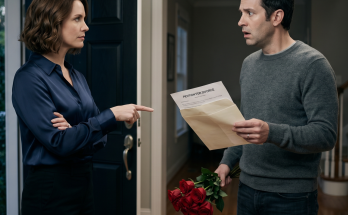
She Held The Scissors High. “We Are Not Dependent On A Single Badge To Exist!” She Shouted, And She Cut It. Then I Stood Up. She Had Just Notified The System That The Custodian Was Removed. Fifteen Years Of Certification Gone In Minutes.
Part 1
You think a security badge is just a piece of plastic until you watch one get cut in half and hear fifteen years of trust tear with it.
At Blackhawk Defense Solutions, that little rectangle of laminated plastic carried more weight than most executive signatures. It opened doors, yes. It also authenticated custody logs, verified physical access, tied federal control reviews to a living person, and told half a dozen government systems that someone accountable was still holding the line.
That someone was me.
My name is Gabriel Martinez. I was forty-seven years old, former Army Signal Corps, and for fifteen years I had been the chief security architect and federal custodian of record for Blackhawk Defense Solutions in Fort Worth, Texas.
Our building sat on the edge of a corporate park where the grass was cut too evenly and the parking spaces were painted so white they looked new every Monday. Beyond the glass front doors, though, Blackhawk was not a normal office. We built systems for people who did not forgive sloppy work. We handled data that could not be misplaced, forwarded, copied, printed, joked about, or “shared for visibility” just because some vice president liked collaboration.
Every morning, I pulled my old silver Ford into space A12 at exactly 7:45. Not because I was obsessive. Because discipline is easier to keep than rebuild.
By 7:52, I had passed three access points, exchanged nods with security, and stood in the break room waiting for a coffee machine that sounded like it was grinding gravel. The office always smelled like burnt coffee, floor cleaner, and warm plastic from too many laptops waking up at once.
Black coffee. No cream. No sugar.
In compliance, you learn to respect things that are exactly what they claim to be.
Before most directors had finished pretending to read email, I was already in the secure wing. No windows. No motivational posters. Just server hum, filtered air, locked safes, blinking status lights, and the kind of quiet that lets you hear trouble before anyone else does.
I called it “checking the board.”
The federal compliance dashboard opened across three monitors. Custody ledger. Archive sync. Incident log. Data residency map. Vendor handshake. Access review.
Green. Green. Green. Green. Green. Green.
Each module ended with the same verification tag.
Verified by G. Martinez.
Some people saw my name in those systems and thought ego. They were wrong. My name was not decoration. It was the anchor. It told auditors, clients, lawyers, and federal portals that Blackhawk still had a living, cleared, trained human being responsible for the custody chain.
Not a committee.
Not an app.
A person.
Around nine, the office woke up around me. The sales team laughed too loudly near the elevators. HR rolled in with paper cups and soft shoes. Engineers moved like tired raccoons, blinking at screens, murmuring about builds and patches.
Andrew Mills showed up at my door at 9:12, holding his laptop like it might bite him.
“Gabriel, got a second?”
“If it’s quick.”
“It’s an email to the naval yard. Status update. Nothing classified. But it mentions the firmware build.”
I took the laptop and read. The words were technically harmless and legally dangerous, which is worse than openly wrong because harmless-looking mistakes survive longer.
I changed two sentences.
“Say ‘scheduled maintenance package,’ not ‘firmware build.’ And don’t write ‘field-ready’ unless the approval memo says field-ready.”
Andrew exhaled so hard his shoulders dropped.
“You’re a lifesaver.”
“No. I’m irritating. Lifesavers get invited to lunch.”
He grinned. “Coffee tomorrow?”
“You already owe me three.”
An hour later, Ryan from IT security pinged me.
Unknown internal IP queried archive index. Not one of mine. Yours?
I checked my scheduled tasks.
No.
Lock it down. Send me raw logs.
Already doing it, he replied.
That was how the people who actually built things treated security. Not as theater. Not as friction. As guardrails on a mountain road.
Then the air changed.
It started with posters.
Glossy ones.
The first appeared on the bulletin board outside the break room, pinned crooked over an old hurricane drill notice.
Re-imagining Operations With Next Generation Leadership.
Under the words was a photo of Daniel Thornfield, our CEO, smiling the smooth smile of a man who had never carried his own boxes through a move. Beside him stood a young woman in a cream blazer, black jeans, and white designer sneakers that had never touched bad weather.
Jennifer Thornfield.
VP of Digital Innovation.
Daniel’s daughter.
I knew the name. Everyone did. She had launched a fintech company in California, burned through investor money, given interviews about “disrupting trust,” then disappeared after the company folded.
Now she was standing in our lobby poster with one hand on her father’s shoulder and a look in her eyes that said she had mistaken confidence for competence.
I stood there with my coffee cooling in my hand, staring at the poster while someone’s microwave beeped behind me.
Then I noticed the small print at the bottom.
Mandatory town hall. Thursday. Operation Phoenix.
My stomach tightened, not from fear.
From recognition.
I had seen young officers walk toward buried mines with that exact same smile.
And by the time I reached the secure wing, the dashboard was still green, but the office no longer felt safe.
### Part 2
The town hall was held in the main conference room, the one with the glass walls and the long white table nobody used because it made everyone feel like they were sitting inside a fish tank.
By 10:00 Thursday morning, every seat was taken. People stood along the walls with coffee cups pressed to their chests like shields. The room smelled like perfume, dry-cleaned wool, and nervous sweat.
I took my usual place in the back corner.
Old habits. Watch the room. Know the exits. Never sit where you can be boxed in.
Daniel Thornfield opened with five minutes of polished nonsense about “legacy strength meeting digital velocity.” He wore a navy suit and a father’s pride so obvious it almost softened him.
Almost.
Then Jennifer walked up.
She did not approach the front of the room. She took it.
She moved like someone who had rehearsed in front of mirrors: slow steps, relaxed shoulders, chin lifted just enough to suggest everyone should be grateful she had arrived.
“Blackhawk has done incredible work,” she began, “but we’ve been operating with one hand tied behind our back.”
The screen behind her lit up.
Operation Phoenix.
A stylized bird rose from flames.
I heard Ryan, three rows ahead, whisper, “Oh no.”
Jennifer clicked to the next slide.
Kill the Paper Dinosaur.
There was a cartoon T-rex holding a clipboard while a meteor labeled data came down on its head.
A few junior managers laughed too loudly. Nobody from engineering did.
“We are moving to a digital-first, agile compliance framework,” Jennifer said. “We’re going to break silos. Reduce dependency on outdated manual approvals. Eliminate bottlenecks. And most importantly, we’re going to stop mistaking tradition for security.”
Her eyes found me when she said that.
I had a printed federal bulletin on my knee and a red pen in my hand. Bad optics, apparently.
“Some legacy roles,” she continued, “will need to evolve. Others will need to vanish.”
A soft ripple moved through the room.
Andrew stared at his shoes. Ryan rubbed the back of his neck. Sarah Bennett, general counsel, sat beside Daniel with her hands folded neatly, expression unreadable.
Jennifer kept going, throwing around words like transformation, velocity, trustless architecture, and cloud-native custody.
That last one made me look up.
There are phrases that sound smart to people who do not understand the thing being discussed. Cloud-native custody, in our environment, was one of them. Custody was not just storage. It was accountability. A person, a process, a log, a physical artifact, a review chain, and a legal obligation braided together so tightly that cutting one strand could tighten the knot around your throat.
Jennifer did not know that.
Or she knew and did not care.
When she finished, applause filled the room, uneven and cautious. Daniel clapped like she had just cured disease. Jennifer smiled, flushed with victory.
As people stood, she came straight toward me.
“Gabriel Martinez,” she said.
“Jennifer Thornfield.”
“The custodian.”
“Chief security architect and federal custodian of record.”
She smiled like I had proved her point.
“Right. I’ve been reviewing your department’s metrics. A lot of manual steps. A lot of paper.”
“Paper has a useful quality.”
“What’s that?”
“It doesn’t silently change after an update.”
Her smile cooled.
“I’m here to modernize, Gabriel. We cannot have our federal operations depending on one person and one badge.”
“The government does not certify vibes. It certifies controls.”
“I’m aware of the requirements.”
“No,” I said. “You’re aware of the slide titles.”
The silence around us changed shape. People who had been pretending not to listen suddenly tried harder.
Jennifer’s eyes sharpened.
“Do we really need one dedicated custodian in 2025?”
“Yes.”
“That seems like a single point of failure.”
“It’s a single anchor point.”
“That sounds like semantics.”
“It sounds that way when you don’t understand anchor points.”
For half a second, the conference room disappeared from her face. No charm. No TED Talk confidence. Just irritation, hot and spoiled.
Then she smiled again.
“We’ll revisit this.”
“I’m sure you will.”
She turned away, designer perfume trailing behind her like a warning.
Back in the secure wing, I checked the board again.
Still green.
But something bothered me.
I opened the provisioning logs and searched her name.
There it was.
Jennifer Thornfield had been granted view-only access to the executive staging environment at 8:15 that morning.
View-only sounded harmless to people who had never seen what “view” could expose. Our staging environment contained live samples, scrubbed but not meaningless. Enough to require training. Enough to require certification. Enough that my signature should have been on the approval.
I checked the training database.
No Jennifer Thornfield.
No four-hour handling course.
No liability acknowledgment.
No custodian approval.
Someone had given the CEO’s daughter a window into a room she had not been cleared to enter.
My pulse slowed, the way it always did when a bad feeling became evidence.
And on my monitor, while every module still glowed green, I opened a new incident folder with her initials in the title.
### Part 3
I did not sleep well that night.
At 1:30 a.m., my phone buzzed once on the nightstand.
Not a text. Not a call.
A priority system alert.
The bedroom was dark except for the blue digits of the clock and the dull silver line of moonlight on the dresser. My wife had been gone six years by then, and the house had settled into the kind of silence that makes one small sound feel like a shout.
I sat up before I was fully awake.
The alert came from a monitoring script I had written years earlier and almost forgotten because it had never triggered.
Repeated authentication failures. Vendor risk portal. Executive sandbox path.
I went to my home office, barefoot on cold tile, and woke up the computer I kept isolated from everything else. No games. No family photos. No browser extensions. Just hardened access tools and a keyboard with half the letters worn off.
The logs loaded.
Someone had spent thirteen minutes probing credential paths from inside our network. Not random guessing. Patterned attempts. Careful. Quiet. The sort of thing a curious amateur might do after reading half a security blog and deciding rules were obstacles.
At 1:47 a.m., the failures stopped.
A temporary admin account had authenticated through the executive sandbox.
Source location: executive wing.
Device assignment: J. Thornfield.
I sat very still.
Outside my window, a dog barked twice somewhere down the street. The refrigerator clicked on in the kitchen. The ordinary sounds of an ordinary Texas night continued while a federal incident unfolded on my screen.
I exported everything.
Raw logs. Timestamps. IP path. Device certificate. Account creation chain. Screenshots.
Then I saved a copy to an encrypted drive in my home safe, inside a folder labeled J. Thornfield Incident.
Document everything.
Assume later becomes court.
At 7:45, my truck was in A12. At 7:52, I was inside the secure wing. At 8:03, I sent a formal notice to Sarah Bennett.
Subject: Unauthorized Credential Escalation Risk / Executive Access Breach / Succession Control Exposure.
Sarah was not my friend. She was not my enemy either. She was a lawyer, which meant she worshiped risk in public and avoided it in private. I wrote in her language: regulatory exposure, chain-of-custody threat, mandated training failure, unauthorized credential escalation, executive interference with federal control.
Then I attached the logs.
The system timestamped the memo.
Read receipt came back six minutes later.
Sarah had seen it.
At 9:20, my desk phone rang.
“Gabriel.” Her voice was low. “I received your memo.”
“Good.”
“Is this really as serious as you make it sound?”
“No. It’s worse. I wrote it politely.”
A pause.
“Jennifer says she was testing workflow assumptions.”
“Then Jennifer confessed to unauthorized access.”
“She says Daniel approved her innovation review.”
“Daniel cannot approve around federal handling requirements.”
Another pause. Paper rustled on her end.
“Can this be handled internally?”
“That depends.”
“On?”
“Whether she stops.”
Sarah sighed, not dramatically. Tiredly. That told me she understood more than she wanted to admit.
“I’ll speak with Daniel.”
“Put it in writing.”
“I said I’ll speak with him.”
“And I said put it in writing.”
She hung up without saying goodbye.
By lunch, Daniel sent a companywide email praising Operation Phoenix.
In just a few days, Jennifer has already begun vital work reducing friction and identifying outdated controls that prevent Blackhawk from competing at the speed of tomorrow.
I read the line twice.
Tomorrow.
People loved that word. It let them avoid responsibility for today.
At 2:00, Jennifer sent a meeting invite.
Mandatory review of obsolete controls.
Attendees: Jennifer Thornfield, Gabriel Martinez.
Agenda: Reassessment of custodian function.
Location: Glass Conference B.
I declined.
Thirty seconds later, my phone rang.
Jennifer.
I let it ring twice before answering.
“Gabriel, I saw you declined.”
“I have an incident review.”
“This is an incident review.”
“No. This is you trying to dress a decision as discussion.”
Her laugh was soft and sharp.
“You know, my father said you were difficult.”
“He pays me to be.”
“He pays you to protect the company.”
“I am.”
“Then show up tomorrow at eight.”
“Send Sarah.”
“I don’t need legal for a process conversation.”
“You do when the process is federal law.”
Her voice hardened.
“Tomorrow. Eight.”
The line went dead.
I looked through the glass of my office toward the server racks blinking steady blue and green. The systems did not care about family names. They did not care about speeches, posters, or bruised egos.
They cared about custody.
And Jennifer Thornfield had just made it personal.
### Part 4
Jennifer had pastries waiting at the meeting.
That told me everything.
People bring pastries to conversations where they plan to do something ugly and want witnesses to remember how reasonable they looked at the start.
Conference B had glass walls, a long table, a wall screen, and a view of the courtyard where three ornamental trees baked under the Texas sun. Jennifer stood near the screen with a tablet in one hand and a paper coffee cup in the other.
“Gabriel,” she said brightly. “Croissant?”
“No.”
“Suit yourself.”
Her slide deck appeared behind her.
De-Risking Blackhawk: Eliminating Single Points of Failure.
My name sat in the middle of the first diagram inside a red circle.
Subtle as a brick.
“I’ve done a deep dive,” she said, pacing slowly. “Our compliance architecture hinges on one person. You. If you get sick, quit, retire, or get hit by a bus, we’re exposed.”
“If I get hit by a bus, Blackhawk has ninety days to execute the succession protocol.”
“Yes, this ninety-day thing keeps coming up.” She smiled at the screen. “That kind of delay is unacceptable in modern business.”
“It isn’t a delay. It’s the control period.”
“It’s bureaucracy.”
“It’s federal requirement.”
“It’s interpretation.”
“It’s signed policy.”
She clicked to a slide showing a flowchart so wrong I almost admired its confidence.
“We can replace manual custody functions with a shared digital trust layer,” she said. “Multiple executives, automated approvals, AI-supported anomaly review, distributed authority—”
“No.”
She stopped pacing.
“No?”
“No.”
“You didn’t let me finish.”
“You finished when you proposed shared authority over custody.”
Her jaw tightened.
“Explain.”
“A custodian is not a Slack channel. You cannot distribute personal accountability across a group of executives who want convenience without liability.”
Her face flushed.
“I am not some intern you can lecture.”
“No. Interns usually ask better questions.”
The coffee cup crinkled in her hand.
For a moment, I thought she might throw it. Instead, she set it down with careful precision.
“My father built this company.”
“Your father hired people to build systems he could sell.”
“You are very comfortable disrespecting leadership.”
“I respect leadership. I don’t respect inheritance wearing a job title.”
That one landed.
The room seemed to shrink around us. Outside the glass, two analysts slowed near the hallway, saw Jennifer’s face, and kept moving.
She lowered her voice.
“You think this company cannot function without you.”
“No.”
“Then what do you think?”
“I think this company can function without me if it follows the procedure we built for that exact situation.”
“Procedure you control.”
“Procedure the company approved, legal signed, auditors tested, and federal systems accepted.”
“You keep hiding behind rules.”
“I stand in front of them. There’s a difference.”
She came around the table, closer now.
“You know what I see? I see a man who built himself a throne in a locked room and convinced everyone the kingdom falls if he stands up.”
I looked at the slide with my name circled red.
Then I looked back at her.
“You accessed restricted systems last night.”
For the first time all morning, she went still.
“I don’t know what you’re talking about.”
“Temporary admin account. Executive sandbox. 1:47 a.m.”
Her eyes flicked once to the glass wall.
Tiny movement. Guilty movement.
“I was reviewing workflow.”
“You were probing credential paths.”
“That sounds dramatic.”
“So does federal inquiry.”
The color left her cheeks, then rushed back twice as hard.
“You are threatening me.”
“No. I am documenting you.”
She stepped closer until I could smell her expensive citrus perfume over the bitter conference coffee.
“You’re done, Gabriel. People like you always think caution makes you powerful. It doesn’t. It makes you slow.”
“Slow is smooth. Smooth is fast.”
“What is that, Army wisdom?”
“Experience.”
She laughed.
“I’ve met men like you my whole life. Sitting in gatekeeper roles, saying no to anything you don’t understand.”
“You haven’t understood one thing I’ve said since Thursday.”
Her smile vanished.
“Tomorrow morning,” she said, “we are holding an operations summit. You will attend. And by the end of it, this custodian bottleneck will be resolved.”
“Resolved how?”
“You’ll see.”
I gathered my folder and stood.
She expected another argument. I gave her none.
At the door, I turned back.
“Jennifer.”
“What?”
“When you move against a system, make sure you know what counts as movement.”
She stared at me, angry but uncertain.
And that uncertainty told me she had a plan.
What scared me was that she still believed the system would ask her permission before answering.
### Part 5
The morning of the operations summit, the building felt staged.
Not busy. Staged.
There were fresh flowers in the lobby, which Blackhawk never had unless a congressional delegation or defense customer was visiting. The digital screens near reception displayed Operation Phoenix graphics on rotation. Even the break room had new signs about “collaboration-first thinking” taped above the recycling bins.
At 8:40, Andrew appeared at my office door.
He looked worse than usual. Pale. Shirt wrinkled. Hair standing up on one side.
“You going to that summit?”
“Yes.”
“Do you know what she’s planning?”
“Enough.”
He glanced over his shoulder.
“Ryan heard Nicholas yelling in the CTO office. Something about ‘executive override’ and ‘custodian dependency.’”
“Did he hear Sarah?”
“No.”
That bothered me.
If Sarah was absent, she had either been cut out or had decided not to stand between Jennifer and the cliff.
Neither was good.
Ryan showed up two minutes later with a folder tucked under his arm.
“I pulled what you asked for,” he said quietly.
I had not asked him for anything out loud. Good man.
He handed me printouts of internal access changes from the last forty-eight hours. Three temporary accounts. Two failed privilege escalations. One request to modify the custodian validation workflow, rejected automatically.
Requested by: J. Thornfield.
Approved by: pending.
Rejected reason: custodian dependency protected.
I felt something cold settle behind my ribs.
Jennifer had not been making speeches only. She had tried to alter the architecture.
“Who else saw this?” I asked.
“Me. Nicholas maybe. Depends if he reads his own alerts.”
“Keep copies.”
Ryan swallowed.
“Gabriel, are we in trouble?”
“Not yet.”
That was not a lie.
Trouble had not arrived yet. It was simply parking outside.
At 9:55, I walked to the fishbowl.
The conference room was packed. Operations leads, compliance staff, engineering managers, HR, legal, finance, executives. People stood shoulder to shoulder outside the glass. It looked less like a meeting and more like a trial where nobody knew who had been charged.
Jennifer stood at the front in a dark blazer, sleeves rolled, watch flashing under the lights. Daniel sat near her, proud and tense. Sarah Bennett was at the far end of the table, expression flat, lips pressed thin.
Good. Legal was present.
That meant there would be witnesses who understood the shape of the wound.
Jennifer began with velocity.
Then agility.
Then trust.
She spoke about Blackhawk needing to move like a modern company instead of “a museum for federal paperwork.” She said customers expected speed. She said competitors were not waiting. She said innovation required courage.
Every empty phrase landed on the room like dust.
Then she opened discussion on a draft policy sent exactly one hour earlier.
I had printed it.
Always print the thing they hope you skim.
My hand went up.
Jennifer’s smile sharpened.
“Gabriel. Our custodian has a thought.”
“A clarification,” I said.
“Of course.”
“Section 4, subsection B. Log retention.”
The room rustled as people opened laptops and tablets.
“You propose reducing mandatory access log retention from twelve months to sixty days.”
“Yes,” she said. “To reduce storage waste.”
“Federal contract access logs must be retained for the required review period after contract closure. Our twelve-month standard is already the minimum we can defend.”
She tilted her head.
“We’re talking internal logs.”
“Internal logs related to federal systems.”
“That’s your interpretation.”
“No. That’s the policy you’re trying to violate.”
Her smile broke.
A few people looked down. Daniel shifted in his chair. Sarah closed her eyes for half a second.
Jennifer clicked her remote too hard.
“Next concern?”
“Section 7. Shared executive custody authorization.”
Her nostrils flared.
“What about it?”
“You created a process allowing three executives to override custodian review.”
“That’s correct.”
“That process would be invalid.”
“Because you say so?”
“Because none of those executives carry custodian liability.”
She set down the remote.
“You see?” she said to the room, voice rising. “This is exactly the problem. Every path forward is blocked by one man.”
The air changed.
There it was. The turn.
She was not discussing policy anymore. She was building permission.
“Gabriel Martinez is not protecting Blackhawk,” she said. “He is protecting his own relevance.”
Andrew stared at the table.
Ryan’s hands curled into fists.
I stayed seated.
“Jennifer,” Sarah said quietly, “be careful.”
But Jennifer was past careful.
She walked toward me, slow, theatrical, feeding on the attention.
“This company will not be held hostage by a badge.”
She reached down.
Her hand closed around the lanyard at my neck.
For one second, I heard nothing but the sudden rush of blood in my ears.
Then she pulled.
### Part 6
The safety clasp snapped exactly as designed.
A small plastic click.
That was all it took to separate my lanyard from my neck.
Still, the pull jerked me forward hard enough that the edge of the table pressed into my thigh. Gasps cracked around the room. Someone whispered, “Oh my God.” A chair scraped backward.
Jennifer stood above me with my badge dangling from her fist.
She was breathing fast. Her eyes were bright with adrenaline and triumph.
“This,” she said, lifting the badge high, “is the problem.”
Nobody moved.
My badge swung under the fluorescent lights, catching flashes of white and blue. A cheap rectangle. My photo. My name. My access level. My physical token embedded inside. The thing everyone thought was just a door key.
Jennifer turned toward the supply station near the wall.
“Jennifer,” Sarah said, sharper now.
But Daniel did not stand.
That mattered.
He watched his daughter walk to the supply station, open a drawer, and take out the heavy black office scissors.
He watched, and he did not stop her.
That mattered more.
Jennifer faced the room again. The scissors looked absurd in her hand, like a prop in a training video about workplace conduct gone wrong.
“We are not dependent on one badge,” she said. “We are not dependent on one legacy employee. We are not dependent on fear.”
She held the lanyard tight and opened the scissors.
The room was so quiet I heard the air conditioner click.
Snip.
The nylon parted.
The sound was small.
The consequence was not.
Jennifer let the cut pieces fall to the table. Then she dropped my badge beside them. It hit the polished surface with a hard plastic clatter.
She stood there waiting for me to react.
I could feel every eye in the room on my face. She wanted anger. She wanted humiliation. She wanted me to shout so she could point to the old soldier losing control.
Instead, I looked at the badge.
Then at Daniel.
Then at Sarah.
Then back to Jennifer.
“You just told the system,” I said quietly, “that the custodian of record has been removed outside proper procedure.”
Her mouth twitched.
“What?”
I stood slowly.
The chair legs made a soft sound against carpet. I picked up the badge, the cut lanyard, and the two severed pieces. I placed them on top of my closed laptop with care, like evidence.
Jennifer’s confidence faltered.
“Sit down,” she said.
“No.”
“This meeting isn’t over.”
“For you it is.”
I looked at Daniel one more time.
He had gone pale now. Not enough, but some instinct had finally reached him.
“Gabriel,” he said. “Let’s not escalate.”
I almost laughed.
He was using the language of restraint after watching his daughter put hands on my credentials in a room full of witnesses.
“Daniel,” I said, “you already did.”
I walked out.
No rush. No slammed door. No speech.
Just my boots on carpet, the soft hiss of the glass door opening, and the weight of the whole room turning behind me.
Outside, Amanda, Daniel’s assistant, stood frozen with a notepad against her chest.
I nodded to her.
“Morning.”
She stared at the cut lanyard in my hand.
I took the elevator down alone.
The mirrors inside showed me a man with gray in his beard, a red line at the side of his neck, and eyes calmer than they had any right to be.
By the time the doors opened at the lobby, my phone had started buzzing.
One notification.
Then five.
Then twelve.
I crossed the lobby, passed the receptionist, and stepped into the bright Texas morning. Heat rose off the parking lot. Somewhere nearby, a lawn crew’s mower droned like distant machinery.
When I reached my truck, the phone was vibrating nonstop.
I sat behind the wheel and looked at the lock screen.
Ryan: Gabriel, where are you?
Andrew: Dashboard just changed color.
Ryan: It went yellow.
Ryan: Now orange.
Ryan: I have never seen orange.
Then one message came through that made the world go still.
Ryan: Custody ledger says UNASSIGNED. What does unassigned mean?
I closed my eyes for one second.
There it was.
The system had heard her.
### Part 7
I did not answer Ryan.
Not because I wanted him scared. Because anything I said in those first minutes could be pulled apart later by lawyers pretending confusion was innocence.
I opened the secure terminal app on my phone and ran a read-only status query.
The screen filled with text.
Custodian physical token: invalidated.
Named authority: removed.
Succession protocol: not initiated.
Federal handshake: unstable.
Reauthentication attempt: failed.
Custody chain: broken.
Safeguard mode: executing.
I sat in my truck with both hands around my phone while the morning sun beat through the windshield.
Safeguard mode.
That was the phrase nobody in the executive wing knew because nobody up there had ever read the architecture past the cost summary.
Fifteen years earlier, when Blackhawk first moved into federal defense contracting, I built the custody system with a simple assumption: the company would someday do something stupid.
Not maybe.
Would.
A company is made of people, and people get promoted above their understanding all the time. So the system had safeguards. Not traps. Not revenge. Safeguards.
If the custodian retired, resigned, died, or was replaced, there was a ninety-day succession process. Dual signatures. Shadow authentication. Physical inventory. Government notice. Auditor review. Training verification. Then and only then could authority pass cleanly.
If someone tried to remove the custodian without that process, the system did not debate intent.
It protected the data.
Jennifer had called me a single point of failure.
She was wrong.
I was the hand on the switch.
And she had just knocked the hand away.
The next notification came from an automated federal registry.
Subject: Certification Status Invalidated.
I read it twice, though I already knew what it would say.
Blackhawk’s vendor handshake had been terminated at 10:32 a.m. Chain of custody broken. Access suspended pending manual review. Attempts to reconnect would be logged as unauthorized behavior.
There are quiet moments in life when the scale of an event arrives late.
The cut lanyard had been dramatic.
This email was the actual explosion.
Every active federal portal Blackhawk depended on had just locked them out. Pending bids. Contract deliverables. Secure file exchanges. Audit attestations. Everything tied to our certification status had gone dark.
My phone rang.
Amanda.
I let it go to voicemail.
It rang again.
Daniel.
Voicemail.
Sarah.
Voicemail.
Nicholas Palmer, CTO.
Voicemail.
Ryan again, text this time.
Nicholas is yelling that someone deleted your custodian role.
I typed one sentence.
Nobody deleted it. It was revoked by event trigger. Preserve logs.
Then I drove.
Not far. Two blocks to a coffee shop wedged between a dentist office and a dry cleaner. It smelled like cinnamon, espresso, and rain that was not coming. I ordered a large black coffee and took the corner booth where I could see the door.
My hands were steady.
That surprised me a little.
At 12:04, an emergency federal compliance call appeared in my external calendar. Because even though Blackhawk had removed me, the federal registry still listed me as the last accountable custodian. Systems remember what executives deny.
I joined with camera off and microphone muted.
Display name: G. Martinez – External.
It took them ninety minutes to gather enough panic into one meeting.
Daniel appeared first, tie loosened, hair disturbed. Sarah sat beside him with a legal pad and the expression of someone watching a house burn while holding proof she warned the owner about matches. Nicholas looked furious in the desperate way technical executives look when they are blamed for nontechnical stupidity.
Jennifer was not on camera.
But I saw her reflection in the glass behind Daniel.
Still there.
Still hiding close to power.
Then the government auditor joined.
Jessica Wells.
Lead federal auditor.
She had neat gray hair, dark-framed glasses, and the calm face of someone who ruins expensive lies for a living.
“This is a recorded emergency compliance call,” she said. “Before we discuss remediation, I have one question.”
Nobody breathed.
“Who removed the named custodian from Blackhawk’s credential architecture this morning?”
Daniel looked off camera.
Sarah’s pen stopped moving.
Nicholas lowered his eyes.
And from my corner booth, surrounded by people sipping lattes and typing on laptops, I watched a billion-dollar room realize the scissors were still open.
### Part 8
Sarah tried first.
Lawyers usually do.
“Ms. Wells,” she said carefully, “there was a personnel event this morning that may have affected system status.”
Jessica Wells did not blink.
“Was Gabriel Martinez terminated?”
Sarah’s face barely moved, but I saw the tiny defeat in her shoulders.
Daniel leaned toward the camera.
“This was a leadership decision related to operational modernization.”
“Was he terminated?” Jessica repeated.
Daniel swallowed.
“He was removed from his role.”
“Was succession protocol initiated ninety days prior?”
Silence.
Jennifer’s reflection shifted in the glass behind him.
Sarah opened her mouth, then closed it.
Jessica typed something.
“For the record, Blackhawk Defense Solutions removed its named federal custodian without initiating the required succession buffer.”
Daniel raised both hands slightly.
“Jessica, with respect, this is fixable. Gabriel is still available. We can bring him back today.”
“That is not the issue.”
“It was a misunderstanding.”
“It was a custody break.”
“We did not intend—”
“Intent does not repair chain of custody.”
The room on screen looked smaller with every sentence.
Jessica continued, voice flat.
“I am viewing your signed control policy. Version 10.4. It states that the federal custodian of record may not be removed, disabled, reassigned, or materially impeded without succession protocol. It is signed by Daniel Thornfield, Sarah Bennett, Nicholas Palmer, and Gabriel Martinez.”
Sarah looked down at her legal pad.
Daniel tried again.
“We can reinstate him.”
“No,” Jessica said. “You can request remediation review. Reinstatement is not automatic once the integrity chain is broken.”
Nicholas leaned forward.
“Our systems are locked out of active deliverable portals. We have shipments tied to those uploads.”
“Then you should notify your contracting officers.”
His face went gray.
That was the moment the business impact truly arrived.
Not the dashboard. Not the email. Contracting officers.
Those were the people who could freeze payments, halt deliverables, suspend work, and invite investigators to ask why a defense vendor had treated custody like office politics.
Daniel rubbed his forehead.
“What are we looking at?”
“Certification invalidation pending manual review. Portal suspension. Possible referral depending on log analysis. You will preserve all records related to the custodian removal event, including video, access logs, email, chat messages, draft policies, and meeting transcripts.”
Jennifer’s reflection disappeared from the glass.
She had stepped away.
Jessica saw it too.
“Also preserve all communications involving Jennifer Thornfield.”
Daniel’s head lifted.
“Why?”
“Because multiple logs indicate her account attempted restricted workflow changes prior to the event.”
Nobody spoke.
Sarah’s eyes snapped toward Daniel with a look I had never seen from her before. Not fear. Anger.
She had not known everything.
Good.
Jessica ended the call without drama.
“Your next instructions will be sent in writing. Do not attempt reconnection without federal authorization.”
The screen went black.
I closed my laptop and looked around the coffee shop.
A man near the window was arguing softly with someone on his phone about soccer practice. A woman in scrubs stirred sugar into iced coffee. A college kid laughed at something on his screen.
The world outside Blackhawk had not noticed the collapse.
That was how most disasters worked.
Huge inside one building. Invisible everywhere else.
My phone rang again.
Daniel.
This time, I let the voicemail record fully before listening.
“Gabriel, it’s Daniel. We need to talk. There’s been a misunderstanding. Jennifer got ahead of herself, and I should have slowed things down. But this company needs you. Hundreds of employees need you. Please call me back.”
He sounded smaller than I had ever heard him.
I deleted it.
Not because I wanted the employees hurt. I had spent fifteen years protecting those people from mistakes made above them.
But Daniel did not get to watch his daughter humiliate me in public, let her cut my credentials, admit it to federal auditors, and then call it a misunderstanding.
The next email came from Sarah.
Urgent External Consultant Engagement Request.
That made me smile without humor.
They had removed an employee.
Now they needed an expert.
I opened a reply and wrote slowly, choosing every word like placing charges on a bridge.
I am no longer a Blackhawk employee. If Blackhawk wishes to retain my expertise as an external federal compliance architect, my rate is $1,000 per hour, portal-to-portal, with a 40-hour minimum retainer paid in advance.
I paused.
Then added the part that mattered.
I require full legal indemnity, preservation of all evidence, written acknowledgment that my removal was retaliation for enforcing federal compliance obligations, and written protection for junior and mid-level staff who raised concerns or followed protocol.
Terms are non-negotiable.
I hit send.
For seven hours, nothing.
Then, at 11:47 p.m., Sarah replied.
All terms accepted. Retainer wired. Documents attached. Please be on site at 8:00 a.m.
I read the signed acknowledgment.
Daniel Thornfield’s signature sat at the bottom.
Jennifer’s name appeared twice.
And in that moment, I understood something important.
They were not asking me to save the company.
They were asking me to save them from what the truth had already started doing.
### Part 9
The next morning, I did not park in A12.
I parked in visitor parking.
It was a small thing, but small things matter. A12 belonged to an employee. I was not one anymore.
The receptionist looked startled when I walked in.
“Mr. Martinez, I—”
“External consultant,” I said. “Sarah Bennett is expecting me.”
She fumbled with the visitor badge printer. The machine whirred and spat out a sticker that said Gabriel Martinez – Guest.
I put it on my jacket and almost laughed.
After fifteen years of being the person who authenticated Blackhawk’s federal custody, I now needed escort access to enter the building I had secured.
Amanda came down herself.
Her face was pale, eyes red from not sleeping.
“Gabriel,” she said softly.
“Amanda.”
“I’m sorry.”
That stopped me for half a second.
She had nothing to apologize for, which is why it mattered.
“Thank you.”
She led me upstairs.
The war room was set up in the fishbowl. Same room. Same table. Different smell. Yesterday it had smelled like coffee and ambition. Today it smelled like stale takeout, dry markers, and fear.
Executives sat around the table with laptops open. Daniel stood near the front, jacket off, sleeves rolled. Nicholas had three monitors connected and the posture of a man losing an argument with reality. Sarah sat with binders stacked beside her.
Jennifer sat in the corner.
No blazer today. Gray sweater. Hair pulled back. No stage presence. No smile.
I placed my laptop bag on the table.
“Before we begin,” I said, “nobody in this room touches federal systems unless I instruct it.”
Nicholas stiffened.
“I’m CTO.”
“Congratulations.”
Daniel raised a hand.
“Nicholas, let him work.”
I opened my folder and spread the architecture diagram across the table. Not a slide. Paper. Large-format print. Red notations. Blue custody lines. Yellow succession dependencies.
Jennifer looked away.
“This,” I said, tapping the center, “is the custody anchor. Not a bottleneck. Not a personality preference. The legally accountable point that tells federal systems Blackhawk has control over protected data.”
I moved my finger down the diagram.
“This is the succession path. Ninety days. Training. dual attestation. Physical inventory. Audit notice. Shadow validation. Final transfer.”
Then I tapped the red box.
“This is safeguard mode. It activates when the custodian is removed or materially disabled without succession.”
Daniel’s voice was rough.
“Why didn’t I know about this?”
“You signed the policy.”
Sarah looked up.
“You were briefed in 2019 and 2022.”
Daniel’s face closed.
I continued.
“Safeguard mode did not destroy anything. It did not delete data. It did not sabotage systems. It did what it was built to do. It severed external access to prevent a vendor with a broken custody chain from touching restricted portals.”
Jennifer muttered, “Because of a lanyard.”
The room went still.
I turned to her.
“No. Because you used physical force to remove a federal credential from the named custodian in front of witnesses after attempting unauthorized workflow changes.”
Her eyes filled with anger, then something close to shame, though not enough to trust.
“I was trying to fix a structural risk.”
“You created one.”
Daniel stepped in quickly.
“Gabriel, what do we do now?”
“We preserve everything. We notify contracting officers. We provide the full event timeline. We request emergency remediation review. We rebuild trust.”
“How long?”
“Months.”
Nicholas cursed under his breath.
Daniel gripped the back of a chair.
“Months?”
“You broke a fifteen-year certification chain in minutes. You will not repair it by lunch.”
Sarah wrote that down.
I looked around the table.
“First order of business. I need access to security video from the summit, provisioning logs, Jennifer’s temporary accounts, all Operation Phoenix policy drafts, and all communications about replacing or bypassing the custodian role.”
Jennifer stood abruptly.
“You’re not getting my private messages.”
Sarah did not look up.
“Yes, he is.”
Jennifer stared at her.
Sarah finally raised her eyes.
“You are under preservation hold. Do not delete anything. Do not alter anything. Do not instruct anyone else to delete or alter anything.”
Daniel said, “Jennifer, sit down.”
She did.
But the look she gave me was not defeat.
It was calculation.
And that was when I realized the disaster was not finished.
Somewhere in her devices, there was something she was more afraid of than the federal auditors finding.
### Part 10
The first three days were triage.
Not repair. Triage.
There is a difference. Repair means fixing what broke. Triage means stopping people from bleeding on everything else.
I set up a clean review environment in the secure wing. Ryan worked beside me, silent and focused, surviving on vending machine pretzels and coffee so strong it could strip paint. Andrew handled contract impact lists. Sarah handled preservation notices with the cold fury of a lawyer who had realized she had been used as decoration.
By noon on day two, we had the timeline.
Jennifer received staging access before training.
Jennifer attempted restricted credential queries.
Jennifer drafted policies reducing retention and creating executive override.
Jennifer requested workflow modification.
System rejected the request.
Jennifer held a summit.
Jennifer removed my badge.
Safeguard mode executed.
Federal certification invalidated.
Clean. Ugly. Indisputable.
But timelines tell what happened, not why someone was so desperate.
That answer arrived inside an export from Jennifer’s company chat.
At first, it was ordinary arrogance.
Messages to her father about “old guard resistance.”
Messages to Nicholas about “architecture hostage problems.”
Messages to an outside consultant named Clay Mercer.
Clay’s name bothered me.
I had seen it before.
Not in Blackhawk records. In industry gossip. Mercer Strategy Group specialized in “defense transformation acceleration,” which usually meant former tech executives charging six figures to tell regulated companies that regulations were mindset issues.
Ryan leaned over my shoulder.
“Search ‘custodian.’”
I did.
Results filled the screen.
Clay Mercer: As long as Martinez remains custodian, Phoenix cannot demonstrate full automation value.
Jennifer: He’s a blocker. Dad still thinks he’s essential.
Clay Mercer: Essential is branding. Remove the symbol. The system dependency will force architecture modernization.
Jennifer: You’re sure?
Clay Mercer: Systems fail open more often than people admit. Once his access is cut, emergency override should become available.
I sat back.
Ryan whispered, “He thought the system would fail open.”
Fail open.
Those two words turned my stomach.
A safe system fails closed. Locks down. Protects the asset. A reckless system fails open and lets people continue because downtime is inconvenient.
Clay Mercer had advised the CEO’s daughter to force a custody break because he assumed the pressure would make the system give executives more control.
He had not expected safeguard mode.
Jennifer had not acted alone. She had been coached by someone selling a modernization package that required my role to disappear.
I printed the messages.
Sarah read them standing up.
Her face changed line by line.
When she finished, she said, “Daniel needs to see this.”
“He may already know part of it.”
Her jaw tightened.
“Then he needs to see that I know.”
The confrontation happened in Daniel’s office at 4:30.
I was there because Sarah insisted. Ryan was there because I insisted. Jennifer was brought in ten minutes later.
Daniel read the messages once.
Then again.
“Jennifer,” he said, voice low, “what is this?”
She crossed her arms.
“Strategy discussions.”
“Clay Mercer told you to force a system dependency failure.”
“He said modernization required pressure.”
“He is not Blackhawk staff.”
“He was advising Phoenix.”
Sarah’s voice cut in.
“His contract was never reviewed by legal.”
Jennifer looked at Daniel.
Daniel looked away.
There it was.
Sarah saw it too.
“You approved him?” she asked.
Daniel rubbed his eyes.
“I authorized preliminary consulting.”
“Without legal review?”
“I wanted Jennifer to have support.”
Sarah stared at him like he had become a stranger.
“You let an outside consultant advise interference with federal custody controls.”
Daniel snapped, “I did not know he would tell her to do that.”
Jennifer’s voice rose.
“Stop acting like I’m a child. You both wanted Phoenix. You both wanted Gabriel out of the way.”
“I wanted efficiency,” Daniel said.
“No,” I said.
Everyone turned.
“You wanted the benefit of compliance without the inconvenience of being bound by it.”
Daniel’s face hardened.
“Careful.”
I leaned forward.
“No. You were careful. That was the problem. Careful enough to avoid writing the ugly parts down. Careful enough to let your daughter take the visible risk. Careful enough to act shocked after the system did what you were warned it would do.”
Jennifer stood.
“You don’t know anything about my father.”
“I know he watched you cut my badge.”
Her face crumpled for one second into raw anger.
Then she said the sentence that ended any sympathy I might have had.
“You should have just stepped aside.”
The room went quiet.
Sarah closed the folder.
“No one deletes a thing,” she said.
But Jennifer’s eyes flicked toward her phone.
And by the time Ryan and I got back to the secure wing, a new alert was already blinking red.
Remote wipe request detected.
### Part 11
Ryan moved faster than I did.
His fingers flew across the keyboard, pulling device controls, isolating endpoints, freezing account tokens.
“Phone,” he said.
“Jennifer’s?”
“Company-managed. Wipe command queued.”
“Stop it.”
“Trying.”
The secure wing filled with the low roar of fans and the sharp clack of keys. On the wall monitor, one red line pulsed through the endpoint management console.
Pending wipe: JTHORNFIELD-MOBILE-02.
Initiated by user.
Timestamp: 4:56 p.m.
Sarah had told her not to delete anything at 4:47.
Nine minutes.
That was how long Jennifer’s obedience lasted.
“Blocked,” Ryan said, exhaling. “Device isolated. Data preserved.”
“Good.”
He looked at me.
“Does she know?”
“She will.”
“She’s going to say it was automatic.”
“Of course she is.”
“She’s going to say she panicked.”
“Probably.”
“What do we say?”
“The logs say enough.”
The federal auditors were notified before dinner. Jessica Wells joined a call at 7:15, camera on, expression unchanged as Sarah walked her through the attempted wipe.
Jessica asked only three questions.
Was preservation hold issued before the wipe?
Yes.
Was Jennifer Thornfield notified?
Yes.
Can Blackhawk prove the attempted deletion was user-initiated?
Ryan answered that one, voice tight but steady.
“Yes, ma’am.”
Jessica nodded.
“Preserve the device physically. Do not return it to the user.”
Jennifer’s company phone was taken from her that night by security in the executive hallway.
Amanda told me later Jennifer screamed loud enough for people on the first floor to hear.
By the end of the week, Blackhawk had federal monitors on site.
Not metaphorical monitors. Actual people with government badges, plain laptops, and quiet shoes. They occupied Conference C, asked precise questions, and took copies of everything.
Clay Mercer disappeared from email.
Then his firm sent a letter denying operational involvement.
Sarah laughed when she read it, one short humorless sound.
“Operational involvement,” she said. “They always deny the word they know hurts most.”
Meanwhile, the company began to bleed.
A Navy deliverable paused.
Two pending bids were disqualified because certification status could not be validated by deadline.
A prime contractor froze Blackhawk’s subcontractor access.
Finance held emergency meetings behind closed doors.
People whispered in hallways. Not about me anymore. About layoffs. Mortgages. Kids. Medical bills. Summer plans evaporating under fluorescent lights.
That part hurt.
Executives make reckless decisions, and ordinary people feel the blast.
So I did what I had promised.
I protected the staff.
Every remediation document I submitted separated executive decisions from staff execution. Every timeline named who warned, who escalated, who preserved logs, who followed protocol.
Andrew stayed clean.
Ryan became essential.
Junior compliance analysts who had flagged draft policy concerns were recorded as proactive.
I made sure the paper trail showed the truth.
Three weeks after the badge incident, Daniel called me into his office.
He looked older. Not just tired. Reduced.
Jennifer was gone from the building by then. Officially on leave. Unofficially locked out of every system and told by counsel not to speak to staff.
Daniel stood by the window overlooking the parking lot.
“A12 is still empty,” he said.
“I noticed.”
“We could make this right.”
“No.”
“You haven’t heard the offer.”
“I heard enough.”
He turned.
“Come back as chief security officer. Full authority. Board-level reporting. Salary increase. Equity.”
There was a time when that offer would have meant something.
Before the scissors.
Before the silence.
Before he watched and let it happen.
“No,” I said.
His mouth tightened.
“Gabriel, I apologized.”
“You apologized after the federal registry shut you out.”
“I made a mistake.”
“You made a choice.”
He looked toward the parking lot again.
“What do you want from me?”
“Accountability.”
“I signed your acknowledgment.”
“That was paperwork.”
He laughed bitterly.
“Of course. Paper matters until it’s my paper.”
“Paper records truth when people revise memory.”
His shoulders sagged.
“I was trying to help my daughter.”
“You used a defense company as her second chance.”
He did not answer.
That silence was answer enough.
When I left his office, Amanda was at her desk pretending not to listen.
She looked up.
“You’re not coming back, are you?”
“No.”
She nodded, eyes wet.
“Good.”
That surprised me.
Then she whispered, “Someone needed to say no and mean it.”
For the first time since Jennifer cut my badge, the anger inside me loosened a little.
Not gone.
Just no longer steering.
But the final hearing was still ahead, and Jennifer Thornfield had one more chance to explain why she thought rules were things other people died under.
### Part 12
The remediation hearing happened sixty-two days after the badge was cut.
Not in a courtroom. Worse.
A federal review room.
No jury. No dramatic gallery. Just a long table, recording equipment, binders, laptops, auditors, counsel, and the slow suffocating pressure of people who measure lies against logs.
Jessica Wells led the review.
I attended as external compliance architect. Blackhawk paid for my time in advance.
That still made me smile.
Daniel sat with outside counsel. Sarah sat beside him, though by then everyone knew she was cooperating fully to save what could be saved. Nicholas looked humbled. Ryan sat behind me with a binder he had built so thoroughly I wanted to frame it.
Jennifer arrived last.
She wore a navy suit and no jewelry except a small watch. Her hair was pulled back. She looked younger without the performance wrapped around her.
For one dangerous second, I almost felt sorry for her.
Then the video played.
The summit room. Jennifer walking toward me. Her hand grabbing the lanyard. The jerk. The scissors. The cut. My badge hitting the table.
A person can tell themselves many stories about an event until video removes all adjectives.
Jessica paused the recording on Jennifer holding the scissors.
“Ms. Thornfield,” she said, “what did you believe would happen when you cut Mr. Martinez’s credential?”
Jennifer’s lawyer leaned toward her.
Jennifer stared at the frozen image.
“I believed,” she said slowly, “that the physical badge was symbolic.”
“Symbolic of what?”
“Legacy dependence.”
“Did you understand the badge contained a physical authentication token?”
“No.”
I watched Sarah close her eyes.
Jessica continued.
“Did Mr. Martinez warn you that the custodian role could not be removed outside proper procedure?”
Jennifer hesitated.
“Yes.”
“Did legal counsel warn you to be careful during the meeting?”
“Yes.”
“Did you attempt to delete data from a company-managed device after receiving preservation instructions?”
Her face tightened.
“I panicked.”
“That was not my question.”
Jennifer’s lawyer shifted.
Jennifer swallowed.
“Yes.”
Jessica wrote something.
Then she turned to Daniel.
“Mr. Thornfield, did you authorize Operation Phoenix?”
“Yes.”
“Did you authorize Jennifer Thornfield to review federal compliance architecture?”
“Yes.”
“Did you verify she completed required data handling training?”
“No.”
“Did you stop her when she physically removed the custodian credential?”
Daniel’s lips parted.
No sound came out.
Jessica waited.
“No,” he said finally.
The room was silent except for the faint hum of the recorder.
Then Jessica asked me to summarize the architecture and the safeguard trigger.
I did it without drama.
I explained the custody anchor. The succession protocol. The physical token. The reason safe systems fail closed. The years of audits where this design had been reviewed and accepted. The warnings sent before the incident. The exact sequence that invalidated certification.
When I finished, Jessica looked at me.
“In your professional opinion, did the safeguard operate as intended?”
“Yes.”
“Did it prevent potential unauthorized access after a custody break?”
“Yes.”
“Could Blackhawk have avoided certification invalidation?”
“Yes.”
“How?”
“By following its own policy.”
That sentence sat in the air heavier than any accusation.
The final determination came two weeks later.
Blackhawk would not be permanently barred, but its certification would not be restored immediately. It would operate under federal monitoring. Certain contracts were lost. Others were delayed. New bids were suspended for a defined review period. Operation Phoenix was terminated. Clay Mercer’s firm was referred for separate review.
Jennifer Thornfield resigned before the board could remove her.
Daniel stepped down as CEO three months later.
Officially, he retired.
Unofficially, nobody survives costing a defense company eight figures because he mistook his daughter’s ambition for strategy.
Blackhawk asked me twice more to return.
Once through Sarah.
Once through the interim CEO.
I declined both times.
Not angrily. Not dramatically.
Finally.
Because there is a difference between helping repair damage and moving back into the house where someone tried to set you on fire.
By winter, the company had stabilized under monitors. Ryan was promoted. Andrew kept his projects. Sarah became interim chief ethics officer, which amused both of us because neither of us had known that title could be real and useful at the same time.
I opened my own firm.
Martinez Custody Architecture.
The first client came from a prime contractor who had heard, through channels nobody admitted existed, that I was the guy whose system shut down exactly when it should have.
My office was smaller than the secure wing. One room at first, above a bakery in Fort Worth that made the whole hallway smell like butter and cinnamon every morning. The server rack hummed in the corner. My desk faced the door. Old habits.
On my first day, I hung the cut lanyard in a shadow box on the wall.
Not as a trophy.
As a reminder.
People think collapse begins with explosions, sirens, and alarms.
Most of the time, it begins with someone powerful picking up scissors and assuming the rules will be too afraid to bleed.
### Part 13
A year later, I saw Jennifer Thornfield again.
Not at Blackhawk. Not in a hearing. Not anywhere dramatic enough for the version of her that liked stages.
It was at a hotel conference in Dallas, one of those industry events where everyone wears badges on thick lanyards and pretends the coffee is acceptable. I had just finished speaking on custody architecture and executive risk, which was a polite title for “how not to let leadership destroy your certification.”
The room had been full.
Standing room only.
That still felt strange.
Afterward, people lined up with business cards, questions, stories. A compliance manager from Virginia told me her CFO had stopped joking about “paper dragons” after Blackhawk. A security lead from Arizona said his board approved succession funding because of my case study, though he did not call it my case study.
No one said Jennifer’s name.
They did not need to.
I was packing my laptop when I noticed her near the back wall.
She looked different. Less polished. Not broken, exactly, but stripped of the glow that comes from never being refused. Her conference badge listed a consulting group I had never heard of. No executive title. No VP. No Thornfield Defense legacy attached to it like armor.
She waited until the room cleared.
“Gabriel,” she said.
“Jennifer.”
For a few seconds, we listened to hotel staff collecting water glasses from the tables. The ballroom smelled like coffee, carpet cleaner, and the faint metal tang of too much air conditioning.
“I heard your firm is doing well,” she said.
“It is.”
“That’s good.”
I nodded once and slid my laptop into my bag.
She took a breath.
“I owe you an apology.”
“You owe a lot of people an apology.”
Her face tightened, but she accepted it.
“Yes.”
I zipped the bag.
She stepped closer.
“I was arrogant.”
“Yes.”
“I thought I understood systems because I understood pitch decks.”
“Yes.”
“I thought you were protecting power.”
“No,” I said. “You needed to believe that because it made what you wanted to do feel noble.”
She looked down.
“That’s fair.”
“No. It’s accurate.”
A flash of the old Jennifer crossed her face, wounded pride looking for a weapon. Then it passed.
“My father and I don’t really speak now.”
I said nothing.
“I lost more than the job.”
“That usually happens when consequences arrive late.”
Her eyes lifted.
“I’m trying to do better.”
“I hope you are.”
“I don’t expect you to forgive me.”
“Good.”
That landed harder than she expected. I saw it.
But forgiveness is not a vending machine where someone inserts regret and receives peace.
Some damage becomes a boundary.
“I just wanted you to know,” she said, “that I understand now.”
I picked up my bag.
“No, Jennifer. You understand more than you did. That’s not the same thing.”
She swallowed.
“What would be?”
“Stopping before the cut.”
The hotel hallway outside the ballroom was bright and busy. People moved past us with tote bags and name badges, talking about panels, dinner reservations, airport traffic. Ordinary life, flowing around an old wound.
Jennifer looked at the badge hanging from my conference lanyard.
This one was temporary. Cheap plastic. Printed by the event staff that morning. No token. No authority. Just my name and company.
Still, her eyes stayed on it.
“I think about that sound,” she said quietly.
“What sound?”
“The scissors.”
“So do I.”
For a moment, neither of us spoke.
Then she said, “I’m sorry, Gabriel.”
This time, the words sounded less like strategy and more like weight.
I believed she meant them.
I also knew meaning them did not change what they had cost.
“I hope you build a better life,” I said. “But you don’t get a place in mine.”
Her eyes shone, but she did not argue.
That was the first smart thing I ever saw her do.
I walked away.
Outside, Dallas sunlight hit the hotel windows hard enough to turn them white. I stood under the entrance awning while cars rolled past and a shuttle bus hissed at the curb. My phone buzzed with a message from Ryan.
Board approved full custody succession drill. No shortcuts. You’d be proud.
I smiled.
Then another message came in from a new client asking if my firm could review their executive override policy before their next audit.
I typed back, Send the policy. No promises until I read it.
A black pickup pulled up. Mine, newer than the old Ford but still silver. Still practical. Still parked straight between the lines.
Before I got in, I looked once at my reflection in the window.
Older now. More gray. Same eyes.
The world had not become safer. Executives still loved shortcuts. Consultants still sold magic. Smart people still confused speed with direction.
But somewhere in Fort Worth, a dashboard glowed green because Ryan knew better than to treat green as luck. Somewhere in Dallas, a young manager had taken notes about succession before disaster forced the lesson. Somewhere, maybe even Jennifer Thornfield would pause the next time she saw scissors near something she did not understand.
I started the truck.
For fifteen years, my name had held one company’s line.
Now it held my own.
And this time, nobody else’s daughter, ego, or signature could cut it away.
THE END!