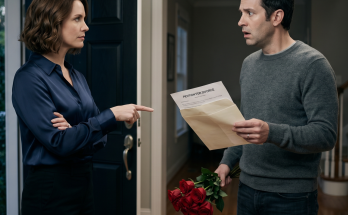
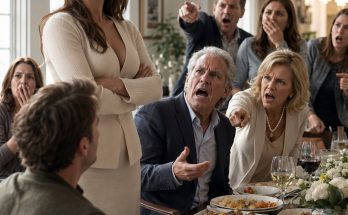
My Mother Sat Down, Looked Me Over, And Said: “Some People End Up Alone For A Reason.” The Table Went Quiet, Waiting For Me To Shrink Like I Used To. Instead, I Smiled And Said: “I’m Not Alone. I’ve Been Married For Years.” My Father Hit The Table So Hard The Forks Jumped… Then Demanded To Know Why They’d Never Met Him…
Part 1
My name is Maya Bennett, and for thirty-two years, my family treated my life like a chair nobody needed to pull out.
That was the first thing I noticed when I arrived at my parents’ house on Christmas Eve.
The dining room table was set for eleven.
Not twelve.
There was a folded chair leaning against the china cabinet, still wrapped in the shadow of the hallway, like my mother had considered adding it and then decided my life had not earned the extra space. The empty place where it should have gone was beside my plate.
I stood there holding two foil-covered trays of roasted carrots and Brussels sprouts while the smell of turkey, pine candles, and my mother’s expensive cinnamon room spray pressed against my face. The house looked perfect, as always. White lights on the tree. Gold ribbon. Matching glass ornaments. Red poinsettias arranged in identical pots near the fireplace.
Everything in my parents’ house knew how to perform warmth except the people.
Mom came in from the kitchen wearing a cream sweater and pearl earrings. She looked at the trays in my hands before she looked at me.
“Oh good, you brought them,” she said. “Put those in the kitchen, sweetheart.”
Sweetheart.
My father used that word when he wanted labor to sound like affection. My mother used it when she was already disappointed but did not want to ruin her lipstick by saying so.
I carried the trays to the kitchen.
Brooke, my younger sister, arrived forty minutes late and got applause.
Actual applause.
She came through the front door in a red coat, cheeks pink from the cold, laughing about traffic like she had survived a war instead of a short drive from her downtown apartment. Mom rushed to take her coat. Dad poured her wine before she even removed her gloves. Aunt Linda said, “There she is,” as if Christmas had been waiting in the driveway.
Brooke kissed the air near my cheek and placed a store-bought pie on the counter.
“I barely made it,” she said.
“You made it,” Dad said, smiling like she had crossed an ocean. “That’s what matters.”
I looked down at the sink, where I had already washed the roasting pan, two serving spoons, and the wineglasses Mom forgot to polish.
That was how things worked in our family. Brooke arrived. I prepared the room for her arrival.
Dinner began almost normally. Normal for us, anyway.
My uncle talked about his knee surgery. My cousin Angelo described his new job. Brooke told everyone about her promotion, her new boyfriend, her gym, her apartment, and the possibility that she might go to Aspen for New Year’s. Every sentence she spoke seemed to make my parents sit taller.
When I mentioned I had taken on a new regional project at work, Dad said, “Well, don’t let them burn you out. Some companies hand responsibility to whoever says yes.”
Brooke laughed into her wine.
I kept cutting my turkey.
The knife scraped softly against the plate. That sound steadied me. So did the weight of the cream envelope inside my purse, tucked beside my chair like a secret with a heartbeat.
I had not planned to use it.
That was what I kept telling myself.
I had come because it was Christmas. Because some foolish part of me still believed one family dinner might pass without somebody using my life as entertainment. Because my grandmother had been gone for nine months, and holidays without her felt like walking through a house with one load-bearing wall missing.
Then Angelo’s wife asked, lightly, “Maya, are you seeing anyone these days?”
Before I could answer, Brooke smiled.
“Maya doesn’t date,” she said. “She emotionally audits men until they escape.”
People chuckled.
Not because it was funny. Because cruelty becomes easier to swallow when the pretty daughter says it with a bright voice.
Dad leaned back in his chair. “Well, she is thirty-two now. Standards have to meet reality eventually.”
My fork paused halfway to my mouth.
“Richard,” Aunt Linda murmured.
“What?” Dad said, spreading his hands. “Christmas makes people reflect. A woman can’t spend her whole life acting impossible and then wonder why nobody stays.”
Brooke looked down, pretending to hide a smile.
Then my mother set down her wineglass.
Carefully.
Like a judge about to deliver sentence.
She looked me over from my plain black dress to my bare left hand folded in my lap and said, “Some people end up alone for a reason.”
The table went quiet.
That was the part I noticed.
No one looked shocked. No one rushed to defend me. They were waiting for me to perform my usual role. Smile weakly. Drop my eyes. Say, “It’s fine.” Disappear into the kitchen and wash plates until everyone forgot what they had done.
I had swallowed so much at that table that sometimes I wondered if my body knew the difference between dinner and punishment.
But that night, something inside me set down its fork.
I smiled.
Not big. Not dramatic.
Just enough for my mother to notice something had changed.
“I’m not alone,” I said.
My father gave a short laugh. “Oh?”
I reached for my water glass, took one sip, and placed it back exactly where it had been.
“I’ve been married for years.”
The dining room went dead quiet.
Not peaceful quiet.
Dangerous quiet.
The kind that comes after a glass cracks, but before anyone sees the blood.
My father’s hand came down on the table so hard the forks jumped against the plates.
“What did you say?”
I looked around at the people who had spent thirty-two years treating my life like a group project they were disappointed to be assigned.
Then I said it again.
“I’m married.”
My father stood halfway out of his chair.
“To who?”
Not congratulations. Not are you happy.
To who.
Like marriage was another thing I had done incorrectly and he needed the name of the witness.
I looked at the folded chair against the wall.
Then I looked back at him.
“You’ve met him.”
That was when Brooke stopped smiling, and my mother’s eyes dropped to my purse like she had just heard something inside it breathe.
### Part 2
For one second, my father did not look angry.
He looked afraid of remembering.
It was quick, a small shift near the eyes, gone almost before I could name it. Then he pulled his face back into the expression I knew best, the one he wore when a contractor overcharged him or a waiter brought cold coffee.
Authority with a pulse.
“You’re telling us you got married and didn’t tell your family?” he demanded.
“My husband knows my family,” I said.
That landed wrong. I knew it by the way my mother’s lips pressed together.
Brooke set down her cranberry sauce. “What does that mean?”
“It means what I said.”
Dad pointed a finger at me. “Do not get clever with me at my table.”
His table.
That was another thing I had grown up hearing. His table, his roof, his rules, his money, his reputation. Even when I was a grown woman with my own apartment, my own career, my own bills, I was still expected to shrink under the architecture of his ownership.
I leaned back slightly and felt the envelope inside my purse brush against my calf.
Grandma had written my name on it in blue ink.
Maya, if they make loneliness into a weapon again.
I had laughed when she handed it to me three years earlier. Not because it was funny, but because I was scared of how well she knew them.
“Grandma, that’s dramatic,” I had said.
She had looked at me over the rim of her glasses. “So are people who call cruelty concern.”
Now she was gone, and the envelope felt heavier than any heirloom she could have left me.
Dad’s voice snapped me back.
“Who is he?”
I looked at the table. At the butter dish shaped like a little Christmas tree. At the gravy boat Mom only used in December. At Brooke’s red nails tapping against her glass. At my mother’s perfect centerpiece of pine branches and fake berries.
My goal had been simple when I arrived: get through dinner, leave before dessert, go home to Ethan, and let Christmas belong to us by midnight.
But my family had turned the night into a trial, and somehow, without meaning to, I had brought evidence.
I reached into my purse.
Mom inhaled sharply.
That sound told me more than any question could have. She recognized the envelope before I pulled it out, or at least she recognized the handwriting. My grandmother’s handwriting had been distinct. Tall letters. Strong loops. No hesitation.
Brooke’s eyes followed my hand.
“What is that?” Dad asked.
“The reason I didn’t invite you to my wedding,” I said. “And the reason Grandma was the only person from this family who was there.”
Nobody moved.
My cousin’s wife slowly lowered her wineglass, as if even the crystal had become too loud.
Dad stared at the cream envelope. “Maya, don’t make a scene.”
I almost laughed.
He had mocked me in front of the entire Christmas table, slammed his hand hard enough to rattle silverware, demanded the name of my husband like he was cross-examining a suspect, and somehow I was the one making a scene.
That was my family’s special talent. They could throw the match, watch the curtains catch, and then blame you for pointing at the smoke.
I opened the envelope.
My fingers were steadier than I expected. Maybe because this moment had been coming for years. Not this exact dinner, not this exact table, but something like it. A moment when I would either protect myself out loud or keep paying for peace with my dignity.
The first thing I took out was a photograph.
I placed it in the center of the table.
It was from my wedding day.
Not a ballroom. Not a church filled with relatives. Not a reception where my mother could rearrange flowers and criticize my dress. Just a courthouse garden in early spring, the sky soft gray above us, white flowers blooming along the walkway, my grandmother in a navy dress beside me, and Ethan holding my hand like he understood exactly what it had cost me to stand there without them.
I loved that picture.
I hated that they were seeing it.
Brooke leaned forward first.
Her face changed.
Of course it did.
She knew him.
Dad picked up the photograph. His eyes moved over my dress, Grandma’s smile, Ethan’s face. For a heartbeat, he looked confused. Then recognition hit him.
“That’s Ethan Cole.”
“Yes.”
“The contractor?”
“My husband.”
My aunt whispered, “Oh my God.”
Dad lowered the photograph like it had burned him.
He had met Ethan twice.
Once at a charity auction two years before the wedding, where he had spent ten minutes praising Ethan for being “a young man with vision.” Dad loved men with money, discipline, and clean shoes. Ethan had all three, though he never performed any of it loudly enough for Dad’s taste.
The second time was in my parents’ kitchen after one of Mom’s backyard dinners.
I had introduced Ethan as a friend.
That was my cowardice.
Or maybe it was survival.
Back then, I was still trying to keep the only peaceful part of my life away from the people who could turn anything mine into something small.
Brooke remembered that night too. I saw it in the way she shifted.
She had flirted with Ethan while I stood ten feet away holding a bowl of salad. She touched his arm. Asked about his business. Laughed too loudly. My mother watched with approval, and my father asked Ethan if he had “found a serious woman yet.”
Brooke had smiled and said, “Careful, Dad. I might call dibs.”
Everyone laughed.
Ethan did not.
Later in the car, he said, “They don’t just overlook you, Maya. They enjoy placing you beneath her.”
I had defended them then.
That is what daughters like me do before they are ready to call the wound by its real name.
Now Dad stared at the wedding photo, his jaw moving like he was chewing something bitter.
“You married Ethan Cole,” Mom said. “And you didn’t tell us.”
“You were laughing about me being alone five minutes ago,” I said. “That is not the same thing.”
“It is exactly the same thing,” Dad snapped.
Brooke’s face went pale, then red. “Where is he?”
I looked toward the dining room window.
Outside, headlights moved slowly across the glass.
My heart gave one hard beat.
Ethan had not wanted me to come alone. I told him I needed to try. He said he would wait nearby, and if I wanted to leave, all I had to text was one word.
Home.
I had not texted him.
But somehow, he had come anyway.
The front door opened, and cold December air moved through the house.
### Part 3
Ethan stepped into the dining room with his coat over one arm and snow melting in his dark hair.
He looked at me first.
Not my father. Not my mother. Not Brooke. Me.
That was one of the things I loved about him before I knew how to say love without apologizing for needing it. Ethan never scanned a room to see who outranked me emotionally. He never treated my family like a panel of judges he had to impress before choosing me. If I was in the room, I was where his eyes went.
“You ready to go home?” he asked.
His voice did not rise.
That made it powerful.
My father had built half his authority on volume. He believed a loud man could bend a room before anyone noticed he had not said anything worth hearing. But Ethan stood in the doorway calm and still, and the whole table shifted toward him anyway.
My mother recovered first.
“Ethan,” she said, suddenly warm. “What a surprise.”
I almost laughed.
Five minutes earlier, she had called me alone for a reason. Now her voice smoothed itself around my husband like she could still save the tablecloth.
Ethan nodded. “Mrs. Bennett.”
Not Sharon.
Not Mom.
Mrs. Bennett.
The distance was polite enough to be surgical.
Dad stepped around his chair. “You’re telling me you married my daughter and never thought to come speak to me?”
Ethan looked at him. “I asked Maya what she wanted.”
Dad blinked. “Excuse me?”
“She said she wanted peace. So I protected that.”
The table went still.
My father was not used to men treating my wishes like instructions.
Brooke gave a sharp laugh. “That’s convenient. She hides a whole marriage, and now you’re acting noble?”
Ethan finally looked at her.
Not angrily.
Worse.
Accurately.
“You tried to ask me out in your parents’ kitchen while your sister was standing ten feet away.”
Brooke’s mouth opened.
Aunt Linda made a tiny sound into her napkin.
Dad turned toward Brooke. “What?”
“I didn’t know,” Brooke snapped.
“That was the problem,” Ethan said. “You didn’t ask who I was to her. You just assumed if Maya had something good near her, it was available.”
I stared at him.
There it was.
The whole family pattern in one sentence.
My mother’s mouth tightened. “That is unfair.”
I looked at her. “Is it?”
She did not answer.
Ethan came around the table and stood beside my chair. He did not touch me right away. He knew better than to make comfort another kind of pressure. He let me decide whether I wanted tenderness in front of people who had used every soft place against me.
I reached for his hand.
That was my answer.
Dad saw our fingers lace together and looked almost offended by it, as if affection had been taken from the family account without approval.
“How long?” he asked.
“For years,” I said. “Four married. Almost five together.”
My mother put one hand to her throat.
Brooke looked at the photograph again. “And Grandma knew?”
“She was at the wedding.”
“My own mother kept this from me,” Dad said.
“No,” I said. “Your daughter kept herself from you. Grandma respected it.”
That landed harder than I expected.
He could not blame Grandma without admitting she had been trusted. He could not blame Ethan without admitting Ethan had chosen me. He could not blame me without explaining why I believed hiding happiness was safer than sharing it.
Uncle Paul cleared his throat. “Maya, why didn’t you tell any of us?”
It was not cruel.
That made it harder.
I looked at him, then at the rest of the table. “Because this family doesn’t receive good news from me. It audits it.”
Nobody moved.
I kept going before my courage could drain out through my hands.
“When Brooke got promoted, everyone asked where we should celebrate. When I got my first management role, Dad asked if the company was desperate. When Brooke ended a relationship, Mom said she was protecting her heart. When I ended one, everyone said I was too hard to love.”
My mother whispered, “We never said that.”
I turned to her.
“You said it tonight.”
Her face changed.
Not enough.
But enough.
Ethan reached into his coat pocket and took out a small photo. He placed it beside the wedding picture.
It was not from the ceremony.
It was from the week after.
Grandma sat in our tiny apartment eating takeout from paper plates, laughing so hard her hand covered her mouth. I was beside her in jeans, not a wedding dress. Ethan was half in the frame, setting down plastic cups on the coffee table.
It was ordinary.
That was why it hurt.
Grandma had not only attended the ceremony. She had been invited into the life after it.
Mom picked up the photo with trembling fingers. “She went to your apartment?”
“Many times,” I said.
Dad’s voice lowered. “Behind our backs.”
I shook my head. “Outside your reach.”
Ethan’s thumb brushed over my knuckles.
The room held its breath.
Then my mother did what she always did when truth got too close.
She turned herself into the victim.
“Do you know what it feels like,” she said, voice breaking, “to find out your daughter got married and chose not to include you?”
That would have worked once.
Her tears would have rearranged the room. Someone would have looked at me like I had gone too far. I would have softened, apologized, explained, and made her pain smaller by swallowing mine.
But Grandma’s letter was still on the table.
So I reached into the envelope again.
“There’s more,” I said.
My mother froze.
### Part 4
The paper made a soft sound when I unfolded it.
That sound should not have been frightening. It was only paper. Cream stationery. Blue ink. My grandmother’s careful slant.
But my mother looked at it like I had brought a loaded weapon to Christmas dinner.
Maybe I had.
Some families are not afraid of tears because tears can be dismissed. They are not afraid of silence because silence can be filled with whatever version makes them look better. But paper is different.
Paper stays.
I read the first line.
“If Maya is reading this at a family table, then someone has mocked her for being alone.”
My aunt lowered her eyes.
Brooke sat back slowly.
My father’s jaw tightened.
I kept reading.
“I am sorry, sweetheart. They always confused your privacy with emptiness.”
The words blurred for half a second. I blinked hard and forced them clear again.
I would not cry yet. Not because they did not deserve to see me hurt, but because they had spent years treating my tears as proof that I was unstable instead of proof that I was bleeding.
“Your father will ask why he was not told. Your mother will make the secrecy about herself. Brooke will act wounded that she was not centered in your joy. Let them.”
Brooke whispered, “Wow.”
I looked up. “Do you want me to stop before the accurate part?”
She closed her mouth.
I continued.
“A family that demands access to your happiness before offering respect has mistaken love for ownership.”
My mother said, “Enough.”
Her voice was small but sharp.
I did not stop.
Not this time.
“I was at your wedding because I knew how long it took you to believe something good could belong to you without first being inspected, ranked, or handed to your sister.”
The sentence landed in the center of the table and spread outward like spilled wine.
Everyone understood it.
Brooke got the attention.
Brooke got the rescue.
Brooke got the benefit of every doubt.
I got errands, criticism, leftovers, and the family’s favorite word for me.
Difficult.
Grandma’s letter went on.
“I watched them call Brooke sensitive when she was selfish and call Maya difficult when she was honest. I watched your mother praise one daughter for shining and use the other daughter as shade.”
My father stood fully then.
“Your grandmother was bitter.”
I folded the letter down and looked at him.
“No,” I said. “She was invited.”
That hurt him.
Good.
Not because it was cruel, but because it was true.
Grandma had not been excluded from my wedding.
They had.
My mother stared at the photograph. Her voice had gone thin. “So he knows about us.”
There it was.
Her real fear.
Not that I had been hurt. Not that I had married without her. Not that her own daughter had felt safer hiding love than sharing it.
Her fear was that someone respectable had seen the family clearly and still chosen me.
“Yes,” I said. “He knows.”
Brooke’s face twisted. “Then why didn’t he tell us? Why did he stand in our kitchen and pretend?”
Ethan answered before I could.
“Because Maya asked me to.”
“That’s lying.”
“That’s boundaries,” he said.
Dad laughed harshly. “Boundaries. That word again. People use it when they want permission to disrespect their family.”
I looked at him.
“You use family when you want permission to disrespect people.”
The room went silent.
For the first time all night, Dad did not have an immediate answer.
The Christmas music from the living room filled the gap. Silver bells, soft choir voices, fake fireplace crackling on the television. My mother always put that channel on during dinner because she said it made the house feel cozy.
It had never fooled me.
Ethan leaned close enough that only I could hear. “We can go.”
I knew he meant it. He would walk me out, drive me home, make tea, sit with me on the couch while I shook apart. He would not ask me to explain what he had already witnessed. That was his gift, his refusal to make my pain prove itself.
But I looked at the table.
At my mother’s perfect centerpiece.
At my father’s red face.
At Brooke’s anger, sharp because the spotlight had finally burned her instead of me.
And I realized I did not want to run.
Not yet.
I wanted to finish what Grandma had started.
I reached into the envelope one more time and pulled out a folded packet clipped together at the corner.
Dad saw the letterhead before I unfolded it.
His expression changed.
“What is that?”
I looked at him.
“The part Grandma left for you.”
For the first time all night, my father looked less angry than careful.
That scared me more.
Anger was easy for him. Anger was furniture in our house. It had a chair at every table, a voice in every hallway, a place beside every version of my childhood.
But caution meant he recognized danger.
I unfolded the legal page, and the room seemed to lean toward it.
### Part 5
Arthur Bell’s Law Office.
The name sat at the top of the page in crisp black letters.
Dad recognized it immediately. Everyone in our family did. Arthur had been Grandma’s attorney for as long as I could remember, a quiet man with silver hair and the habit of taking off his glasses before saying anything important.
My father swallowed.
That small movement told me the legal paper had done what my pain never could.
It made him listen.
I read Grandma’s handwritten note first, the one clipped above the formal document.
“Richard, if Maya is reading this in front of you, then you have done what I expected. You have made her private life into evidence against her while refusing to ask why she protected it from you.”
Dad’s face darkened.
Ethan stood beside me, silent.
“You always believed respect was owed to you because you were the father. You rarely asked whether you had earned the kind of trust that makes a daughter bring joy home.”
Uncle Paul looked down at his plate.
Aunt Linda pressed her napkin to her mouth.
Nobody defended him.
That was new.
Dad’s whole life had been padded by people who softened his edges for him. Mom translated him. Brooke charmed around him. Relatives laughed off his insults as old-fashioned. I absorbed them.
But Grandma’s letter left no soft place for his pride to land.
“I have watched you mock Maya for being cautious, too serious, too hard to impress, too hard to love. I have watched you reward Brooke for needing rescue and punish Maya for needing respect. Do not pretend surprise that the daughter you turned into a target learned to build a life outside your range.”
Brooke whispered, “This is unbelievable.”
I looked up.
“It is, isn’t it?”
She flinched because for once I did not mean the letter.
I meant us.
Dad pushed back his chair, but this time he did not stand. “What is the legal page?”
So he had seen it.
Of course he had.
He could endure being called cruel if he thought cruelty was just opinion. The letterhead was different.
I placed Grandma’s handwritten page down and lifted the typed document beneath it.
“This is the amendment Grandma made to her estate plan after my wedding.”
My mother’s hand flew to her throat.
There it was.
The thing everyone had been waiting for without knowing its name.
Estate.
Money did what pain could not. It made everyone suddenly fluent in consequences.
Dad’s voice sharpened. “Your grandmother’s estate has nothing to do with this.”
“She thought it did.”
Ethan squeezed my hand once, then released it so I could turn the page.
I read from the typed section.
“Any attempt by Richard Bennett, Sharon Bennett, or Brooke Bennett to challenge, punish, publicly shame, or financially pressure Maya Bennett-Cole because of her private marriage shall result in the immediate removal of their discretionary shares.”
My mother whispered, “Bennett-Cole?”
Brooke’s head snapped toward me.
I almost smiled.
That was the part that bothered them.
Not that I had been humiliated. Not that Grandma had seen it. Not that I had felt unsafe bringing my husband home.
That my name had changed somewhere beyond their permission.
Dad stood. “This is ridiculous. She can’t control how we react to being lied to.”
Arthur had anticipated that too.
I read the next line.
“For clarity, Maya’s decision not to disclose her marriage shall not be considered deception for purposes of this clause. It shall be considered personal privacy justified by documented family hostility.”
Documented.
My father hated that word because it took the family out of the fog and put it under glass.
My mother’s voice trembled. “Documented by who?”
I touched Grandma’s letter. “By Grandma.”
No one asked what she had documented.
They already knew.
The Christmas insults. The birthday cards where Brooke’s achievements filled the first paragraph and mine appeared after a grocery list. The family group chat where Dad joked that I would probably marry a tax auditor if I ever found a man patient enough. The voicemail Mom left after my thirty-first birthday saying she worried I had become “emotionally uninviting.”
I had deleted that voicemail.
Grandma apparently had not.
Brooke sat down slowly. “So what? Grandma paid you for getting married?”
“No,” I said. “She protected me from being punished for it.”
Dad scoffed. “Punished? By family?”
Ethan spoke then.
Quietly.
“That’s why it mattered.”
Dad turned on him. “You stay out of this.”
Ethan did not move. “I did for four years because Maya asked me to.”
The room went still.
He continued, calm as ever.
“I watched her leave family dinners with headaches from pretending your insults didn’t land. I watched her rehearse phone calls before making them because one wrong sentence could become a week of punishment. I watched her hide good news because this family treats her happiness like something that needs correction.”
My mother’s face crumpled.
Brooke looked away.
Dad’s jaw tightened, but he had no answer that could survive Ethan’s tone.
That was the thing about calm truth.
It does not give anger much to grab.
I folded the document and placed it back on the table.
“I didn’t come here tonight to take anything from you,” I said. “I came because it was Christmas, and part of me still hoped you could get through one dinner without turning my life into a punchline.”
Dad looked at me like I had betrayed him.
Maybe I had.
Not by getting married.
By becoming unavailable for the old role.
My mother started crying softly. “Maya, you should have told me.”
I looked at her for a long time.
“I wanted to.”
That shut her up.
Because the truth was not that I enjoyed excluding her. The truth was that I had once wanted my mother at my wedding so badly it hurt.
But wanting something does not make it safe.
Then Brooke looked at Ethan and said the cruelest thing she still had left.
“So what? You married up and hid him like some prize?”
I turned toward her.
“No,” I said. “I hid him like something alive.”
The whole room fell silent, because even Brooke understood what that meant.
### Part 6
Nobody knew what to do after that.
Christmas dinner sat half-eaten and cooling under the chandelier. Gravy formed a skin in the boat. The turkey had gone dry at the edges. Candle wax ran down the sides of my mother’s red tapers and hardened into crooked little rivers.
It was strange, what the body notices when the old world cracks.
A cranberry stain on Brooke’s napkin.
My father’s wedding ring tapping against his glass.
A pine needle on the white tablecloth.
Ethan’s sleeve brushing mine whenever he breathed.
My mother stared at me as if she were seeing not a daughter but a locked room she had always assumed was empty.
“I would have come,” she said.
Her voice was soft enough to be believed by anyone who had not survived her.
“To the wedding,” she added.
That sentence hit me in the chest because some small foolish part of me had waited years to hear it.
But truth has timing.
Hers had missed the ceremony by four years.
“No,” I said. “You would have corrected it.”
Her mouth trembled. “You don’t know that.”
“I knew it well enough to keep my wedding safe.”
She looked down.
I kept going, because if I stopped then, I knew I might spend the rest of my life softening the sharpest part.
“You would have asked why the dress was so simple. Why Brooke wasn’t maid of honor. Why Dad wasn’t walking me down the aisle. Why we didn’t wait for a better venue, a better season, a better version of me to be proud of.”
Mom’s tears slipped down her cheeks.
This time nobody moved to rescue her.
Brooke stared at her plate like she had never seen food before.
“Did Grandma really say all that about me?” she asked.
I looked at her.
“She said the truth about all of us.”
Brooke’s eyes filled, but this time she did not turn the room toward her tears. She just nodded once, slowly. It was the closest thing to growth I had ever seen from her.
My father, however, was not interested in growth.
He pointed at the legal packet. “So what happens now? Are you threatening us?”
“No.”
“That’s exactly what this is.”
“No,” I said again. “A threat tries to control someone’s behavior. This is a boundary explaining what your behavior will cost.”
His laugh was sharp. “Listen to yourself. You sound like a lawyer.”
“I learned from the best,” I said, touching Grandma’s letter.
His face flushed.
For a moment, I thought he might grab the packet. Ethan must have thought so too, because he shifted half a step closer to the table. Not aggressive. Just present.
Dad noticed.
“Don’t worry,” he snapped. “I’m not going to steal your precious evidence.”
I almost said, You already tried to steal the story.
But I was tired.
A bone-deep tiredness settled over me, the kind that comes after years of holding your shoulders high without realizing it. I looked toward the folded chair still leaning against the wall.
No.
Not still leaning.
That chair bothered me now more than anything anyone had said.
It bothered me because it was ordinary. Because my mother had removed it before dinner with no drama, no announcement, no cruelty obvious enough to name. Just one small decision built on thirty-two years of assumptions.
Maya won’t bring anyone.
Maya doesn’t need space.
Maya can fit wherever we leave room.
I stood.
Ethan looked at me. “Maya?”
“I’m not leaving yet,” I said.
My mother’s eyes followed me as I crossed to the china cabinet. The folded chair was colder than I expected when I picked it up, the metal frame biting gently into my palm.
Ethan started to move, but I shook my head.
“I’ve got it.”
And I did.
For thirty-two years, I had carried serving dishes, coats, gifts, expectations, leftovers, and other people’s shame.
Carrying one chair for my husband felt almost light.
I unfolded it beside mine.
The sound of the legs locking into place cracked through the dining room.
Then I went to the kitchen.
The floor tiles were cold under my shoes. The kitchen smelled like butter, garlic, and dishwasher steam. I opened the cabinet where Mom kept her Christmas plates and took down one clean setting. I added a fork, a knife, a spoon, and one of the cloth napkins she only used when relatives were present.
When I returned, no one was speaking.
I set the place carefully.
Plate.
Fork.
Knife.
Water glass.
Napkin.
A full setting for the man my family had decided did not exist because they never bothered to ask whether my life had become fuller without them.
Ethan sat beside me.
Not dramatically. Not like he was claiming territory.
Like he belonged because I had invited him.
That was enough.
My father remained standing, his face hard.
Then the doorbell rang.
Everyone froze.
No one was expected.
Except I suddenly remembered one sentence Grandma had written in the margin of the legal page.
If they still deny it, Arthur knows when to arrive.
### Part 7
My mother looked toward the front hall. “Who is that?”
Nobody answered.
The doorbell rang again, longer this time, cheerful and completely inappropriate under the circumstances.
Dad turned to me. “What did you do?”
“I didn’t do anything.”
That was true.
At least, I did not think I had.
Ethan’s eyes moved to the envelope, then to me. He had seen the margin note too, once, years ago, when Grandma gave us copies of the papers and told us Arthur Bell was “a man who understood timing.”
I thought she had meant legal timing.
Apparently, Grandma had meant Christmas dinner.
Uncle Paul pushed back his chair. “I’ll get it.”
Dad snapped, “Sit down.”
Uncle Paul sat.
For a second, no one moved. Then Aunt Linda rose with a tired little sigh.
“Richard, it is a doorbell, not a hostage negotiation.”
She walked out before he could stop her.
The hall light spilled across the dining room floor. I heard the front door open, then a man’s low voice, then Aunt Linda saying, “Arthur?”
My father’s face changed again.
Not fear this time.
Fury.
Arthur Bell entered the dining room wearing a dark overcoat dusted with snow. He was older than I remembered, thinner through the shoulders, but his eyes were the same: calm, observant, and impossible to rush.
Behind him stood his assistant, a woman in her forties carrying a leather folder.
“Merry Christmas,” Arthur said.
No one answered.
He looked at me. “Maya.”
“Mr. Bell.”
“I apologize for the intrusion.”
Dad barked, “Then leave.”
Arthur removed his gloves finger by finger. “I will, shortly.”
My mother gripped the back of her chair. “Why are you here?”
Arthur looked at the table, at the photographs, at the open letter, at Ethan sitting beside me with a newly set plate.
“I received a scheduled instruction from your mother’s estate file,” he said.
Dad’s eyes narrowed. “Scheduled?”
“Yes.”
“That’s absurd.”
Arthur’s expression did not change. “Your mother anticipated denial, escalation, and accusations if Maya’s marriage became known under hostile circumstances. She asked that I make myself available on the first Christmas after her passing in case the issue arose.”
Brooke whispered, “Grandma planned this?”
Arthur turned to her. “Your grandmother prepared for it. There is a difference.”
The sentence settled over the room.
Prepared.
That was Grandma exactly.
She had prepared me for rain even when the sky looked clear. Prepared soup before storms. Prepared receipts before arguments. Prepared truth for the day love would be put on trial.
Dad pointed at him. “You have no right to interfere in my family.”
Arthur’s voice remained mild. “Your mother made it my business when she amended her estate documents.”
“This is manipulation.”
“It is documentation.”
There was that word again.
Dad hated it more every time.
Arthur’s assistant opened the folder and withdrew several pages. I recognized copies of the documents in my envelope, plus others I had never seen.
My stomach tightened.
“What are those?” I asked.
Arthur looked at me kindly. “The supporting record. I will not read it aloud unless you ask me to.”
My mother stared. “Supporting record?”
Arthur nodded.
“Your mother preserved letters, recordings, and written accounts relevant to her stated concern that Maya would be humiliated, pressured, or financially punished if she withheld private information from the family.”
Dad laughed, but it came out thin. “Recordings? Of what?”
Arthur did not answer immediately.
That silence was its own accusation.
Then he said, “Enough.”
Brooke’s face had gone pale again.
I remembered Grandma sitting beside me at her kitchen table three years earlier, sliding the envelope toward me while sunlight made bright squares on the linoleum.
“You don’t have to use it,” she had said.
“I won’t.”
“I hope you never do.”
“Then why make it?”
She had stirred honey into her tea and watched it disappear.
“Because hope is not a plan, sweetheart.”
Now Arthur stood in my parents’ dining room proving she had been right.
Dad squared his shoulders. “I will challenge the amendment.”
Arthur nodded once, as if he had expected the line exactly. “You may. I am obligated to tell you that the challenge itself, if framed as retaliation against Maya’s private marriage, may trigger the forfeiture provision.”
Dad’s mouth opened, then closed.
My mother whispered, “Richard.”
He ignored her.
Arthur turned to me. “Maya, your grandmother also left a personal instruction. Only you may decide whether to hear it tonight.”
My pulse moved into my throat.
“A personal instruction?”
He held up a sealed envelope.
This one was smaller than mine.
My name was written across it in Grandma’s blue ink.
Maya Bennett-Cole.
My married name.
My chosen name.
The room blurred around the edges.
Ethan leaned closer. “You don’t have to.”
I knew that.
That was why I could breathe.
I reached for the envelope.
My father said, “For God’s sake, enough theater.”
Arthur looked at him then, and for the first time all night, his voice sharpened.
“Richard, your mother is the only person not here who seems to have told the truth.”
Dad went silent.
I opened the envelope with trembling fingers.
Inside was one page.
And one small brass key.
### Part 8
The key fell into my palm with a soft metallic click.
It was old brass, warm from the envelope, the teeth worn smooth at the edges. A tiny paper tag was tied to it with red thread.
Bennett house attic.
My breath caught.
I had not been in my parents’ attic since I was seventeen.
Back then, I had gone up looking for Christmas garland and found a box labeled Maya—school. Inside were my old report cards, art projects, debate certificates, and a stack of birthday cards I did not recognize because I had never received them.
When I asked Mom about it, she said she must have forgotten.
When I asked Dad why Brooke’s trophies were in the hallway cabinet while mine were in a box under insulation dust, he said, “Don’t make everything a competition.”
I never went looking again.
Now Grandma had left me a key to the same place.
I unfolded her final page.
“Maya, if Arthur gives you this, it means the truth came out and they still tried to make you the problem.”
My throat tightened.
“Take the key before anyone else does. In the attic, behind the cedar chest, there is a green storage trunk with my name taped underneath. I placed it there after your wedding because your mother refused to let me keep certain things at my own house once she started managing my papers.”
My mother went very still.
Dad turned toward her. “What is she talking about?”
Mom’s eyes stayed on the key.
I kept reading, my voice lower now.
“In that trunk are the things I wanted you to have if I could not give them to you openly. Letters you wrote me. Photographs. A copy of the recording from the night your father told your mother that Brooke needed confidence more than you needed encouragement. The necklace my mother gave me. And the first wedding gift I bought for you before I knew whether you would ever let yourself be loved safely.”
I stopped.
The room had changed.
This was no longer just about my marriage.
Something deeper had opened under the floor.
Brooke whispered, “Mom?”
My mother sat down slowly.
Dad’s face darkened as he stared at her. “Sharon. What papers?”
She shook her head. “Your mother was confused near the end.”
Arthur spoke before I could.
“Margaret Bennett was evaluated twice during the period in question. She was lucid.”
My mother’s eyes flashed. “You don’t know what it was like. She was always favoring Maya.”
I laughed once.
I could not help it.
The sound cracked out of me, bright and ugly.
“Favoring me?”
Mom looked at me, tears returning. “Yes, Maya. Favoring you. Always taking your side. Always making me feel like I was failing you.”
“You were.”
The words left my mouth before fear could catch them.
My mother flinched.
I did not take them back.
Dad slammed his hand against the back of his chair. “We are not digging through the attic on Christmas.”
“No,” I said.
His eyes narrowed.
I closed Grandma’s letter and wrapped my fingers around the key.
“We’re doing it tonight.”
Dad stared at me. “Absolutely not.”
I stood.
Ethan stood with me.
Arthur did not move, but his assistant quietly closed the folder and held it against her chest like she knew this part mattered.
Mom’s face crumpled. “Maya, please.”
That word, please, almost stopped me.
Because it sounded like the mother I had wanted. The mother who might have helped me button a wedding dress. The mother who might have saved my certificates instead of my sister’s newspaper clippings. The mother who might have been safe.
But grief is not evidence.
Tears are not repair.
I looked at her. “What’s in the trunk that scares you?”
She did not answer.
Dad stepped in front of the hallway. “You are not going upstairs.”
For a moment, I was sixteen again. Standing in that same house with a permission slip for a debate tournament, hearing Dad say Brooke had a dance recital and the family could not be in two places. Watching Mom write a check for Brooke’s costume while telling me disappointment built character.
Then Ethan’s hand touched my back.
Not pushing.
Just reminding me I was no longer trapped in that hallway.
I lifted my chin.
“Move.”
Dad’s eyes widened.
I had never spoken to him like that.
Not once.
Arthur’s voice came from behind me. “Richard, I advise you not to obstruct her access to property specifically identified in Margaret Bennett’s estate instruction.”
Dad looked at Arthur.
Then at me.
Then, slowly, he stepped aside.
The hallway seemed longer than it had when I was a child.
The stairs creaked beneath my feet. The air grew colder as we climbed. Behind me, I heard Ethan, Arthur, Brooke, Mom, Dad, and half the family following like we were walking toward a crime scene instead of an attic.
At the top, I inserted the brass key into the attic door.
It turned easily.
Too easily.
Like Grandma had known I would come.
The door opened, and the smell of dust, cedar, and old paper came rushing out.
### Part 9
The attic light flickered three times before staying on.
Everything up there looked smaller than I remembered, but meaner somehow. Slanted ceiling. Pink insulation showing in places. Plastic bins stacked like quiet accusations. Boxes labeled ORNAMENTS, TAXES, BROOKE COLLEGE, BROOKE PAGEANT, BROOKE KEEPSAKES.
I searched for one labeled MAYA.
I found it near the back, half-crushed under a box of old wreaths.
Of course.
But Grandma’s letter had not sent me to that box.
Behind the cedar chest, she had said.
The cedar chest sat under the small round window, the same one that looked over the frozen backyard. Snow tapped lightly against the glass. The moon made the attic silver around the edges.
I crossed the room.
Mom followed three steps behind me. “Maya, some things are better left alone.”
I looked back at her. “That has been this family’s motto long enough.”
Brooke stood near the attic stairs hugging herself. Her face was pale, her earlier anger replaced by something less familiar.
Fear, maybe.
Or shame.
Ethan moved the cedar chest for me. Behind it sat a green storage trunk with a strip of yellowed tape on the lid.
MARGARET.
Grandma.
My knees almost weakened.
The lock matched the key.
When I opened the trunk, the smell came up first.
Lavender sachets.
Old paper.
Grandma’s house in summer.
I pressed one hand to my mouth.
Inside were bundles tied with twine. A velvet jewelry box. A stack of photographs. Several envelopes marked with dates. A small wrapped package in faded silver paper.
And on top, a note.
For Maya. Not for the room.
My fingers closed over it.
Dad said, “Read it.”
I looked at him. “No.”
His face hardened. “This is happening in my house.”
“And this note has my name on it.”
Arthur, standing near the stairs, said, “Maya is correct.”
Dad glared at him.
I slipped the note into my dress pocket.
Then I lifted the first bundle.
Photographs.
Not the posed ones from mantels and Christmas cards. Real ones. Me at seven holding a spelling bee ribbon. Me at ten asleep against Grandma’s shoulder on Thanksgiving. Me at fourteen in a thrift-store blazer after my first debate. Me at seventeen holding a college acceptance letter while my parents stood behind Brooke in another photo from the same day, celebrating her cheer banquet.
I had never seen most of them.
Grandma had been witnessing me quietly for years.
Brooke came closer and picked up one photo from the edge of the trunk. It showed the two of us as children. Brooke in a pink dress, me beside her holding a scraped knee, both of us squinting in sunlight.
Her voice was strange. “I remember this day.”
“So do I,” I said.
“You fell on the driveway.”
“Because you pushed me off the scooter.”
She looked down.
“I told Mom you tripped,” she whispered.
“I know.”
Mom said sharply, “You were children.”
I turned on her.
“I was hurt. She lied. You comforted her because she cried harder.”
Silence.
That had been the pattern before any of us had words for it.
Brooke took a step back.
I lifted an envelope marked Maya, 16.
Inside was a printed email.
From Mom to Grandma.
Margaret, please stop encouraging Maya’s debate obsession. Brooke already feels overshadowed academically, and Maya does not need more reasons to think she is superior.
My skin went cold.
I remembered being sixteen and begging Mom to come to the regional finals. She said she had a migraine. Dad said debate was not a real event. Grandma came alone, sat in the front row, and took me out for pancakes afterward.
Brooke whispered, “Mom.”
Mom’s eyes shone with anger now, not tears. “You don’t understand what it was like raising two daughters with such different needs.”
I stared at her.
There it was.
The family Bible.
Brooke had needs.
I had advantages.
Therefore, anything taken from me was balance.
I pulled another envelope.
Maya, job offer.
A copy of a voicemail transcript.
Mom’s voice, typed neatly by someone else.
Maya, your father and I think you should be careful about acting too proud. Brooke is still finding her footing, and it would be kind not to make everything about your success.
I remembered that call.
I had received my first major promotion and spent the night crying in my car because I knew before I dialed that good news would become something to apologize for.
Ethan touched my shoulder.
I leaned into his hand for one second.
Then I saw the velvet jewelry box.
Mom saw it too.
Her face changed so fast I knew.
I picked it up.
Inside was Grandma’s necklace.
Gold chain. Small emerald pendant. The one Mom told me Grandma had lost.
Tucked underneath was a card.
To Maya on her wedding day. Some women inherit jewels. You inherited yourself the hard way.
I closed my fist around the pendant.
Then Brooke, very quietly, said, “Maya, there’s a recording.”
At the bottom of the trunk was a small digital recorder sealed in a plastic bag.
The label read: Richard and Sharon, June 14, after Maya’s engagement.
My heart stopped.
My parents had known.
### Part 10
For a moment, the attic seemed to tilt.
The word engagement stared up from the label like a witness stepping out of the dark.
My parents had known.
Not about the wedding, maybe.
But about Ethan.
About us.
I looked at my mother first.
Her face had gone gray.
Dad’s expression shut down so completely it became its own confession.
Brooke looked between them. “What is that?”
Nobody answered.
The air was cold enough that I could see a faint tremble in my fingers as I lifted the recorder.
Ethan said softly, “Maya.”
I knew what he was asking without words.
Do you want to do this here?
No.
I did not want to.
But I had spent my whole life not wanting to know things I already felt.
I pressed play.
Grandma’s voice came first, faint and close to the microphone.
“This is Margaret Bennett. June fourteenth. I am recording because Richard and Sharon are in my kitchen, and I believe this conversation may matter later.”
Then my father’s voice.
“You need to stop encouraging this Ethan situation.”
My chest tightened.
Mom’s voice followed.
“Maya gets attached when someone pays her attention. We’re worried she’s reading too much into it.”
Grandma said, “He asked for my blessing to propose.”
Brooke gasped.
My father said, “That’s exactly the problem. A man like that has options.”
The attic went silent around the recording.
A man like that.
Options.
My face burned even though the air was cold.
Mom’s recorded voice was lower, careful in the way she got when she wanted cruelty to sound reasonable.
“If he marries her and regrets it, she’ll be devastated. Brooke said he seemed very interested in her at dinner. We just think Maya may be mistaking kindness for commitment.”
Brooke’s hands flew to her mouth.
“I didn’t,” she whispered. “I didn’t say that.”
The recording continued.
Grandma’s voice sharpened. “Brooke flirted with him. Ethan did not return it.”
Dad said, “Brooke has always been more socially natural. Maya can be intense. Men get overwhelmed.”
I felt Ethan move beside me.
Not away.
Closer.
Grandma said, “Are you listening to yourselves?”
Mom replied, “We’re protecting her.”
“No,” Grandma said. “You are protecting the family story where Brooke is chosen and Maya is tolerated.”
A long silence followed on the recording.
Then Dad said, “If Maya marries him, she’ll think she’s better than everyone.”
That was the sentence.
Not that I would be hurt.
Not that Ethan would hurt me.
Not that we were moving too fast.
They were afraid love would make me harder to control.
My thumb hovered over the stop button, but Grandma’s voice came again.
“If you interfere, I will change my estate.”
Dad laughed on the recording. “Mother, don’t be dramatic.”
“I am not dramatic,” Grandma said. “I am old. There is a difference. Dramatic people threaten what they will never do. Old women who have watched enough damage make arrangements.”
The recording clicked off.
No one spoke.
Snow tapped against the attic window.
Somewhere downstairs, the Christmas music had shifted to another song, muffled and absurd.
I looked at my parents.
“You knew Ethan wanted to propose.”
Mom shook her head. “We didn’t know if he was serious.”
“He asked Grandma for her blessing.”
Dad said, “He should have asked me.”
I stared at him.
Even now.
Even after everything.
“That is what bothers you?”
His jaw clenched. “I am your father.”
“You were my first reason to hide.”
He flinched, but not enough.
Brooke stepped toward me. Her face had collapsed into something almost childlike. “Maya, I didn’t tell them he liked me. I swear I didn’t. I flirted, yes. I was awful. But I didn’t say that.”
I believed her.
That surprised me.
Not because Brooke was honest often, but because my mother’s silence had become too loud.
I turned to Mom.
“You lied about Brooke to make me doubt Ethan.”
She whispered, “I was scared.”
“Of what?”
Her tears returned, but this time they looked angry too.
“Of losing you.”
I let out a breath that was almost a laugh.
“You made me feel unlovable so I wouldn’t leave?”
Mom covered her mouth.
Dad snapped, “She did what she thought was best.”
“No,” Ethan said.
His voice was calm, but the attic changed around it.
“She did what kept Maya small.”
My father turned on him. “You don’t know my daughter.”
Ethan’s eyes hardened.
“I know she keeps cough drops in her purse because her grandmother used to get a dry throat at church. I know she checks locks twice because this house taught her safety could disappear without warning. I know she cried after I proposed because she was happy and terrified in the same breath. I know she asked me three times if I was sure because you taught her love was always waiting to be withdrawn.”
He took my hand.
“So yes, Richard. I know your daughter.”
Dad looked away first.
That was the first victory of the night that did not feel good.
I picked up Grandma’s trunk note from my pocket.
For Maya. Not for the room.
I did not open it.
Not there.
Not with them.
I placed the recorder back in the trunk, lifted the wrapped silver package, the necklace, and the bundles of letters.
Then I closed the lid.
Dad said, “You can’t take that.”
I looked at Arthur.
Arthur said, “She can.”
My father’s hands curled into fists.
But he did not stop me.
We went downstairs carrying the truth in our arms.
And when we reached the dining room again, my mother finally said the thing that ended Christmas.
“I only wanted Brooke to feel special.”
### Part 11
The sentence was quiet.
That made it worse.
I only wanted Brooke to feel special.
Not I wanted both my daughters to feel loved.
Not I made mistakes.
Not I hurt you.
Brooke sat down hard in the nearest chair, as if her legs had given out.
My father said, “Sharon.”
But Mom kept looking at me.
“I didn’t mean for it to become this.”
That sentence hung between us, thin and useless.
I looked at Brooke. For the first time all night, she did not look like my rival, or my parents’ favorite, or the woman who had turned every room into a stage where I was expected to clap.
She looked like someone who had just discovered her crown had been made from stolen things.
I should have felt satisfied.
I didn’t.
Grief moved through me instead.
Grief for the child I had been. Grief for the sister I might have had. Grief for all the years Mom called me strong because strong children were easier to neglect.
“What did you think would happen to me?” I asked.
Mom blinked.
“When Brooke felt special,” I said. “What did you think I felt?”
Her mouth opened.
Closed.
Dad stepped in. “This is enough.”
“No,” I said. “You don’t get to decide when truth becomes inconvenient.”
His face reddened again, grateful for anger because it was safer than shame.
“You come into my home, humiliate your mother, drag legal threats into Christmas dinner, dig through private family property—”
“Private?” I cut in. “You hid my life in boxes.”
“We raised you.”
“You managed me.”
“We fed you. Housed you. Paid for college.”
“You also taught me that gratitude meant silence.”
He pointed toward the door. “Then maybe you should leave.”
The old Maya would have folded.
The old Maya would have heard rejection in that sentence and rushed to repair it. She would have apologized for bleeding on the carpet. She would have said, “Please don’t be mad,” to the person holding the knife.
But I looked at Ethan’s plate beside mine.
At the chair I had carried myself.
At Grandma’s trunk by the hall.
And I realized leaving was not punishment anymore.
It was freedom with shoes on.
I nodded.
“Okay.”
Dad’s finger lowered.
He had expected a fight.
I gave him an exit instead.
That confused him more than anger would have.
Ethan went to get my coat from the entryway. Arthur’s assistant helped me place Grandma’s letters and the wrapped package into a canvas tote Aunt Linda quietly brought from the kitchen. No one spoke while I tucked the necklace box inside last.
Brooke stood.
“Maya.”
I stopped but did not turn fully.
“I’m sorry,” she said.
Two words.
Small.
Late.
Maybe true.
I looked at her.
“For what?”
She swallowed.
The question forced her to choose between performance and honesty.
Her eyes shone. “For liking it.”
Mom made a wounded sound.
Brooke kept going, voice shaking.
“For liking that they picked me. For acting like I didn’t know it cost you something. For flirting with Ethan. For the jokes. For pretending you were cold when I knew we were all freezing you out.”
The room was silent.
That apology did not fix us.
But it was the first one that named the crime.
I nodded once.
“Thank you for saying the true part.”
She looked like she wanted to hug me.
I did not open my arms.
Some people think refusing a hug is cruelty. Those people have never been grabbed by someone who wants the appearance of forgiveness more than the work of repair.
My mother whispered, “Maya, please don’t go like this.”
I turned to her.
“How should I go?”
She cried harder.
That was her answer.
Ethan came back with my coat. He helped me into it carefully, his fingers brushing my shoulders, warm and familiar. Outside, snow fell heavier now, softening the yard, covering the walkway, making my father’s perfect lawn look innocent.
Arthur buttoned his overcoat.
“I will contact everyone after the holiday,” he said.
Dad barked, “Don’t bother.”
Arthur looked at him. “I was not asking permission.”
Aunt Linda hugged me in the hallway.
“I should have said something years ago,” she whispered.
“Yes,” I said.
She pulled back, startled.
I softened only a little. “But thank you for saying it now.”
Uncle Paul squeezed my shoulder. Angelo looked embarrassed and sad. His wife wiped her eyes.
At the front door, Dad stood with his arms crossed.
He did not apologize.
Of course he didn’t.
He said, “You should have told us.”
I looked at him one last time.
“You should have been safe to tell.”
He had no answer.
That became the final sentence I left in that house.
Not a slam.
Not a scream.
Just a truth lying in the hallway like a coat nobody wanted to pick up.
In the car, Ethan drove without speaking for several minutes. Snow slid across the windshield and melted under the wipers. The tote bag sat at my feet, Grandma’s trunk contents shifting gently with every turn.
Finally, Ethan said, “Are you okay?”
I laughed once.
“No.”
He nodded.
Then I looked at our joined hands over the console.
“But I’m not alone.”
His thumb moved over mine.
“No,” he said. “You’re not.”
I thought Christmas was over.
I was wrong.
Because the next morning, my father called Arthur Bell and made the mistake Grandma had predicted exactly.
### Part 12
Arthur called me two days after Christmas.
I was sitting at our kitchen table in Ethan’s old sweatshirt, sorting through Grandma’s letters while coffee went cold beside me. Morning light came through the window in pale yellow strips. The house smelled like cinnamon rolls Ethan had warmed because he knew I ate better when food appeared without questions attached.
My phone buzzed.
Arthur Bell.
Ethan looked up from the sink.
I answered on speaker.
“Maya,” Arthur said, “I wanted you to hear this from me before anyone else attempts to frame it differently.”
My stomach tightened. “What happened?”
“Your father contacted my office yesterday morning. He stated his intention to challenge your grandmother’s amendment on the basis that you manipulated her against the family.”
Ethan dried his hands slowly.
Arthur continued.
“He also stated that your marriage secrecy was evidence of emotional instability and suggested your husband may have influenced you for financial reasons.”
I closed my eyes.
There it was.
The punishment.
Not even forty-eight hours later.
Arthur’s voice remained steady. “Those statements, combined with his demand that I freeze any distributions connected to you until the matter is investigated, triggered the clause.”
I opened my eyes.
“What does that mean?”
“It means your father has forfeited his discretionary share. Because your mother supported the call in writing afterward, hers is under review. Brooke has not contacted us.”
I looked at Ethan.
He did not look pleased.
That helped.
A lesser man might have smiled at my father losing money. Ethan only looked sad for me, because he understood consequences still hurt when someone earned them.
Arthur said, “I have sent formal notice. I expect an emotional response.”
He was right.
Dad called seventeen times that afternoon.
I did not answer.
Then Mom called.
Then Brooke.
Then Dad again.
By evening, he was leaving voicemails.
The first was angry.
The second was louder.
The third used the word family six times.
By the fourth, he had found a new story.
“Maya, your mother is devastated. I hope you’re proud of yourself. Christmas is ruined. Your grandmother would be ashamed of this.”
I deleted that one.
Not because it didn’t hurt.
Because it did.
But pain is not an instruction.
On New Year’s Day, Mom sent an email.
It began badly.
I never meant to make you feel that way.
I almost deleted it right there. That phrase had carried more family poison than any open insult. Make you feel. As if the wound were something I had invented in my own nervous system.
But halfway through, something shifted.
She wrote:
When I saw Ethan’s plate at the table, I realized you had not hidden a husband from me. You had hidden a home.
I read that line three times.
Then I closed the laptop and cried in the laundry room where Ethan would not immediately hear me.
Not because the email fixed anything.
Because my mother had finally named what I protected instead of what she lost.
I did not reply for a week.
Brooke texted on January third.
I’m sorry I flirted with him. I’m sorry I liked being chosen better.
That was all.
No defense.
No request.
No heart emoji trying to soften it.
I let the message sit unanswered for three days.
Then I wrote back:
Thank you for saying the true part.
She responded:
I don’t expect you to forgive me.
For once, I believed her.
Dad did not stop.
When Arthur’s formal notice arrived, he drove to our house.
It was a gray Saturday with dirty snow piled along the curb. Ethan was at the hardware store. I was in the living room reading Grandma’s private note, the one she had marked Not for the room.
The doorbell rang.
I looked through the peephole and saw my father standing on the porch in his wool coat, face tight, jaw clenched.
For a second, my body forgot I was thirty-two.
My heart jumped like I was a child caught doing something wrong.
Then I looked down at Grandma’s note in my hand.
Sweetheart, the day you stop asking dangerous people to understand your peace is the day you start living inside it.
I opened the door but left the chain on.
Dad looked at the chain.
His face darkened.
“Really?”
“Yes,” I said.
He drew a breath through his nose. “We need to talk.”
“No, you want access.”
“I am your father.”
“I know. That is why the chain is on.”
His eyes flashed.
For a moment, the old fear rose in me, hot and metallic.
Then I heard Ethan’s truck turn onto our street.
Dad heard it too.
His expression changed.
“You let him turn you against us.”
I shook my head.
“No. You taught me to leave. He taught me I was allowed to.”
Dad stared at me like he did not recognize the woman standing behind the door.
Maybe he didn’t.
Maybe that was the point.
Ethan parked in the driveway and stepped out with a paper bag from the hardware store. He saw Dad, then looked at me through the open doorway.
My choice.
Always my choice.
I said, “I’m done.”
Ethan nodded once and came up the walk.
Dad turned toward him. “This is between me and my daughter.”
Ethan stopped beside the porch steps. “Then listen to your daughter.”
Dad looked back at me.
I said, “Leave.”
One word.
No shaking.
No apology.
My father’s mouth tightened.
Then he stepped back.
But before he walked away, he said, “One day you’ll regret cutting off your family.”
I closed the door.
Locked it.
Turned the deadbolt.
Then I opened Grandma’s note again and finished the last line.
Choose the table where your joy does not need permission.
That was the day I decided my father would never sit at mine.
### Part 13
The next Christmas, Ethan and I hosted dinner in our own home.
Not because I wanted to prove anything.
Not because I wanted a photograph to post where my family might see it.
Because for the first time in my life, Christmas did not feel like a test I was expected to fail quietly.
Our house was smaller than my parents’ place. The dining room table had one scratch near the corner from when Ethan tried to assemble it himself and refused to read the instructions. The chairs did not match. Two were from a thrift store. One had a loose rung we kept meaning to fix. The plates were white, simple, and bought on sale.
But the room was warm.
Actually warm.
Garlic and rosemary drifted from the kitchen. Snow tapped at the windows. Our tree leaned slightly to the left because Ethan insisted it had “personality,” and I had laughed so hard I let him win. Grandma’s wedding photo sat on the mantel, not the formal one, but the candid shot where she was laughing in the courthouse garden and holding my bouquet badly.
I wore her emerald necklace.
It rested against my collarbone like a small green heartbeat.
We set eight places.
Two friends from work.
Ethan’s sister, Claire.
Our neighbor, Mr. Alvarez, whose wife had passed the year before and who pretended he only came because Ethan needed help carving turkey.
Aunt Linda and Uncle Paul.
Ethan.
Me.
And one extra chair.
Not for my parents.
Not for Brooke.
Just one extra chair near the end of the table, set with a plate and a napkin like all the others.
Ethan noticed me looking at it.
“You okay?” he asked.
I nodded.
“In this house,” I said, “an empty chair doesn’t mean shame.”
He smiled softly. “What does it mean?”
“Welcome.”
My mother sent flowers that morning.
White roses and pine branches.
The card said:
I am learning the difference between missing you and deserving access to you. Merry Christmas, Maya.
I stood in the kitchen holding that card for a long time.
Then I placed the flowers near the window.
I did not invite her.
My father sent nothing.
That was also an answer.
Brooke sent a card with one sentence inside.
I hope this year your table feels kind.
It did.
I texted her a photo of the tree. Not the table. Not the guests. Not the inside of my life. Just the tree, crooked and glowing.
She replied:
It’s beautiful.
That was enough.
Some stories end with reconciliation because people want the wound to look useful.
Mine did not.
I did not forgive my father. I did not invite him back. I did not pretend that blood was a contract I had signed before birth. My mother and I exchanged careful messages once in a while. Brooke and I became honest strangers with the same childhood, which was more peaceful than being false sisters competing for scraps.
Arthur settled Grandma’s estate by spring.
Dad challenged nothing after the forfeiture notice became real. Money had finally taught him the language my pain could not. I took no pleasure in that, but I also refused to feel guilty. Consequences are not cruelty just because they arrive late.
With part of what Grandma left me, Ethan and I started a small scholarship for girls in debate programs whose families could not travel to tournaments.
The first recipient sent me a thank-you note written in blue ink.
I cried when I opened it.
At dinner that Christmas, Aunt Linda lifted her glass.
“To Margaret,” she said.
“To Grandma,” I corrected gently.
Everyone smiled.
We drank to her.
For a moment, I could almost feel her there, sitting in the extra chair, wearing navy, laughing at the fact that my turkey was slightly dry and my gravy had lumps.
After dessert, while our guests moved into the living room, I stood alone in the dining room and looked at the table.
Crumbs on the cloth.
Wineglasses half full.
Napkins unfolded.
Chairs pushed back at odd angles.
A mess.
A beautiful, human mess.
No one had mocked me.
No one had measured me against my sister.
No one had used love as a knife and called it honesty.
Ethan came up behind me and slipped his arms around my waist.
“Thinking?” he asked.
“Remembering.”
“Good or bad?”
“Both.”
He kissed my temple.
I leaned back against him and touched the emerald necklace.
For years, my family thought being chosen meant being displayed. They thought love was proven by how much humiliation you tolerated before leaving the table. They thought family meant access, ownership, and a permanent seat no matter how badly they behaved.
They were wrong.
Love felt like Ethan waiting outside in the cold because I asked him to let me try.
Love felt like Grandma sitting in a courthouse garden refusing to let my joy go unwitnessed.
Love felt like a plate set for someone who had never once made me smaller to fit beside him.
My father had asked why he had never met my husband.
The answer was simple.
He had met him.
He just never recognized the kind of man who would choose the daughter he had spent years teaching everyone to overlook.
That night, after everyone left, Ethan and I turned off the lights one by one. The house settled around us, warm and quiet. Not dangerous quiet. Not the silence before a blow.
Peaceful quiet.
The kind you build after you stop begging cold rooms to become home.
Before bed, I took Grandma’s letter from my nightstand and read the last line again.
Choose the table where your joy does not need permission.
I folded it carefully and placed it back in the envelope.
Then I turned toward my husband, toward my home, toward the life I had protected long enough to finally live out loud.
And for the first Christmas in my life, I did not feel lucky to have survived dinner.
I felt free.
THE END!
Disclaimer: Our stories are inspired by real-life events but are carefully rewritten for entertainment. Any resemblance to actual people or situations is purely coincidental.