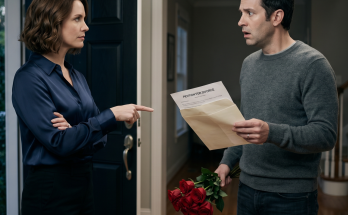
After My Grandparents Died In A Car Crash, Their Attorney Revealed I Was The Only Heir To Their $31 Million Estate. My Family Demanded I Sign It Over — I Refused. That Night, They Threw Me Out. I Moved Into My Grandparents’ Home. The Next Morning, They Showed Up To Force Me Out… But Froze When They Saw Who Was Waiting Inside.
Part 1
I was grading spelling tests with a red marker when my entire life split cleanly into before and after.
It was a Wednesday afternoon in late October, the kind of Tennessee afternoon that came in gold through the classroom windows and made every dust speck look important. My first graders were bent over handwriting worksheets, their little tongues poking out in concentration. The room smelled like dry erase markers, pencil shavings, and the apple cinnamon candle my co-teacher kept unlit on her desk because the district would not let us burn it, but she swore the smell still made everyone calmer.
I sat cross-legged on the reading rug with a stack of papers in my lap. Lily had written “becuz” four different ways. Mateo had turned every lowercase “b” into something that looked like a golf club. I was smiling at the crooked confidence of it all when my phone buzzed in the pocket of my cardigan.
Unknown number.
I almost ignored it. Teachers learn to ignore their own lives between 7:30 and 3:15. But something about the timing, or maybe the way the screen lit up against the red marker in my hand, made my stomach drop.
I stepped into the hallway and answered quietly.
“Is this Marigold Elaine Calloway?”
No one called me that except my grandmother, usually when I had eaten cookie dough from her mixing bowl after she told me not to.
“This is Marigold,” I said.
The man on the line introduced himself as Gerald Fitch, an attorney in Knoxville. His voice was slow and careful, like someone crossing a frozen pond.
“I’m very sorry,” he said. “There’s been an accident on Route 17.”
For a second, I heard everything too clearly. The squeak of sneakers in the classroom. The hum of the fluorescent lights. A child laughing somewhere down the hall. Then he said my grandparents’ names.
Chester and Lorraine Calloway.
Gone.
I did not fall dramatically. I did not scream. I stared at the blue paper butterfly taped to the leg of my desk, one of the ones my students had made during our insect unit. One wing was folded wrong. There was too much glue on its body. I remember thinking I should fix it before it dried that way forever.
Then Mrs. Alvarez, my co-teacher, put a hand on my shoulder, and I realized Gerald Fitch was still speaking.
He told me there would be arrangements. He told me not to drive if I felt unsafe. He told me he would call again.
I nodded as if he could see me.
After I hung up, I walked back into my classroom and looked at my twenty-two first graders. They kept working because children do not know when the world has ended unless you tell them. A boy near the window was sounding out “pumpkin” under his breath. Someone dropped a pencil. The clock clicked toward dismissal.
I wanted my grandmother’s kitchen. I wanted my grandfather’s rough hand closing around mine. I wanted the porch swing that squeaked every third rock, the smell of coffee, the chipped yellow mug my grandfather refused to throw away.
Instead, I stood in a hallway outside Room 104 with my phone in my hand and understood I had just become unmoored.
My principal drove me home after school. I sat in the passenger seat holding my teacher bag on my lap, gripping the straps like they could keep me in my body. She said things people say when there are no useful words. I thanked her because I was raised to be polite even when I was breaking.
At my apartment, I found three missed calls from my mother.
That should have comforted me. It didn’t.
My mother, Patrice Calloway, did not call me three times unless she needed something arranged, corrected, or hidden. The last voicemail was only seven seconds long.
“Marigold, call me immediately. Your father and I are dealing with a lot.”
Not “Are you okay?”
Not “I’m sorry.”
Not even “We lost them.”
We.
I sat on my couch, still wearing my school shoes, and let that word settle in the room like smoke.
Then my phone buzzed again. A text from my brother Brandon appeared.
Heard about Nana and Pop. Mom says you need to not make this harder.
I read it twice, waiting for grief to show itself somewhere between the words.
It didn’t.
Outside my window, a leaf scraped along the sidewalk with a dry, papery sound. My whole apartment suddenly felt smaller than it had that morning. The thrift-store lamp. The stack of library books. The unpaid electric bill under a magnet shaped like a strawberry.
I thought the worst thing that day would be losing my grandparents.
I had no idea that by the end of the week, I would learn they had left me something my family would try to tear out of my hands.
And when I saw what they had hidden for me, I finally understood they had been preparing for war.
### Part 2
Before I tell you about the will, you need to understand the family I came from.
From the outside, we looked polished enough to be printed on a Christmas card. My parents lived in a brick house outside Nashville with white columns, trimmed hedges, and seasonal wreaths my mother changed with the discipline of a military officer. In October, the porch had tasteful pumpkins, never the lumpy kind children pick, only smooth white ones from the expensive nursery. In December, our lights were warm white because my mother said colored lights looked “chaotic.”
My father, Douglas Calloway, sold commercial real estate and wore success like cologne. His shoes were always shined. His watch always caught the light. He could make a stranger feel important for exactly as long as it benefited him.
My mother, Patrice, chaired committees. Beautification. Fundraising. Women’s leadership brunches. Charity luncheons where nobody seemed to know the names of the people being helped. She had a soft voice in public and a sharp one at home, and I learned early that the softer she sounded, the more dangerous she was.
Then there was Brandon.
My brother was two years older and born knowing where to stand in a room. He played golf with my father by twelve, shook hands with adults by fourteen, and learned to repeat opinions before he had any of his own. My parents adored him with the open relief of people who had received the child they ordered.
I was the extra.
That was never said directly when I was little. It lived in pauses. In family photos where Brandon stood between them and I stood slightly to the side. In dinners where my father asked Brandon about his tournament scores while I waited with news about the science fair until my mashed potatoes went cold. In the way my mother said, “Marigold is sensitive,” when what she meant was inconvenient.
I liked books, storms, stray cats, and asking why people said one thing when they clearly meant another. My mother considered curiosity a social liability. My father considered kindness a weakness unless it could be photographed.
The only place I could breathe was my grandparents’ house outside Knoxville.
Chester and Lorraine Calloway lived in a small, crooked house in the foothills, with creaking floors and a porch that smelled like rain after a storm. Their mailbox leaned forever to the left. My grandmother grew tomatoes along the back fence and basil in chipped coffee cans. My grandfather had a workshop behind the garage where everything had a place and every place had a story.
They had built Calloway Freight Solutions from one borrowed truck and a route nobody wanted. My grandfather slept in rest areas to save motel money. My grandmother kept the books at the kitchen table after working double shifts at a diner. They turned grit into a company, then turned that company into something people trusted.
My father hated that part.
Not the money, of course. He loved the money. He loved the checks my grandparents wrote when his deals went bad. He loved the quiet bailouts, the loans nobody mentioned, the down payment on the house with white columns.
But he hated where it came from.
At holidays, he made little comments. “Still driving that old truck, Dad?” “You know, Mom, they sell new dish towels now.” “This neighborhood sure has character.”
My grandmother would smile as if she had not heard the insult. My grandfather would butter a roll and ask me about school.
On Sundays, when I got old enough to drive, I started visiting them by myself. Every week, I left my apartment in Murfreesboro and drove east with gas-station coffee in the cup holder and my teacher bag in the backseat. I would arrive around four. Nana would be pulling biscuits from the oven, and Pop would be pretending he had not already eaten two.
They asked real questions.
Not “Are you seeing anyone yet?” Not “When are you getting a better job?” Not “Did you hear Brandon got promoted?”
They asked about my students. They remembered their names. My grandmother prayed for a little boy named Owen after I told her he had cried because he could not read like the others yet. My grandfather bought a case of glue sticks when I mentioned my classroom supply closet was empty.
When I told my parents I wanted to be a teacher, my mother set down her fork like I had announced a disease.
“You have options, Marigold.”
My father did not look up from his steak.
“We’re not paying for that.”
My grandparents did. Without hesitation. My grandmother sent me a card my first week of college. Her handwriting looped across the paper like ribbon.
The world needs more people who show up for children. You are going to be wonderful.
I kept that card in my wallet for years, folded soft at the corners.
So when my grandparents died, I was not just grieving relatives. I was grieving the only two people who had ever made me feel chosen.
The funeral proved exactly why they had chosen carefully.
My mother wore a black hat with a veil and accepted condolences like she was hosting a receiving line at a gala. My father delivered a eulogy that sounded less like love and more like a business biography. Brandon stood near the casket with red eyes he had not earned, checking his phone whenever he thought no one was looking.
I stood in the back pew, my hands clenched around a tissue that had gone damp and useless.
That was when I noticed something strange.
Gerald Fitch, the attorney who had called me, was standing near the side door. He was not watching the casket. He was watching my parents.
And when my father placed a hand on my grandmother’s closed casket and bowed his head for show, Gerald’s face hardened like he had just seen a man step onto a stage wearing a stolen costume.
I did not know it then, but my grandparents’ last gift to me was not money.
It was evidence.
### Part 3
Two weeks after the funeral, we were called to Gerald Fitch’s office in downtown Knoxville.
The building overlooked the Tennessee River, which moved gray and slow beneath a sky the color of wet cotton. Gerald’s office was on the fourth floor. Everything inside was quiet in the expensive way, all dark wood, leather chairs, and framed black-and-white photographs of bridges and courthouse steps.
My father sat like a man waiting for a meeting he expected to control. He kept one ankle on his knee and tapped two fingers against his polished shoe. My mother wore a plum-colored dress and matching nails, her face arranged into solemn dignity. Brandon had driven in from Nashville and looked annoyed that grief had traffic.
I sat at the end of the conference table with my hands wrapped around a paper cup of coffee I did not want. The lid smelled faintly of cardboard and burnt beans. My stomach was empty, but I knew if I ate anything, it would come right back up.
Gerald entered with a folder, a laptop, and the composed expression of a man carrying a storm.
“I appreciate everyone coming,” he said.
My father gave him the smile he used on clients. “Let’s make this as efficient as possible.”
Gerald did not smile back.
He read through the standard language first. Dates. Names. Formalities. My mind drifted in and out. I stared at a photograph on the wall of fog lifting over the river and tried not to imagine my grandmother’s hands, always warm, always smelling faintly of flour or lavender soap.
Then Gerald turned a page.
“The entirety of the estate, including all shares of Calloway Freight Solutions, the property at 4412 Ridgeline Road, personal effects, and all liquid and investment accounts valued at approximately thirty-one million dollars, is bequeathed to one person.”
My father’s fingers stopped tapping.
Gerald looked at me.
“Marigold Elaine Calloway.”
The room did not go quiet.
It emptied.
I heard my pulse in my ears. My mother blinked once, twice, as if she had misunderstood English. Brandon let out a short laugh that sounded like a cough.
My father leaned forward slowly.
“Run that back.”
Gerald slid a copy of the document across the table. “The will is clear.”
My mother’s mouth opened, but nothing came out at first. Then her face changed. Grief drained away and something bare took its place.
“This is absurd.”
Gerald folded his hands. “Chester and Lorraine were both of sound mind.”
“They were old,” my mother snapped. “Old people get confused. Especially when someone is in their ear every single Sunday.”
Every eye turned to me.
I felt heat rise up my neck. I wanted to defend myself, but the accusation was so ugly, so quickly spoken, that all I could do was stare at her.
My father’s voice became very controlled. “Are you suggesting my parents left everything to a first-grade teacher and nothing to their own son?”
“I am not suggesting anything,” Gerald said. “I am reading their legal instructions.”
Brandon pushed his chair back. “This is insane. She can barely pay rent.”
The words hit harder than I expected. Not because they were new, but because he said them with such disgust, as if my ordinary life had been a crime I had committed in public.
Gerald opened his laptop.
“Chester and Lorraine anticipated questions. They recorded a message.”
My mother went still.
That was my first clue that she had expected a fight, but not this one.
The video filled the screen. My grandparents sat on their couch, the one with faded blue flowers and a cushion that always dipped on the left. My grandfather wore his brown cardigan. My grandmother had curled her hair and pinned her pearl brooch to her blouse.
For one wild second, I forgot they were gone.
My grandfather cleared his throat.
“Well,” he said, “if you’re seeing this, I guess Lorraine and I finally managed to leave a room without cleaning it first.”
My grandmother elbowed him gently. “Chester.”
I laughed, but it broke into a sob.
Then my grandmother looked directly into the camera.
“We made this choice with clear minds and full hearts. We have loved our family as best we could. But love and trust are not the same thing.”
My father’s face flushed.
My grandfather continued. “Douglas, Patrice, Brandon. We saw more than you thought we saw. We saw how money changed hands in this family. We saw who came around when they needed something and who came around when there was nothing to gain.”
My grandmother’s voice softened.
“And we saw Marigold. She showed up. Not for inheritance. Not for attention. She came because she loved us. She listened. She remembered. She carries the part of this family we most wanted to leave behind.”
My grandfather reached for her hand.
“So she will be the keeper of what we built.”
The video ended.
For two seconds, no one moved.
Then my father stood so fast his chair scraped the floor with a sound that made my teeth ache.
“This will not stand.”
My mother was crying now, but not like she had cried at the funeral. These tears were sharp, furious, offended. Brandon stared at me as if I had crawled across the table and stolen the breath from his lungs.
Gerald quietly closed the laptop.
“There is more,” he said.
My father froze.
I looked at Gerald, confused.
He did not open another folder yet. He only glanced once at my parents, and in that glance, I saw something terrifying.
The will was not the weapon.
It was the warning shot.
### Part 4
Gerald did not show us “more” that day.
He said there would be a private meeting with me once the initial documents were acknowledged. My father objected. My mother called it inappropriate. Brandon muttered something about manipulation. Gerald listened to all of it with the patient exhaustion of a man who had expected every word.
Then he said, “The meeting is with my client’s sole beneficiary. That is not up for debate.”
My father’s jaw tightened.
Outside the office, my family surrounded me before I could reach the elevator. The hallway smelled like lemon polish and old carpet. A secretary down the hall lowered her eyes and pretended to sort envelopes.
My mother grabbed my wrist.
“Do not embarrass us,” she whispered.
I looked down at her hand. Her nails pressed half-moons into my skin.
“I didn’t do anything.”
“That is exactly the problem,” my father said. His voice was low enough that only we could hear it. “You sat there and let that man humiliate your mother.”
Brandon laughed under his breath. “Unbelievable.”
The elevator doors opened with a soft ding. A man in a gray suit stepped out, saw us, and immediately decided to wait for the next one.
My father leaned closer.
“You will come to the house tonight. Seven o’clock. We will fix this privately.”
There was no invitation in his voice. Only command.
I should have said no.
But grief makes fools of people who were trained to hope. Some part of me still believed they might calm down. Some part of me thought maybe my mother would hug me in the kitchen when nobody was watching and say she was sorry. Maybe my father would admit shock had made him cruel. Maybe Brandon would remember that we had once built blanket forts and eaten cereal out of mixing bowls.
At seven, I pulled into their driveway.
The house looked the same as always. Porch lights glowing. Boxwoods trimmed. The brass door knocker polished bright enough to reflect my tired face back at me. Inside, the air smelled like furniture wax and my mother’s expensive perfume.
They were waiting in the living room.
Not grieving.
Waiting.
A folder sat on the coffee table.
My father gestured for me to sit. I remained standing.
“We’ve consulted someone,” he said.
“Someone?”
“A private estate advisor,” my mother said. “A very respected one.”
Brandon leaned against the mantel, arms crossed. “You should be grateful we moved fast.”
My father opened the folder and pushed papers toward me.
The language was dense, but certain phrases jumped out.
Administrative control.
Managed distribution.
Fiduciary appointment.
Family preservation.
My father tapped the signature line.
“You will sign temporary control to me. I’ll manage the estate and company. You’ll receive a generous allocation.”
“How generous?” I asked, because my voice needed something to do.
“Fifteen percent,” Brandon said.
I stared at him.
He shrugged. “Honestly, that’s more than you’d ever make teaching.”
My mother stepped closer, softening her face into the expression she used when other people were watching. No one else was watching, but habit is a powerful thing.
“Marigold, you are a sweet girl, but you are not equipped for this. You cannot run a multi-million-dollar company. You cannot manage investments. You cannot understand the kind of responsibility your grandparents dropped on you.”
Dropped.
As if my grandparents had been careless.
As if I were a mess on the floor.
I looked at the signature line. My name was already typed beneath it.
“How long have you had these drawn up?”
The room shifted.
Just slightly.
My father’s eyes flicked to my mother. Brandon looked away.
There it was. A clue so small I almost missed it.
They had not arranged this after the will reading. There had not been enough time.
They had expected something.
Maybe not everything. But something.
My father recovered first. “That is irrelevant.”
“It feels relevant.”
His face darkened. “You are making a mistake.”
“I’m asking a question.”
“You are acting like a child.”
My mother sighed. “This is what we mean. You get emotional and suspicious. This is why you need guidance.”
I thought of my grandmother’s video. The way she had said love and trust were not the same thing. I thought of every Sunday dinner. Every biscuit. Every tomato plant tied carefully to a stake.
“No,” I said.
The word surprised even me.
My father went still.
“What did you say?”
“No. I’m not signing.”
Brandon shoved off the mantel. “Are you kidding me?”
My mother’s face collapsed into outrage. “After everything we have done for you?”
That almost made me laugh. It came out as a breath.
“What have you done for me?”
The room froze.
My father stepped around the coffee table.
“You walk out of this house without signing, and you are done. No holidays. No calls. No family. You will be dead to us.”
My hands were shaking, but my voice was not.
“I think I already was.”
I picked up my purse and walked out.
No one followed me to apologize.
No one called my name.
By the time I reached my apartment, my phone had three messages and one email. The email was formal, cold, and sent from a property management company I had never heard of.
Crestview Property Holdings LLC.
Termination of lease.
Effective immediately.
I read it twice before I understood.
Then I found the ownership records online and saw my father’s name buried behind the company structure like a snake under leaves.
He had owned my apartment building the entire time.
And now, because I had refused to hand over my grandparents’ fortune, he had made me homeless by midnight.
### Part 5
Packing your life in four hours teaches you what your life really is.
Mine was not the furniture. The couch came from a yard sale and had a permanent dip in the middle. The table wobbled unless you folded a napkin under one leg. The bookshelf was too heavy to move and too cheap to survive being moved anyway.
My life was letters.
A shoebox full of cards from my grandmother. A stack of notes my students had written in crooked pencil. A recipe card for biscuits, stained with butter at the edges. The quilt my grandmother made when I started college, sewn from scraps of her old house dresses, my grandfather’s flannel shirts, and one square of orange fabric from my childhood Halloween costume.
I packed those first.
Then clothes. Toiletries. My laptop. The framed class photo from my first year teaching. A coffee mug that said First Grade Teachers Have Class.
At 11:37, I carried the last box down the stairs. The night smelled like wet asphalt and dead leaves. My neighbor, Mrs. Henry, watched from behind her curtains, her silhouette small and still.
My father stood on the sidewalk beside his car.
Of course he did.
He wore a dark coat over a dress shirt, like he had come from dinner rather than from ruining his daughter’s life. His face was calm. That made it worse.
“This can stop tonight,” he said.
I shifted the box against my hip. The cardboard edge dug into my wrist.
“Move.”
“Don’t be dramatic.”
I laughed then. Not because anything was funny, but because drama was apparently what people called pain when they had caused it.
He looked toward my old apartment window.
“You were always like this. Difficult. Emotional. Making everything harder than it needed to be.”
I should have kept walking.
But something in me was raw and stupid with hurt.
“Why do you hate me so much?”
His expression barely changed.
That was how I knew the answer had always been ready.
“You were an accident,” he said.
The box slipped slightly in my arms.
He continued, almost conversational. “Your mother and I were happy. We had plans. Brandon was enough. Then you came along and complicated everything. Your grandparents spoiled you because they felt sorry for you. Don’t confuse pity with love.”
There are sentences that do not just hurt you. They rearrange the furniture inside you.
For a moment, I was six again, standing at the edge of a family photo while my mother fixed Brandon’s collar. I was twelve, holding a report card full of A’s while my father watched golf. I was twenty-one, calling home to say I made the dean’s list and hearing my mother say she had guests.
Then I was thirty-one, standing under a flickering parking lot light with my grandmother’s quilt in a box, looking at a man who had finally said the quiet part out loud.
“You’re wrong,” I said.
His mouth twitched. “Am I?”
I got in my car.
I drove toward Knoxville with everything I could save packed around me. The road unspooled black and silver beneath my headlights. I cried so hard outside Cookeville that I had to pull into a gas station and sit between a diesel pump and an ice machine until I could see again.
At 2:18 in the morning, I unlocked my grandparents’ house.
The air inside was cold and familiar. Coffee. Wood smoke. Lemon oil. My grandmother’s lavender sachets tucked into drawers. The silence pressed against me, enormous and waiting.
I carried the quilt inside and sat at the kitchen table.
Their kitchen still had the rooster clock over the sink. My grandfather’s reading glasses lay beside the newspaper from the morning before the accident. A grocery list in my grandmother’s handwriting was stuck to the fridge.
Milk. Flour. Batteries. Call Marigold.
That undid me.
I folded over the table and sobbed until my ribs hurt.
I do not know when I fell asleep. I woke to morning light striping the floor and someone knocking gently at the back door.
Gerald Fitch stood on the porch holding two coffees and a white bakery bag.
“I tried your phone all night,” he said. “When you didn’t answer, I figured you came where you belonged.”
I let him in.
He placed the coffee in front of me, then looked at the boxes stacked near the hallway.
“They moved faster than I expected,” he said.
I stared at him.
“You expected this?”
Gerald’s face softened, but his eyes did not.
“Your grandparents did.”
He opened his leather briefcase and removed a thick folder bound with a red rubber band. Then another. Then a small black flash drive.
My stomach tightened.
“What is all that?”
Gerald sat across from me at my grandparents’ kitchen table, under the rooster clock, and said the sentence that turned my grief into something sharper.
“Chester and Lorraine asked me to give you the truth only after your family showed you who they were.”
### Part 6
The first folder was labeled Douglas.
My grandmother had written the name in blue ink, neat and looping, as if she were labeling a jar of peach preserves instead of a record of betrayal.
Gerald did not push it toward me immediately. He rested his hand on top of it.
“Once you read these, you cannot unread them.”
Outside, a crow called from the pecan tree. The sound cut through the kitchen like a rusty hinge.
“I already can’t unhear what my father said.”
Gerald nodded once and slid the folder across the table.
Inside were copies of checks. Loan agreements. Emails. Handwritten notes. A timeline printed in careful columns.
My father had borrowed from my grandparents for years.
Not small amounts. Not emergencies. Hundreds of thousands. A failed development deal in Franklin. A private school donation he had promised publicly before he had the money. A commercial property “bridge loan” he never repaid. Credit lines my grandfather had quietly guaranteed.
Beside one entry, my grandmother had written: Douglas said this was the last time. Chester did not believe him. I wanted to.
That sentence hurt worse than the numbers.
The second folder was labeled Patrice.
This one was thinner, but uglier.
Screenshots of messages. Receipts. Jewelry appraisals. Notes about items that had gone missing after family visits. A silver tea service. My grandmother’s garnet brooch for three months, then returned after Nana asked directly. A set of pearl earrings “borrowed” and never mentioned again.
“My grandmother knew?”
“She suspected,” Gerald said. “Then she confirmed.”
He opened the laptop and inserted the flash drive.
The screen showed the hallway of my grandparents’ house, filmed from an angle high near the ceiling. I recognized the bookshelf, the braided rug, the little table with the brass lamp.
The timestamp was two days after the funeral.
My parents entered the house using the spare key under the loose brick by the side porch.
I stopped breathing.
My mother did not wander. She did not look around with grief. She walked straight to the hallway bookshelf, slid aside a row of Reader’s Digest condensed books, pressed something behind them, and removed a false-backed panel.
I had never known that panel existed.
Behind it sat a small fireproof lockbox.
My mother opened it with a key from her purse.
Gerald paused the video.
“I’m sorry,” he said.
“Keep going.”
My mother removed jewelry. My grandmother’s pearl earrings. The garnet brooch she wore every Christmas. A gold locket that had belonged to my great-grandmother. She wrapped them in a scarf and placed them in her handbag.
My father stood at the window with his arms crossed.
Watching.
Not stopping her.
Not grieving.
Watching.
I felt strangely calm. So calm it scared me.
“How did they know?”
“Your grandfather installed cameras four years ago. Quietly. After money went missing from his desk during Thanksgiving weekend.”
“Thanksgiving,” I whispered.
That year, Brandon had announced he was thinking of buying into a new investment group. My father had praised his ambition. My grandmother had dropped a serving spoon in the kitchen and seemed distracted for the rest of the night.
I had thought she was tired.
Gerald closed that video and opened another file.
“This is not only about inheritance. Chester was worried your father might try to challenge the will on mental competency.”
He showed me medical evaluations, all recent. Letters from doctors. A statement from their pastor. An affidavit from Dolores Hensley, my grandmother’s best friend of forty years. Another from Warren Pike, my grandfather’s business partner. Another from a former sheriff’s deputy who lived down the road.
My grandparents had built a fortress.
And then they had handed me the keys.
But there was one more folder Gerald had not opened.
It sat at the edge of the table, thinner than the others, tied with white string.
The label read Marigold.
My name in my grandmother’s handwriting made my throat tighten.
“What’s in that one?”
Gerald’s expression changed.
“That one is personal.”
I untied the string.
Inside was an envelope, a stack of photographs, and a small brass key taped to an index card.
On the card, my grandfather had written:
Annie girl, when the house gets too loud, go where it gets quiet.
Annie girl.
Only he called me that.
My hands shook as I lifted the key.
Gerald looked toward the hallway.
“Do you know about the cellar room?”
I frowned.
“There’s no cellar room.”
Gerald stood.
“There is.”
He led me to the pantry. The shelves smelled like flour, cinnamon, and old wood. He reached behind a row of canned tomatoes and pressed his thumb against a knot in the wall paneling.
Something clicked.
A narrow door opened inward into darkness.
Cold air breathed up from below, carrying the smell of dust, paper, and earth.
I stood at the top of hidden stairs I had passed a thousand times without seeing.
And somewhere beneath my grandparents’ kitchen, something had been waiting for me.
### Part 7
The stairs were narrow and steep, lit by one bare bulb that flickered when Gerald pulled the chain.
The cellar room was not large. Maybe ten feet by twelve. The walls were stone. The floor was sealed concrete. Metal shelves lined one side, stacked with plastic bins, old ledgers, and banker’s boxes labeled in my grandfather’s blocky handwriting.
At the center of the room sat a wooden desk.
On it was my grandmother’s blue ceramic lamp, a tape recorder, and a sealed envelope.
For Marigold, when she is ready.
I stood there with my arms wrapped around myself, listening to the hum of the bulb overhead.
“Your grandparents used this room for business records during the early years,” Gerald said quietly. “Later, they used it for things they wanted protected.”
I walked to the desk.
The envelope was thick. My name curved across it in my grandmother’s handwriting. I opened it carefully, afraid of tearing something that had outlived her.
The letter inside was four pages.
My dearest Marigold,
If you are reading this, then we are gone, and I hate that we cannot sit you down with coffee and tell you all of this ourselves.
I had to stop after the first sentence.
Gerald turned toward the shelves, giving me privacy without leaving me alone.
I read slowly.
They told me they had changed the will not out of anger, but out of recognition. They had watched the family for years. They had hoped my father would soften. They had hoped my mother would stop measuring love by usefulness. They had hoped Brandon would become his own man instead of my father’s echo.
Hope, my grandmother wrote, can be holy. It can also make you stupid if you use it to ignore the truth.
I almost laughed through my tears because that sounded exactly like her.
Then the letter changed.
There are things we did not tell you because you were a child, and then because you were trying to build a peaceful life. Your father’s resentment of you began long before you could have earned it. That is his burden, not yours. Do not pick it up for him.
My vision blurred.
My grandfather had added a paragraph in his uneven handwriting.
Annie girl, listen to me. A person can call himself family and still be a thief. A person can share your blood and still not know your worth. Don’t hand good tools to people who only know how to break things.
On the last page, they explained the brass key.
It opened a locked cabinet at the back of the cellar.
Inside were original company records, personal journals, and signed statements. Not to punish my family, they wrote, but to protect me if punishment became necessary.
Punishment became necessary faster than any of us expected.
By noon, people began arriving.
Gerald had made calls. Or maybe my grandparents had arranged those calls years before. I was never entirely sure.
Dolores Hensley came first, carrying a casserole dish covered in foil and wearing red lipstick like armor. She was seventy-six, barely five feet tall, and had the energy of a woman who would fight a bear if it insulted her friend.
She hugged me so hard my ribs complained.
“Lorraine said you’d need feeding and witnesses,” she said. “I brought both.”
Behind her came Hector Alvarez, who had worked in my grandfather’s fleet garage for twenty-two years. He had oil permanently worked into the lines of his hands and a face that looked carved from weathered oak.
Then Warren Pike arrived in a gray pickup, carrying three boxes of financial records and the kind of quiet fury that made loud anger look childish.
By three o’clock, my grandparents’ kitchen table was full.
Not with relatives.
With people who had shown up.
Dolores laid out a second journal my grandmother had given her for safekeeping. Hector described overhearing my father call my grandfather “a stingy old man waiting to die” after Pop refused another loan. Warren produced company documents showing my father had tried, twice, to pressure minority shareholders into supporting a restructuring that would have given him influence over Calloway Freight.
Each piece was a match.
Together, they became a fire.
Then a woman in a navy blazer stepped through the back door without knocking.
Gerald stood immediately.
“Judge Beaumont.”
She waved him down. “Retired, technically. But only technically.”
Sandra Beaumont had grown up down the road from my grandparents. I remembered her vaguely from Sunday dinners years earlier. She had sharp eyes, silver hair, and a leather briefcase that looked older than I was.
She looked at me, not with pity, but with assessment.
“Chester called in every favor I owed him before he died,” she said. “I intend to repay them.”
I swallowed. “What happens now?”
Judge Beaumont set her briefcase on the table.
“Now we let your family make one more mistake.”
As if summoned by the sentence, tires crunched on the gravel outside.
Through the kitchen window, I saw my father’s black car pull into the driveway.
Then Brandon’s truck behind it.
My mother got out holding her purse like a weapon.
They thought they were coming to find me alone.
Instead, they were about to walk into a room full of people my grandparents had trusted more than their own son.
And for the first time in my life, I did not move away from the door.
### Part 8
My father entered without knocking.
That told me everything. He still believed every room in this family belonged to him.
He stopped two steps inside the kitchen when he saw the table.
Dolores sat with her casserole untouched in front of her. Hector leaned against the counter, arms crossed. Warren stood near the sink with a folder in one hand. Gerald was beside the refrigerator, calm as a closed gate. Judge Beaumont sat at the head of the table, reading glasses low on her nose.
My mother came in behind my father and froze.
Brandon nearly bumped into her.
For once, none of them knew where to stand.
My father recovered first because men like him always confuse recovery with performance. He gave a short laugh.
“What is this? An intervention?”
Dolores looked him up and down. “If it is, you’re late.”
My mother’s eyes snapped to me. “Marigold, this is humiliating.”
I stood near the pantry door, my grandmother’s letter folded in my cardigan pocket.
“No,” I said. “This is clarifying.”
Brandon rolled his eyes. “You’ve got to be kidding me.”
My father pointed at Gerald. “You had no right to gather these people.”
Gerald’s voice remained even. “I gathered no one who had not already been authorized by Chester and Lorraine to participate if necessary.”
“If necessary?” My father barked a laugh. “She turned this family against itself.”
Judge Beaumont removed her glasses.
“Douglas, I have known your family since you were seventeen years old and already lying about things too small to matter. Choose your next words carefully.”
The air changed.
My father’s face flushed dark.
My mother stepped forward, tears gathering with impressive speed.
“Marigold, sweetheart, this has gone too far. We were upset. Everyone was upset. Your father should not have sent that lease notice so quickly.”
“So quickly?” I asked.
She blinked.
“Not wrongly?” I said. “Just quickly?”
Her tears stopped moving.
Gerald opened his laptop and turned it toward them.
The hallway security footage began to play.
At first, my mother did not understand what she was seeing. Then she did.
Her hand flew to her throat.
On screen, she walked into my grandparents’ house two days after the funeral. On screen, she went to the bookshelf. On screen, she opened the hidden compartment and removed the jewelry.
Brandon’s mouth fell open.
Not in horror, exactly.
In calculation.
My father spoke first. “Turn that off.”
Gerald did not.
My mother’s voice came out thin. “Lorraine told me I could have those.”
“No, she didn’t,” Dolores said.
My mother looked at her with pure hatred. “You don’t know that.”
Dolores reached into her purse and withdrew a folded piece of paper.
“I know because Lorraine wrote me two days before she died. She said if anything went missing after the funeral, I should look straight at you and ask whether plum nail polish comes off pearls.”
My mother’s nails were still plum.
The room went silent.
Warren placed a document on the table and slid it toward my father.
“While we’re discussing missing things,” he said, “this is the two-hundred-forty-thousand-dollar loan Chester guaranteed for you five years ago. You represented to your partners that it was satisfied. It wasn’t.”
My father’s eyes sharpened.
That was not embarrassment.
That was fear.
Judge Beaumont noticed too.
“There it is,” she said softly.
My father snatched the paper. “This is business.”
“No,” Warren said. “This is fraud if you used false financial statements in a partnership disclosure.”
My brother stepped back half an inch.
It was the first honest thing he had done all day.
My father turned on me then, because cornered people bite whatever looks softest.
“You think these people care about you? They care about the money. That’s all anyone has ever cared about with your grandparents.”
Hector’s voice rumbled from the counter.
“Chester paid my wife’s medical bills when I was too proud to ask. He never told a soul. Lorraine brought groceries to my sister for six months after her husband died. Warren’s boy got a scholarship Chester funded anonymously. You want to talk about what people cared about?”
My father looked away.
For one second, just one, I saw him without polish. Not powerful. Not elegant. Just small.
I stepped forward.
“You didn’t come here to protect me,” I said. “You came because you were afraid I would become someone you couldn’t control.”
My mother whispered, “Marigold.”
I turned to her.
“You let him make me homeless.”
Her face twisted. “You forced our hand.”
“No. I refused to sign away what wasn’t yours. That is not the same thing.”
Brandon slammed his palm on the table. “You don’t deserve it!”
The sound cracked through the kitchen.
There he was. The golden son, finally honest.
I looked at him and felt something inside me detach.
“Maybe not,” I said. “But Nana and Pop thought I did. And they knew all of us better than we wanted to be known.”
My father grabbed my mother’s arm.
“We’re leaving.”
Judge Beaumont stood.
“One more thing, Douglas.”
He paused.
“If you contest this will, every document in this room becomes discoverable. Every loan. Every recording. Every statement. Every theft.”
My mother flinched at the word theft.
Judge Beaumont continued. “You may still choose to do that. But you should understand the difference between losing quietly and being exposed publicly.”
My father’s hand tightened around my mother’s arm.
He looked at me, and for the first time in my life, he looked uncertain.
Then he smiled.
It was not a good smile.
“You think this is over because you have old people and paperwork?”
My stomach tightened.
He leaned closer, voice low enough to feel private even in a crowded room.
“You have no idea how ugly I can make your life.”
Then he walked out.
The door slammed behind them.
For a second, nobody spoke.
Then Gerald’s phone buzzed on the table.
He looked at the screen, and the color drained from his face.
“What?” I asked.
He turned the phone toward me.
An email had arrived from my father’s attorney.
They were filing an emergency petition by morning, claiming I had manipulated two elderly people into changing their will.
And attached to it was a statement from someone I never expected to betray me.
### Part 9
The statement was from my aunt Celia.
My father’s younger sister had always hovered at the edge of family events like cigarette smoke, present but never fully acknowledged. She lived outside Chattanooga, sold homemade candles online, and called my grandmother every December to cry about money before posting beach photos in January.
I had not seen her at the funeral until she appeared at the graveside wearing oversized sunglasses and leaning dramatically on her third husband.
Now she had signed a statement saying I had isolated my grandparents.
I read the sentence four times.
Marigold used frequent visits to influence Chester and Lorraine against their immediate family.
My hands went cold.
Dolores made a sound low in her throat. “That lying little possum.”
Judge Beaumont took the phone from Gerald and scanned the attachment.
“This is sloppy,” she said. “But sloppy can still make a mess.”
The next week became a blur of legal filings, phone calls, and rage so hot it felt almost clean.
My father petitioned for temporary control of the estate, claiming I lacked the capacity to manage complex assets and had exerted undue influence over my grandparents. My mother submitted a statement about my “emotional instability.” Brandon described me as “resentful of family success.” Aunt Celia claimed my grandparents had become “confused and dependent.”
They painted my Sundays as a scheme.
Every biscuit I helped roll. Every weed I pulled from my grandmother’s garden. Every hour I spent listening to my grandfather tell the same story about his first truck became evidence of manipulation.
The cruelty of it stunned me.
Not because I still believed they loved me well, but because I had not understood how easily they could turn love itself into a weapon.
Gerald prepared me for depositions. He sat with me in my grandparents’ living room while rain ticked against the windows and taught me to answer only what was asked.
“Do not defend your whole life,” he said. “They will try to make you.”
That advice saved me.
My father’s attorney was a narrow man named Calvin Root who wore rimless glasses and smiled like he had practiced in front of a mirror. He asked why I visited every Sunday. He asked whether I discussed my parents with my grandparents. He asked whether I had ever complained about money.
“Did you resent your brother?” he asked.
“No.”
“Did you envy his success?”
“No.”
“Did you believe your parents treated him better?”
I looked at my father across the conference table. He watched me with a flat expression.
“Yes,” I said.
Calvin Root leaned forward. “So you admit there was family tension.”
I thought of Gerald’s advice.
“Yes.”
“And you used that tension to gain sympathy from Chester and Lorraine?”
“No.”
“Yet you visited them far more than anyone else.”
“Yes.”
“Why?”
The room waited.
I could have said because I loved them. It would have been true, but it would have sounded soft, easy to twist.
Instead, I said, “Because they invited me.”
Gerald’s pen paused over his notebook.
My father’s mouth tightened.
Calvin Root tried another angle.
“Were you aware of the size of their estate?”
“No.”
“Never?”
“No.”
“You expect us to believe you spent years visiting the owners of a major logistics company and never asked what they were worth?”
“Yes.”
“Why wouldn’t you ask?”
“Because they were people, not bank accounts.”
For the first time all day, Calvin Root looked irritated.
The red herring came from Aunt Celia.
She produced a voicemail from my grandmother. In it, Nana sounded tired and said, “Marigold is coming again Sunday. She worries about us too much sometimes.”
My father’s team acted like they had uncovered a confession.
But Dolores, bless that woman forever, remembered the week.
“That was when Lorraine had pneumonia,” she said. “Marigold wanted to bring soup. Lorraine didn’t want anyone fussing. That’s all.”
Gerald subpoenaed phone records. Text messages. Medical notes. My grandmother’s calendar.
There it was in blue ink.
Marigold bringing soup. Tell her no hovering.
For the first time, I understood what my grandparents had done by saving everything. They had not been paranoid. They had been realistic.
Then Warren called late one Friday.
“I need you at the office Monday,” he said.
“Which office?”
“Calloway Freight. Main building.”
My stomach tightened. “Why?”
There was a pause on the line.
“Because your father came by today.”
I stood in my grandparents’ kitchen, barefoot on cold linoleum.
“What did he do?”
Warren exhaled.
“He told three senior managers you were selling the company and firing half the staff.”
I gripped the phone.
“I’m not.”
“I know that,” Warren said. “They don’t.”
On Monday morning, I drove to Calloway Freight Solutions for the first time not as Chester’s granddaughter, not as the teacher who stopped by with cookies, but as the person who legally owned it.
The building sat near the interstate, broad and practical, with rows of trucks lined behind chain-link fencing. Diesel hung in the air. Tires hissed on wet pavement. Somewhere, a backup alarm beeped steadily.
People watched me as I walked in.
Drivers. Dispatchers. Mechanics. Office staff.
Some faces were curious. Some were cold. Some were afraid.
My father had planted a match in dry grass.
And as I reached the conference room, I saw Brandon standing inside through the glass wall, laughing with two men I did not recognize.
My brother had no job there.
No reason to be there.
But he was holding a folder with the Calloway Freight logo on it.
And when he saw me, he smiled like he had already taken something I had not known was vulnerable.
### Part 10
The conference room smelled like burnt coffee, printer toner, and rain-damp wool coats.
Brandon stood at the front as if he belonged there. Beside him were two men in suits I had never seen, both with the polished blankness of consultants who could say “efficiency” while gutting a place.
Warren was already seated, his face carved into stone.
Twenty or so employees filled the room. Dispatchers with travel mugs. Mechanics in navy shirts. A payroll woman named Denise who had hugged my grandmother at the funeral. A driver I recognized only as Big Sam because Pop had once joked he could parallel park a tornado.
Brandon clapped his hands once.
“Well, here she is.”
The room turned.
I felt every eye land on my cardigan, my sensible shoes, my teacher bag still in my hand because I had come straight from school planning meetings. I looked exactly like what my father wanted them to see.
Unprepared.
Small.
Temporary.
One of the suited men smiled. “Ms. Calloway, we were just discussing transition opportunities.”
I looked at Warren.
His jaw flexed.
“What transition opportunities?”
Brandon lifted the folder. “Don’t play dumb, Mari.”
I hated that nickname. He knew that.
He continued. “Dad’s trying to save you from making beginner mistakes. There are buyers interested. Serious buyers. You get a clean payout, everyone gets professional management, and we avoid emotional decision-making.”
Murmurs moved through the room.
There it was. My father’s strategy.
If he could not take the estate directly, he would make everyone believe I was unstable enough to destroy what my grandparents built. Then he would present himself as the adult in the room.
My heart pounded so hard I could feel it in my wrists.
I wanted to explain. To defend. To tell them I was not selling, not firing anyone, not the spoiled granddaughter my family was painting.
Then I remembered Gerald’s words.
Do not defend your whole life.
I set my teacher bag on the table.
“Who invited you, Brandon?”
He blinked. “Excuse me?”
“You do not work here. You are not legal counsel. You are not part of company leadership. Who invited you?”
The room went very still.
One consultant cleared his throat. “We were contacted by Douglas Calloway.”
“Douglas Calloway does not own Calloway Freight Solutions.”
Brandon’s face hardened. “This is family business.”
“No,” Warren said, standing. “It is company business. And you are trespassing.”
A low sound moved through the room. Surprise. Approval. Maybe both.
Brandon pointed at me. “She doesn’t know the first thing about this company.”
“That’s true,” I said.
Everyone looked at me.
I forced myself not to shrink.
“I don’t know enough yet. That’s why I’m not selling it, restructuring it, or pretending I can run operations better than the people who have kept it alive for decades.”
The room shifted.
I looked at the employees one by one.
“My grandparents left me ownership. They did not leave me arrogance. Warren will remain president of operations. No layoffs are planned. No sale is planned. No outside consultants have been authorized.”
The suited men began gathering their folders.
Brandon laughed, but it was thin now. “You rehearsed that?”
“No. I learned it from Pop.”
That landed.
I saw Denise blink hard.
Big Sam lowered his coffee cup.
I continued. “My grandfather told me a leader who doesn’t understand the work has no business making decisions about the workers. So I’m going to learn. From you. If you’re willing.”
Silence.
Then Hector, who had slipped in through the side door without me noticing, said, “Start in the garage. Six a.m. tomorrow. Wear shoes you don’t like.”
A few people laughed.
The tension cracked just enough for air to enter.
Brandon saw it happen. His face flushed.
“You all really think she cares about you?” he snapped. “She’s a schoolteacher playing heiress.”
Denise stood.
“She remembered my husband’s name after meeting him once. Your grandfather employed me sixteen years, and your daddy never learned my name at all.”
Brandon had no comeback for that.
The consultants left first. Then Brandon, but not before leaning close as he passed me.
“You’re going to regret embarrassing me.”
I looked straight ahead.
“I’m getting used to being threatened.”
He left.
By the end of that week, I had ridden in a dispatch van, sat with payroll, watched Hector rebuild a transmission, and learned that logistics was less about trucks than promises. A shipment arrived or it did not. A driver got home for his kid’s birthday or he did not. A company told the truth or it did not.
Simple, but not easy.
Meanwhile, my father’s court petition moved forward.
The hearing was set for early December.
The morning before it, I found a manila envelope on my grandparents’ porch. No postage. No return address.
Inside was a single photograph.
My father and Brandon were sitting in a restaurant booth with Calvin Root, their attorney.
Beside them sat a woman I recognized from my school district office.
Her name was Elaine Porter.
She handled teacher conduct complaints.
On the back of the photo, someone had written:
They are not stopping at the will.
My phone rang before I could breathe.
It was my principal.
“Marigold,” she said carefully, “we need you to come in before school tomorrow. There’s been a complaint.”
### Part 11
The complaint said I had accepted expensive gifts from a student’s family.
It was a lie so clumsy I almost admired the desperation.
Almost.
According to the report, an anonymous parent claimed I had used my classroom position to solicit money and personal favors, creating “ethical concerns” in light of my “recent financial circumstances.” The phrasing was too polished for a parent. Too legal. Too much like Calvin Root.
I sat across from my principal, Ms. Harrow, while morning announcements crackled through the intercom. The office smelled like coffee, copier paper, and the peppermint lotion our secretary kept by the sign-in sheet.
Ms. Harrow looked exhausted.
“I don’t believe this,” she said before I could speak.
That almost broke me.
After weeks of my family treating me like a criminal, simple trust felt like water after drought.
“But we have to document it,” she continued. “The district requires a review.”
Elaine Porter from district HR joined by video. Her face appeared on the conference screen, smooth and professional, the same face from the photograph on my porch. She did not know I had seen it.
“Ms. Calloway,” she said, “given the size of the inheritance involved, there are concerns about boundaries.”
I stared at her.
“My inheritance has nothing to do with my students.”
“Perception matters.”
There it was. My mother’s favorite religion.
Perception.
Ms. Harrow’s jaw tightened. “We’ll provide classroom records. Marigold keeps meticulous supply logs.”
I did. Teachers document everything because someday someone will ask why you bought crayons in September.
Elaine Porter smiled faintly. “That will be helpful.”
But I could see the trap.
If I stayed silent, the complaint would hang over me. If I fought too loudly, my family would call me unstable. If I resigned, they would use it in court as proof I could not handle pressure.
That afternoon, I sat in my empty classroom after dismissal, listening to the custodian’s cart rattle down the hall. The tiny chairs were stacked on desks. Construction paper pumpkins hung from the windows. Someone had left a mitten in the reading corner.
I pressed my hands flat on a table meant for six-year-olds and wanted my grandmother so badly I felt hollow.
Then I noticed something on my desk.
A folded note in purple crayon.
Ms. C, you are the best teecher. You help me when words are mean.
It was from Owen, the little boy my grandmother used to pray for.
Words are mean.
Yes, they were.
But they were not always stronger than records.
Gerald filed a response to the school complaint with the same precision he used in probate court. Ms. Harrow produced supply receipts, donation forms, and emails showing that every classroom contribution went through official channels. A parent named Mrs. Bell came forward furious because her name had been used in the anonymous report without her knowledge.
“I never complained about Marigold,” she told the district. “She bought my son shoes last winter and made sure nobody knew it was her.”
That created a different problem.
I had helped quietly, outside school funds, because I could not stand seeing a child’s toes through worn-out sneakers. I thought I had been careful. I had given the money to Ms. Harrow, who arranged it through the family support closet.
Elaine Porter tried to twist that too.
But Ms. Harrow was ready.
“The purchase was anonymous, approved, and documented,” she said. “If compassion is misconduct, we have larger issues.”
The complaint collapsed within forty-eight hours.
Elaine Porter resigned from the review after Gerald sent the photograph of her meeting with my father’s attorney.
She claimed it had been “informational.”
Judge Beaumont called it “stupid.”
The probate hearing came three days later.
The courthouse smelled like old wood, winter coats, and metal detectors. My father arrived in a navy suit with my mother on his arm. Brandon walked behind them, face tight. Aunt Celia fluttered near the doorway, wearing too much perfume and a scarf patterned with gold chains.
Gerald sat beside me.
“You ready?” he asked.
“No.”
“Good. Ready people get careless.”
The hearing room was smaller than I expected. Less dramatic. Fluorescent lights. Scratched tables. A judge with silver eyebrows and no patience for theater.
Calvin Root began by painting me as a lonely granddaughter who had exploited access. He spoke of my modest income, my resentment, my “unusual attachment” to my grandparents.
Unusual attachment.
As if showing up was suspicious.
Then Gerald stood.
He did not shout. He did not perform. He built a wall one brick at a time.
Medical evaluations. Affidavits. The video message. Phone records showing my grandparents called me as often as I called them. Calendars. Emails. My grandmother’s journals. Witnesses.
Dolores testified that my grandmother was “sharp enough to skin a lie before breakfast.”
The judge told her to answer only the question.
She said, “That was my answer.”
Hector testified. Warren testified. Their pastor testified. My grandparents’ doctor testified.
Then Gerald played the security footage.
My mother’s theft appeared on a courthouse screen in unforgiving clarity.
My father closed his eyes.
Not from shame.
From strategy failing.
Calvin Root objected. The judge overruled him.
By the end, the petition looked exactly like what it was: greed wearing concern as a mask.
The judge denied emergency control. He affirmed the will’s validity pending final probate and warned my father’s side against further harassment.
It should have felt like victory.
Instead, as we left the courtroom, my mother caught my arm in the hallway.
Her fingers trembled.
“For once in your life,” she whispered, “think about what this will do to your father.”
I looked at her hand on my sleeve.
Then at her face.
Not once had she asked what he had done to me.
Before I could answer, a courthouse clerk stepped into the hallway holding another envelope.
“Ms. Calloway?”
I took it.
Inside was a copy of a civil filing.
My father had just sued me personally for repayment of every dollar my grandparents had ever spent on my education.
And attached to the filing was a handwritten note from him.
You wanted to be independent. Pay your own debts.
### Part 12
The lawsuit was ridiculous.
Gerald said that immediately.
“These were gifts,” he told me, standing in my grandparents’ kitchen with snow beginning to dust the porch rail outside. “Documented gifts. Tuition payments made directly by Chester and Lorraine. Your father has no standing.”
That should have comforted me.
It didn’t.
Because the point was not to win. The point was to exhaust me. To make every memory expensive. To drag my grandparents’ love into court and put a price tag on it.
My father wanted me to associate my education with debt, my Sundays with manipulation, my grief with legal fees.
For one night, it worked.
I sat on the floor of my grandparents’ bedroom, surrounded by boxes I had not been brave enough to unpack. My grandmother’s robe still hung behind the door. My grandfather’s slippers were under his side of the bed, toes pointed toward morning.
The house was quiet except for the tick of the old radiator.
I pressed my face into the quilt and felt very young.
Then my phone buzzed.
A text from Brandon.
Still time to fix this. Give Dad control and we all drop everything.
I stared at the words.
We all.
As if they were a unit and I was the weather.
I typed nothing back.
Instead, I walked downstairs to the cellar room.
The hidden door clicked open. The cold air met me like a hand on my face. I sat at the wooden desk and turned on my grandmother’s blue lamp. Its light filled the stone room gently, making the boxes look less like evidence and more like a waiting library.
I opened the cabinet with the brass key and found a ledger I had not read before.
It was not financial.
It was a list.
Names. Dates. Notes.
Hector Alvarez — emergency loan after tornado damage. Repaid in full, refused interest. Good man.
Denise Carter — husband laid off, Christmas fund delivered anonymously.
Marigold — tuition, books, rent help senior year. Never tell Douglas. He will make it ugly.
My breath caught.
There were pages of these entries.
Not charity for applause. Not leverage. A private record of kindness, kept not to collect repayment but to remember responsibility.
On the last page, my grandfather had written:
Money is a tool. Tools reveal the hand that holds them.
I sat in that cellar until dawn.
By morning, I knew what to do.
We did not only respond to my father’s lawsuit. We countered.
Gerald filed for sanctions. Warren reported the undisclosed loan issue to the appropriate business partners. My mother received a formal demand for return of stolen property. Elaine Porter’s meeting with Calvin Root became part of a harassment record. Aunt Celia withdrew her statement after Gerald subpoenaed communications between her and my father.
Her email was short.
I’m sorry. Douglas promised to pay off my credit cards.
I was not surprised.
That sadness felt old now.
The final probate hearing happened in January, after the kind of cold rain that makes courthouse steps shine black. My father’s side looked smaller this time. My mother wore gray and no hat. Brandon kept checking his phone. Calvin Root had lost the mirror-smile.
The judge finalized the estate.
All shares. All property. All accounts.
Mine.
But that word felt wrong even as he said it.
Mine.
What my grandparents had left was never meant to sit in my hands.
After the hearing, my father waited near the courthouse doors.
For a moment, he looked older. Not humble. Just worn. My mother stood beside him with red eyes. Brandon was already halfway down the steps, making a call.
My father said, “You’ve made your point.”
I waited.
He looked irritated that I did not rush to fill the silence.
“We can discuss terms.”
I almost laughed.
“Terms?”
“For moving forward.”
The rain tapped against the courthouse awning. A car hissed along the street. Somewhere nearby, someone’s brakes squealed.
My mother stepped closer. “Family shouldn’t end like this.”
That was the closest she came to apology.
Family shouldn’t end like this.
Not “We shouldn’t have hurt you.”
Not “Your father was cruel.”
Not “I’m sorry I stole from a dead woman’s house.”
I looked at them, these two people I had spent my entire childhood trying to become worthy of, and felt grief rise one last time. Not fresh grief. Final grief.
“The family ended when you made my love for Nana and Pop into a crime,” I said.
My mother flinched.
My father’s face hardened. “You’ll regret being alone.”
I shook my head.
“I was alone at your dinner table for thirty-one years.”
Neither of them answered.
I walked away without forgiving them.
I did not do it for drama. I did it because forgiveness had become another thing they expected me to provide so they would not have to change.
Behind me, my mother called my name once.
I kept walking.
The rain smelled like pavement and winter.
Gerald held the car door open for me at the curb, but before I got in, my phone rang.
It was Warren.
His voice was rough with emotion.
“You need to come to the freight office.”
My stomach dropped. “What happened?”
He was quiet for one beat.
“Your grandfather left instructions for one more thing. We just found the envelope.”
### Part 13
The envelope was in my grandfather’s old office, taped beneath the bottom drawer of his desk.
No one had found it because no one had thought to remove the drawer completely. Hector discovered it while fixing a jammed runner. He called Warren. Warren called me.
By the time I arrived, the freight office was glowing under late-afternoon light. Trucks rolled through the yard beyond the window. Diesel rumbled. A dispatcher laughed somewhere down the hall. The place felt alive in a way money never could.
Warren handed me the envelope.
My grandfather had written:
For after the dust settles.
Inside were two things.
A letter and a draft plan for the Chester and Lorraine Calloway Community Fund.
I read the plan first because I was afraid of the letter.
The fund was specific, practical, and completely them.
Scholarships for first-generation college students in rural East Tennessee. Emergency classroom grants for teachers who were buying supplies with grocery money. After-school art and music programs in counties where the arts had been cut. A driver family assistance fund for employees facing sudden hardship. A small annual grant for community gardens because my grandmother believed tomatoes could save a neighborhood if people would stop acting too important to kneel in dirt.
Warren watched my face.
“He worked on that for two years,” he said. “Lorraine edited every page.”
My hands shook as I opened the letter.
Annie girl,
If you are reading this, then you made it through the worst of them.
I smiled through tears.
Not because everything was healed. Because Pop had known exactly how to say hello from the other side.
He wrote that he did not care if I ran the company myself, sold pieces of it responsibly, or let better-qualified people handle operations. He cared that I understood what the company was for. It was not a monument. It was not a throne. It was a machine built by human hands, and its first duty was not to make powerful people feel powerful.
Its duty was to keep promises.
He wrote:
Your grandmother says I am getting preachy. She is right. Listen to her more than me. But remember this. Wealth will make some people call you lucky and others call you selfish. Let them talk. The only question worth asking is whether the tool did good work in your hand.
That spring, I funded the foundation with eight million dollars.
Not all of it. Not recklessly. Gerald and Warren made sure the structure was sound. I learned words I had never needed before: endowment, governance, distribution policy, restricted grants. I sat in meetings where people spoke in percentages until my eyes crossed, then went back to my classroom and tied shoelaces, opened applesauce cups, and reminded six-year-olds not to lick glue.
I kept teaching.
People expected me to quit. My father had built a whole argument around the idea that being a teacher made me unqualified for wealth. But teaching had made me exactly the kind of person my grandparents trusted. It taught me to listen before acting. To notice who was hungry. To understand that small things become big things when ignored long enough.
My students did not care that I had inherited money.
They cared that I remembered library day.
Calloway Freight stayed intact. Warren continued running operations. Hector finally accepted a promotion he had refused twice under my grandfather because he did not want to “sit in an office and get soft.” Denise designed an employee emergency fund application so respectful it made me cry. Big Sam became the unofficial face of a driver mentorship program and pretended he hated the attention.
My parents did not disappear quietly.
People like them rarely do.
My father’s business partners learned about the undisclosed loan. The fallout was not cinematic. No one was dragged away in handcuffs. But doors closed. Calls went unanswered. Invitations stopped arriving. His name became something people lowered their voices around.
My mother returned the jewelry through her attorney. Not with a note. Not with apology. The pearls came wrapped in tissue paper, the garnet brooch in a plastic evidence bag, the gold locket scratched near the hinge.
I had the locket repaired and placed it in the foundation office beside a photograph of my grandmother kneeling in her tomato garden.
Brandon sent one final email.
You got what you wanted. Hope it was worth losing your family.
I replied with one sentence.
I did not lose my family. I found out who they were.
Then I blocked him.
That summer, the first scholarship recipients came to the house for Sunday dinner.
There were seven of them. Nervous, bright-eyed, overdressed for fried chicken and biscuits. One girl named Kayla brought her little brother because she was babysitting and apologized three times until Dolores put him to work setting napkins. A boy named Marcus stood in my grandfather’s workshop for twenty minutes staring at the tools and said he had never been in a place where things looked used and loved at the same time.
The tomato plants were heavy with fruit. The porch swing still squeaked every third rock. The kitchen smelled like coffee, butter, basil, and warm bread.
At the table sat Dolores, Hector, Warren and his wife, Gerald, Ms. Harrow, two teachers from my school, three drivers, seven scholarship students, one little brother, and me.
No one performed.
No one measured anyone’s worth by what they could extract.
We talked too loudly. We argued about Tennessee football. Someone spilled tea. Someone laughed with their mouth full. The little brother fell asleep on the couch under my grandmother’s quilt.
For the first time since the accident, I looked around and felt something settle.
This was inheritance.
Not the accounts. Not the shares. Not the number people whispered like it explained anything.
Inheritance was the way Dolores used my grandmother’s biscuit cutter without asking because love had made her family. It was Hector teaching Marcus how to hold a wrench properly. It was Kayla crying quietly when Gerald told her the foundation would cover her books too. It was the empty chair at the head of the table that no one sat in, not because we were frozen in grief, but because some spaces stay sacred.
Later that night, after everyone left, I washed dishes alone.
The window over the sink reflected my face back at me. Tired. Older than I had been in October. But not small.
The phone rang.
Unknown number.
For one second, my body remembered the hallway outside my classroom, Gerald’s careful voice, the blue paper butterfly.
I let it ring twice.
Then I answered.
It was my mother.
She did not say hello. She cried first. Quietly. Maybe really. Maybe not. I no longer trusted myself to sort her tears into categories.
“Marigold,” she said, “your father and I have been thinking.”
I looked out at the dark garden, where lightning bugs blinked over my grandmother’s tomatoes.
She continued. “We made mistakes.”
Mistakes.
Such a small word for eviction notices, stolen jewelry, court petitions, lies, and a childhood spent starving beside a full table.
“We want to come Sunday,” she said. “We want to start over.”
I closed my eyes.
Once, that sentence would have dragged me across any distance. I would have cleaned the house, cooked the meal, worn the right dress, softened my voice, made myself smaller so they could enter without bending.
But love that arrives only after power is gone is not love.
It is hunger changing strategies.
“No,” I said.
The silence on the line was vast.
My mother inhaled sharply. “You don’t mean that.”
“I do.”
“We’re your parents.”
“You were supposed to be.”
She began to cry harder then. Maybe because I had hurt her. Maybe because I had finally stopped being useful. Maybe because somewhere inside her, behind all that polish and performance, there was a woman who understood too late what she had thrown away.
I felt sad for her.
But sadness is not a door.
“I hope you become better people,” I said. “But you won’t become them at my table.”
Then I hung up.
My hands shook afterward. Freedom is not always clean. Sometimes it leaves you standing in a kitchen at midnight, grieving people who are still alive.
But when I turned around, I saw my grandmother’s recipe card drying beside the sink. I saw my grandfather’s jacket hanging by the back door. I saw the long table with crumbs still scattered across it from people who had chosen to stay.
I was not alone.
I had never been less alone in my life.
The next Sunday, I set out plates for the people who showed up with honest hands and hungry hearts. I made biscuits from scratch. I burned the first batch because I was laughing at something Hector said from the porch. The second batch came out golden.
Before dinner, I walked to the garden and picked the ripest tomato I could find.
It was warm from the sun, red and heavy in my palm.
I thought of my grandparents on their faded blue couch, leaving me a fortune, yes, but also leaving me a map. Not toward revenge. Not even toward victory.
Toward a life where no one had to earn their seat by bleeding for it.
My parents never sat at my table again.
That was the clearest ending I could give myself.
And every Sunday after, when the house filled with coffee, laughter, diesel stories, school gossip, and the sweet green smell of tomato vines through the open window, I understood what my grandparents had known all along.
The people who truly love you do not wait until you inherit millions to see your worth.
They saw it when you had nothing but a red marker, a tired heart, and a habit of showing up.
THE END!