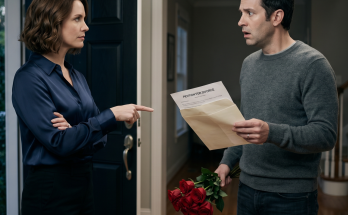
“Your Refrigerator Is A War Crime, Sweetheart.” My Mother-In-Law Used Her Own Key To Walk Into My Home Whenever She Wanted, Urging She Brought, But The Day Came When I Finally Made Her Regret Every Single Step She Took Across My Doorway.
Part 1
“You really should get curtains in here. Anyone walking by can see straight into your home.”
It was 7:52 in the morning.
I remember the exact time because my coffee maker had just beeped, and the little green numbers on the stove were glowing at me through a smear of steam. I had one hand around a mug, my hair still damp from the shower, and my son’s cereal bowl sitting empty on the counter because he was still asleep upstairs.
My mother-in-law stood in my living room wearing a camel-colored coat, black gloves, and the expression of a woman inspecting a house before making a low offer.
She hadn’t knocked.
She never knocked.
The front door lock had made its small metallic click, then the hush of weather slipping in, then her heels crossing my hardwood floor like she belonged there more than I did.
My name is Autumn Briggs. I had been married to Daniel for four years, and for most of those four years, his mother, Lorraine Briggs, treated my home like a badly managed branch of her own life.
She had a key.
Not because I gave her one.
Daniel did.
He gave it to her during our first year of marriage after I locked myself out once while carrying groceries and our then-baby son’s diaper bag. I had been grateful for about six minutes. Then Lorraine used that key the first time without calling, and I realized gratitude can turn into dread faster than milk turns sour in July.
That morning, she stood by the front window, moving her gaze from the glass to the couch to the basket of folded blankets beside the fireplace.
“You heard me, right?” she said.
“I heard you.”
“You and Daniel are too casual about privacy.”
My mouth tasted like coffee and toothpaste. Outside, a delivery truck groaned past the curb. A neighbor’s dog barked twice and stopped. Everything in the house felt too bright, too exposed, as if her words had actually peeled the walls open.
“Lorraine,” I said, setting my mug down carefully, “it’s before eight.”
“Oh, I know. I was already in the neighborhood.”
She said it like that explained something.
She turned and smiled at me, but it was the kind of smile people use when they want credit for not saying something worse.
“Your porch light was still on,” she added. “And there’s a pile of shoes by the door. You really should get a small bench with storage. It would look more intentional.”
Intentional.
That was one of her favorite words.
She liked homes to look intentional. Children to be raised intentionally. Meals to be planned intentionally. Women, especially daughters-in-law, to accept correction intentionally and gratefully.
I took a breath through my nose. Her perfume floated through the room, powdery lavender with something sharp under it, like lemon cleaner. I had come to hate that smell because it arrived before trouble and lingered after she left.
“Did Daniel know you were coming?” I asked.
“He’s my son, Autumn. I don’t need an appointment to care about his family.”
There it was. The little trapdoor in every conversation.
His family.
Not my home. Not our son. His family.
I glanced toward the staircase. Mason was still asleep, one sock usually kicked off under his blanket, cheeks pink, mouth open. He was three, soft-hearted and loud and obsessed with fire trucks. He loved his grandmother because children love the people who bring stickers and blueberry muffins and clap too hard when they finish puzzles.
He did not know she had once commented that his speech was “a little behind” after hearing him mispronounce “spaghetti.”
He did not know she had asked Daniel whether I was “letting him run wild” because I allowed him to wear mismatched pajamas to bed.
He did not know that every time she stepped into our house, something inside me tightened like a wire.
“I’m going to wake Mason in a few minutes,” I said. “This isn’t a good time.”
Lorraine looked genuinely surprised, as if the concept of my time having edges had never occurred to her.
“I won’t stay long. I brought banana bread.”
She lifted a foil-wrapped loaf from her tote bag and placed it on the counter. The gesture should have been kind. Four years earlier, I would have thought it was kind.
Back then, she brought lasagna in glass dishes and chicken soup in jars with white lids. She wrote little notes that said Made with love in looping blue ink. I told Daniel his mother was sweet. He kissed my forehead and said, “She’s a lot, but she means well.”
I had not yet learned that “she means well” is sometimes just a prettier way to say, “Please tolerate this because I don’t want to deal with it.”
Lorraine removed her gloves finger by finger.
“Do you have a minute?” she asked.
“No,” I said.
It came out sharper than I meant it to.
Her eyes changed. Just a flicker. The warmth disappeared first. Then the surprise. What remained was calculation.
“Well,” she said softly, “I can see you’re having one of those mornings.”
One of those mornings.
As if my irritation were a symptom. As if her walking into my house without permission were just weather, and I was unreasonable for noticing the rain.
Before I could answer, Mason called from upstairs.
“Mommy?”
His little voice loosened something in me and broke something else at the same time.
Lorraine smiled toward the stairs.
“I’ll get him.”
“No,” I said.
This time my voice was low and clear.
She froze with one hand on the newel post.
“I’ll get my son.”
For two seconds, the house held its breath.
Then she stepped back. Slowly. Politely. Like I had embarrassed both of us by making a scene, even though I had barely moved.
I passed her on the stairs and felt her perfume cling to my sweater.
When I reached Mason’s room, he was sitting in bed with his dinosaur blanket twisted around his legs. Morning light spilled over his toys, gold and dusty. He reached for me, warm and heavy, and I held him longer than usual.
From downstairs came the soft clink of Lorraine opening a cabinet.
Not asking. Opening.
That was when I understood something I had been trying not to know.
The key was not just a key. It was permission Daniel had given her to enter every part of my life.
And one day soon, I was going to have to decide whether I wanted my peace badly enough to take it back.
### Part 2
The strange thing about being invaded slowly is that you keep explaining it to yourself in small, harmless words.
She’s just helping.
She’s just old-fashioned.
She’s just lonely.
She’s just Daniel’s mother.
For a while, I used those words too.
Lorraine’s first corrections had been wrapped in foil, served with garlic bread, and delivered with a smile. When Mason was a baby, she would appear with casseroles and clean onesies, kissing his little bald head and telling me to rest.
I was exhausted then. The kind of exhausted where your bones feel filled with wet sand. I let her fold laundry. I let her wash bottles. I let her hold Mason while I showered.
I thought closeness was being built.
I did not understand that she was taking inventory.
The first time she rearranged my living room, I laughed.
I had gone outside to pull weeds from the flower bed while Mason toddled after bubbles on the patio. When I came back in, the throw pillows had been switched, the blanket basket moved beside the couch, and a framed photo from our wedding placed more prominently on the mantel.
“You have such nice things,” Lorraine said, wiping invisible dust from the frame. “They just need a little guidance.”
A little guidance.
I repeated the phrase to Daniel that night while we brushed our teeth.
“She moved things around again,” I said.
He spat toothpaste into the sink. “She’s always been like that.”
“That doesn’t make it okay.”
He kissed my shoulder. “I’ll mention it.”
He did not mention it.
Or if he did, nothing changed.
Instead, Lorraine changed tactics. She stopped correcting me directly and started passing concerns through Daniel like notes under a locked door.
“Mom said Mason looked cold today.”
“Mom wondered if you’re giving him too many packaged snacks.”
“Mom said she noticed you seemed tired.”
“Mom asked if work is overwhelming you.”
Each sentence began with Mom said, Mom wondered, Mom noticed, Mom asked.
After a while, I began to dread Daniel coming home.
Not because I didn’t love him. I did.
He was gentle in many ways. He rubbed my feet when deadlines kept me at my desk until midnight. He sang old country songs off-key while making pancakes. He carried Mason on his shoulders through the grocery store and let him pick the cereal with the cartoon tiger even when I rolled my eyes.
But when it came to Lorraine, he had a blind spot the size of a highway.
One Thursday, I found my spice cabinet completely reorganized. Not improved. Not alphabetized. Reorganized according to a logic only Lorraine understood.
Cumin beside cinnamon. Garlic powder behind baking soda. Paprika missing entirely.
I was making chili, rain beating against the kitchen window, Mason sitting on the floor banging wooden blocks together, when I opened the cabinet and just stared.
Daniel came home to me standing on a chair, pulling everything out.
“What happened?” he asked.
“Your mother happened.”
His shoulders dropped.
That tiny drop. I saw it every time. The weariness before I had even finished speaking.
“She was probably trying to help.”
“She was in my cabinets.”
“Our cabinets.”
I turned around so fast the chair wobbled.
“What?”
He held up a hand. “I just mean it’s our house.”
“Yes,” I said. “Ours. Not hers.”
He looked away.
That was the beginning of a silence between us that did not look like silence from the outside. We still made dinner. We still watched shows. We still discussed bills and preschool applications and whether the dryer was making a weird noise.
But beneath all of it, something had started to rot.
Lorraine came by on Tuesdays most often. I noticed because Tuesday was trash day, and she liked to comment on what was in the recycling bin.
“Lots of takeout containers this week,” she said once, standing in my kitchen with one eyebrow raised.
“I had three deadlines.”
“I’m sure.”
Two words. That was all. I’m sure.
She could put a whole courtroom inside two words.
Then there was the bathroom.
I was upstairs changing Mason’s sheets when I heard a cabinet click shut in the hall bathroom. I stepped into the hallway and found Lorraine emerging with a polite smile.
“Looking for extra hand soap,” she said.
“There’s soap on the sink.”
“I meant unopened.”
Later, I found the cabinet rearranged. First-aid supplies moved. Cotton balls transferred into a glass jar I did not own. A half-empty bottle of children’s vitamins pushed to the front like an accusation.
That night Daniel asked, carefully, “Are you feeling okay?”
I looked up from my laptop. “Why?”
“You just seem stressed.”
The room was dim except for the blue glow of my screen. Mason’s baby monitor hummed softly on the side table.
“Did your mother say that?”
He hesitated.
That hesitation told me everything.
“She worries,” he said.
“She snoops.”
“Autumn.”
“No. Don’t say my name like I’m being unreasonable.”
He rubbed his face. “Can we not do this tonight?”
We didn’t.
That was another way she won. By making the conversation so exhausting that peace felt like surrender, and surrender felt like maturity.
The next clue came on a cold Monday in February.
Daniel was in Denver for work. Mason had spilled orange juice on the rug that morning, I had a client call at noon, and the dishwasher smelled faintly like melted plastic because a tiny blue cup lid had fallen onto the heating element.
It was an ordinary bad day.
At 8:14 that night, Daniel called from his hotel.
“Did you get the dishwasher sorted out?” he asked.
I paused with one hand inside the laundry basket.
“What?”
“The dishwasher. Mom said there was a smell.”
My skin went cold before my mind caught up.
“Your mom was here?”
“She dropped off muffins.”
“She didn’t tell me.”
“She said you were working.”
“She came into my house while I was on a call?”
Silence.
Then Daniel said, “She has a key.”
Not as an apology.
As an explanation.
I looked at the dark kitchen window and saw my own reflection staring back at me, pale and stunned.
That night, when Daniel’s phone buzzed on the nightstand after he came home, I glanced down without meaning to.
Lorraine’s name lit up the screen.
Under it was a photo preview.
My kitchen counter.
My unopened mail.
My son’s backpack on the floor.
And a message that began, Just wanted you to see…
### Part 3
I did not pick up Daniel’s phone right away.
I sat on the edge of the bed in the blue darkness and stared at it like it was something alive. Daniel was in the shower. Water rushed behind the bathroom door. Steam curled into the bedroom carrying the smell of his cedar body wash.
The phone buzzed again.
Lorraine Briggs: I don’t want to interfere, but you need to know what things look like when you’re gone.
My heart did something strange. It did not speed up. It slowed. Each beat landed heavy, deliberate, like a fist against a locked door.
I picked up the phone.
Daniel’s passcode was Mason’s birthday. It always had been. A tiny domestic fact that used to feel sweet.
The message thread opened.
At first, my brain refused to organize what I was seeing. Photos. So many photos. My kitchen sink with two bowls in it. A laundry basket beside the stairs. Mason’s shoes scattered by the back door. A stack of library books on the coffee table. A grocery bag I had not unpacked yet because Mason had needed help in the bathroom.
Each photo had a little comment beneath it.
Tuesday, 10:12 a.m. Mail still unopened.
Thursday, 3:44 p.m. He was watching TV again.
Sunday, 1:05 p.m. She seemed irritated when I arrived.
The word she burned worse than my name would have.
She.
As if I were a case file.
As if I were not the woman making lunches, wiping counters, remembering which pajamas did not itch Mason’s ankles, paying the electric bill, and waking at 2:00 a.m. when he coughed.
I scrolled upward.
Three months. Then four. Then more.
Lorraine had been sending Daniel photographs of our home for nearly a year.
Sometimes Daniel answered with a thumbs-up. Sometimes with I’ll talk to her. Sometimes with She’s just overwhelmed.
Overwhelmed.
I nearly laughed. Not because it was funny, but because the alternative was making a sound I would not be able to stop.
The bathroom door opened.
Daniel stepped out with a towel around his waist, hair wet, face relaxed until he saw me holding his phone.
“Autumn?”
I looked up.
There are moments in a marriage when you see a person clearly, not as the husband who made you coffee on Sunday or the father who tucked your son in, but as someone standing on the other side of a line he helped draw.
“How long?” I asked.
His face changed.
Not confused. Not shocked.
Caught.
That was what broke my heart first.
He knew exactly what I meant.
“Autumn, listen—”
“How long has your mother been sending you pictures of my house?”
“Our house.”
I stood.
He flinched.
Good.
“Our house?” I said. “Then why am I the only one being reported on?”
He closed his eyes. “She worries.”
“No. She spies.”
“That’s not fair.”
I held the phone out. “This is fair?”
He took one step toward me, then stopped. His hair dripped onto his shoulder.
“She thinks you’ve been under a lot of pressure.”
“I’m a freelance writer with a toddler. Of course I’m under pressure. That doesn’t make me unfit.”
“I didn’t say that.”
“No, Daniel. You let her say it in pieces.”
He sat down on the bed as if his knees had given out.
I kept scrolling. My thumb moved with the sharp mechanical certainty of someone doing a task because if she stopped, she would fall apart.
Then I found a message from Lorraine that made the room tilt.
If this continues, we may need to keep records. Not for judgment. For Mason.
For Mason.
I read it twice.
Daniel had replied: I don’t think it’s that serious.
Not Stop.
Not Don’t photograph my home.
Not Stay out of my wife’s private life.
Just I don’t think it’s that serious.
I turned the screen toward him.
“What does this mean?”
He looked at it and swallowed.
“She gets dramatic.”
“What does it mean?”
“I don’t know.”
“You didn’t ask?”
He rubbed both hands over his face. “I didn’t want to start a fight with her.”
I stared at him.
Behind us, the monitor crackled. Mason sighed in his sleep. That little sound cut through the room like a thread pulling me back from the edge.
“You didn’t want to start a fight with her,” I said quietly, “so you let her start one with me.”
Daniel’s eyes filled.
I hated that. I hated that his tears still reached me.
“I’m sorry,” he said.
“No,” I said. “You’re embarrassed. That’s different.”
He had no answer.
The next morning, he called Lorraine from the garage. I watched through the kitchen window as he paced in his work shoes, one hand on his hip, the other holding the phone tight to his ear.
I could not hear what he said. I could see his posture, though. Bent forward. Pleading, not commanding.
When he came back inside, he said, “She won’t send photos anymore.”
“That’s it?”
“She said she was just trying to help me understand what was going on.”
“What is going on, Daniel?”
He opened his mouth, closed it, then looked toward Mason, who was lining up toy trucks on the rug.
“Nothing,” he said.
I wanted to believe that nothing was the end of it.
For two weeks, Lorraine did not come by. The house felt strange without her intrusions, like a body waiting for pain that had not arrived yet. I started sleeping a little better. I stopped listening for the lock in the mornings.
Then, on a Sunday afternoon, Daniel came into the kitchen carrying his phone.
“Mom wants to have everyone over here next weekend.”
I was cutting strawberries for Mason. The knife stopped against the board.
“Everyone?”
“Just family. Aunt Cecilia, Mark and Jenna, maybe Mrs. Bell from church. Mom thinks it would be good.”
“Good for who?”
He sighed. “Can we please not assume the worst?”
I looked at the strawberries, their red juice spreading across the white cutting board.
Lorraine had stopped sending photos.
But when Daniel turned away, I saw the last message still open on his screen.
Don’t worry. I know how to handle this gently.
### Part 4
I spent the week before the family dinner cleaning things that were already clean.
That is what shame does when it cannot find a real stain. It invents one.
I wiped the baseboards with a damp cloth until my knees hurt. I scrubbed the inside of the microwave. I reorganized the pantry so the cereal boxes faced forward like soldiers. I bought new hand towels for the guest bathroom, pale blue with stitched edges, and then hated myself for caring.
Every time I set something straight, I heard Lorraine’s voice.
A little more intentional.
Just concerned.
For Mason.
On Friday afternoon, Mason sat on a stool at the kitchen island, kicking his sneakers against the cabinet while I trimmed green beans.
“Grandma coming?” he asked.
“Yes, buddy.”
“She bring muffins?”
“Probably.”
He smiled, and guilt moved through me so sharply I had to put the knife down.
That was the part nobody tells you about boundaries when children are involved. You are not just protecting yourself from someone your child dislikes. You are protecting yourself from someone your child loves. That makes every decision feel like theft.
Daniel came home early Saturday with flowers from the grocery store.
“Peace offering?” I asked.
He leaned against the counter. “I know this isn’t your idea of fun.”
“That’s one way to put it.”
He looked tired. There were faint shadows under his eyes.
“I told Mom no speeches, no weird comments, no checking cabinets.”
I laughed once.
“What?”
“You told her no checking cabinets?”
“I’m trying.”
“I know you are,” I said.
But I didn’t know that. Not really.
Trying can look a lot like managing the victim so the offender does not have to change.
Sunday arrived cold and bright. The kind of winter daylight that makes every fingerprint on glass visible. I cooked from eight in the morning until three in the afternoon. Roast chicken. Mashed potatoes. Green beans with almonds. A salad Lorraine could not accuse of being too heavy. A lemon cake cooling under a glass dome.
At 3:37, Lorraine arrived first.
Of course she did.
She wore a white blouse, pearl earrings, dark slacks, and a soft gray coat. Her hair was sprayed into a smooth helmet. She carried a bakery box tied with red string.
“Autumn,” she said warmly, stepping inside when Daniel opened the door. “Everything smells wonderful.”
“Thank you.”
Her eyes moved past me.
Dining table. Centerpiece. Floor. Shoes by the door. Kitchen island. My face.
Inspection complete.
“The flowers are dramatic,” she said, looking at the vase in the center of the table. “But pretty.”
Daniel stiffened.
I smiled.
“They’re from your son.”
Her mouth tightened, then relaxed.
“How sweet.”
Aunt Cecilia came next, wrapped in a burgundy scarf and carrying a bottle of sparkling cider. She kissed my cheek and whispered, “You’ve done too much, honey.”
Mark and Jenna arrived with their two teenagers, both glued to their phones. Mrs. Bell from Lorraine’s church appeared in a cloud of rose perfume and cold air, calling everyone sweetheart.
By five, my dining room was full.
Forks clinked. Ice cracked in glasses. Mason ran between the living room and dining room with a toy fire truck, making siren noises until Daniel scooped him up and whispered something that made him giggle.
For a little while, I let myself relax.
The chicken was juicy. The potatoes were smooth. Aunt Cecilia asked about my writing and seemed to actually want the answer. Jenna complimented the lemon cake before I had even served it.
Lorraine was quiet.
Too quiet.
She watched more than she spoke. Her hands rested in her lap between bites. She smiled at Mason whenever he looked her way, but her eyes kept returning to me.
At one point, I dropped a spoon.
It hit the floor with a bright metallic sound.
Lorraine bent to pick it up before I could move.
“See?” she said softly, handing it to me. “We all need help sometimes.”
Nobody else seemed to hear.
I did.
After dinner, I began clearing plates. Daniel rose to help, but Lorraine touched his arm.
“Sit,” she said. “Autumn has it.”
The room stilled just slightly.
I stacked plates anyway.
Warm gravy slicked my fingers. The dining room smelled like chicken fat, lemon, and Mrs. Bell’s perfume. My face felt hot, but my hands were steady.
Then Lorraine tapped her water glass with her knife.
Not loudly.
Just enough.
Tink. Tink. Tink.
Conversations died one by one.
Mason looked up from the rug, where he was driving his fire truck over Daniel’s shoe.
Lorraine stood.
“I don’t want to make anyone uncomfortable,” she began.
My stomach dropped so fast I thought I might be sick.
Daniel said, “Mom.”
She lifted one hand gently, almost sadly.
“No, Daniel. I promised I would be careful. And I will be. But sometimes families have to love each other enough to say difficult things.”
Aunt Cecilia looked down at her napkin.
Jenna stopped chewing.
Mrs. Bell’s eyes widened with the hungry concern of someone who had just found herself at the center of a story she would be telling by Tuesday.
Lorraine reached into her purse.
I heard paper slide against paper.
The sound was so small, but every nerve in my body recognized it as danger.
### Part 5
Lorraine placed the photographs on my dining table one by one.
Not tossed. Not scattered.
Placed.
As if she had rehearsed the spacing.
The first was my kitchen counter with mail stacked beside a coffee mug. The second was Mason’s backpack lying open on the floor, one mitten half out of it. The third was a laundry basket near the hallway. The fourth showed our recycling bin full before pickup day. The fifth was my desk, papers spread across it, laptop open, sticky notes everywhere.
Ordinary things.
A lived-in house.
But printed on glossy paper and arranged in front of eleven silent people, they looked criminal.
“I know this may seem intrusive,” Lorraine said, hand pressed to her chest, “but I have been worried for a long time.”
Daniel pushed back his chair.
“Mom, stop.”
“I’m not attacking her,” Lorraine said quickly. “I’m trying to help.”
Her eyes shone. I realized with horror that she could cry on command, or close to it.
She turned to the table.
“When someone is struggling, the people who love her shouldn’t look away. They should step in before things get worse.”
Worse.
The word hung in the air like smoke.
Mason had stopped playing. His little fire truck sat upside down near Daniel’s foot.
I wanted to grab the photos, tear them in half, shout until the windows shook. I wanted to ask Aunt Cecilia if her laundry folded itself. I wanted to ask Mrs. Bell if her counters had never seen mail.
Instead, I looked at Daniel.
His face was pale with anger, but anger at what? At her? At the situation? At me for not making this easier? I could not tell, and that uncertainty sliced deeper than Lorraine’s performance.
Mrs. Bell whispered, “Oh, Lorraine.”
Not Oh, Autumn.
Oh, Lorraine.
The sympathy went to the woman holding the knife because she had wrapped the handle in lace.
Lorraine continued.
“I’ve seen Mason watching screens more than I’m comfortable with. I’ve seen meals that don’t seem balanced. I’ve seen household tasks pile up. And I’ve seen Autumn become increasingly defensive when anyone offers help.”
My cheeks burned.
Aunt Cecilia looked at me then. Her eyes were not cruel. They were confused, maybe embarrassed, maybe sorry. That almost made it worse.
“Autumn,” Lorraine said, softening her voice, “no one here wants to shame you.”
I laughed.
I did not mean to. It slipped out, one short broken sound.
Everyone looked at me.
Lorraine’s face flickered with victory before she hid it.
There. She wanted that. She wanted me sharp, emotional, unstable. She had set the room like a trap and was waiting for me to step exactly where she needed.
I stood.
Daniel reached for my hand, but I moved before he touched me.
“Excuse me,” I said.
My voice sounded far away.
I walked down the hall to the bathroom, closed the door, and locked it.
Then I gripped the sink with both hands.
The mirror showed a woman I recognized and did not recognize. Thirty-two years old. Brown hair pinned badly at the nape of her neck. Small gold hoops in her ears. A red mark on her wrist from carrying hot plates. Eyes bright with fury.
The bathroom smelled like lavender hand soap and bleach. The new blue towel hung perfectly folded beside the sink. I had bought it for people who were now sitting at my table looking at photographs of my laundry.
My throat hurt.
Not from crying. From holding back every word that wanted to become a scream.
I turned on the faucet and let the water run. Its sound filled the small room.
Think, I told myself.
Not feel.
Think.
Lorraine had not done this impulsively. She had printed those photos. Carried them here. Waited until the meal was over. Chosen witnesses. Used words like struggling and worse and step in.
She did not want to embarrass me.
Embarrassment was only the surface.
She wanted a record.
I lifted my head.
That thought landed cleanly, coldly.
A record.
My breathing slowed.
I turned off the faucet, dried my hands, and opened the bathroom door.
When I returned to the dining room, nobody was speaking.
Lorraine stood beside the table like a grieving saint.
I walked to my chair and sat.
Then I looked at the photographs.
“Thank you for sharing your concerns,” I said.
Lorraine blinked.
Daniel turned toward me.
I folded my napkin and set it beside my plate.
“I’ll take them seriously.”
The disappointment in Lorraine’s face was almost invisible, but I saw it. She had expected tears. Defensiveness. A fight. I had given her manners.
The rest of the evening limped toward its end.
Jenna helped me clear dessert plates, whispering, “I’m sorry,” so quietly I almost missed it. Aunt Cecilia hugged me too long at the door. Mrs. Bell avoided my eyes.
Lorraine was the last to leave.
She touched Mason’s hair.
“Grandma loves you,” she said.
He smiled sleepily.
“Love you.”
She looked at me over his head.
There was no softness in her face then. No concern. Only warning.
After the door closed, Daniel stood in the foyer with his hands on his hips.
“I can’t believe she did that,” he said.
I looked at him.
“You can’t?”
He flinched.
“Autumn—”
“No. Not tonight.”
I walked past him into the kitchen.
On the counter, beside the bakery box Lorraine had brought, sat a single photograph she had forgotten to collect.
It was not of my kitchen.
It was of Mason’s bedroom doorway.
And in the corner of the image, reflected faintly in his dark window, was Lorraine herself holding up her phone.
### Part 6
I did not sleep that night.
Daniel tried to talk after Mason went to bed, but words from him felt like towels thrown on a flooded floor. Too late. Too thin. Not enough.
“She crossed a line,” he said.
I stood at the sink rinsing plates that were already clean.
“She crossed a hundred lines, Daniel. You only noticed when she made it public.”
He leaned against the counter, looking wrecked.
“I’m sorry.”
I turned off the water.
The sudden quiet filled the kitchen.
“Sorry for what?”
He opened his mouth.
I watched him search for the correct answer and hated that he had to search.
“For not taking it seriously,” he said.
“That’s a start.”
His jaw tightened.
“I said I’m sorry.”
“I heard you.”
He looked away, wounded, as if my refusal to comfort him were another problem I had caused.
I went upstairs.
At 2:13 a.m., I sat on the floor of our walk-in closet with Daniel’s old laptop balanced on my knees. The house was dark except for the closet light, yellow and humming. A pile of shoes pressed against my hip. Somewhere outside, wind scraped dry leaves across the driveway.
I was not snooping for revenge.
I was looking for the shape of the thing.
That is the only way I can describe it. Lorraine’s dinner speech had shown me the surface, but I needed to know what was underneath.
Daniel’s email was still logged in on the laptop. I searched Lorraine’s name. Too much came up. Recipes. School pickup reminders. Family vacation threads. Then I searched words she had used.
Concerned.
Struggling.
Mason.
Documentation.
The last word opened a door.
There were no direct emails from Lorraine to Daniel with that word. But there was one message from Aunt Cecilia, sent three weeks before the dinner.
Subject: Re: Please don’t involve me in this.
My mouth went dry.
I clicked.
The email was short.
Lorraine, I love you, but you need to slow down. A lawyer is a very serious step. If you’re worried, talk to Daniel and Autumn directly. Do not make this a family matter unless there is real danger.
Below that was a forwarded message.
From Lorraine.
To Aunt Cecilia.
A wall of text, careful and polished, describing “ongoing concerns” about my home, my “emotional volatility,” Mason’s “daily environment,” and the need to understand “what rights a grandparent might have if access became restricted.”
She mentioned photographs.
She mentioned dates.
She mentioned that Daniel “may not be able to see the full picture because he is emotionally attached to his wife.”
I felt my body go numb.
Not cold. Not shaking. Just absent.
The email was not to a lawyer, not yet. It was Lorraine telling Aunt Cecilia she was considering contacting one. Maybe she already had. Maybe not.
But the intention was there, black letters on a white screen.
She had not embarrassed me at dinner because she was worried.
She had staged evidence.
I forwarded the email to myself.
Then I sat in the closet until the light hurt my eyes.
By morning, something in me had become very calm.
Daniel found me making pancakes at 7:00. Mason was at the table pushing blueberries into the batter with one sticky finger.
“Mommy, this one is a planet.”
“It’s a very good planet.”
Daniel stood in the doorway.
“You okay?”
No, I thought.
“I’m thinking.”
He looked nervous. Good.
After breakfast, I made a list.
Not an emotional list. A practical one.
Locks. Cameras. Documents. Boundaries. Witnesses.
I started with the locks.
The locksmith arrived Monday afternoon, a man named Pete with a gray beard and a tool belt that smelled like metal and cigarette smoke. He replaced the front lock and the side garage entry. I chose a smart lock with keypad access and an app that logged every entry.
Pete showed me how it worked.
“Codes can be changed anytime,” he said.
“That’s the idea.”
When Daniel came home, he stared at the new keypad.
“You changed the locks?”
“Yes.”
“Without telling me?”
I looked at him until he heard himself.
His face reddened.
“Right,” he said quietly. “Okay.”
I gave him his code. I did not give him the master password to the app.
He noticed.
I let him.
On Tuesday, I bought four cameras. Not hidden. Visible. Legal. Mine.
One by the front door. One in the entry hallway. One in the kitchen. One in the living room angled toward the main spaces, not private areas.
Daniel watched me install the kitchen camera.
“Is this necessary?” he asked.
I tightened a screw.
“Apparently.”
He did not argue.
On Wednesday morning, I took Mason to his pediatrician. The waiting room smelled like crayons and disinfectant. A cartoon fish tank bubbled in the corner. Mason sat on my lap eating crackers from a plastic bag while I asked the doctor careful questions.
Was he healthy?
Was he developing normally?
Were there concerns about his home environment?
Dr. Patel looked at me for a long moment.
“Autumn,” she said gently, “is someone questioning your care?”
I swallowed.
“Yes.”
She nodded once and turned to her computer.
By the time I left, I had visit summaries, growth charts, developmental notes, and a letter stating that Mason was healthy, bonded, well cared for, and thriving.
That word nearly broke me.
Thriving.
Not surviving Lorraine’s version of my house.
Thriving in mine.
On Wednesday afternoon, I called my own doctor and requested documentation too. General health. No concerns. Fit to work. Fit to parent.
The receptionist sounded confused.
I sounded polite.
By Wednesday night, everything was in two folders on my desk.
One blue. One manila.
At 8:40 p.m., I called Lorraine.
She answered on the second ring.
“Autumn,” she said, surprised and pleased. “How are you?”
I looked at the new lock on my front door.
“I’ve been thinking about what you said at dinner,” I told her. “About family stepping in. Maybe we should have coffee tomorrow. Just the two of us.”
There was a pause.
Then she said, “I would like that very much.”
Her voice was warm.
Mine was warmer.
After I hung up, Daniel stood in the hallway staring at me.
“What are you doing?”
I picked up the blue folder.
“What I should have done years ago.”
### Part 7
Lorraine arrived Thursday morning at 9:07.
I watched her from my phone.
The camera showed her car pulling to the curb, a silver Lexus polished so clean it reflected the bare branches overhead. She sat inside for almost a full minute before getting out. That interested me.
Lorraine was usually early and purposeful. That pause told me she was thinking too.
She stepped onto the porch with her purse hooked over one arm and a bakery bag in her hand.
Banana muffins, probably.
Peace always came wrapped in carbohydrates with her.
She reached into her purse.
Pulled out her key.
Slid it into the lock.
Nothing happened.
She turned it harder.
Still nothing.
On the camera feed, I saw her shoulders stiffen.
She removed the key, looked at it, then tried again.
The lock did not move.
For the first time in four years, my front door refused her.
I stood in the hallway watching the live feed with one hand pressed to my stomach. My house smelled like coffee and lemon dish soap. Morning light pooled on the hardwood floor. Upstairs, Mason was at preschool, safe and finger-painting somewhere under fluorescent lights.
Lorraine stepped back.
Her face tilted toward the porch camera.
She saw it.
For half a second, she looked naked.
Then she rang the bell.
I waited three breaths before opening the door.
“Oh,” I said pleasantly. “I should have mentioned I updated the locks.”
Her smile arrived late.
“I noticed.”
“Come in.”
She stepped over the threshold slowly. Her eyes went first to the keypad, then the hallway camera, then me.
“Security?” she asked.
“Yes.”
“How modern.”
“How necessary.”
Her smile thinned.
I took the bakery bag from her before she could decide where to place it.
“Coffee?”
“That would be lovely.”
In the kitchen, she sat at the table in the chair facing the window. I had chosen my seat the night before. Back to the wall. Full view of the room. The blue folder on my left. The manila folder on my right.
Lorraine noticed both.
Of course she did.
I poured coffee into two white mugs. The smell rose rich and bitter. My hands were steady, which surprised me. I had expected anger to make me clumsy. Instead, anger had sharpened me.
“I’m glad you called,” Lorraine said. “I know Sunday was hard.”
“Was it?”
She blinked.
“I mean, hard for everyone.”
I sat across from her.
“Especially you, I imagine,” she added. “It can’t be easy to feel exposed.”
There it was. A small blade set gently on the table.
I smiled.
“No. Exposure is uncomfortable.”
Something in her face relaxed. She thought I was stepping into the role she had written for me.
I opened the blue folder.
“I took your concerns seriously, like I said.”
I slid the papers across the table.
She looked down but did not touch them.
“Mason’s pediatric records,” I said. “Visit summaries, growth charts, developmental notes, and a letter from Dr. Patel confirming he’s healthy, well cared for, emotionally secure, and thriving.”
Her nostrils flared at the last word.
“Autumn, I never said he wasn’t healthy.”
“No. You implied it in front of eleven people.”
She looked toward the hallway, maybe hoping Daniel would appear.
He would. But not yet.
I continued.
“Behind that is documentation from my doctor confirming I’m healthy and functioning well.”
Lorraine gave a soft, sad laugh.
“You didn’t need to do all this.”
“I agree.”
That stopped her.
I picked up my phone and tapped the screen.
The kitchen TV woke up. Usually it showed cartoons or Daniel’s football games. That morning it showed my security app.
Lorraine’s face changed.
Not much. Just enough.
The first clip played.
Tuesday, 8:43 a.m.
Lorraine entering through the front door while I was upstairs.
The second clip.
Tuesday, 8:46 a.m.
Lorraine standing at my kitchen counter, lifting envelopes from a stack of mail. She opened one, scanned it, folded it back badly, and slid it under the others.
The third clip.
Thursday, 10:18 a.m.
Lorraine walking down the hall toward my bedroom.
She watched herself on the screen as if she were seeing a stranger commit a crime in her coat.
“I was looking for you,” she said.
“I was on a work call.”
“You didn’t answer.”
“So you went into my bedroom?”
Her lips pressed together.
The next clip showed her holding up her phone, taking a picture of my desk.
Then another.
And another.
The room was silent except for the faint hum of the refrigerator and the recorded sound of Lorraine’s heels on my floor.
She set her mug down without drinking.
“You recorded me.”
“In my home,” I said.
“You set me up.”
“No, Lorraine. I stopped leaving myself undefended.”
Her eyes snapped to mine.
For the first time, the concerned mother-in-law mask slipped completely.
Under it was not sadness.
It was fury.
“You have no idea what it’s like,” she said, voice low, “to watch your son live in a house where everything feels unstable.”
The word unstable landed between us.
I leaned back.
“Say exactly what you mean.”
She looked at the folders again.
Then the hallway.
Then the TV.
“I mean,” she said carefully, “that some women don’t see when they’re drowning.”
I opened the manila folder.
Her gaze locked on it.
The room seemed to shrink around us.
And for the first time since I had known her, Lorraine Briggs looked afraid of what I might know.
### Part 8
I did not open the manila folder right away.
That was the hardest part.
Every instinct in me wanted to throw the email across the table and watch her deny the words she had written. But I had learned something from Lorraine. Timing mattered. Witnesses mattered. Control of the room mattered.
So I let the silence stretch.
Lorraine shifted in her chair.
The leather of her purse creaked where it rested against her knee.
“You’re enjoying this,” she said.
“No.”
“You are. You think you’ve caught me in something.”
“I have caught you in something.”
Her face flushed.
“I am Mason’s grandmother.”
“You are a guest.”
Her mouth opened, then closed.
I heard the garage door rumble.
Daniel.
Lorraine heard it too. Relief moved across her face so quickly it almost made me laugh. Even now, she believed his arrival would restore the natural order. Her son would enter, confused and uncomfortable, and she would become fragile. I would become harsh. He would ask everyone to calm down. And somehow, by the end, I would be the one apologizing for tone.
Daniel stepped into the kitchen at 9:34.
He wore his navy work jacket and still had his laptop bag over one shoulder. His hair was windblown. He looked first at me, then his mother, then the TV frozen on footage of Lorraine opening my mail.
“What is this?” he asked.
“Sit down,” I said.
Lorraine turned to him.
“Daniel, she changed the locks and set up cameras without telling me. She invited me here to ambush me.”
I looked at him.
His eyes were still on the TV.
“Mom,” he said slowly, “is that you opening our mail?”
Lorraine’s mouth tightened.
“I was trying to see if there were any bills you’d missed.”
Daniel set his bag down.
“Why would you think we missed bills?”
“Because things have been chaotic here.”
His face hardened.
“You don’t live here.”
“No,” she said, voice breaking slightly, “but I care what happens here.”
There were the tears again, gathering on command.
Daniel pulled out a chair and sat. He looked exhausted, but this time the exhaustion was not aimed at me.
I opened the manila folder.
Lorraine’s hand jerked on the table.
I placed the printed email in front of Daniel first.
“Read it.”
He did.
At first, his expression was blank. Then the color drained from his face.
Lorraine whispered, “That was private.”
I almost smiled.
Private.
The word had apparently become available again.
Daniel looked up.
“You wrote to Aunt Cecilia about getting a lawyer?”
“I asked a question.”
“You asked about grandparent rights.”
“I was scared.”
“Of what?”
Lorraine turned to me.
“Of losing him.”
I said nothing.
Daniel read more. His jaw moved like he was grinding his teeth.
“You said Autumn was emotionally volatile.”
“She can be.”
“She walked out of the room Sunday so she wouldn’t yell at you.”
Lorraine’s eyes flashed.
“Because she knew she couldn’t explain those photos.”
“Those photos were of laundry, Mom.”
“They were patterns.”
“They were laundry.”
His voice cracked on the second word.
The sound moved through me unexpectedly. It was not enough to fix anything, but it was the first time I had heard him defend the obvious.
Lorraine leaned toward him.
“You’re not seeing clearly. You never have when it comes to her.”
Daniel stared at his mother.
“She’s my wife.”
“And I am your mother.”
The room seemed to go still.
That was the sentence beneath every sentence she had ever spoken.
I am your mother.
Meaning: I came first.
Meaning: she is temporary.
Meaning: I outrank her.
Daniel closed his eyes.
When he opened them, something in his face had shifted.
“You were building a case against my wife,” he said.
“I was protecting my grandson.”
“From what?”
Lorraine’s tears spilled over now. She did not wipe them.
“From neglect. From instability. From a home where no one is allowed to ask questions.”
I opened my blue folder again and spread the documents beside the email.
“Medical records. Developmental notes. School reports. Doctor letters. Camera footage. Entry logs. Text messages. You wanted documentation, Lorraine. We have documentation.”
She stared at the papers.
Then she did something I did not expect.
She laughed.
It was small and breathless and ugly.
“You think this is over because you printed some papers?”
Daniel stood.
“Mom.”
She ignored him.
“You think a doctor sees what happens behind closed doors? You think a neat letter means anything when families know the truth?”
“What truth?” I asked.
Her eyes snapped to mine.
“That you are not the victim here.”
The words hit hard, but not because I believed them. Because I understood then that there was no bottom to this. No proof would satisfy her. No clean counter, no doctor letter, no calm voice, no healthy child. She had chosen her story, and she would feed anything into it until it looked true enough to use.
Daniel said, “You need to leave.”
Lorraine went very still.
“What did you say?”
“I said you need to leave.”
For one second, I saw the child in him. The boy who had probably been trained to fear that look. His shoulders were tight, his hands flexed at his sides, but he did not take the words back.
Lorraine stood slowly.
Her chair scraped against the tile.
“You’ll regret this.”
Daniel’s face twisted.
“Don’t threaten us.”
“I’m not threatening anyone. I’m telling you that someday you’ll understand I was the only one brave enough to act.”
She reached for her purse.
I stood too.
“One more thing.”
She looked at me with pure hatred.
I picked up the final page from the folder.
It was not legal paperwork. Not yet.
It was a written notice I had prepared, simple and direct.
“You are no longer welcome in this house without my explicit invitation. Your key no longer works. If you enter, attempt to enter, or use family members to continue collecting information about my home or my son, I will take formal action.”
She looked at Daniel.
He looked at the floor.
Not at her.
That hurt her more than anything I had said.
At the doorway, she turned back.
“I only ever wanted to protect him.”
I held her gaze.
“He was never in danger from me.”
Her face folded, but I no longer trusted even that.
Then she left.
The door closed.
A second later, my phone buzzed.
Entry alert: front door lock attempt failed.
Lorraine had tried her old key again from the outside.
Daniel stared at my phone.
I stared at him.
The house was silent except for Mason’s school artwork fluttering faintly on the refrigerator.
And I realized the lock had denied her faster than my husband ever had.
### Part 9
Daniel cried at the kitchen table after his mother left.
Not loudly. Not dramatically. He sat with both elbows on the wood, hands covering his face, shoulders shaking in small, contained movements.
I watched him from across the room.
The coffee had gone cold. Lorraine’s bakery bag sat unopened near the sink, grease darkening the brown paper from inside. Outside, a garbage truck beeped down the street, ordinary life continuing with insulting confidence.
“I’m sorry,” Daniel said.
I had heard those words before.
This time, I did not answer quickly.
He lowered his hands.
His eyes were red.
“I didn’t know she was thinking about lawyers.”
“No,” I said. “But you knew she was taking pictures.”
He flinched.
“You knew she had a key. You knew she came here when I didn’t invite her. You knew she texted you things about me. You knew I hated it.”
“I thought I was keeping peace.”
“You were keeping your peace.”
That landed.
He nodded slowly, as if the words had entered somewhere deep and painful.
“I know.”
But knowing now did not erase four years.
That afternoon, after we picked Mason up from preschool, Daniel tried to behave like everything was normal. He buckled Mason into his car seat and asked about finger painting. He made grilled cheese for lunch and cut it into triangles. He laughed when Mason dipped the corner in ketchup and announced it was “fire truck sauce.”
I watched him and felt two truths at once.
He loved our son.
He had failed to protect our home.
Both were real. Neither canceled the other.
By evening, the family messages began.
Aunt Cecilia texted first.
Autumn, Lorraine called me very upset. I don’t agree with what she did, but I hope everyone can calm down before this becomes permanent.
Permanent.
I typed three different responses and deleted them.
Finally, I wrote: She attempted to build a case against me as a mother using unauthorized access to my home. Calm is not the same as safe.
Cecilia did not reply.
Then Jenna texted.
For what it’s worth, I thought Sunday was awful. I’m sorry. Mark says to document everything.
I stared at that message for a long time.
There it was again.
Document everything.
It sounded paranoid until it became practical.
At 9:51 p.m., the lock app buzzed again.
Failed key attempt: front door.
I was in Mason’s room, sitting beside his bed while he drifted to sleep. His nightlight cast small blue stars across the ceiling. He smelled like bubble bath and warm cotton.
My phone lit up in my lap.
I looked at the alert.
Then I looked at my sleeping son.
A wave of cold anger moved through me so quietly it felt almost peaceful.
Downstairs, Daniel’s footsteps crossed the hall. He had received the alert too.
He appeared in Mason’s doorway, phone in hand.
“She tried again,” he whispered.
“I know.”
His face was pale.
“I’ll call her.”
“No.”
He blinked.
“No?”
“No. You’ve been talking to her for years. It hasn’t helped.”
“What do you want me to do?”
The question should have sounded supportive. Instead, it made me tired.
Because he was still asking me to manage the shape of his responsibility.
“I want you to decide who has access to your life,” I said. “Then I’ll decide whether I can live with that.”
He looked like I had slapped him.
I turned back to Mason.
Daniel left without another word.
The next morning, Lorraine sent a long email to both of us.
She used paragraphs. Bullet points. Dates.
She wrote that she felt “excluded from Mason’s life without cause.” She wrote that my behavior had “escalated.” She wrote that Daniel seemed “afraid to speak honestly” in my presence. She wrote that she hoped we could avoid “outside involvement,” but she would do what was necessary for her grandson’s well-being.
I read the email twice.
Then I printed it.
Daniel stood behind me.
“She’s making it worse,” he said.
“She’s making it clearer.”
He made a sound that might have been a laugh if either of us had been happier.
“What do we do?”
“I’m calling an attorney.”
His shoulders stiffened.
“Autumn…”
I turned.
There it was again. The hesitation. The fear of escalation. The old instinct to soften, delay, explain, absorb.
“No,” I said. “Don’t do that.”
“Do what?”
“Make me fight you before I fight her.”
He looked down.
“I’m not.”
“You are.”
He sat at the kitchen table heavily.
I called an attorney recommended by Jenna’s husband. I did not ask for war. I asked for boundaries. A formal no-trespass notice. A letter preserving evidence. Instructions on what to do if Lorraine continued.
The attorney, a woman named Marcy Klein, listened without interrupting.
When I finished, she said, “You’re not overreacting.”
I closed my eyes.
Those three words did something to me.
After four years of being told the opposite, my body did not know how to receive them.
By Friday, the letter was sent.
By Saturday, Lorraine had received it.
By Sunday, Mrs. Bell called Daniel.
I was in the laundry room folding Mason’s pajamas when I heard his voice from the kitchen.
“No, Mrs. Bell, Autumn is not keeping Mason from anyone out of spite.”
Pause.
“No, my mother does not have permission to enter our home.”
Pause.
Longer this time.
Then Daniel said, “Because she abused that permission.”
I stopped folding.
The dryer hummed beside me, warm and rhythmic.
For one fragile second, I let myself feel hope.
Then Daniel said, “I still think we can fix this as a family.”
The hope went out like a match in water.
I looked down at Mason’s dinosaur pajamas in my hands.
Fix this as a family.
I finally understood that Daniel’s idea of family still included repairing the bridge Lorraine had used to march into my house.
Mine did not.
### Part 10
For two weeks, Lorraine disappeared.
Not completely. People like her rarely disappear. They hover at the edges.
Aunt Cecilia sent careful texts. Mrs. Bell left one voicemail about forgiveness that I deleted after twelve seconds. Daniel’s cousin Mark sent a short message saying his mother had told him the situation was “complicated,” but from what he saw at dinner, it looked “pretty damn simple.”
I liked Mark more after that.
Lorraine did not call me. She did not come by. She did not attempt the lock again.
But quiet did not feel like peace.
It felt like the pause before a floorboard creaks.
I started noticing cars too much. A silver sedan parked too long at the corner. A woman in a gray coat at the grocery store who turned out not to be her. My own reflection in the dark kitchen window made me jump once while rinsing a bowl.
That is another thing people do not understand. Even after the door is secured, your body keeps listening for the old key.
Daniel and I moved around each other politely.
He slept in the guest room without me asking. The first night, he stood in our bedroom doorway holding a pillow.
“I think maybe you need space,” he said.
“I do.”
He waited, as if hoping I would soften.
I did not.
After he left, I sat on our bed and looked at the dent his body had made over the years. Marriage leaves shapes everywhere. In mattresses. In routines. In the way you buy the cereal he likes even when you are angry.
The problem was not that I stopped loving Daniel all at once.
I didn’t.
The problem was that love had become too crowded with evidence.
On the third Monday after the confrontation, a woman from Mason’s preschool called.
“Mrs. Briggs?” she said carefully.
“Yes?”
“This is Elaine from Little Oaks. I just wanted to confirm that only you and Daniel are approved for pickup, correct?”
My hand tightened around the phone.
“Yes. Why?”
“There was a call asking about Mason’s schedule. The caller said she was his grandmother.”
The laundry room seemed to tilt.
“What did you tell her?”
“Nothing. We don’t give information over the phone. I just wanted to check.”
I thanked her in a voice so calm it sounded borrowed.
Then I sat on the floor between the washer and dryer until the cold tile came through my jeans.
Lorraine had not disappeared.
She had changed doors.
I called Marcy Klein.
Then I called Daniel.
He answered on the first ring.
“What happened?”
I told him.
For once, he did not explain.
“I’m leaving work,” he said.
When he got home, I was at the kitchen table with my laptop open, updating our documentation file. Dates. Times. Screenshots. Names.
Daniel stood across from me.
“I called her,” he said.
I looked up slowly.
“After I told you not to?”
His face twisted.
“I know. I know. But I had to hear her say it.”
“And?”
“She said she had a right to know where her grandson spends his days.”
My fingers went still on the keyboard.
“She admitted it?”
“She said it like it was obvious.”
That was Lorraine’s gift. She could make violation sound like common sense.
Daniel sat down.
“I told her if she contacts the school again, we’ll take further action.”
“We?”
“Yes,” he said. “We.”
I wanted that to matter more than it did.
I wanted to feel relief. Gratitude. Partnership.
Instead, I felt the dull ache of a door being locked after the burglar had already moved in.
That evening, after Mason went to bed, Daniel came into the living room.
The lamps were low. Rain tapped softly against the windows Lorraine had once told me needed curtains. I sat on the couch with a blanket over my knees, not reading the book open in my lap.
“I found something,” he said.
My stomach tightened.
He handed me his phone.
It was a text thread with Lorraine from months earlier. He had searched back, maybe finally brave enough to look at what he had allowed.
One message from her read: Keep these, honey. You may need them someday if Autumn tries to shut us out.
Daniel had replied: Mom, please stop. This is making me uncomfortable.
I stared at the response.
It was more than I had known.
Less than I needed.
“You told her to stop,” I said.
“Once.”
He sat beside me but left space between us.
“I should have done more.”
“Yes.”
“She scared me,” he said.
The honesty in that sentence was raw enough to make me look at him.
Daniel stared at his hands.
“When I was a kid, if I pushed back, she’d go quiet for days. Not yelling. That would’ve been easier. She’d just disappear inside the house. No dinner. No rides. No help with homework. She made you feel like you’d killed something in her.”
I listened.
The rain kept tapping.
“I learned not to upset her,” he said. “And then I married you and acted like that was your job too.”
My throat tightened despite myself.
That was the closest he had come to the center of it.
“I’m sorry,” he whispered.
“I know.”
He looked at me, hope rising painfully fast.
I hated what I had to do next.
“Daniel, understanding why you failed me doesn’t erase that you failed me.”
His eyes filled again.
“I know.”
“I can’t stay in a marriage where I have to prove I deserve privacy.”
He went still.
The room changed.
Rain, lamp light, blanket, book, couch. All the ordinary pieces of our life sat around us while something enormous moved through the middle.
“Are you saying you want a divorce?”
I looked toward the dark window.
This time, I had curtains. I had installed them myself.
“I’m saying I don’t know how to be your wife right now.”
### Part 11
Daniel moved into a short-term rental six days later.
Not because he wanted to. Because I did.
The morning he packed, Mason sat in the hallway with a bowl of dry cereal and watched his father fold shirts into a duffel bag.
“Daddy going trip?”
Daniel’s face broke for half a second before he knelt.
“Kind of, buddy. I’m going to stay at another place for a little while, but I’ll see you all the time.”
“Why?”
The smallest questions are the cruelest.
Daniel looked at me.
I did not rescue him.
“Because Daddy and Mommy need some quiet to figure out grown-up things,” he said.
Mason considered this, then offered him a cereal piece.
Daniel ate it like communion.
After he left, the house felt both emptier and easier to breathe in.
I cried in the pantry at 10:16 a.m. because I found his favorite hot sauce behind the rice. Then I wiped my face, threw it away, took it back out of the trash because that felt too dramatic, and finally put it in a box labeled Daniel.
Healing is not elegant. Sometimes it is a woman sitting on the kitchen floor arguing with condiments.
Lorraine learned about the separation within twenty-four hours.
Of course she did.
She sent Daniel a message he showed me voluntarily.
I’m sorry your marriage is suffering. I hope someday you see I was trying to help before things reached this point.
He did not respond.
Instead, he sent a screenshot to Marcy.
That mattered.
Not enough to save us, but enough to show he was no longer handing Lorraine the pen.
For the next month, life became paperwork and routines.
Custody schedule. Temporary agreements. Preschool pickup list. Security codes. Counseling appointments for Daniel. Counseling appointments for me. Mason adjusting to two bedrooms and asking if his stuffed dinosaur could travel back and forth in Daddy’s car.
Lorraine tried once to send a package to Mason through Aunt Cecilia.
I returned it unopened.
Aunt Cecilia called.
“She’s devastated,” she said.
“I believe that.”
“She misses him.”
“I believe that too.”
“She is still his grandmother.”
“And I am still his mother.”
Silence.
Then Cecilia sighed.
“I wish she had listened.”
“So do I.”
For the first time, Cecilia did not ask me to soften.
Spring came slowly.
The maple tree in the front yard budded red, then green. Rain washed salt from the driveway. Mason learned to write the letter M and drew it on every scrap of paper he could find. My work picked up. I wrote essays in the morning and picked him up at three, and we made dinner with music playing too loud.
The house became mine in ways I had not realized it wasn’t.
I put the couch back where I liked it.
I moved the spice cabinet into chaos and loved it.
I left mail on the counter for two whole days once, just because I could.
Nobody photographed it.
Nobody reported it.
Nobody turned my life into evidence.
Daniel came by for pickups and drop-offs. He was different. Not fixed. Different.
He knocked every single time.
At first, that made me angry all over again. The politeness arrived after the damage. But eventually, the knock became what it should have always been.
A sound asking permission.
One afternoon in May, he stood on the porch after bringing Mason home from the park. Mason ran inside wearing one shoe and carrying the other.
Daniel looked thinner. Tired. More honest somehow.
“My mother wants mediation,” he said.
“No.”
He nodded immediately.
No argument. No sigh. No Mom just wants closure.
Just acceptance.
“She asked me to ask,” he said. “I told her I would tell you, and that your answer would be final.”
“That’s my answer.”
“I figured.”
He looked toward the yard, where Mason had abandoned his shoe beside a dandelion.
“I’m not asking you to forgive her,” Daniel said.
“Good.”
“And I’m not asking you to forgive me.”
I looked at him then.
He swallowed.
“I want that. I’m not pretending I don’t. But I know wanting it doesn’t mean I get it.”
That was the man I had needed four years earlier.
Maybe he had always been in there. Maybe he had to lose the house to find the door.
But I was no longer willing to be the hallway he practiced in.
“I hope you keep getting better,” I said.
His eyes shone.
“Me too.”
He left.
The lock clicked behind him, not dramatic, not cinematic. Just a soft mechanical sound.
I leaned my forehead against the door.
I did not feel victorious.
I felt free, which is quieter and much more expensive.
That night, after Mason fell asleep, I opened the security app to check the cameras before bed.
Everything looked normal.
Porch empty. Hallway dim. Kitchen clean enough. Living room still scattered with toy trucks.
Then a notification appeared.
Front door motion detected.
I tapped it.
The porch camera opened.
Lorraine stood under my porch light holding a white envelope.
My heart did not race.
It sank.
She looked into the camera, eyes wet, face pale, and lifted the envelope like an offering.
Then she mouthed five words I could not hear.
Please let me explain.
### Part 12
I did not open the door.
That was the ending, really, though it took months for everyone else to understand it.
Lorraine stood on my porch for seven minutes. The camera recorded all of it. She cried. She pressed the envelope to the door. She looked once toward the street, embarrassed that a neighbor might see, then back at the camera with a face arranged for mercy.
I watched from the hallway with my phone in my hand.
The house was dark except for the stair light. Mason slept upstairs with his dinosaur tucked under one arm. The air smelled faintly of laundry detergent and the tomato soup I had made for dinner.
Once, that sight might have undone me.
A woman crying outside my door. My husband’s mother. My son’s grandmother. The person who had brought lasagna when I was too tired to stand.
But memory is not innocence.
I called Daniel.
He answered sleepily, then woke fast when he heard my voice.
“She’s here.”
“What?”
“Your mother is on my porch.”
“I’m coming.”
“No. Call her. Tell her to leave. Then call Marcy.”
He was silent for one beat.
Then he said, “Okay.”
Not Why can’t you just talk to her?
Not She’s crying.
Not Maybe this is a chance.
Okay.
Lorraine’s phone rang on the camera feed. She looked down, saw Daniel’s name, and her face changed. Even without sound, I could read the old pattern. Relief first. Then hurt. Then anger when she realized he was not calling to rescue her.
She answered.
I watched her mouth move.
Then stop.
Then harden.
She looked into the camera again, and for a second, the crying grandmother vanished. The woman who had placed photographs on my dining table looked back at me.
She set the envelope on the doormat and walked away.
I did not touch it.
The next morning, Marcy told me to photograph it, bag it, and bring it to her office unopened. I did exactly that. Later, she told me it contained six handwritten pages.
An apology, technically.
But not really.
Lorraine was sorry I had misunderstood. Sorry I had felt attacked. Sorry Daniel had been put in the middle. Sorry Mason was “suffering from adult conflict.” She wrote that mothers sometimes see danger before others do. She wrote that one day I might thank her.
I laughed when Marcy read that part aloud.
Not because it was funny.
Because I finally understood that Lorraine’s apologies were just locked doors with prettier handles.
So I did not forgive her.
I did not meet her for coffee. I did not accept mediation. I did not let Aunt Cecilia pass along messages. I did not let Mrs. Bell tell me about grace. I did not confuse guilt with wisdom.
Lorraine remained outside my home, outside my schedule, outside my son’s school records, outside every door she had once opened without asking.
Daniel kept working on himself.
We finalized our separation that fall and divorced the next spring.
People expected that part to sound tragic, and some of it was. I won’t pretend otherwise. There were nights I missed him so sharply I hated myself for it. There were mornings Mason asked why Daddy didn’t live with us, and I had to answer with a calm I did not feel.
But tragedy is not always losing the marriage.
Sometimes tragedy is staying inside one that teaches you to disappear.
Daniel became a better father after he stopped being a frightened son first. He kept firm boundaries with Lorraine. He never gave her Mason’s schedule. He never brought her to pickups. He did not ask me to reconsider.
Years late, but real.
Still, I did not go back.
Love that arrives after the locks are changed does not automatically get a new key.
A year later, I bought a smaller house three miles away.
It had a blue front door, a narrow porch, and kitchen windows that faced the morning sun. The first week we lived there, Mason and I ate pizza on the floor because the table had not been delivered yet. He got sauce on his pajamas. I left the box on the counter overnight.
The next morning, sunlight hit the cardboard, the toy trucks, the unopened mail, the little chaos of a life being lived.
No one photographed it.
No one judged it.
No one walked in.
I stood barefoot in that kitchen with my coffee cooling in my hand and listened to the silence.
Not empty silence.
Mine.
Mason ran in wearing a superhero cape and one sock.
“Mommy, can we have pancakes?”
“Yes,” I said.
“Planet pancakes?”
“Obviously.”
He climbed onto the stool, humming to himself, safe in the ordinary mess Lorraine had tried to turn into evidence.
My phone buzzed on the counter.
For one second, my body remembered fear.
Then I saw it was only a weather alert.
Rain expected after noon.
I smiled and set the phone down.
Outside, the blue door stayed closed. The lock waited, loyal and simple. It knew exactly what I had taken too long to learn.
Not everyone who loves your child gets access to your home.
Not everyone who says they mean well deserves your trust.
And sometimes the most powerful sentence a woman can say is not screamed across a dining room table.
Sometimes it is quiet.
Final.
Access denied.
THE END!
Disclaimer: Our stories are inspired by real-life events but are carefully rewritten for entertainment. Any resemblance to actual people or situations is purely coincidental.