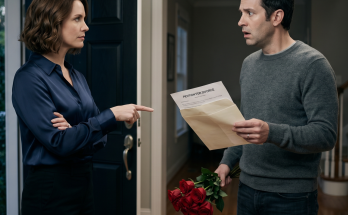
My Husband Tore My Boarding Pass in Half at Gate 14 and Smiled Doing It. He Landed in Zurich Thinking He’d Won. He Had No Idea I Was Already There.
The Woman He Left at Gate Fourteen
Part 1
My husband tore my boarding pass in half at Gate 14 and smiled while he did it.
The sound was small. A dry little rip swallowed by the airport noise, by rolling suitcases and gate announcements and the hiss of coffee machines opening for the morning rush. But to me, it was louder than a slammed door.
The two pieces fluttered down onto the gray tile like paper snow.
Elliot stood close enough for me to smell the cedar cologne I had bought him three Christmases ago, back when I still believed gifts could be love if you wrapped them carefully enough. He wore his navy travel blazer, the one I had steamed at five that morning, and his smile had that lazy, polished curve he used with lenders and restaurant hosts and people he needed to charm.
Only this time, he was using it on me like a knife.
“You should’ve learned when to step aside, Nora,” he said quietly.
Twelve years of marriage, three mortgages, one son, two failed pregnancies, four near-bankrupt business years, and nights where I had sat at our kitchen table until two in the morning reconciling accounts while he slept upstairs.
All of it reduced to one sentence.
Behind him, Sloane Avery adjusted the belt on her ivory coat. She had the kind of calm face women wear when they have already been told they won. Her hair was tucked behind one ear. Her diamond studs caught the fluorescent airport lights. She didn’t look embarrassed. She looked entertained.
“Elliot,” I said, keeping my voice low.
I wasn’t asking him not to go. I wasn’t asking why she was there. I wasn’t asking anything a wife asks when she still hopes shame might crawl back into a man’s body.
I was only saying his name so I could hear how empty it sounded.
He glanced at Sloane, then back at me. “Don’t make this ugly.”
That almost made me laugh.
People near Gate 14 watched without watching. A man in a Cowboys cap stared down into his phone with theatrical focus. A woman feeding pieces of a muffin to her toddler pulled her carry-on closer to her ankle. A gate agent looked up, looked at the torn paper, then looked away.
That is what I remember most clearly now.
Not the betrayal. Betrayal has weight, shape, history. This was lighter and uglier.
A public erasing.
Elliot had bought that ticket himself. Dallas to Zurich. First class. He had told me three weeks earlier that he wanted me there when the Ridgemont deal closed, because I had been “part of the early struggle.”
I should have heard the past tense.
Instead, I packed a black dress, a wool coat, and the pearl earrings his mother gave me before she decided I was too opinionated to be a proper Reed wife.
At the gate, he waited until boarding began. Waited until Sloane arrived from the lounge. Waited until I was standing there with my passport open in my hand.
Then he took my boarding pass, tore it cleanly in half, and let the pieces fall.
He leaned in again. “Go home.”
Sloane laughed once under her breath.
I looked down at the paper.
One half showed my name: Nora Bell Reed.
The other showed the destination: Zurich.
For one second, something hot and animal rose in me. I wanted to slap him. I wanted to scream so loudly the whole airport would turn. I wanted every stranger at Gate 14 to know exactly what kind of man had just boarded a plane with his mistress after twelve years of letting his wife build the bones of his company.
But Elliot wanted a scene.
He wanted tears. He wanted proof that I was unstable, emotional, jealous, small.
So I gave him nothing.
I bent down.
My knees touched the cold tile. Someone’s suitcase wheel squeaked past my shoulder. The airport smelled like burnt coffee and floor cleaner. I picked up one piece of the boarding pass, then the other. A tiny torn corner had slid under the metal chair beside me, and I reached for it too.
When I stood, Elliot’s smile had thinned.
I smoothed the pieces against my palm and tucked them into the zippered pocket inside my purse.
Then I looked at him.
“Have a safe flight,” I said.
His jaw moved once.
Sloane’s hand slipped through his arm. They walked down the jet bridge together, her ivory coat swinging beside his navy blazer like they were posing for a magazine spread about people who never had to pay for what they broke.
I sat in a metal chair by the window and watched the jet bridge door close.
Only then did I take out my phone.
My thumb did not shake when I pressed the contact.
Mara answered on the second ring. “Nora?”
“He did it,” I said. “Gate 14. Exactly like we thought.”
A pause.
Then her voice went cool and sharp. “Good. Don’t move yet.”
Outside, dawn bled over the runway, purple and gray and bruised.
Elliot Reed was about to cross an ocean believing he had finally cut me out of his life, his company, and his future.
He had no idea the thing he had torn in half was not my last chance.
It was my receipt.
And when Mara said, “Now we move,” I realized my husband had just handed me the one piece of evidence I had been missing.
### Part 2
Before Elliot Reed became the kind of man who could smile while humiliating his wife in an airport, he was a man with ink on his shirt cuffs and too much hope in his eyes.
I met him in Kansas City at a regional business conference that smelled like burnt coffee, hotel carpet, and panic.
He was thirty-three. I was twenty-nine. He was pitching a delivery logistics start-up called ReedLink Freight to a room full of cautious investors who liked his confidence but hated his numbers. I was there as a junior financial consultant, mostly because my boss had food poisoning and someone had to sit through the small-business sessions.
Elliot walked onstage with no notes.
He talked about regional freight gaps across the Midwest. He talked about refrigerated routes, last-mile delivery, small manufacturers getting squeezed by national carriers that treated them like rounding errors. He had maps, customer stories, a working knowledge of trucking lanes that made older men in suits lean forward.
Then his financial slide came up.
And I nearly choked on my coffee.
His projections were fantasy. His margins ignored fuel spikes. His payroll estimate looked like it had been made by someone who believed dispatchers volunteered out of patriotism. His debt schedule had a hole big enough to drive one of his leased box trucks through.
After the session, I found him near the coffee urn, surrounded by two men who were complimenting his “vision” in the tone people use when they are backing away.
When they left, I said, “Your idea is good. Your math is trying to kill you.”
He turned toward me slowly.
For a moment, I thought he would get offended. Men with microphones usually do.
Instead, he laughed.
Not the boardroom laugh he developed later. A real one. Surprised, open, almost boyish.
“Buy you coffee,” he said, “and you tell me how bad?”
“It’s hotel coffee,” I said. “You’d owe me dinner.”
He grinned. “That bad?”
“Worse.”
That dinner lasted four hours.
Elliot listened when I talked. Really listened. He took notes on a napkin, asked smart questions, admitted what he didn’t know. I remember the yellow light over the restaurant table, the condensation on my water glass, the way he said, “I can move freight all day. But I don’t know how to make the money tell the truth.”
That sentence did something to me.
I had spent years around men who treated accounting like a punishment and women with calculators like office furniture. Elliot saw structure as power. He saw me as useful, yes, but also as brilliant.
At least, I believed he did.
For three months, I helped rebuild his pitch. I cleaned up his cost structure, cut his fantasy growth curve in half, found hidden efficiencies, and made his numbers honest without making them look dead. I introduced him to two lenders. I coached him through investor questions. I warned him where they would attack.
When he secured his first serious financing round, he drove four hours to my apartment with grocery-store flowers and a bottle of champagne he couldn’t afford.
“I got it because of you,” he said.
I believed that, too.
We married fifteen months later in a brick chapel outside Tulsa, with rain tapping the stained-glass windows and his mother crying loudly enough to make people turn around. My father walked me down the aisle and whispered, “Make sure he knows your worth.”
I smiled.
I thought Elliot already did.
In the early years, ReedLink was less a company than a hungry animal living in our kitchen. Invoices on the table. Route maps on the fridge. Payroll spreadsheets open beside Caleb’s baby bottles after he was born.
I co-signed the first bank loan because Elliot’s credit was bruised from the years before me. I put my savings into payroll twice. Once, when a client delayed payment ninety days, I moved $38,000 from my personal account so twelve drivers could get paid on Friday.
Elliot cried that night.
He held me beside the dishwasher while Caleb slept in his swing, and he said, “I will never forget this.”
That is another sentence I still keep, though not for the reason he meant.
Because people do forget.
Or worse, they remember and decide the memory is inconvenient.
By year five, ReedLink had grown out of our kitchen and into a warehouse outside Dallas. By year seven, we had contracts in four states. By year nine, Elliot was speaking at industry panels in suits I picked out and calling himself a “self-made founder.”
The first time I heard him say that, I was standing near the back of a ballroom holding a cup of coffee that had gone cold.
Self-made.
The applause covered the sound of something small cracking inside me.
Afterward, I teased him about it in the hotel elevator.
“Self-made?” I said. “Interesting. I must be imaginary.”
He kissed my temple. “You know what I mean.”
I did not, actually.
But I let it go because marriage is full of small moments you tell yourself are too small to name.
A missed thank-you. A story retold with your part removed. A joke at dinner about how you “love spreadsheets more than people.” A hand on your lower back guiding you out of a conversation where your own knowledge might complicate his image.
None of those things felt like betrayal at the time.
They felt like weather.
And because I loved him, I kept dressing for the climate instead of asking why I was always cold.
The first real chill came fourteen months before Gate 14, when Elliot mentioned, over grilled salmon and a bottle of wine, that he was “simplifying the ownership structure” before a major European investment review.
He said it while cutting asparagus.
Casual. Boring. Administrative.
I asked, “What structure?”
He did not look up. “Just cleaning up old documents. Marcus is handling it.”
Marcus was his cousin, not his brother, though Elliot trusted him like blood. A corporate attorney with silver glasses and a habit of correcting waiters. I had never liked him. But dislike is not evidence.
“Anything I need to sign?” I asked.
“If there is, I’ll tell you.”
His fork scraped the plate.
Something about the scrape stayed with me.
That night, after Elliot fell asleep, I stood in the doorway of our home office and looked at the filing cabinet where twelve years of our life sat in labeled folders.
I didn’t open it.
Not then.
But I remember thinking, for the first time in my marriage, that my husband had answered me without answering me.
And three weeks later, I saw Sloane Avery’s name in his calendar.
### Part 3
Sloane first appeared as a calendar block.
No last name at first. Just Sloane – Meridian, 7:30 PM.
It was a Tuesday. Rain tapped against the kitchen windows, and Caleb was upstairs pretending to study chemistry while actually watching basketball highlights. I was using the shared family desktop because the printer in my little office had jammed again.
Elliot’s calendar was open in a browser tab.
I told myself not to look.
Then I looked.
Sloane – Meridian.
The Meridian was a private dining room in downtown Dallas where ReedLink took high-value clients. I had booked that room myself at least a dozen times. It had walnut walls, low lighting, and waiters who knew when to disappear.
I clicked the event.
No company listed. No agenda. Just her name and a reservation confirmation.
When Elliot came home that night, his coat smelled faintly of rain and expensive perfume.
“Good dinner?” I asked from the kitchen island.
He dropped his keys into the ceramic bowl by the door. “Long. Zurich people are demanding.”
“Zurich people named Sloane?”
His face did not change. That was what frightened me later. Not guilt. Not panic. Just a tiny pause, like an accountant adjusting a decimal.
“Sloane Avery,” he said. “Consultant Ridgemont brought in. She’s helping prepare investor-facing materials.”
“Investor-facing materials require dinner at the Meridian?”
His smile appeared, warm and patient. “Nora.”
Just my name.
Like I was being unreasonable by continuing to have a brain.
He came around the island, kissed my cheek, and opened the fridge. “Don’t start building stories. It’s business.”
I wanted to believe him because believing him kept my life intact.
So I did what too many women do. I took the discomfort inside me and folded it smaller.
Over the next few months, Sloane became weather too.
A name in his call log. A laugh in the background when he thought he had muted himself. A cream-colored scarf in the passenger seat of his car that he said belonged to a visiting investor. A receipt from a boutique hotel bar on a night he told me he was at the warehouse solving a refrigeration problem.
I watched. I stored. I did not confront.
Part of that was pride. Part of it was fear. Most of it was the slow education of being married to a man who had learned to make denial sound like maturity.
When I questioned him, he became sad before he became angry.
“You don’t trust me?”
That was his favorite trap.
Because then the conversation was no longer about his behavior. It was about my flaw.
One Friday evening, I found Caleb in the garage sitting on the deep freezer with his backpack still on.
He was fifteen then, all knees and silence, with Elliot’s dark eyes and my habit of noticing too much.
“You okay?” I asked.
He shrugged. “Dad forgot.”
“Forgot what?”
“My driving lesson.”
I checked my phone. Elliot had said he had a late investor call.
Caleb stared at the concrete floor. “He said we’d go every Friday.”
“I’ll take you.”
“No offense, Mom, but you brake like the car insulted you.”
That made me laugh. He smiled a little, but only for a second.
Then he said, “Is Dad moving out?”
My body went still.
“What makes you ask that?”
He pulled at a loose thread on his backpack strap. “I heard him on the phone. He said, ‘Once Zurich closes, everything changes.’ Then he said, ‘She’ll adjust.’”
The garage hummed around us. Old paint cans on the shelf. A basketball with no air under the workbench. The lawn mower smelling of gasoline and summer.
“What else did he say?”
Caleb shook his head. “Nothing. He saw me.”
“Did he say who he was talking to?”
“No.”
I sat beside my son on the freezer. The metal was cold through my jeans.
For years, I had told myself Elliot’s erasures were about ego. Carelessness. Ambition. A man growing bigger in public and forgetting who had held the ladder.
But “she’ll adjust” was not ego.
It was planning.
The next week, a colleague from my old accounting firm texted me a photo.
It showed Elliot at a restaurant in Highland Park. Not the Meridian this time. Smaller. Darker. More intimate. He sat beside Sloane in a curved leather booth, not across from her. His hand rested on the back of her neck.
The text beneath the photo read: Nora, I hate sending this. But you need to know.
I looked at the photo until the edges blurred.
Then I saved it to a folder labeled Insurance.
That was not the folder’s real name, of course. I had learned by then that obvious labels are for people who have never been betrayed by someone with the house password.
I named it Garden Receipts.
For two weeks, I collected quietly.
Screenshots. Dates. Credit card charges. Hotel bar receipts. Calendar entries. Not because I had decided what to do. Not yet.
I collected because numbers had taught me that patterns tell the truth before people do.
The affair was painful, but it was not the thing that scared me most.
The thing that scared me was ReedLink.
Whenever I asked about Zurich, Elliot became almost tender. He told me to relax. Told me everything was handled. Told me I had “done enough in the early days” and deserved to enjoy being taken care of.
That phrase made my skin crawl.
Taken care of.
It sounded too close to taken out.
One Saturday morning, while Elliot was golfing with Marcus, I went into the home office and opened the bottom drawer of the filing cabinet.
The old operating agreement was there.
My name was on page four.
Forty percent membership interest.
I ran my finger over it.
Nora Bell Reed.
The ink was blue. My signature leaned slightly right. I remembered signing that page at our kitchen table while Caleb slept in a baby carrier against my chest.
I kept digging.
Bank loans. Personal guarantees. Tax filings. Old amendments.
Then I found a folder I had not made.
Its label was printed, not handwritten.
ReedLink Holdings – 2019 Restructure.
Inside were copies, not originals.
The first page listed Elliot as sole managing member.
I turned the page.
Then another.
Then I saw my signature at the bottom of a transfer document I had never seen before.
My own name stared back at me from the paper.
But the handwriting was wrong.
Not obvious. Not cartoonish. Close enough to fool a clerk. Close enough to pass if you did not know the way I made the loop on the capital N when I was tired.
But I knew.
I had signed thousands of forms in my life.
And I had not signed that one.
The house was silent except for the air conditioner kicking on.
I heard Caleb laugh upstairs at something on his phone, young and unguarded, and the sound nearly split me open.
Because suddenly Sloane was not the story.
She was decoration.
The real betrayal had been filed three years earlier.
And my husband had put my name on it himself.
### Part 4
I did not take the folder.
That was the first smart thing I did.
Every instinct in me wanted to march downstairs when Elliot came home, throw the documents on the dining table, and watch his face break. I wanted the ugly satisfaction of saying, “Explain this.”
But I had spent enough years in finance to know that the first person to show panic usually loses the room.
So I took photos.
Every page. Every signature. Every notary stamp. Every date. I photographed the folder label, the drawer it came from, even the dust line around where it had been sitting, because something in me had gone cold and precise.
Then I put everything back exactly as I found it.
That evening, Elliot grilled steaks in the backyard.
The sunset was orange behind the fence. Caleb threw Gerald, our neighbor’s borrowed golden retriever, a tennis ball until both of them were panting. Elliot asked me about a grocery delivery like he had not forged my name on a document that could strip me out of a company I helped build.
I watched him salt the meat.
His wedding ring flashed in the porch light.
“How was golf?” I asked.
“Marcus cheats,” he said, smiling.
“Does he?”
“Only when he thinks he can get away with it.”
I laughed at the correct volume.
That night, after Elliot fell asleep, I went downstairs with bare feet and my laptop tucked under my arm. The kitchen smelled faintly of steak smoke and lemon dish soap. I sat at the island and searched every old email account I had.
At 1:12 a.m., I found the first thread.
It was not in my inbox. It was in the shared desktop’s cached browser, under Elliot’s account, which he had forgotten to close. The subject line was boring enough to be dangerous.
ReedLink ownership clean-up.
The thread was between Elliot and Marcus.
I read the most recent message first.
Marcus wrote: The Ridgemont team will rely on the cap table you provide. If Nora’s interest appears anywhere, valuation and distribution become complicated. Keep domestic matters outside investor review. The 2019 transfer gives us cover.
Cover.
I sat very still.
Elliot had replied: I need this clean before Zurich. No surprises. She can’t hold up the close.
She.
Not Nora. Not my wife.
She.
I scrolled backward.
There were twenty-six emails over nine months. Some were short. Some had attachments. Some referred to calls I had never heard about. The language was careful, but not careful enough.
Marcus repeatedly warned Elliot to avoid “unnecessary disclosure.” Elliot repeatedly asked whether my old equity interest could “resurface.” They discussed the personal guarantees I remained attached to. They discussed whether I would have standing to challenge anything if I found out after the Zurich money came through.
One line made my stomach turn.
Elliot wrote: She’s still on the old debt, which is fine. But she cannot be on the upside.
I had to stop reading.
The kitchen lights hummed overhead. The refrigerator clicked. Outside, a sprinkler started somewhere down the block, ticking against somebody’s fence in the dark.
I pressed my palms flat against the cool quartz counter and breathed until I could continue.
I took screenshots.
Not just of the emails, but of the headers, timestamps, attachments, and routing details. I forwarded copies to an email address Elliot did not know existed. Then I logged out, cleared nothing, touched nothing, and closed the laptop.
At 2:30 a.m., I walked upstairs and stood in Caleb’s doorway.
He was asleep on his side, one arm hanging off the bed, headphones tangled near his pillow. A blue glow from his charging station lit the posters on his wall.
For years, I had told myself I stayed calm for the marriage.
That night, I understood I was staying calm for my son.
The next morning, I called Mara Bellamy.
Mara was a divorce attorney in Dallas with a voice like warm tea and courtroom instincts like a loaded trap. I had met her once at a charity luncheon. She was short, silver-haired, and had made a banker twice her size apologize without raising her voice.
When she answered, I was in the parking lot behind a pharmacy, sitting in my car with the engine off because I did not want the Bluetooth to connect at home by accident.
“Mara,” I said, “I need help. Quietly.”
She did not ask if I was sure.
Good lawyers don’t waste time insulting terrified women.
“Tell me what happened,” she said.
I told her about the emails. The 2019 documents. The forged signature. Sloane. Zurich. The personal guarantees. The way Elliot had started using the word domestic like I was an inconvenience and not a person.
Mara listened without interrupting.
When I finished, she said, “Do not confront him.”
“I know.”
“Do not move money.”
“I know.”
“Do not threaten divorce. Do not mention the documents. Do not tell your friends. Do not tell your son details yet. From this moment on, you behave like a woman who suspects an affair and nothing more.”
I closed my eyes.
The pharmacy sign buzzed above the windshield.
“What is this, legally?” I asked.
Mara’s pause was brief.
“Potential forgery. Potential fraudulent transfer. Potential investor misrepresentation. Depending on what was given to Ridgemont, possibly securities fraud. But we need documents before we use those words anywhere outside this call.”
Securities fraud.
The phrase dropped into the car like a stone through glass.
“I can get documents,” I said.
“No,” Mara said. “You can preserve documents. There is a difference. I’m bringing in a forensic accountant and a handwriting examiner. You are going to give me what you already accessed, and then you are going to let us build this clean.”
Clean.
That word again.
Only this time, it belonged to me.
Over the next ten days, I became two women.
One woman made coffee, checked Caleb’s homework, asked Elliot whether he needed shirts from the cleaner, and sat beside him at a restaurant while he talked about Zurich like it was a sunrise he had built with his bare hands.
The other woman scanned tax returns at midnight, copied loan files, documented account statements, and sent everything to Mara through an encrypted portal.
The strangest part was how easy Elliot made it.
He never thought to hide from me because he never believed I was capable of seeing him fully.
That was his mistake.
One afternoon, while he was in the shower, his phone lit up on the dresser.
A text preview appeared.
Sloane: Once Zurich closes, you tell her. No more delays. I’m not flying over there as your secret.
I stared at it until the screen went dark.
Then another message appeared.
Marcus: Make sure Nora boards with you. Optics matter until the close.
Make sure Nora boards with you.
I took one photo.
Then I heard the shower turn off.
I set the phone down exactly where it had been, walked into the closet, and began folding Elliot’s shirts with hands so steady they did not feel like mine.
Because now I knew the trip was not just a trip.
It was part of the plan.
And whatever Elliot intended to do to me in Zurich, he needed me close enough to control.
### Part 5
Mara’s office was on the twenty-second floor of a glass building downtown, but her conference room felt more like a chapel than a workplace.
No clutter. No family photos. No motivational quotes. Just a long oak table, legal pads stacked with military neatness, and a view of Dallas baking under a white afternoon sky.
I arrived wearing a gray dress and carrying twelve years of my marriage in a black tote bag.
Mara sat at the head of the table. Beside her was Theo Grantham, a forensic accountant with tired eyes and the posture of a man who had made a living disappointing liars. Across from him sat Lenora Pike, a handwriting analyst with silver bracelets that clicked softly whenever she turned a page.
Nobody hugged me.
I appreciated that.
Sympathy would have cracked me. Procedure held me together.
Theo started with the money.
He laid out ReedLink’s history year by year, document by document. The first loan with my signature. The emergency payroll transfer from my savings. The business tax returns listing my interest. The operating agreement naming me as a forty percent member. The later documents shifting valuable assets into ReedLink Holdings, an entity I had supposedly approved.
Supposedly.
Lenora placed two signatures side by side.
One was from our original operating agreement.
One was from the 2019 transfer.
“At first glance,” she said, “the questioned signature is a competent imitation.”
Competent.
Such a polite word for theft.
She pointed to the capital N. “Your natural stroke begins lower and accelerates upward. The questioned signature hesitates here. See the ink pressure? Someone is drawing the letter rather than writing it.”
I leaned closer.
Once she showed me, I could not unsee it.
The fake signature had tried too hard.
My real handwriting moved like a person walking through her own house in the dark. The fake one moved like a burglar counting steps.
“How certain can you be?” I asked.
“Certain enough to testify,” Lenora said.
My throat tightened.
Mara slid a glass of water toward me.
Theo continued. “The restructuring didn’t just remove your upside. It isolated your liability. You remained attached to certain personal guarantees and legacy debt instruments while the operating revenue and contracts moved into the new holding entity.”
“So if things went bad,” I said slowly, “I could still be responsible.”
“Yes.”
“But if Zurich closed…”
“You would receive nothing unless you challenged it.”
Mara’s eyes met mine. “And Elliot appears to have counted on you not challenging it until after the money moved.”
There it was.
The shape of the thing.
Not an affair. Not a midlife crisis. Not a husband leaving his wife for a younger consultant in a coat that cost more than my first car.
This was extraction.
He had planned to pull value out of our shared life and leave me holding the debt like an empty purse.
The room tilted slightly.
I gripped the edge of the table.
Mara waited until I was breathing normally again.
Then she said, “There’s another issue.”
Of course there was.
She opened a folder marked Ridgemont Capital – Preliminary Materials.
“How did you get that?” I asked.
“From your shared business archive. You had access because you created the original investor reporting folder years ago. Elliot never removed your credentials.”
A strange little laugh escaped me.
“He removed me from ownership but forgot Dropbox.”
Theo’s mouth twitched. “Arrogance creates excellent evidence.”
Mara turned the folder toward me.
The investor presentation listed Elliot Reed as founder and sole owner of ReedLink Freight and ReedLink Holdings.
No mention of my equity history.
No mention of disputed transfers.
No mention of personal guarantees.
No mention of pending domestic financial exposure.
“Ridgemont is not just investing,” Mara said. “They are leading a European syndicate. The final close is scheduled in Zurich. If they sign based on false ownership representations, Elliot has misrepresented material facts to investors.”
I read the slide three times.
Sole owner.
After everything, those two words hurt more than Sloane.
I could understand lust. I could understand boredom, cowardice, ego, even cruelty.
But sole owner?
That was history murder.
Mara folded her hands. “The lead investor is a woman named Anika Roth. Former financial regulator. Now managing partner of Rothmere Group in Zurich. She has a reputation for walking away from deals over disclosure failures.”
“Good,” I said.
Mara watched me. “We cannot send her rage. We send her evidence.”
“I don’t have rage,” I said.
That was not true.
But what I had was better.
I had documents.
For the next week, we built a packet.
Not a story. A timeline.
2009: original formation records.
2010: loan documents with my guarantee.
2012: payroll transfers from my personal account.
2014 through 2018: tax returns reflecting my membership interest.
2019: questioned transfer documents.
2020 through 2023: revenue moved into ReedLink Holdings.
Current: Zurich investor materials naming Elliot as sole owner.
Appendix A: email communications between Elliot and Marcus.
Appendix B: preliminary handwriting analysis.
Appendix C: personal guarantee and debt exposure.
Every page numbered. Every claim sourced. No adjectives. No begging. No wife language. No mistress language.
Facts have their own violence when arranged in the right order.
Mara couriered the packet to Anika Roth’s Zurich office and sent a secure digital copy through counsel.
Then we waited.
Waiting was the hardest part because home had become a stage.
Elliot brought me coffee in bed one morning and kissed my forehead like a man rehearsing mercy. He talked about Zurich while tying his tie. He said maybe, after the close, we should “take some time to redefine things.”
Redefine.
Men like Elliot loved soft words for hard betrayals.
I smiled into my coffee.
“What does that mean?” I asked.
He sat on the edge of the bed. “It means I want us both to be happy.”
“Both of us?”
His eyes flickered. “Of course.”
I wondered whether Sloane knew how easily he lied while touching someone’s hair.
Two days passed.
No word from Zurich.
On the third day, Mara called while I was in the grocery store standing between cereal and pancake mix.
“Anika’s counsel responded,” she said.
I gripped the cart handle. “And?”
“They are not canceling the meeting.”
My stomach dropped.
Then Mara continued.
“They are keeping it on the calendar because they want Elliot in the room.”
A woman in yoga pants reached past me for maple syrup.
I stood there with fluorescent lights buzzing overhead and felt the first clean spark of something almost like joy.
“When?” I asked.
“Zurich. Same date. Same time. But Nora…”
“Yes?”
“They asked whether you would be willing to attend.”
The grocery store seemed to go silent around me.
My husband wanted me in Zurich as a prop.
The investors wanted me there as evidence.
And suddenly the trip he had designed as my humiliation became something else entirely.
A trap with his own name on the door.
### Part 6
The invitation to Zurich arrived in two versions.
The one Elliot gave me was printed on thick paper and placed beside my dinner plate like a gift.
The one Mara sent me came through an encrypted email and included airport instructions, a hotel address, and three emergency contacts.
Elliot’s version said: Nora should attend select closing events as spouse and early supporter.
Mara’s version said: Do not check luggage. Carry originals. Assume he may attempt to separate you from your documents.
That sentence sat in my mind like a stone.
Assume he may attempt to separate you.
I looked across the dinner table at my husband, who was cutting roasted chicken into neat pieces and telling Caleb that Zurich had better chocolate than Switzerland had any right to own.
Caleb said, “Zurich is in Switzerland, Dad.”
Elliot smiled. “Smart mouth.”
“Accurate mouth,” Caleb said.
I laughed because Caleb did, but under the table my foot pressed hard against the floor.
I had not told my son everything. Mara was firm about that. He knew his father and I were having serious problems. He knew I had hired a lawyer. He knew none of it was his fault because I repeated that until he rolled his eyes.
But he did not know about the forged signatures.
Not yet.
Children deserve truth, but they do not deserve adult shrapnel before it is necessary.
That night, Caleb knocked on my bedroom door while Elliot was downstairs taking a call.
He held a laundry basket against his hip, which meant he wanted to talk but needed a prop.
“Are you going to Switzerland with Dad?” he asked.
“Yes.”
“Is she going too?”
The basket creaked under his fingers.
I did not pretend not to understand.
“I think so.”
He looked at the wall behind me. “That’s disgusting.”
“Yes.”
He blinked, surprised by my honesty.
I patted the edge of the bed. He sat, long legs awkward, hair falling into his eyes.
“Mom,” he said, “you don’t have to act normal for me.”
That nearly undid me.
I looked at this boy who still left wet towels on the floor but could see through a grown man’s performance better than half the adults in our life.
“I’m not acting normal because I’m okay,” I said. “I’m acting normal because there are things I have to finish carefully.”
His eyes sharpened.
“What things?”
“Legal things.”
“Is Dad in trouble?”
I thought of the forged N on that transfer document. I thought of Elliot telling Marcus I could not be on the upside.
“Yes,” I said. “But I need you to let me handle it.”
Caleb looked down at the laundry basket. “Did he steal from you?”
There are moments when motherhood feels like walking across ice while carrying fire.
I chose the smallest true answer.
“I believe he tried.”
Caleb’s face changed.
Not childish shock. Something harder.
“Then don’t let him.”
“I won’t.”
He nodded once, as if we had signed a treaty.
Before he left, he turned back. “Mom?”
“Yes?”
“When he says you’re emotional, he means you noticed something.”
That sentence stayed with me longer than any comfort would have.
The next morning, Elliot announced he had booked our tickets.
“First class,” he said, sliding a printed itinerary across the kitchen island. “I know things have been tense. But this trip can still be dignified.”
Dignified.
I looked at the itinerary.
Dallas to Zurich. Flight 682. Gate to be assigned.
My name was there.
So was his.
Sloane’s was not, but I knew better.
“What about Caleb?” I asked.
“My mother can stay with him.”
“No,” I said too quickly.
Elliot looked up.
I softened my voice. “He has exams. He’ll stay with my sister.”
My sister June lived twenty minutes away and had already agreed to keep Caleb, Gerald the borrowed dog, and a sealed envelope marked Open Only If I Don’t Call By Friday.
Elliot studied me.
For one brief second, I wondered if he saw the woman behind the woman.
Then he smiled. “Whatever makes you comfortable.”
Comfortable.
There were so many words I was beginning to hate.
Mara had me prepare two sets of documents. One remained with her. One went ahead by courier to Anika Roth’s counsel. The third, a condensed set, would travel with me in a slim leather portfolio that never left my hand.
But the real trick was the boarding pass.
Three days before departure, Mara called.
“We think he may try to prevent you from boarding.”
“Why would he buy me a ticket just to stop me?”
“Optics,” she said. “Control. Cruelty. Maybe all three. If you appear unstable at the airport, he can tell Zurich you refused to travel or created a scene.”
I sat in my car outside Caleb’s school, watching students spill across the sidewalk with backpacks and hoodies and loud, ordinary lives.
“So what do we do?”
“We let him do whatever he plans to do. But you will not need that ticket.”
My reflection in the rearview mirror looked pale.
“Mara.”
“I’ve booked you separately. Different airline. Different route. Your flight leaves from another terminal forty minutes after his. You’ll arrive before the meeting. Anika’s office knows. They will not tell Elliot.”
I breathed out slowly.
“He thinks I’m going as his wife.”
“No,” Mara said. “He thinks you’re going as his witness. He doesn’t understand you’re going as yours.”
On departure morning, I dressed before dawn.
Black trousers. White blouse. Charcoal coat. Flat shoes. Pearl earrings.
Elliot looked me up and down when we met in the foyer.
“You look serious,” he said.
“I am.”
He smiled like he had decided to find that charming.
At the airport, Sloane appeared near Gate 14 ten minutes before boarding, exactly as if she had been summoned by a stage manager. Ivory coat. Red suitcase. Soft smile.
Elliot did not apologize.
He did not explain.
He simply took my boarding pass from my hand and said, “This has gone far enough.”
And as the paper tore, I understood something so clearly it almost calmed me.
Mara had been right.
He did not want me gone.
He wanted me broken before witnesses.
But when those two paper halves fell at my feet, I was not breaking.
I was watching him sign his confession in public.
### Part 7
After Elliot disappeared down the jet bridge with Sloane, I stayed seated at Gate 14 for eleven minutes.
Not ten. Not twelve.
Eleven, because Mara had told me to wait long enough for the boarding door to close and short enough not to miss my own route.
The gate agent avoided my eyes at first.
Then, when most of the passengers had boarded and the area emptied into that strange airport quiet between crowds, she came over with a paper cup of water.
“I’m sorry,” she said.
Her badge read Denise.
Her hands looked tired.
I accepted the water. “Thank you.”
“Do you need airport police?”
“No.”
“Family?”
“I have someone.”
She glanced toward the jet bridge. “I saw what he did.”
I looked up.
The fluorescent lights made everyone look older at airports. Denise had soft brown eyes and a mouth pressed thin with the anger of someone who had seen too much public cruelty and been required to keep boarding groups moving.
“Would you be willing to write down what you saw?” I asked.
She blinked.
Then she nodded.
I gave her Mara’s card.
That was the evidence Elliot had given me without understanding it. Not just the torn pass, though I still had the pieces. A witness. A neutral third party who saw him take and destroy my travel document in a controlled public setting.
Maybe it would matter legally. Maybe it would not.
But emotionally, it mattered to me that at least one person had not looked away forever.
I walked through the terminal with my purse tight against my side.
Every sound seemed sharpened. The rolling thunder of suitcase wheels. The beep of a cart reversing. A child crying near a pretzel stand. A businessman barking into his headset about quarterly exposure. Life continuing rudely, as it always does, even when yours has split open.
In the restroom near Terminal D, I changed my blouse.
Mara had insisted.
“If he has anyone watching,” she said, “make yourself slightly less memorable.”
So I removed the white blouse and put on a soft blue sweater. I twisted my hair into a lower knot. I switched my charcoal coat for a tan raincoat folded in my tote.
In the mirror, I looked like another tired woman catching another international flight.
Good.
My second boarding pass was digital. My real one.
Dallas to Newark. Newark to Zurich.
Coach, middle seat for the first leg. Window for the second. Mara had apologized for that.
“I’m not paying for comfort,” I told her. “I’m paying for arrival.”
On the first flight, I sat between a college student who slept with his mouth open and a retired nurse from Plano who offered me gum during takeoff.
“You look like you’re going to a funeral,” she said kindly.
“In a way.”
She nodded like that made perfect sense and did not ask another question.
I loved her for it.
In Newark, I called Caleb.
He answered on the first ring.
“Are you okay?” he asked.
“Yes.”
“Did he do something?”
I looked out at the dark window where planes moved like lit insects across the wet tarmac.
“Yes.”
Caleb was silent.
“Mom.”
“I handled it.”
“Did you cry?”
“No.”
“Good,” he said, then immediately sounded ashamed. “I mean—not good. I just mean—”
“I know what you mean.”
He exhaled. “Aunt June made chili. It’s too spicy, but I lied.”
“Don’t lie to your aunt.”
“She looked proud.”
“Then continue lying.”
He laughed, and the sound put one warm hand around my heart.
Before we hung up, he said, “Don’t let him make you feel small.”
I closed my eyes.
“I won’t.”
The flight to Zurich was long and sleepless.
The cabin smelled of recycled air, coffee, wool coats, and the faint chemical sweetness of airplane soap. Somewhere over the Atlantic, while everyone around me breathed in the blue dark of dimmed screens and folded blankets, I took out the torn boarding pass.
I fitted the pieces together on my tray table.
Nora Bell Reed.
Zurich.
A clean rip through the flight number.
I thought about the woman I had been at twenty-nine, leaning across a restaurant table telling a brilliant, messy man that his numbers would kill him. I thought about the woman at thirty-five, moving money from savings so drivers could pay rent. The woman at forty-one, standing in a grocery aisle while her lawyer said the investors wanted her in the room.
I had been so many versions of myself for Elliot.
Useful. Loyal. Quiet. Forgiving. Careful. Presentable.
But never stupid.
That was the part he forgot.
At Zurich Airport, the morning light was silver and clean. Mountains sat in the distance like judges.
I moved through customs with my leather portfolio under one arm.
Anika Roth’s assistant, a young man named Felix, met me outside arrivals holding a sign with only my first name.
“Nora?” he asked.
“Yes.”
He did not shake my hand. He gave a slight nod, efficient and Swiss and deeply comforting.
“Ms. Roth has arranged a car. Mr. Reed’s flight landed twenty minutes ago. He has gone to the hotel.”
The words passed through me.
Elliot was in Zurich.
He believed I was in Dallas, humiliated, stranded, crying into my torn boarding pass.
Instead, I was standing under the glass roof of the airport with every document he had tried to bury.
Felix opened the car door.
As I slid into the back seat, my phone buzzed.
A text from Elliot.
Hope you made it home. Please don’t embarrass yourself further.
I stared at it.
Then I looked out at Zurich waking beneath a pale sky, all glass and stone and cold order.
For the first time all morning, I smiled.
Because in less than twenty-four hours, Elliot would learn that embarrassment has a return address.
### Part 8
Anika Roth’s office overlooked the Limmat River, where the water moved green and clean between old stone buildings.
It was too beautiful a place for something so ugly.
The conference room had floor-to-ceiling windows, a long white table, and a silence so complete I could hear the soft click of Anika’s pen when she set it down.
She was in her early sixties, tall, with silver-blond hair cut at her jaw and eyes that made small talk feel illegal. Her suit was dark gray. Her watch was simple. Everything about her said she had outlived charm.
Mara joined by secure video from Dallas. Beside Anika sat her counsel, Lukas Meier, a narrow man with rimless glasses and a stack of marked folders.
Anika did not ask how I was.
Again, I appreciated that.
She began with the only question that mattered.
“Did you sign the 2019 transfer documents?”
“No.”
“Did you authorize anyone to sign on your behalf?”
“No.”
“Did you know Mr. Reed had represented himself as sole owner to Ridgemont and Rothmere?”
“No.”
Her face did not change.
Lukas slid a document toward me. “This is the cap table provided to us during due diligence.”
I looked down.
Elliot Reed: 100%.
My stomach tightened, but I did not look away.
“Is this accurate?” Lukas asked.
“No.”
“How do you know?”
I opened my portfolio.
The leather zipper sounded loud in the room.
“Because I kept the original agreement.”
For the next hour, I answered questions.
Not emotional questions. Not marriage questions. Questions about dates, ownership interests, financial contributions, loan guarantees, tax filings, bank records, and access credentials. Questions I could answer because I had been the one maintaining the company’s financial life while Elliot performed the mythology of the lone founder.
Mara barely spoke. She did not need to.
Facts walked in by themselves.
At one point, Lukas asked, “Why did you not come forward earlier?”
I looked at him.
“Because I found out earlier. Not early.”
Anika’s pen stopped moving.
Something in her expression shifted, not softening exactly, but sharpening with recognition.
She understood.
Women who survive rooms full of ambitious men often do.
When the meeting ended, Anika closed the folder.
“Tomorrow morning, Mr. Reed is scheduled to present final representations before signature.”
“Yes,” I said.
“We will not cancel.”
“I understand.”
“Do you?”
The river moved below us.
I thought of Elliot at Gate 14, tearing paper in half as if a boarding pass were the same thing as a woman’s legal standing.
“You want him to make the representation in the room,” I said. “On record.”
Anika held my gaze for a long moment.
Then she said, “Correct.”
Mara’s face on the screen remained neutral, but I knew her well enough by then to see satisfaction in the stillness.
Lukas handed me a printed agenda for the next morning.
Elliot Reed – Founder Presentation: 9:00 AM.
Ownership Confirmation: 9:40 AM.
Closing Discussion: 10:00 AM.
My name did not appear.
“Where will I be?” I asked.
Anika said, “Nearby.”
That night, I checked into a small hotel near the river under my maiden name, Nora Bell. Mara had booked it. No luxury. No lobby bar where Elliot might see me. Just clean sheets, a narrow bed, and a window that looked down at a quiet street where bicycles leaned against iron railings.
I should have slept.
Instead, I walked.
Zurich at night felt almost staged in its calm. Trams slid past with soft electric sighs. Restaurant windows glowed gold. People laughed in languages I could not catch. Church bells rang somewhere in the dark, deep and steady.
My phone buzzed at 8:17.
Elliot again.
I’m sorry about this morning. Emotions were high. We’ll talk when I get back.
I stopped under a streetlamp.
Emotions were high.
My God.
Even now, even after tearing my boarding pass in half, he was editing the crime into weather.
I typed nothing.
At 8:23, another message came.
You need to understand this deal is bigger than us.
That one made me laugh out loud on a Swiss sidewalk.
A woman walking a terrier glanced at me and smiled politely, as if public heartbreak was simply one more thing cities had to absorb.
I almost replied.
I almost wrote: I know exactly how big it is.
Instead, I turned off my phone.
Back in the hotel room, I laid the torn boarding pass beside the original operating agreement. The paper scraps looked childish next to the legal documents, almost silly.
But they belonged together.
One showed who Elliot was in public when he thought I had no power.
The other showed what he had done in private when he thought I would never find out.
I slept badly, in pieces.
At 5:30 a.m., I woke before the alarm.
The room was blue with early light. For a moment, I forgot where I was. Then I saw the portfolio on the desk and remembered everything.
I showered. Dressed. Put on flat black shoes. Pearl earrings. No perfume.
At 8:35, a black car took me to Rothmere’s office.
Felix met me in the lobby.
“Mr. Reed has arrived,” he said.
“Is he alone?”
Felix’s face remained perfectly professional.
“No.”
Of course not.
Sloane was there.
I felt no jealousy then. That surprised me. Whatever pain she had caused had been swallowed by something larger.
She was not my replacement.
She was his audience.
Felix led me to a small room beside the main conference room. Through the frosted glass, I could see shapes moving. Hear low voices. Elliot’s laugh, muffled but recognizable.
Warm. Confident. Alive with performance.
I sat in a chair with my portfolio on my lap.
At 9:04, his presentation began.
Through the wall, I heard my husband selling a company built partly with my labor, my savings, my credit, my nights, my belief.
At 9:38, Lukas entered the small room.
“It is time,” he said.
My legs felt steady when I stood.
But as my hand touched the conference room door, I realized I did not want revenge as much as I had expected.
I wanted correction.
I wanted the room to know the truth.
And when the door opened, Elliot was standing at the screen beneath the words sole founder, sole owner.
He turned toward me.
For the first time in twelve years, my husband had no script.
### Part 9
Elliot said my name like he had found a ghost in his soup.
“Nora?”
Sloane sat two chairs to his left in her ivory coat, though the room was warm. Her red suitcase stood near the wall, absurdly bright against the pale wood floor. Marcus was not there, but Elliot’s Dallas attorney was, a heavyset man named Grant Willis who looked as if he had already developed a headache.
Anika sat at the head of the table.
She did not look surprised.
“Mrs. Reed,” she said, “please join us.”
I walked to the empty chair beside Lukas.
The room smelled faintly of espresso and expensive paper. The screen behind Elliot still displayed his final slide.
ReedLink Freight: Founder-Led. Debt-Light. Fully Aligned Ownership.
Fully aligned.
I folded my hands in my lap so no one would see how tightly I wanted to grip them.
Elliot recovered enough to smile, but it came out wrong.
“I’m sorry,” he said, turning to Anika. “There’s clearly been a misunderstanding. My wife was not expected—”
“You are correct,” Anika said. “She was not expected by you.”
The silence that followed had teeth.
Grant Willis shifted in his chair.
Sloane looked from Elliot to me, then to the screen, as if trying to decide which version of reality still paid better.
Lukas stood.
“For the record,” he said, “Rothmere requested Mrs. Reed’s attendance after receiving documentation that materially conflicts with representations provided by Mr. Reed during due diligence.”
Elliot’s face darkened.
“What documentation?”
Lukas did not answer him directly. He opened a folder.
“Mr. Reed, did you provide this cap table to Rothmere Group?”
He projected the document on the screen.
Elliot Reed: 100%.
Elliot glanced at Grant.
Grant said, “We’ll need context before my client answers.”
Anika looked at him. “You will have opportunity. Mr. Reed, this is not a deposition. It is a closing meeting. You may answer or decline.”
Elliot swallowed.
“Yes,” he said. “That was provided.”
“Is it accurate?”
“It reflects the current structure.”
Lukas clicked to the next slide.
Original operating agreement. My name. Forty percent interest.
The air changed.
Sloane sat back slowly.
Elliot said, “That document is outdated.”
Lukas clicked again.
2019 transfer documents.
My alleged signature.
Then authenticated samples.
Then Lenora Pike’s preliminary report.
“The question,” Lukas said, “is whether the 2019 documents validly removed Mrs. Reed’s ownership interest.”
Grant leaned forward. “We dispute any characterization of invalidity.”
“Mrs. Reed,” Lukas said, turning to me, “did you sign the 2019 transfer?”
“No.”
My voice sounded calm. Almost plain.
Elliot stared at me.
There was anger in his face now, but under it was something better.
Fear.
Lukas continued. “Did you authorize Mr. Reed, Marcus Vale, or any other person to execute this transfer on your behalf?”
“No.”
“Were you informed that your ownership interest had been transferred into a debt-holding entity?”
“No.”
The words were small. The damage was not.
Elliot’s attorney began speaking quickly about domestic disputes, incomplete information, marital property claims, and the need to avoid premature conclusions.
Anika let him talk for thirty seconds.
Then she lifted one hand.
He stopped.
I had never seen a gesture so quiet do so much.
Lukas clicked again.
The email thread appeared.
Elliot: She’s still on the old debt, which is fine. But she cannot be on the upside.
No one spoke.
Not even Elliot.
I watched him read his own words in a room where charm could not translate them into something softer.
Then the next line.
Marcus: Keep domestic matters outside investor review. The 2019 transfer gives us cover.
Anika looked at Elliot.
“Mr. Reed, were you aware that Mrs. Reed disputed the validity of the 2019 transfer?”
Elliot’s mouth opened.
Closed.
His eyes flicked to me, and for one strange second I saw not the man from Gate 14, but the man from Kansas City with ink on his cuffs, asking me to tell him how bad the numbers were.
The answer, Elliot, was very bad.
“I was not aware of any dispute,” he said finally.
Mara appeared on the screen then, joining by video.
Her voice filled the room, soft and lethal.
“That is because my client only discovered the transfer recently. However, Mr. Reed was aware that Mrs. Reed had not personally executed the documents.”
Grant snapped, “Objection.”
Mara looked mildly amused. “This is not your courtroom, Mr. Willis.”
Anika’s mouth moved almost imperceptibly. Not a smile. Something colder.
For forty-three minutes, they walked Elliot through the documents.
Loan guarantees.
Tax filings.
Email timestamps.
ReedLink archive access.
Sloane’s name appeared only once, in a calendar record attached to investor preparation meetings. I saw her flinch at that. She had expected to be scandal, perhaps. She had not expected to be footnote.
By the end, Elliot’s confidence had drained out of him entirely. His shoulders rounded. His skin looked gray under the clean Swiss light.
Then Anika closed her folder.
“Rothmere Group is withdrawing from this transaction effective immediately,” she said. “We will preserve all materials provided during due diligence. We will notify relevant regulatory authorities and reserve all rights regarding costs incurred in reliance upon your representations.”
Elliot gripped the edge of the table.
“This is a misunderstanding,” he said.
Anika stood.
“No,” she said. “It is a pattern.”
That sentence landed harder than any shout could have.
Her team began gathering papers.
Sloane stood too quickly, bumping the table. Her coffee cup rattled in its saucer. She whispered something to Elliot, but he did not answer.
I stood last.
Elliot looked at me then.
Really looked.
Not through me. Not around me. Not as wife, obstacle, prop, or domestic matter.
As consequence.
“Nora,” he said, voice low. “We need to talk.”
I thought of Gate 14. The torn paper. Denise the gate agent handing me water. Caleb asking whether his father had stolen from me. Twelve years of being edited out of my own life.
“No,” I said.
Just that.
I picked up my portfolio and walked toward the door.
Behind me, Elliot said my name again.
This time, I did not turn around.
Because some doors do not need to be slammed.
Some doors close best when you leave someone listening to your footsteps fade.
### Part 10
Consequences do not arrive all at once.
They arrive like bills.
First came the phone calls.
Elliot called eleven times the afternoon after Rothmere withdrew. I know because my phone logged each attempt while I sat in my hotel room eating toast I could barely taste. He texted apologies that were not apologies.
You don’t understand what you’ve done.
Marcus gave bad advice.
We can fix this privately.
Think about Caleb.
That last one made me put the phone face down.
Men who burn down a house love asking women to consider the children once smoke reaches their own lungs.
Mara told me not to respond.
Anika’s office arranged my flight home for the next morning. Not as a favor, she clarified through Felix, but as a practical measure. I accepted anyway.
At Zurich Airport, I saw Sloane near a luxury watch store.
She was alone.
No ivory coat this time. Just black leggings, sunglasses, and the tense posture of a person recalculating fast. She saw me. For a second, I thought she might speak.
Instead, she turned and walked away.
I felt nothing.
That was how I knew something in me had already moved beyond her.
On the flight home, I slept for four hours and woke with a stiff neck and a strange lightness in my chest. Not happiness. Not yet.
Space.
At Dallas-Fort Worth, June and Caleb were waiting near baggage claim.
Caleb reached me first.
He was trying to be grown, I could tell. Trying not to run. Then his face cracked and he folded into me like the little boy who used to climb into my lap during thunderstorms.
“I’m okay,” I whispered.
He held on tighter.
June stood behind him with red eyes and a paper cup of coffee.
“Did you destroy him?” she asked.
“Not me,” I said. “Documents.”
“Good girl.”
We drove home under a wide Texas sky.
The house looked the same when we pulled up. White brick. Black shutters. Crepe myrtle near the mailbox. The same porch light I had reminded Elliot to replace six times.
But it no longer felt like home.
It felt like a set after the actors had left.
Mara filed for divorce three days later.
Emergency motions followed: preservation of business records, temporary financial restraints, custody arrangements, access to marital accounts. Elliot’s attorney tried to frame the Zurich meeting as an ambush by a vindictive spouse.
Mara’s response included the forged documents, the emails, and Denise’s statement from Gate 14.
That statement was only two paragraphs.
It said Elliot Reed took my boarding pass from my hand, tore it in half, and told me to go home while boarding an international flight with another woman.
Two paragraphs can carry a surprising amount of weight.
The Ridgemont withdrawal triggered its own chain reaction.
Rothmere notified their compliance counsel. Ridgemont notified their American legal team. The bank that held ReedLink’s line of credit requested updated ownership documentation. Then the Texas Secretary of State opened an inquiry into the 2019 filings.
Marcus Vale, who had been so confident in emails, suddenly became difficult to reach.
Elliot came to the house once before the temporary order barred unannounced visits.
It was raining.
Of course it was. Real life has no shame about using obvious weather.
He stood on the porch in a soaked overcoat, looking thinner than he had a week earlier.
I opened the door with the chain on.
“Nora,” he said.
“No.”
“You haven’t even heard me.”
“I heard you for twelve years.”
Rain ran from his hair down the side of his face. He looked tired, but tired is not the same as sorry.
“I made mistakes.”
I almost admired the efficiency of that word.
Mistakes.
A forged signature becomes a mistake. A mistress becomes confusion. A public humiliation becomes emotions running high. Theft becomes pressure.
“No,” I said. “You made decisions.”
His face hardened. There he was.
The real Elliot always appeared when tenderness failed.
“You think you can run ReedLink without me?” he said.
The question was so absurd I smiled.
“I already did.”
His eyes flashed.
For the first time, I understood how much he hated that. Not that I had helped him. That he had needed help. That somewhere under the polished founder speeches, he knew exactly who had kept the company alive when charm did not pay invoices.
“Caleb needs his father,” he said.
“He has one,” I said. “That’s the problem.”
He flinched then.
Good.
From behind me, Caleb’s voice came from the hallway.
“Mom?”
Elliot looked past my shoulder.
I stepped fully into the doorway, blocking his view.
“You need to leave.”
“Nora—”
“The order is filed. Don’t make me call Mara.”
That name did what my pain never could.
It made him step back.
He stood in the rain a moment longer, then walked to his car. His tires hissed against the wet street as he drove away.
When I closed the door, Caleb was standing near the stairs in socks and an old hoodie.
“He said he made mistakes?” he asked.
I sighed. “You heard?”
“Enough.”
I walked over and touched his shoulder. “I’m sorry.”
He looked toward the door.
“I’m not,” he said.
There was no anger in his voice. That frightened me more than rage would have.
There are things a father can break that courts cannot repair.
And as the first legal notices began arriving the next morning, I realized Elliot had not only lost the Zurich deal.
He was beginning to lose the version of himself that everyone else had been helping him pretend was real.
### Part 11
The divorce took seven months.
That sounds short until you live inside it.
Seven months is long enough for tulips to bloom and die. Long enough for a teenager to stop asking whether his father called. Long enough for lawyers to turn your marriage into labeled exhibits and financial schedules. Long enough for every room in your house to become evidence.
Mara was careful, relentless, and allergic to drama.
Elliot was dramatic enough for everyone.
At first, he tried remorse.
He sent flowers to the house with a card that read: We built too much to let this end.
I put the flowers in the garage because Caleb was allergic to lilies, something Elliot apparently forgot.
Then he tried blame.
Through his attorney, he claimed I had been aware of the 2019 restructuring and was only challenging it because of “marital disappointment related to extramarital conduct.”
Mara replied with bank records, metadata, and handwriting analysis.
Then he tried nostalgia.
He emailed me a photo from our honeymoon in Santa Fe, the two of us squinting in sunlight outside a turquoise shop. I was wearing a white sundress. He had his arm around me and that old open smile I used to trust.
Under the photo, he wrote: This was real.
I stared at it for a long time.
Then I forwarded it to Mara without replying.
Because yes, maybe it had been real.
That was not the defense he thought it was.
Real love can become real harm. Real history can still end. Real memories do not cancel forged signatures.
The hardest part was not Elliot.
It was Caleb.
He refused to see his father for the first month. The temporary custody order allowed visits, but not forced affection, as Mara put it. Elliot blamed me. Of course he did.
Then one evening, Caleb knocked on my bedroom door and said, “I think I should go to dinner with him.”
I set down the sweater I was folding. “Because you want to?”
“Because if I don’t, he’ll keep saying you turned me against him.”
“That is not your responsibility.”
“I know.”
He sat on the edge of my bed, taller than the boy who used to build Lego towers on that same comforter, not yet the man he was trying too hard to become.
“I want to hear what he says when you’re not there,” he said.
That hurt.
But I understood.
So I drove him to a restaurant near the mall and waited in the parking lot with a book I did not read.
Forty-eight minutes later, Caleb came out alone.
His face was blank.
He got into the car, buckled his seat belt, and stared through the windshield.
“Do you want to talk?” I asked.
“He said you were always controlling.”
I gripped the steering wheel.
“He said you never respected his vision. He said you poisoned me. He said Zurich fell apart because you wanted money.”
My breath went thin.
“What did you say?”
Caleb looked at me.
“I asked him whether he forged your signature.”
The air in the car changed.
“What did he say?”
“He said, ‘It’s complicated.’”
Caleb laughed once, without humor.
“Then I left.”
I wanted to say something wise, something motherly, something that could soften the damage.
All I managed was, “I’m sorry.”
Caleb looked out the window again.
“I think I’m done for a while.”
I nodded because if I spoke, I would cry.
After that, visits became shorter, then less frequent. Elliot complained in filings. Mara documented everything. The judge ordered family counseling. Caleb attended twice and then told the counselor, calmly, that he was willing to have a relationship with his father only if his father stopped lying.
The counselor wrote that down.
I bought Caleb tacos afterward.
“What?” he said when he caught me looking at him.
“Nothing.”
“You’re doing the proud-mom face.”
“I am proud.”
He rolled his eyes, but he smiled into his soda.
Meanwhile, ReedLink was collapsing in slow motion.
Not because it had no value. It did. The routes, contracts, drivers, systems—all of that was real. But lenders hate uncertainty. Investors hate fraud. Customers hate headlines. Employees hate silence.
And Elliot, stripped of performance, was not nearly as operationally brilliant as he had spent years claiming.
The company had survived because people under him fixed what he promised.
One of those people, a dispatch manager named Inez, called me in May.
“I know this is awkward,” she said.
“Inez, awkward left the building months ago.”
She laughed tiredly. “Fair. I just wanted you to know a lot of us knew you were the reason payroll worked.”
I closed my eyes.
“Thank you.”
“He told people you were just his wife.”
“I know.”
“We didn’t all believe him.”
After we hung up, I sat at the kitchen table where I had once saved ReedLink from missing payroll and let myself cry for exactly six minutes.
Not because Inez’s call fixed anything.
Because being seen late is still being seen.
The settlement negotiations were brutal.
Elliot fought the valuation, the equity percentage, the repayment of personal funds, the release of my guarantees. Then the handwriting examiner’s final report came in. Then Marcus Vale received formal notice from the state bar. Then Ridgemont’s counsel sent a preservation letter that made Elliot’s attorney suddenly much more interested in compromise.
In the end, the numbers spoke.
My forty percent interest was valued based on ReedLink’s worth before the fraudulent transfer. Adjusted for growth, distributions, and my unrepaid contributions, the settlement came to $3.2 million, plus release from all personal guarantees and a structured payment secured against company assets.
Elliot called it robbery.
Mara called it discounted.
I called it enough.
The divorce decree was signed on a hot Thursday afternoon.
I stood outside the courthouse afterward under a sky so bright it made my eyes water.
Mara touched my arm.
“How do you feel?”
I searched for the right word.
Free was too clean. Happy was too early. Sad was too small.
“Unmarried,” I said finally.
Mara smiled. “That will do for today.”
Across the street, Elliot stood beside his attorney, staring at me.
For once, he did not come over.
For once, he seemed to understand that there was no line left to deliver.
Then my phone buzzed.
A message from an unknown number.
Nora, this is Sloane. You and I need to talk about what Elliot did.
I looked at the screen.
And for one wild second, I almost laughed.
Because apparently, even after everything, there was still another bill coming due.
### Part 12
I met Sloane in a coffee shop off Henderson Avenue because Mara said public places discourage stupidity.
Sloane arrived thirteen minutes late, wearing sunglasses indoors and no ivory coat.
Without the careful styling, she looked younger than I expected. Or maybe just less expensive. Her hair was pulled back too tightly. Her manicure was chipped on one thumb. The woman who had laughed at Gate 14 had been polished glass.
This woman was cracked.
I did not stand when she approached.
She sat across from me and placed her phone on the table face down.
“Thank you for coming,” she said.
“I almost didn’t.”
“I know.”
The coffee shop smelled like cinnamon, espresso, and overheated milk. A student near the window typed loudly. Two women in workout clothes discussed preschool waitlists with the intensity of hostage negotiators.
Life, again, refusing to pause.
Sloane removed her sunglasses.
Her eyes were red.
I felt no satisfaction. That annoyed me.
“What do you want?” I asked.
She looked down at her hands. “Elliot lied to me.”
“I assumed.”
Her mouth tightened. “You think I deserved that.”
“I think you boarded a plane with my husband after watching him tear my boarding pass in half.”
She swallowed.
“Yes.”
No excuse. That surprised me.
She continued. “He told me you were already separated. He said you knew about me. He said you were coming to Zurich for appearances because you were negotiating a private settlement.”
“And at Gate 14?”
Her face flushed. “He said you had threatened to ruin the deal unless he gave you more money. He said he needed to stop you from creating a scene on the plane.”
I stared at her.
There it was.
The preloaded narrative.
Unstable wife. Greedy wife. Emotional wife.
A cage built before I even arrived.
“And you believed him,” I said.
“I wanted to.”
That was the first honest thing she had ever said to me.
She opened her purse and pulled out a folded sheet of paper.
“I’m not asking forgiveness.”
“Good.”
“I have messages. From Elliot. From Marcus. Things about the ownership structure, about keeping you away from documents, about Zurich. I didn’t understand all of it then. Or I didn’t want to. But Mara might.”
I did not touch the paper.
“Why now?”
Sloane laughed softly, bitterly. “Because he blamed me.”
Of course.
“When the deal collapsed,” she said, “he told people I mishandled investor materials. He said my consulting work created disclosure confusion. Ridgemont terminated my contract. My reputation is…” She stopped. “Damaged.”
I looked at her for a long moment.
“So you’re here because consequences reached you.”
“Yes,” she said.
Again, honest.
I took the paper.
It listed a secure download link and a password. Mara would enjoy that.
Sloane’s eyes filled, but the tears did not fall.
“I’m sorry,” she said. “For the airport. For all of it.”
The apology landed somewhere near me, not quite inside.
I thought apology would feel bigger. Warmer. More useful.
It felt like receiving a package after you had already replaced what was stolen.
“Thank you for saying it,” I said.
Her face lifted with something like hope.
I ended that quickly.
“But I don’t forgive you.”
She nodded once, hard.
“I understand.”
“I hope you do better next time another woman is being erased in front of you.”
That one got through.
She flinched.
Good.
I left my coffee untouched and drove straight to Mara’s office.
The messages Sloane provided did not save me. I was already saved.
But they helped bury the lie deeper.
They showed Elliot coaching Sloane on what to say if anyone asked about my role. They showed Marcus warning both of them not to use phrases like forged or hidden transfer in writing, then using them anyway because arrogant men cannot resist proving they are clever.
Marcus Vale resigned from his firm within two months.
The state bar moved against him after the investigators confirmed he had prepared and filed documents bearing a signature he had reason to know was false. He eventually surrendered his license rather than face a full disciplinary hearing.
Elliot avoided prison, which disappointed June more than anyone.
But he did not avoid punishment.
He pleaded to two counts tied to the forged filings and one count involving investor misrepresentation. The sentence was probation, community service, fines, restitution, and a permanent stain on every room he entered with a banker in it.
Some people wanted me to be angry about that.
I was, for a while.
But prison would not give me back twelve years. It would not give Caleb back the father he thought he had. It would not restore the early version of Elliot who may or may not have been real.
What the conviction did was simpler.
It made the truth official.
That mattered more than I expected.
Six months after the divorce, I accepted a job as CFO of a regional cold-chain logistics company in Austin.
The irony was not subtle.
During the final interview, the CEO, a woman named Marisol Grant, slid a messy financial packet across the table and said, “Tell me how bad.”
For a moment, I was twenty-nine again in Kansas City, looking at a man with big ideas and terrible numbers.
Then I looked at Marisol.
She was waiting with a pen in her hand, not performing, not charming, not expecting me to save her quietly and disappear from the story.
“It’s fixable,” I said. “But not if you hate the truth.”
She grinned. “I love the truth when it makes payroll.”
I took the job.
Caleb and I moved into a smaller house with blue shutters, a lemon tree in the backyard, and a kitchen that got morning light. He complained about changing schools, then joined the robotics club in week two and pretended not to like it.
We got our own dog, a golden retriever named Waffles, who had one brain cell and used it exclusively for joy.
On our first night in the new house, Caleb and I ate pizza on the living room floor because the table had not arrived.
He lifted his soda can.
“To no more fake documents,” he said.
I tapped my can against his.
“To no more fake anything.”
He smiled.
And for the first time in a long time, the future did not feel like a hallway I had to survive.
It felt like a door I had chosen.
### Part 13
Elliot asked for forgiveness almost exactly one year after Gate 14.
Not in person. He knew better by then.
He sent a letter.
Real paper. Blue ink. His handwriting, not forged this time. The envelope arrived on a Tuesday afternoon with the rest of the mail: electric bill, grocery coupons, college brochures for Caleb, and one white envelope postmarked Dallas.
I knew his handwriting before I saw the return address.
My first instinct was to throw it away.
My second was to give it to Mara.
My third, the one I chose, was to set it on the kitchen counter and make dinner.
Caleb was at robotics practice. Waffles lay belly-up near the sink, snoring like a broken lawn mower. The house smelled like garlic, tomato sauce, and rain because a storm had rolled through Austin just before sunset.
I cooked slowly.
Chopped onions. Stirred sauce. Washed lettuce. Let the letter sit there like a guest I had not invited and did not intend to entertain before I was ready.
After dinner, I opened it on the back porch.
The air was cool. The lemon tree moved gently in the dark. Somewhere down the street, a child laughed, and a dog answered.
Elliot’s letter was four pages.
He wrote about shame. About therapy. About how losing ReedLink’s expansion had forced him to see himself. About how Caleb barely answered his texts. About how Sloane had been a symptom, not the cause. About how he had confused ambition with purpose.
Some of it was probably true.
That was the inconvenient thing about people who hurt you. They can still become partially honest later.
Near the end, he wrote: I know I have no right to ask, but I hope one day you can forgive me. Not for me. For yourself.
I laughed then.
Not loudly. Not bitterly.
Just enough to startle Waffles awake.
For yourself.
Even in apology, Elliot had found a way to assign me homework.
I folded the letter and placed it back in the envelope.
The next morning, I wrote back.
Elliot,
I read your letter.
I believe you are beginning to understand some of what you did. I hope that continues, especially for Caleb’s sake.
I do not forgive you.
I am not carrying hatred for you, and I am not organizing my life around what you broke. But forgiveness is not a toll I owe in order to cross into peace.
You made decisions. You forged my name. You erased my work. You humiliated me in public because you believed I would react instead of remember. You tried to leave me with debt while taking the value of a company I helped build.
I have accepted that this happened.
I have not excused it.
Do not write to me again unless it concerns Caleb or a legal matter.
Nora
I sent it before I could soften it.
That afternoon, Marisol called me into her office to review a potential acquisition. The target company had beautiful revenue and ugly liabilities. I sat across from her with a marked-up report and said, “Their numbers are wearing makeup.”
She laughed so hard she dropped her pen.
Work became good again.
Not easy. Good.
There is a difference.
Caleb grew taller. His voice settled. He got his driver’s license on the second try and blamed the first failure on “state-sponsored parallel parking propaganda.” He visited Elliot occasionally, on his own terms. Sometimes he came back quiet. Sometimes annoyed. Once, cautiously hopeful.
I learned not to manage it.
Their relationship belonged to them now.
Mine with Elliot was over.
Completely.
People sometimes dislike that part when I tell the story. They want a softer ending. They want me to say forgiveness freed me, or Elliot changed, or Sloane apologized and we became unlikely friends, or love survived under the wreckage.
But American life is already full of stories asking women to turn pain into wisdom for everyone else’s comfort.
Here is the truth.
I did not become kinder because Elliot betrayed me.
I was already kind.
I did not become stronger because he tried to ruin me.
I was already strong.
What changed was that I stopped donating my strength to people who called it support when it benefited them and attitude when it did not.
The torn boarding pass is still in my desk.
Not framed. Not displayed. I am not that dramatic, despite what Elliot once claimed.
It sits in a plain envelope behind my passport, beside the original operating agreement and the final divorce decree. Three documents. Three versions of my life.
The agreement reminds me I was there from the beginning.
The decree reminds me I left.
The boarding pass reminds me of the morning my husband mistook my silence for defeat.
Sometimes, before a difficult meeting, I take it out.
The pieces are still creased from where I smoothed them against my palm at Gate 14. The tear runs through the destination line, but if you place the halves together carefully, you can still read it.
Zurich.
I think about the gray tile. The coffee smell. The way strangers looked away. Denise handing me water. Mara saying, “Now we move.” Caleb telling me not to feel small. Anika Roth saying, “It is a pattern.”
And I remember this:
A man can tear your ticket.
He can block the gate.
He can smile for the crowd and call it dignity.
But if you know who you are, and if you keep the receipts, he cannot cancel your arrival.
Elliot landed in Zurich thinking he had won.
He did not know I had already arrived in the only way that mattered.
With evidence.
With patience.
With my name still legally, loudly, permanently attached to everything he tried to steal.
And when I walked out of that conference room without turning around, I did not lose a husband.
I recovered myself.
THE END!
Disclaimer: Our stories are inspired by real-life events but are carefully rewritten for entertainment. Any resemblance to actual people or situations is purely coincidental.