AFTER MY HUSBAND DIED, I KEPT MY $500 MILLION INHERITANCE SECRET TO SEE WHO WOULD STILL TREAT ME WITH RESPECT
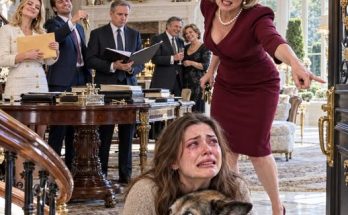
Twenty-four hours after my husband died, my mother-in-law dragged a suitcase onto my lawn.
It was raining.
Not heavily.
Just enough to turn the grass into mud and make the black dress I was still wearing from the funeral feel even heavier.
She dropped the suitcase beside the porch.
Then she looked at me.
“Now that Terence is gone, you get nothing.”
My sister-in-law stood behind her.
She was smiling.
Her phone was already recording.
I looked at the suitcase.
Then at my mother-in-law.
Then at the camera.
I should have screamed.
I should have demanded they leave.
Instead, I quietly bent down and picked up my muddy wedding album.
The corner had been stepped on.
The cover was stained.
My hands trembled as I wiped it clean.
Then I looked at Howard, my mother-in-law’s husband.
He had been standing silently near the driveway.
He was Terence’s older brother.
The man who had spent years calling my husband “the lucky one.”
I smiled faintly.
“You’re right.”
My mother-in-law’s expression softened with satisfaction.
She thought she had won.
I looked at the suitcase.
“You’re right,” I repeated.
“I have nothing.”
Then I carried my wedding album inside.
Six months later, I walked into their glittering charity gala wearing a simple black dress.
The room fell silent.
Howard turned.
His face drained of color.
My mother-in-law dropped her champagne glass.
My sister-in-law stopped filming.
I walked straight toward them.
I looked Howard directly in the eye.
And said one sentence.
“You’re right, Howard. I have nothing—because I gave the entire fortune to the people Terence actually loved.”
His smile disappeared.
But that wasn’t the real twist.
Because I hadn’t come to the gala to announce what I had done with the money.
I had come to reveal what Terence had secretly asked me to do with it.
And when Howard finally learned why my husband had hidden the truth from his family for years…
he realized the $500 million had never belonged to him in the first place.
PART ONE
THE MAN I MARRIED
My husband’s name was Terence Whitmore.
To the outside world, he was a billionaire.
To his family, he was an inconvenience.
To me, he was simply the man who brought me tea when I forgot to eat.
He was the man who remembered that I hated hotel pillows.
The man who knew I cried during old movies.
The man who would leave notes on the refrigerator that said:
Eat lunch. That’s an order.
We met when I was twenty-seven.
I wasn’t looking for someone wealthy.
Actually, I didn’t know he was wealthy.
I met him at a small bookstore.
He was standing in the business section holding a book upside down.
I laughed.
He looked at me.
“What’s funny?”
“You’re reading it upside down.”
He looked at the book.
Then at me.
“That explains why none of it made sense.”
I laughed harder.
That was our beginning.
Three years later, we married.
There was no massive wedding.
No television cameras.
No celebrity guests.
Just family, close friends, flowers, and a small church.
His mother complained that the ceremony was too simple.
His sister complained that my dress wasn’t expensive enough.
Howard didn’t complain.
He barely spoke to me.
At the reception, Terence took my hand.
“Ignore them.”
“I’m trying.”
He smiled.
“They don’t know you.”
“You do?”
“I know enough.”
“Enough for what?”
He kissed my forehead.
“Forever.”
I believed him.
I had no idea how much that word would cost.
PART TWO
THE FAMILY
The Whitmores were wealthy.
Very wealthy.
But wealth wasn’t what made them powerful.
Their real strength was the family name.
They owned companies.
Buildings.
Land.
Foundations.
Investment firms.
They donated to hospitals and museums.
Their names were engraved on university buildings.
They attended charity dinners where everyone seemed to know everyone else.
But inside the family, things were different.
Howard was the oldest son.
He believed the family business belonged to him.
He acted like Terence was lucky to have been included.
Terence rarely argued.
He simply built his own company.
That company eventually became enormous.
Howard hated it.
His wife, Margaret, hated it even more.
She called me “the outsider.”
At Christmas dinner one year, she said:
“You must feel strange around all this wealth.”
I smiled.
“I suppose I do.”
She laughed.
“At least you’re honest.”
Terence squeezed my hand under the table.
Later, I asked him why they disliked me.
He shrugged.
“They don’t dislike you.”
“They do.”
“They dislike what they can’t control.”
“What can’t they control?”
“You.”
I laughed.
“Me?”
He nodded.
“You’re the first person in this family who doesn’t care about their approval.”
I didn’t know whether that was true.
But I knew I cared about his.
And that was enough.
PART THREE
THE DIAGNOSIS
Terence became sick suddenly.
At first, we thought it was exhaustion.
He worked too much.
He traveled.
He rarely slept enough.
Then one afternoon, he collapsed.
The diagnosis came weeks later.
It was serious.
Very serious.
I remember sitting beside him in the hospital.
He looked at me.
“I have something to tell you.”
“Okay.”
“If something happens to me…”
I interrupted.
“Don’t.”
He smiled sadly.
“Let me finish.”
“No.”
“Listen.”
I looked at him.
He took my hand.
“I’ve arranged everything.”
“Your will?”
“Everything.”
“I don’t want to talk about this.”
“You need to.”
I shook my head.
“I’m not losing you.”
He looked away.
“I hope you’re right.”
Then he said something I didn’t understand.
“Promise me you’ll never let my family know everything.”
I frowned.
“Why?”
“Because they’ll change.”
“They already don’t like me.”
“You don’t understand.”
He looked directly at me.
“Money doesn’t reveal character.”
He paused.
“It reveals priorities.”
I squeezed his hand.
“What are you planning?”
He smiled.
“You’ll know when you need to.”
PART FOUR
THE LAST NIGHT
Terence died six months later.
He died with my hand in his.
There was no dramatic speech.
No miracle.
Just silence.
The monitor stopped.
The room became impossibly quiet.
I remember staring at his hand.
It was still warm.
I couldn’t accept that warmth could remain after someone was gone.
For three days, I barely spoke.
The funeral was enormous.
Thousands of people attended.
Business leaders.
Politicians.
Employees.
Friends.
Family.
People who hadn’t spoken to Terence in years suddenly cried as if they had been his closest companions.
Howard gave a speech.
He called Terence “my beloved brother.”
I almost laughed.
Margaret stood beside him.
She cried beautifully.
Perfectly.
Not one tear ruined her makeup.
After the funeral, she hugged me.
“You’re going to be okay.”
I nodded.
She whispered:
“We’ll take care of everything.”
I didn’t understand what she meant.
I would soon find out.
PART FIVE
THE SUITCASE
The next morning, Margaret arrived.
Howard came with her.
So did my sister-in-law, Vanessa.
Vanessa was twenty-nine.
She had spent most of her life treating me like an employee who wasn’t being paid.
She walked into my house without asking.
Margaret pointed toward the bedroom.
“Pack your things.”
I stared at her.
“What?”
“You can’t stay here.”
“Why?”
“This is a Whitmore property.”
I looked at her.
“Terence bought this house.”
“With family money.”
“That’s not what the deed says.”
She smiled.
“The deed won’t matter.”
Howard stepped forward.
“Terence is gone. We need to discuss the estate.”
I stared at him.
“You mean my husband’s estate.”
“Our family’s estate.”
There it was.
The truth.
Not even twenty-four hours.
They weren’t grieving.
They were calculating.
Margaret dragged a suitcase outside.
“You can take your clothes.”
I followed her.
She dropped it on the lawn.
Then she said:
“Now that Terence is gone, you get nothing.”
Vanessa laughed.
She was filming.
I looked at the camera.
“Are you recording this?”
“Yes.”
“Why?”
“Because I want proof you were difficult.”
I almost smiled.
“Difficult?”
Margaret folded her arms.
“You married into this family. You don’t own it.”
I looked at Howard.
He didn’t say anything.
I bent down.
My wedding album was lying near the porch.
Someone had stepped on it.
I picked it up.
I wiped away the mud.
Then I said:
“You’re right.”
Margaret smiled.
“I have nothing.”
Then I went inside.
I closed the door.
And finally allowed myself to cry.
Not because I believed them.
Because I knew they had no idea what was coming.
PART SIX
THE LAWYER
Two hours later, someone knocked.
It was a man named Jonathan Reed.
He had been Terence’s attorney.
He walked inside carrying a leather case.
“I’m sorry about what happened this morning.”
I stared at him.
“You saw?”
“Yes.”
“How?”
“Terence prepared for it.”
I froze.
“What did he prepare?”
Jonathan opened the case.
Inside was a folder.
He placed it on the table.
“Your husband’s will.”
I opened it.
The first page was ordinary.
The second was not.
I read the number.
Then I read it again.
$500,000,000.
I looked at Jonathan.
“What is this?”
“Your inheritance.”
I laughed.
Not because it was funny.
Because I didn’t know what else to do.
“Five hundred million?”
“Approximately.”
I sat down.
“How?”
“Terence had investments outside the Whitmore family business.”
I stared at the document.
“What did he leave his family?”
Jonathan paused.
“Very little.”
I looked up.
“How little?”
“A house in Connecticut.”
“A car.”
“Several charitable donations.”
“That’s it?”
“Yes.”
“And me?”
Jonathan slid another document across the table.
“Everything else.”
I stared at the signature.
Terence’s handwriting.
To my wife, Emma Whitmore, I leave the entirety of my private estate.
I started crying.
Jonathan didn’t interrupt.
After several minutes, he said:
“There is one condition.”
“What?”
“You must not disclose the amount for six months.”
I looked at him.
“Why?”
“Because your husband specifically instructed me to tell you something.”
I waited.
Jonathan looked directly at me.
“He wanted to know who would treat you like a human being when they believed you had nothing.”
PART SEVEN
THE TEST
I didn’t understand.
“You mean this is a test?”
“Partly.”
“Why?”
“Because Terence had doubts about several people.”
“His family?”
Jonathan nodded.
“He knew what they believed.”
“Why didn’t he confront them?”
“He wanted you to see it yourself.”
I looked down.
“That’s cruel.”
“Maybe.”
Jonathan sighed.
“But he told me something.”
“What?”
“He said, ‘Emma deserves to know who loves her without the money.'”
I closed my eyes.
Terence had always been protective.
But I hadn’t realized how much he had seen.
Jonathan handed me another envelope.
“Open this when you’re ready.”
Inside was a handwritten letter.
Emma,
If you’re reading this, I’m gone.
I pressed the paper against my chest.
Please don’t tell them about the money.
Not yet.
Give them six months.
Let them believe the story they want to believe.
You’ll learn more from their behavior than I ever could from their words.
Then:
And remember one thing.
If they leave you, don’t chase them.
If they insult you, don’t defend yourself.
If they underestimate you, let them.
I cried.
The final line said:
Because the moment they believe you have nothing is the moment you’ll finally see what they are worth.
PART EIGHT
SIX MONTHS OF SILENCE
The next six months became the strangest period of my life.
I moved into a smaller apartment.
I dressed simply.
I stopped attending family events.
I didn’t tell anyone about the inheritance.
And I watched.
Margaret never called.
Vanessa called twice.
Both times, she asked about money.
Howard sent one message.
We need to discuss the estate.
I replied:
What estate?
He never answered.
Terence’s old business partners were different.
Some called to offer help.
Some sent condolences.
Some checked on me without asking for anything.
One employee, Samuel, came to my apartment with groceries.
“I heard you’re having a hard time.”
I thanked him.
He shrugged.
“Terence helped my family when my daughter was sick.”
He left.
He never asked for anything.
That stayed with me.
PART NINE
THE PEOPLE WHO DISAPPEARED
My friends changed too.
Some stayed.
Some vanished.
One woman I’d known for years asked me if I’d inherited anything.
When I said no, she stopped inviting me anywhere.
Another friend offered to help me “find a cheaper apartment.”
I thanked her.
She never called again.
At first, it hurt.
Then I understood.
Terence had been right.
Money didn’t create the behavior.
It revealed it.
PART TEN
THE CHARITY GALA
Six months after Terence died, the Whitmore Foundation held its annual charity gala.
It was the largest event of the year.
Hundreds of people attended.
The family expected Howard to become the new center of the Whitmore empire.
I received an invitation.
I almost threw it away.
Then I remembered Terence’s letter.
Let them believe you have nothing.
I decided to go.
I wore a simple black dress.
No diamonds.
No expensive jewelry.
No announcement.
When I entered the ballroom, people turned.
Whispers spread.
“Isn’t that Terence’s widow?”
“I thought she left.”
“She looks different.”
Then Vanessa saw me.
Her face changed.
She walked toward me.
“You came.”
“Yes.”
She looked me up and down.
“I didn’t think you could afford the ticket.”
I smiled.
“I didn’t pay for it.”
She laughed.
“Of course.”
Then Howard appeared.
He was holding a glass of champagne.
He looked at me.
For a moment, he seemed nervous.
Then he smiled.
“Emma.”
“Howard.”
“I heard you’ve been struggling.”
“I’m managing.”
He nodded sympathetically.
“Terence would want us to help.”
I almost laughed.
“You never helped me before.”
He looked uncomfortable.
“We’re family.”
I looked around the ballroom.
“No.”
He frowned.
“You were my husband’s family.”
Then I looked at him.
“I was his family.”
His face hardened.
“You’re making a mistake.”
“No.”
I smiled.
“I’m correcting one.”
PART ELEVEN
THE SENTENCE
The charity director walked onto the stage.
“Tonight, we celebrate the legacy of Terence Whitmore.”
Applause.
Howard stepped forward.
He gave a speech about family.
About loyalty.
About generosity.
About Terence’s vision.
Then he announced:
“We have raised twelve million dollars for the Whitmore Children’s Hospital.”
Everyone applauded.
I stood.
The room went silent.
Howard looked at me.
“Emma?”
I walked toward the stage.
He tried to stop me.
I looked at him.
“Don’t.”
Something in my voice made him freeze.
I took the microphone.
“I’d like to make a donation.”
The room whispered.
Howard smiled nervously.
“That’s unnecessary.”
I looked directly at him.
“You’re right, Howard.”
His smile faded.
“I have nothing.”
A few people laughed awkwardly.
Then I continued.
“That’s what you told me six months ago.”
The room went silent.
“And because you believed me, I learned everything I needed to know.”
Howard’s face turned white.
I looked around.
“Today, I am donating $100 million to the hospital.”
Gasps filled the room.
Margaret dropped her purse.
Vanessa stopped breathing.
Howard stared at me.
“Where did you get that money?”
I smiled.
“From my husband.”
The room erupted in whispers.
Then I said:
“But that’s not why I’m here.”
I turned toward Howard.
“I’m here because Terence asked me to tell you something.”
Howard’s face changed.
“What?”
I looked at him.
“You’re not the heir.”
Silence.
“Terence never intended to leave the family business to you.”
Howard stared.
“That’s impossible.”
“No.”
I handed him a document.
“Read it.”
His hands shook.
He opened it.
Then his knees almost gave way.
PART TWELVE
THE SECRET COMPANY
The document revealed that Terence had secretly transferred ownership of his most valuable company into a private foundation.
The foundation wasn’t controlled by Howard.
It wasn’t controlled by Margaret.
It wasn’t controlled by me.
It was controlled by a board of employees, independent trustees, and charitable representatives.
Howard had assumed he would inherit the company.
He hadn’t.
Terence had built the company so that his family couldn’t destroy it.
Howard stared at the document.
“You can’t do this.”
“I didn’t.”
“Terence did.”
“Exactly.”
Then I revealed something else.
The $500 million wasn’t simply sitting in my bank account.
Terence had divided it.
$100 million to the hospital.
$100 million to education.
$75 million to medical research.
$50 million to employees.
$50 million to shelters and family services.
And the rest remained under a trust designed to support causes we had discussed together.
Howard looked at me.
“You gave away his fortune?”
“No.”
I shook my head.
“I gave away mine.”
He stared.
“Why?”
“Because Terence trusted me.”
Then I looked toward the audience.
“And because he told me that wealth is only useful when it becomes something good.”
PART THIRTEEN
THE SECOND WILL
I thought the room had heard everything.
It hadn’t.
Jonathan walked onto the stage.
He carried another folder.
Howard recognized him.
His face went pale.
Jonathan said:
“There is one more matter.”
I stepped aside.
He opened the folder.
“Terence Whitmore executed a second estate document three months before his death.”
Howard whispered:
“No.”
Jonathan continued.
“That document contains evidence concerning financial transfers made by several family members.”
Margaret sat down.
Vanessa began crying.
Howard shouted:
“This is ridiculous!”
Jonathan didn’t stop.
The records showed that Howard had been secretly moving company funds for years.
Margaret had received payments.
Vanessa had received payments.
Several shell companies were involved.
Terence had discovered it.
He had been collecting evidence.
The charity gala wasn’t simply a celebration.
It was the moment he had chosen to expose them.
Except he had died before he could.
So he had left the responsibility to me.
PART FOURTEEN
THE REAL BETRAYAL
Howard approached me.
“You think you’re better than us?”
“No.”
“You think money makes you powerful?”
“No.”
“Then why are you doing this?”
I looked at him.
“Because you thought I was powerless.”
He stared at me.
“You took my home.”
“You insulted me.”
“You filmed me crying.”
“You told everyone I was nothing.”
He didn’t respond.
I continued:
“But you made one mistake.”
“What?”
“You assumed my husband’s silence meant he didn’t know.”
Howard looked away.
Terence had known.
He had known everything.
For years.
PART FIFTEEN
THE FINAL LETTER
After the gala, I returned home.
Jonathan gave me one final envelope.
“Terence wanted you to open this after the six-month period.”
I sat alone.
I opened it.
Emma,
If you’ve reached this point, you’ve probably learned what I suspected.
Some people loved me.
Some loved my money.
Some loved my name.
And some loved what they thought they could inherit.
I smiled sadly.
Then I read the next line.
But there is something I never told you.
My heart stopped.
The $500 million isn’t my inheritance.
I frowned.
What did that mean?
I continued.
It belonged to you before I ever met you.
I stared at the page.
Then came the truth.
Years before our marriage, my own father had created a private investment trust.
But Terence had discovered that the trust had originally been established by a woman who had died decades earlier.
A woman named Eleanor Whitmore.
His grandmother.
And Eleanor had left the original fortune not to Terence.
Not to Howard.
Not to the Whitmore family.
She had left it to a child who had been erased from the family records.
A child named…
Emma.
My name.
I stopped breathing.
The original fortune had been intended for me.
Why?
Because Eleanor had known my mother.
She had known the circumstances surrounding my birth.
And she had discovered something no one else knew.
My biological connection to the Whitmore family.
I wasn’t simply Terence’s wife.
I was part of the family by blood.
PART SIXTEEN
THE BIGGEST SECRET
I called Jonathan immediately.
“Why didn’t you tell me?”
“Terence wanted you to learn it this way.”
“Am I a Whitmore?”
He paused.
“Yes.”
My heart pounded.
“How?”
Jonathan explained.
My biological father wasn’t the man my mother had always identified.
There had been a secret relationship between my grandmother on my father’s side and the Whitmore family.
The details were complicated.
But one thing was clear.
I had been intentionally removed from the family records.
Someone had wanted me forgotten.
And that someone was…
Margaret.
My mother-in-law.
She had known.
For years.
She knew I was the rightful beneficiary of the old family trust.
She had also known Terence was protecting me.
That was why she hated me.
It wasn’t because I had married her son.
It wasn’t because I was an outsider.
It was because she knew that if Terence died, the truth could destroy everything she believed she controlled.
I sat in silence.
Then I understood the suitcase.
The insults.
The filming.
The humiliation.
She had believed I was vulnerable.
She had believed the fortune would eventually return to her branch of the family.
She had no idea Terence had already uncovered the truth.
PART SEVENTEEN
WHY TERENCE MARRIED ME
There was one final question.
Why me?
Why had Terence fallen in love with me?
Was it coincidence?
Jonathan handed me another letter.
Emma,
The first time I saw you, I didn’t know who you were.
I only knew that I couldn’t stop thinking about you.
I smiled through tears.
Later, I discovered the truth.
My grandmother had left a letter about you.
She said that one day I might meet the person she had spent her life protecting.
I thought she meant a child.
I never imagined it would be my wife.
I laughed through my tears.
Then I read the final paragraph.
I didn’t marry you because you were my heir.
I married you because you were you.
The money came later.
The love came first.
I put the letter down.
And cried.
Not because of the fortune.
Because suddenly I understood something.
Terence had known who I was.
He had known what I would inherit.
And still, he had spent our marriage treating me exactly the same.
He never told me.
He never changed.
He never asked me to sign anything.
He never used the secret against me.
He simply loved me.
PART EIGHTEEN
WHAT HAPPENED TO HOWARD
The investigation continued for months.
Howard lost his position.
The company was restructured.
Several financial accounts were frozen.
The family foundation was audited.
Margaret was forced to answer questions about documents she had hidden.
Vanessa’s video from the lawn became evidence.
She had thought she was humiliating me.
Instead, she had documented their behavior.
The video eventually became one of the most important pieces of evidence.
Ironically, the thing she had recorded to embarrass me helped expose the family.
When the case ended, Howard approached me.
He looked smaller.
Older.
He didn’t have the confidence he’d once carried.
“I was wrong.”
I looked at him.
“About what?”
“Everything.”
I said nothing.
He continued.
“I thought Terence was weak.”
“He wasn’t.”
“I thought you were nothing.”
“I know.”
“I thought money belonged to whoever could control it.”
“And now?”
He looked down.
“Now I think I destroyed my family trying to own it.”
I didn’t forgive him.
Not that day.
Maybe never.
But I listened.
Sometimes that’s all a person can offer.
PART NINETEEN
MY MOTHER-IN-LAW
Margaret was different.
She never apologized.
Not immediately.
She continued insisting that she had been protecting the family.
Then one day, she called me.
“I found something.”
“What?”
“Your wedding album.”
My heart stopped.
“The one from the lawn?”
“Yes.”
She brought it to my apartment.
The cover was repaired.
She placed it on the table.
“I had it restored.”
I looked at her.
“Why?”
She swallowed.
“I don’t know.”
Then she said:
“I watched the video Vanessa recorded.”
I said nothing.
“I saw myself.”
She started crying.
“I didn’t recognize that woman.”
I looked at her.
“You were cruel.”
“I know.”
“You were grieving.”
“No.”
She shook her head.
“I was greedy.”
That was the first honest thing she had ever told me.
I didn’t hug her.
I didn’t forgive her.
But I didn’t ask her to leave.
Sometimes accountability begins with admitting what you actually did.
PART TWENTY
THE LAST SURPRISE
A year after Terence’s death, I returned to the house we had shared.
I had renovated it.
Not extravagantly.
Just enough to make it feel alive again.
There were photographs everywhere.
Terence laughing.
Terence cooking.
Terence pretending to hate my Christmas decorations.
One evening, I found something behind the bookshelf.
A small wooden box.
Inside was another letter.
This one wasn’t from Terence.
It was from Eleanor Whitmore.
His grandmother.
The original beneficiary document was there too.
I read it carefully.
Then I reached the final paragraph.
And my hands started shaking.
Eleanor had known my mother.
She had known about me.
But she hadn’t simply left the fortune to me.
She had included one condition.
If the family ever tried to take the inheritance from me…
the entire remaining estate would automatically be transferred to charity.
I laughed.
Terence had known.
That’s why he had never been afraid of his family.
They couldn’t take what wasn’t theirs.
And the greatest twist of all?
The $500 million I thought Terence had left me…
was never really his.
It had been waiting for me long before we met.
Terence hadn’t created my fortune.
He had protected it.
And when he died, he didn’t make me rich.
He simply returned something that had belonged to me all along.
EPILOGUE
WHAT I HAVE NOW
People sometimes ask me what happened to the $500 million.
The answer surprises them.
I don’t live like a billionaire.
I don’t own twenty houses.
I don’t have a private jet.
I don’t walk around wearing diamonds.
Instead, I built schools.
I funded medical research.
I created housing programs.
I established scholarships.
I created a foundation in Terence’s name.
And I created one program that matters most to me.
It helps widows who are suddenly treated as disposable after losing their husbands.
Women who are told:
“You get nothing.”
Women who are pushed out of homes.
Women whose in-laws suddenly become strangers.
Women who are grieving and expected to fight lawyers at the same time.
The program is called:
The Nothing Fund.
Because sometimes people who say you have nothing are actually telling you exactly who they are.
I still have the muddy wedding album.
It’s in a glass case now.
Beside it is a photograph of Terence and me.
Underneath the photograph is a small plaque.
It says:
“He loved me when he thought I had nothing.”
That’s the part people don’t understand.
The money didn’t make me valuable.
Terence knew that.
Grandmother Eleanor knew that.
Even Grandma, the woman who raised me, had known that.
The fortune was never the proof that I mattered.
The people who stayed when they thought I was broke were.
The employee who brought groceries.
The friend who checked on me.
The attorney who followed Terence’s wishes.
The strangers who donated to the foundation.
Those people taught me something no amount of money ever could.
And my husband’s final letter taught me the rest.
I keep it in my bedroom.
Sometimes I read it when I miss him.
The last paragraph says:
Emma,
When they finally learn what you have, they will tell you that they always believed in you.
Don’t listen to them.
Remember who they were when they thought you had nothing.
But also remember this:
Don’t become like them.
You don’t have to punish people because they underestimated you.
You only have to live so well that their opinion becomes irrelevant.
Love people who love you without knowing your bank balance.
Give because you want to give.
Walk away when you need to walk away.
And if you ever wonder what I saw in you…
I saw the woman you were when you thought nobody was watching.
That woman was worth more than all the money in the world.
I read that line whenever I miss him.
Then I close the letter.
I look at our wedding photograph.
And I remember the day his family threw my suitcase onto the lawn.
They thought they were throwing away a widow with nothing.
They didn’t know they were standing in front of the woman who had inherited half a billion dollars.
They didn’t know their insults were being recorded.
They didn’t know Terence had prepared for everything.
They didn’t know the fortune had belonged to me before I ever met him.
And most importantly…
They didn’t know I wasn’t trying to prove that I was rich.
I was trying to find out who would still treat me like a human being when they thought I wasn’t.
I found my answer.
And that was worth more than $500 million.
THE END.