My mother moved faster than I had seen her move in years. “Give me that.” Her hand shot toward the letter. I stepped back. “No.” “Clara.” There was something in her voice I had never heard before. Not anger. Fear.
Ryan moved between us. “What does it say?” Mom turned on him. “Nothing.” I looked at her. “That’s strange.” “What?” “If it’s nothing, why are you trying so hard to take it from me?” Her face hardened.
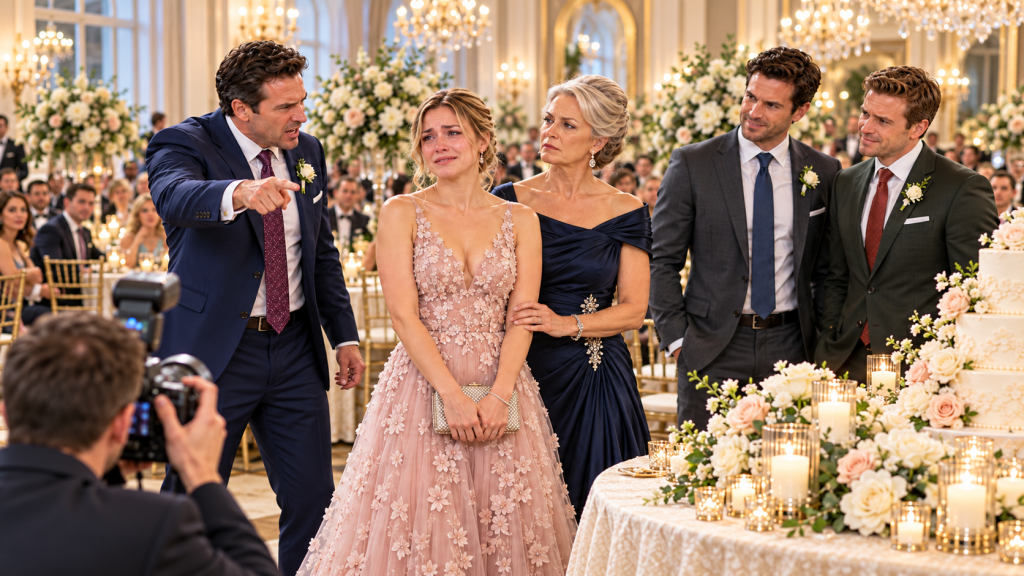
“Because this is my birthday, and I refuse to let you ruin it with another one of your scenes.”
I almost laughed.
“My scene?”
I pointed toward the corner where they had ordered me to stand.
“You told me I wasn’t family in front of a ballroom full of people.”
“I said blood relatives.”
“You knew exactly what you were saying.”
Jason rolled his eyes.
“Oh, for God’s sake, Clara. Are we really doing this again?”
I looked at him.
“Doing what?”
“Making everything about your adoption.”
My chest tightened.
“I didn’t mention my adoption.”
“You always do.”
“No.”
I shook my head.
“You do. Every time you need to remind me that I should be grateful.”
Jason opened his mouth.
Then closed it.
The venue manager, Mr. Bennett, remained beside the table holding the unpaid invoice.
The photographer stood near the backdrop with his camera lowered.
Dozens of guests were pretending not to listen.
Every single one of them was listening.
Ryan pointed at the papers.
“Forget the argument. What does Dad’s trust say?”
I looked down.
There were six pages.
The first page was formal.
Legal language.
Names.
Dates.
References to properties I recognized.
Then one sentence.
Upon my death, I appoint my daughter, Clara Elizabeth Whitmore, as successor trustee.
Daughter.
Not adopted daughter.
Not niece.
Not ward.
Daughter.
My eyes burned.
Mom saw where I was looking.
Her expression changed.
I continued reading.
Dad had established the trust eighteen months before he died.
The family house was in it.
So was the lake cabin.
A commercial property downtown.
Several investment accounts.
And forty-two acres of farmland outside Madison that had belonged to his grandfather.
I looked at Ryan.
Then Jason.
Then Mom.
“Did you know about this?”
“No,” Ryan said immediately.
Jason shook his head.
Mom said nothing.
I stared at her.
“Mom?”
Her lips pressed together.
Ryan looked between us.
“Mom?”
She lifted her chin.
“Your father made a lot of plans when he was sick.”
That wasn’t an answer.
I asked again.
“Did you know?”
She looked directly at me.
“Yes.”
The word dropped into the ballroom like a stone.
Ryan stared at her.
“You knew Dad had another trust?”
“I knew he had discussed one.”
“You said the estate was settled.”
“It was.”
“Apparently not.”
Jason moved closer.
“What property is in it?”
I almost laughed.
Not Why did Dad hide it?
Not Why did Mom lie?
Property.
Of course.
I folded the papers.
“You don’t need to worry about it.”
His eyes narrowed.
“Excuse me?”
“Family matter.”
That landed.
Ryan’s face tightened.
“Don’t start.”
“Why?”
I gestured toward the photographer.
“Five minutes ago, bloodline was extremely important.”
“Clara.”
“No, Ryan.”
My voice remained calm.
That was what frightened them.
I had spent most of my life explaining myself.
Defending myself.
Softening my words so nobody could accuse me of being difficult.
I didn’t feel the need anymore.
“You wanted a blood-family photograph.”
I looked at Jason.
“You told me I was being childish.”
Then Mom.
“And you sat there and let them put me in a corner.”
Mom’s eyes flashed.
“I gave you a home.”
There it was again.
The debt she believed I owed forever.
I stared at her.
“I was four.”
Silence.
“I didn’t apply for the position.”
Her mouth opened.
I continued.
“You chose to raise a grieving four-year-old girl whose parents had just died.”
My voice trembled.
“And somehow, for the rest of my life, you made me feel as if I should send you a thank-you card every morning for not abandoning me.”
Several guests looked away.
Mom’s face reddened.
“That is unfair.”
“Is it?”
“I fed you.”
“So did Dad.”
“I clothed you.”
“So did Dad.”
“I sent you to school.”
“So did Dad.”
“I treated you like my own.”
That one hurt.
I smiled sadly.
“No.”
Her face changed.
“You treated me like someone who should be grateful you almost did.”
Mr. Bennett cleared his throat.
“I apologize, but I still need direction regarding the balance.”
Mom turned toward him.
“This is ridiculous. Continue the party.”
“I need payment authorization.”
She pointed at me.
“She arranged it.”
Mr. Bennett looked at me.
I shook my head.
Mom’s voice sharpened.
“Clara.”
“No.”
“Stop behaving like this.”
“I am.”
She frowned.
“I’m finally stopping.”
I turned toward Mr. Bennett.
“Please charge me only for any contractual amount that is legally mine based on the deposits I personally authorized. Anything beyond that needs to be paid by the hosts who remain.”
Ryan stared at me.
“You can’t just walk away.”
I looked at him.
“Watch me.”
Jason stepped forward.
“What are we supposed to do?”
I looked at the champagne tower.
The flowers.
The band.
The custom cake.
The ballroom.
Then at the blood relatives.
“Figure it out.”
Mom followed me into the hallway.
“Clara!”
I kept walking.
Her heels struck the marble behind me.
“Stop.”
I did.
She grabbed my arm.
“Give me the trust papers.”
“No.”
“They concern my property.”
“Apparently they concern Dad’s trust.”
“That house is mine.”
“Then why are you worried?”
Her grip loosened.
I looked at her.
“What did Dad do?”
“Nothing.”
“Mom.”
“He was sick.”
“So?”
“He wasn’t thinking clearly.”
I stared at her.
“Are you saying Dad lacked capacity?”
She hesitated.
That hesitation mattered.
“Sometimes.”
“Did you challenge the trust?”
“No.”
“Why?”
No answer.
“Did you know I was trustee?”
Her eyes moved away.
I felt something cold settle in my stomach.
“You did.”
She whispered:
“I knew he was considering it.”
“That’s not what I asked.”
Before she could answer, a man’s voice came from behind us.
“Perhaps I can.”
We both turned.
An older man stood near the entrance.
Navy suit.
Silver tie.
Brown leather briefcase.
I recognized him after a moment.
“Mr. Lawson?”
He smiled gently.
“Hello, Clara.”
Thomas Lawson had been Dad’s attorney.
I hadn’t seen him since the funeral.
Mom’s face went white.
“You shouldn’t be here.”
He looked at her.
“Actually, Eleanor, I should have been here three years ago.”
Ryan and Jason had followed us.
Ryan frowned.
“What does that mean?”
Mr. Lawson looked at me.
“Your father left instructions.”
“What instructions?”
“To contact Clara under certain circumstances.”
My heart pounded.
“What circumstances?”
“When the trust became relevant.”
Mom snapped:
“This is inappropriate.”
Mr. Lawson ignored her.
“Or if I had reason to believe the trust assets were being mishandled.”
The hallway became silent.
Ryan looked at Mom.
“What assets?”
She folded her arms.
“I haven’t mishandled anything.”
Mr. Lawson opened his briefcase.
“I hope that’s true.”
Mom’s eyes narrowed.
“You have no right to interrogate me.”
“No.”
He looked at me.
“But Clara does.”
I stared at him.
“Why?”
“Because your father appointed you trustee.”
“I understand that.”
“No.”
His expression softened.
“I don’t think you do.”
He removed another document.
“You weren’t appointed trustee only after his death.”
I frowned.
“What?”
“Your authority became effective thirty days before he died.”
Mom closed her eyes.
I turned toward her.
“What?”
Mr. Lawson continued.
“Your father signed the final trust amendment while fully competent, witnessed by two independent parties and evaluated by his physician that same week.”
He handed me a certificate.
Mom had anticipated a capacity challenge.
Dad had anticipated Mom anticipating it.
That realization hurt.
“How much did Dad know?”
Mr. Lawson looked at Mom.
“A great deal.”
We returned to a smaller conference room beside the ballroom.
I didn’t want the conversation performed in front of sixty guests.
Mom sat across from me.
Ryan and Jason sat beside her.
Mr. Lawson sat beside me.
For once, the family arrangement had changed.
Mom noticed.
She hated it.
“What did Dad know?” I asked.
Mr. Lawson opened a folder.
“Your father became concerned approximately two years before his death.”
“About Mom?”
“About the way certain family assets were being handled.”
Mom laughed bitterly.
“I was his wife.”
“Yes.”
“You’re speaking as though I stole from him.”
“I haven’t said that.”
“Then say what you’re accusing me of.”
Mr. Lawson remained calm.
“After his diagnosis, your husband discovered several transfers.”
Ryan frowned.
“What transfers?”
Mom said:
“Household expenses.”
Mr. Lawson continued.
“Transfers to Ryan.”
Ryan’s face changed.
“To Jason.”
Jason stopped moving.
“And to two accounts held solely by Eleanor.”
I looked at them.
“How much?”
Nobody answered.
Mr. Lawson did.
“Approximately $610,000 over four years.”
I stared at Mom.
“Six hundred thousand dollars?”
She lifted her chin.
“Your father knew we helped the boys.”
Ryan looked shocked.
“Mom said Dad approved everything.”
Mr. Lawson turned toward him.
“Some assistance was authorized.”
“Some?”
“Yes.”
Ryan looked at Mom.
She said nothing.
Jason whispered:
“How much wasn’t?”
Mr. Lawson opened another page.
“Your father documented approximately $370,000 he did not remember authorizing.”
Mom stood.
“He was on medication!”
Mr. Lawson didn’t flinch.
“And that is why his physician evaluated his capacity.”
She froze.
I looked at her.
“You used Dad’s illness?”
“No!”
“Then explain.”
“He always wanted the boys taken care of.”
“The boys were forty-one and thirty-six.”
Ryan winced.
Mom ignored me.
“Ryan had a mortgage.”
“So do millions of people.”
“Jason’s business was struggling.”
“So you took Dad’s money?”
“It was our money.”
Mr. Lawson corrected her.
“Some of it was held in separate inherited accounts.”
Mom glared.
“Thomas.”
He stopped.
Not because he was intimidated.
Because the truth was already on the table.
I looked at my brothers.
“Did you know?”
Ryan shook his head.
“I knew Mom helped with the house.”
“How much?”
“Eighty thousand.”
I blinked.
He looked embarrassed.
“She said it was from both of them.”
Jason stared at the table.
“My business got one hundred twenty.”
I looked at him.
“You never paid it back?”
“Mom said it was a gift.”
“And neither of you asked Dad?”
Jason’s eyes filled.
“He was dying, Clara.”
“So?”
“I didn’t want to bother him.”
I laughed once.
It sounded painful.
“No.”
I shook my head.
“You didn’t want to risk hearing no.”
He looked away.
Then Mr. Lawson gave me the second surprise.
“Your father did not create the trust to punish Eleanor or your brothers.”
I looked at him.
“Then why?”
“To protect the remaining assets.”
“From whom?”
He looked at all three of them.
“Everyone.”
Mom scoffed.
“He didn’t trust his own family?”
Mr. Lawson looked at me.
“He trusted Clara.”
That sentence changed the room.
Ryan leaned back.
Jason stared at his hands.
Mom looked as if she had been slapped.
“Why her?”
There it was.
Not why Clara?
Why her?
Even now.
Mr. Lawson answered carefully.
“Your husband wrote an explanation.”
My throat tightened.
“A letter?”
“Yes.”
“Where?”
He reached into his briefcase.
Mom stood again.
“No.”
Everyone looked at her.
Her face was pale.
“Don’t.”
I stared.
“You’ve read it.”
She didn’t answer.
“You’ve read Dad’s letter.”
“I saw an earlier draft.”
“What does it say?”
Her eyes filled with tears.
For the first time that night, my mother looked genuinely wounded.
“He chose you.”
The words came out almost like an accusation.
I stared.
“Mom.”
“He chose you over his sons.”
Ryan stiffened.
“He chose you over me.”
And suddenly I understood something I had never understood before.
Her cruelty wasn’t random.
It wasn’t merely about adoption.
It was resentment.
Dad had trusted me.
And she had never forgiven me for it.
Mr. Lawson handed me the letter.
Dad’s handwriting.
My hands trembled.
I opened it.
My Clara,
I had to stop.
Two words.
That was all it took.
My Clara.
I covered my mouth.
Mr. Lawson waited.
Eventually, I continued.
If Thomas is giving you this, then something has happened that I hoped would not happen.
I know you will hate being placed in the middle. You have spent your life trying not to take sides. That is one of the reasons I chose you.
Tears blurred the page.
Ryan is a good man who often confuses confidence with judgment. Jason has a generous heart and terrible financial instincts. Your mother loves fiercely, but fear makes her controlling.
I almost laughed through my tears.
Dad had known us.
Every one of us.
And you, Clara, have spent your life believing you must earn the right to stay.
I stopped breathing.
Mom looked away.
You do not.
My tears fell onto the paper.
You never did.
The room disappeared.
I was four again.
A little girl with a plastic suitcase.
A stuffed rabbit.
A black dress from my parents’ funeral.
Dad kneeling in front of me.
You’re safe here, miracle girl.
I kept reading.
I did not choose you as trustee because you are adopted. I chose you because you are careful when other people are impulsive, fair when other people are angry, and because money has never impressed you enough to make you foolish.
Ryan wiped his eyes.
Jason stared at the wall.
If anyone tells you that blood determines family, remember this: blood is an accident of birth. Family is a pattern of behavior.
Mom began crying.
You are my daughter.
I pressed the letter against my chest.
For years, Mom’s little comments had accumulated inside me.
Lucky we chose you.
Not technically our blood.
The boys inherited the family features.
Dad had answered all of them from beyond the grave.
You are my daughter.
Then I reached the final paragraph.
And everything changed again.
There is one more thing you need to know about the house.
I looked up.
Mom had stopped crying.
She was staring at the letter.
I read silently.
Then again.
“No.”
Mr. Lawson nodded.
“What?” Ryan asked.
I looked at Mom.
“The house was never Mom’s.”
Jason frowned.
“What?”
Mr. Lawson explained.
“The family residence was purchased primarily with funds inherited by Charles from his parents.”
Dad.
“Under the estate structure, it was transferred into the trust.”
Ryan looked at Mom.
“But Mom has lived there since Dad died.”
“She was granted lifetime occupancy.”
Mom whispered:
“Stop.”
Mr. Lawson continued.
“Subject to certain conditions.”
I stared at the document.
“What conditions?”
“Primarily that she maintain the property and not encumber, sell, or transfer it.”
My stomach tightened.
I looked at Mom.
“Did you?”
She said nothing.
“Mom.”
Ryan stared at her.
“What did you do?”
Her hands trembled.
Jason stood.
“Mom?”
Finally, she whispered:
“I borrowed against it.”
Mr. Lawson closed his eyes.
“How much?”
No answer.
I asked again.
“How much?”
“Two hundred fifty thousand.”
Ryan swore.
Jason walked away from the table.
I couldn’t speak.
“You mortgaged a house you didn’t own?”
“I thought it was mine!”
“No.”
Mr. Lawson’s voice was firm.
“You were specifically advised otherwise.”
Mom turned on him.
“I needed money!”
“For what?”
Silence.
Ryan stared.
“What did you need a quarter-million dollars for?”
Mom looked at Jason.
Jason stopped.
“No.”
His face drained.
“Mom.”
I followed her gaze.
“Jason?”
He whispered:
“My business.”
I closed my eyes.
“How much?”
Jason sat down.
“One hundred eighty.”
I looked at Mom.
“And the rest?”
She whispered:
“Expenses.”
“What expenses?”
“The house.”
“Seventy thousand?”
“Taxes. Repairs. Living.”
Ryan stared at her.
“You told us Dad left you millions.”
“He did.”
Mr. Lawson shook his head.
“No.”
She glared at him.
“He left you substantial assets,” he said. “But not unlimited assets.”
Ryan looked at Mom.
“Where did the money go?”
Her face crumpled.
And for the first time, I saw past the pearls.
Past the expensive dress.
Past the ballroom.
Past the woman who had spent years making me feel fortunate to occupy a chair in her house.
She was scared.
“I didn’t know how to live differently.”
The sentence was so quiet I almost missed it.
“What?”
“Your father handled everything.”
She looked at me.
“The investments. Insurance. Taxes. Repairs.”
Her voice cracked.
“When he died, everyone expected me to keep being Eleanor Whitmore.”
I stared.
“The house.”
“The club.”
“The clothes.”
“The gifts.”
“The trips.”
She looked around.
“This party.”
And suddenly the $40,000 birthday celebration looked different.
Not better.
Not excusable.
But sadder.
A woman spending money to preserve the appearance of a life that had already changed.
Ryan whispered:
“You could have told us.”
She laughed bitterly.
“You?”
He flinched.
“You came to me for money.”
Then Jason.
“You came to me for money.”
Finally me.
“And Clara always had everything under control.”
My heart twisted.
“So you asked me to pay for your birthday.”
“Yes.”
“But you couldn’t let me into the photograph.”
She closed her eyes.
That was the part she couldn’t explain away with grief.
We returned to the ballroom forty minutes later.
Half the guests had left.
The champagne service had stopped.
The band was packing equipment.
The giant birthday cake remained untouched.
Mr. Bennett approached.
“We need to resolve the outstanding balance.”
Mom looked at me.
For one moment, I thought she might ask.
I waited.
She didn’t.
Instead, she removed a credit card.
“Put as much as you can on this.”
The card declined.
Her face burned.
Ryan tried his.
Approved for $8,000.
Jason could manage $3,500.
Aunts and cousins suddenly found urgent reasons to leave.
The bloodline was thinning rapidly.
I watched quietly.
Then Mom sat down.
Her shoulders collapsed.
The woman who had spent months planning a perfect sixtieth birthday was sitting alone beneath thousands of dollars’ worth of flowers.
Something inside me softened.
Not enough to erase what she had done.
Enough to remember she was human.
I walked toward Mr. Bennett.
Mom looked up.
Hope flickered across her face.
I asked:
“How much is contractually unavoidable tonight?”
He checked.
“After the deposits already paid, minimum remaining obligations are $18,420 if we terminate the extensions and extras.”
“And the rest?”
“Additional service hours, open bar extension, and optional late-night catering.”
I nodded.
“Cancel all optional services.”
Mom stared.
“Clara.”
I looked at her.
“I will pay half of the unavoidable balance.”
Ryan frowned.
“Why?”
“Because I agreed to organize this party before tonight.”
I looked at Mom.
“And because boundaries aren’t revenge.”
Her eyes filled.
“But I won’t pay the whole thing.”
Ryan nodded slowly.
“I’ll cover the other half.”
Jason said:
“I’ll contribute too.”
For the first time that evening, the bill became shared.
Like family responsibility should have been from the beginning.
Then I did something nobody expected.
I walked toward the photographer.
“Are you still working?”
He looked surprised.
“For another twenty minutes.”
“Good.”
I looked at Ryan.
Jason.
Mom.
“Take the picture.”
Mom stared.
“What?”
“The bloodline picture.”
Her face crumpled.
“No.”
“You wanted it.”
“I don’t anymore.”
I nodded.
“Good.”
I stood beside the backdrop.
“Then let’s take a family picture.”
Ryan joined me.
Jason stood on my other side.
Mom remained seated.
I held out my hand.
For several seconds, she didn’t move.
Then she stood.
Slowly.
She walked toward us.
But when she reached the group, she stopped.
Her eyes filled.
“Clara.”
“What?”
“Will you stand beside me?”
It was such a small question.
It should not have mattered.
It did.
I stepped beside her.
The photographer raised his camera.
Dad wasn’t there.
I felt that absence like a hand against my chest.
Then Mom whispered:
“I’m sorry.”
The camera clicked.
I didn’t answer.
Not yet.
Another click.
Healing should never be confused with pretending.
The trust situation took months to untangle.
Mom had violated the occupancy terms by borrowing against the house.
Technically, as trustee, I had authority to terminate her right to remain.
Ryan expected me to.
Jason feared I would.
Mom never asked me not to.
That mattered.
One afternoon, she came to my apartment carrying a folder.
“I found somewhere.”
I frowned.
“Somewhere?”
“To live.”
She showed me a brochure for a modest condominium.
“You’re moving?”
“I violated the trust.”
“You don’t have to leave immediately.”
“Yes.”
She sat across from me.
“I do.”
I stared.
“Why?”
“Because if I ask you to bend the rules for me, I’m doing exactly what I’ve always done.”
I said nothing.
She continued.
“Expecting you to prove you love me by rescuing me.”
That sentence stayed between us.
She had finally named it.
I closed the folder.
“Sell the condo brochure.”
She frowned.
“What?”
“You’re not moving there.”
“Clara—”
“I’m not finished.”
I opened the trust documents.
“The trust permits the trustee to approve a downsizing arrangement if maintaining the original residence is financially impractical.”
She stared.
“We sell the house.”
Her face changed.
“The house?”
“It costs too much.”
She looked devastated.
I understood.
Dad was in every room.
But memories shouldn’t become financial prisons.
“We sell it,” I repeated. “Repay the unauthorized loan, restore the trust, and purchase a smaller property within the trust for your lifetime occupancy.”
Her eyes filled.
“You would do that?”
“No.”
She looked confused.
“We would do that.”
I leaned forward.
“But there are conditions.”
She almost smiled.
“Of course.”
“You meet with a financial adviser.”
“Fine.”
“You live on a budget.”
She grimaced.
“Clara.”
“A real budget.”
“Fine.”
“And no more forty-thousand-dollar birthday parties.”
She laughed.
Then cried.
“Deal.”
The house sold the following spring.
On the final day, the four of us walked through it.
Ryan found pencil marks inside a closet where Dad had measured our heights.
Jason found an old baseball glove.
I found my childhood room.
The wallpaper had changed.
The furniture had changed.
But one thing remained.
Inside the closet door, Dad had written three names.
RYAN.
JASON.
CLARA.
No qualifier.
No asterisk.
No explanation.
Just his children.
I touched my name.
Mom stood behind me.
“I used to hate that.”
I turned.
“What?”
“Your father writing your name with theirs.”
I stared at her.
She began crying.
“I don’t know why.”
I did.
But I let her say it.
“I think I was afraid.”
“Of what?”
“That loving you the same somehow diminished the boys.”
My throat tightened.
“Love doesn’t work like that.”
“I know.”
She looked around the empty room.
“I know now.”
I nodded.
Then she said:
“Your father understood before I did.”
“Yes.”
She accepted it.
That mattered too.
Ryan changed.
Slowly.
He stopped calling me only when he needed help.
He invited me to lunch.
Sometimes for no reason.
The first time, I spent twenty minutes waiting for him to ask for money.
He finally frowned.
“What?”
“What do you need?”
“A sandwich.”
“No.”
He laughed.
“I’m serious.”
“So am I.”
“You invited me here.”
“Yes.”
“Why?”
“Because you’re my sister.”
I stared at him.
He winced.
“I know. Low bar.”
“Extremely.”
“Can we start somewhere?”
I smiled.
“Yes.”
We started there.
Jason’s business failed.
That was painful.
But necessary.
For years, Mom had kept it alive with money.
When the money stopped, reality arrived.
He took a job with another company.
At first, he was humiliated.
Then something surprising happened.
He became happier.
No payroll anxiety.
No debt collectors.
No pretending.
One evening he told me:
“I think Mom’s money kept me trapped.”
I nodded.
“Sometimes rescuing people prevents them from leaving the fire.”
He looked at me.
“Did you read that somewhere?”
“No.”
“Sounds annoying enough to be on a mug.”
I threw a napkin at him.
Mom’s new house was small.
Two bedrooms.
A little garden.
No ballroom.
No dramatic staircase.
She loved it.
Eventually.
The first Christmas there, she called me into the hallway.
“I want a photograph.”
I laughed.
“Dangerous territory.”
“Very funny.”
Ryan and Jason stood beside the tree.
Mom walked toward me.
Then she did something I will never forget.
She placed me in the center.
“Mom.”
“What?”
“Why am I here?”
“Because that’s where I want you.”
The photographer—Ryan’s teenage daughter with a phone—raised the camera.
Mom put one arm around me.
Ryan stood beside her.
Jason beside me.
Before the picture, Mom whispered:
“No bloodline pictures.”
My eyes filled.
“No?”
“No.”
She squeezed my hand.
“Family only.”
The camera clicked.
It took me years to understand that forgiveness isn’t one decision.
It’s hundreds.
Some days I forgave Mom.
Other days I remembered the ballroom.
The corner.
The word bloodline.
And I became angry again.
Both were allowed.
She didn’t demand I forget.
That helped.
Once, almost three years later, she asked:
“Do you still think about that birthday?”
“Yes.”
She looked ashamed.
“So do I.”
I waited.
“I think it was the ugliest thing I’ve ever done to you.”
I swallowed.
“It was up there.”
She nodded.
“I wish I could take it back.”
“You can’t.”
“I know.”
“But you can keep being different.”
She smiled through tears.
“I’m trying.”
“I know.”
That was enough.
Mr. Lawson eventually gave me one final item from Dad.
A small wooden box.
Inside was Dad’s watch.
And beneath it, a photograph.
Me at five years old.
Sitting on Dad’s shoulders.
Both of us laughing.
On the back he had written:
Clara’s first summer home.
Home.
Not placement.
Not adoption.
Not charity.
Home.
I cried for an hour.
Years later, I became trustee in more than name.
The farmland remained leased to the same family that had farmed it for decades.
The commercial building provided income.
The investments recovered.
Mom’s smaller home remained protected.
Ryan and Jason received distributions only under the terms Dad had created.
So did I.
Nobody got everything they wanted.
That was probably why the trust worked.
One day Ryan joked:
“Dad really left the money to the only person least interested in spending it.”
I smiled.
“Exactly.”
Jason groaned.
“I hate responsible people.”
“You’re welcome.”
On what would have been Dad’s seventy-fifth birthday, we gathered at the lake cabin.
Mom brought an old photo album.
We sat near the water.
One page showed Dad holding newborn Ryan.
Another showed Jason covered in birthday cake.
Then there was me.
Four years old.
Standing on the front porch with my tiny suitcase.
I stared at the photograph.
I remembered almost nothing about that day.
Trauma does strange things to memory.
But Mom remembered.
“You wouldn’t let go of that rabbit.”
I smiled.
“Mr. Buttons.”
“Terrible name.”
“I was four.”
She laughed.
Then became quiet.
“Your father knelt right there.”
She pointed toward the porch.
“And said, ‘This is your house now.’”
My throat tightened.
Mom touched the photograph.
“I should have listened to him.”
I looked at her.
“He never thought he was borrowing you.”
She cried.
“He thought you had come home.”
I reached for her hand.
For years, I had wanted her to say something that would erase every cruel comment.
Nothing could.
But this wasn’t erasure.
It was recognition.
And recognition mattered.
Sometimes people ask why I didn’t simply cut everyone off.
Others ask why I didn’t forgive immediately.
Both questions assume healing has only two doors.
Stay.
Leave.
Love.
Hate.
Forgive.
Never forgive.
Life was messier.
I learned boundaries without becoming cruel.
I learned forgiveness without surrendering memory.
I learned that someone can love you and still wound you.
I learned that apologies matter most when behavior follows them.
And I learned that the word family becomes meaningless when it is used only to demand sacrifice from one person.
Family should never mean:
Pay because you’re family.
Forgive because you’re family.
Stay quiet because you’re family.
Accept humiliation because you’re family.
If family means anything, it must also mean:
Protect.
Listen.
Include.
Respect.
Show up.
Change.
Mom turned seventy five years later.
She refused a ballroom.
We held dinner in her backyard.
Twenty-three people.
Paper lanterns.
Barbecue.
A grocery-store cake Ryan accidentally dropped while carrying it from his car.
It leaned sideways for the entire evening.
Mom called it perfect.
Before sunset, Jason gathered everyone.
“Picture.”
I laughed.
Mom looked at me.
“Come here.”
I walked over.
Ryan shouted:
“Blood relatives first!”
Everyone went silent.
Mom’s eyes widened.
Ryan grinned.
“Kidding!”
I hit him with a napkin.
Mom laughed so hard she cried.
Then she pulled me beside her.
The photograph captured that exact moment.
Not posed.
Not perfect.
Mom laughing.
Me half-annoyed.
Ryan ducking because I was throwing another napkin.
Jason pointing at the camera.
Children everywhere.
No one in the corner.
That photograph is framed in my living room.
Beside Dad’s letter.
I kept one other thing.
The original invoice from Mom’s sixtieth birthday.
$40,000.
Not because I wanted to remember the money.
I wanted to remember the moment I stopped believing love had to be purchased.
For years, I paid.
Doctor appointments.
Roof repairs.
Hotel rooms.
Family dinners.
Birthdays.
Emergencies.
I told myself I was helping.
Sometimes I was.
Sometimes I was paying an invisible admission fee.
Maybe if I was useful enough, generous enough, quiet enough, nobody would remember I arrived differently.
Maybe I could earn permanence.
Dad had understood the truth before I did.
I never needed to earn it.
After Mom died many years later, peacefully in her sleep, I found something inside her bedside drawer.
A photograph.
The one from her seventieth birthday.
All of us laughing.
On the back, in her handwriting, were six words.
My children. All of them. Always.
I sat on the floor and cried.
Not because our story had become perfect.
It hadn’t.
Not because one sentence erased decades.
It couldn’t.
I cried because she had finally learned the language Dad had spoken naturally.
And because, eventually, she had chosen to speak it too.
Dad once wrote that blood was an accident of birth and family was a pattern of behavior.
I think he was right.
Blood can tell you where your eyes came from.
It can explain your hair.
Your height.
A medical condition.
But it cannot guarantee kindness.
It cannot manufacture loyalty.
It cannot excuse cruelty.
And it cannot decide who deserves a place in the photograph.
Love does that.
Choice does that.
Years of showing up do that.
Whenever I remember that ballroom, I still see myself standing near the wall.
Clutch in my hand.
Mom beneath the chandelier.
Ryan waving me away.
Jason looking impatient.
The photographer uncomfortable.
“Blood relatives only.”
At the time, I thought those words had reduced me.
They hadn’t.
They revealed everyone else.
Then I canceled the payment.
For years afterward, my brothers joked that it was the most expensive family photograph never taken.
They were wrong.
It was the most valuable.
Because that photograph taught us something before the shutter ever clicked.
A family that measures belonging by blood eventually discovers blood is not enough to hold people together.
Respect does.
Honesty does.
Accountability does.
Love does.
And sometimes, the person you send to stand in the corner turns out to be the person quietly holding everything together.
I didn’t become Dad’s daughter because he signed adoption papers.
I became his daughter every morning he knocked on my bedroom door.
Every scraped knee he bandaged.
Every bicycle ride.
Every Christmas stocking.
Every time he called me miracle girl.
Every ordinary Tuesday when nobody was watching.
And in the end, that was the inheritance that mattered.
Not the house.
Not the farmland.
Not the investment accounts.
Not the trust.
It was one sentence written by a dying father to a daughter who had spent too many years wondering whether she truly belonged.
You are my daughter.
I was.
I always had been.
And no photograph, no bloodline, no cruel remark, and no forty-thousand-dollar bill could ever change that again.