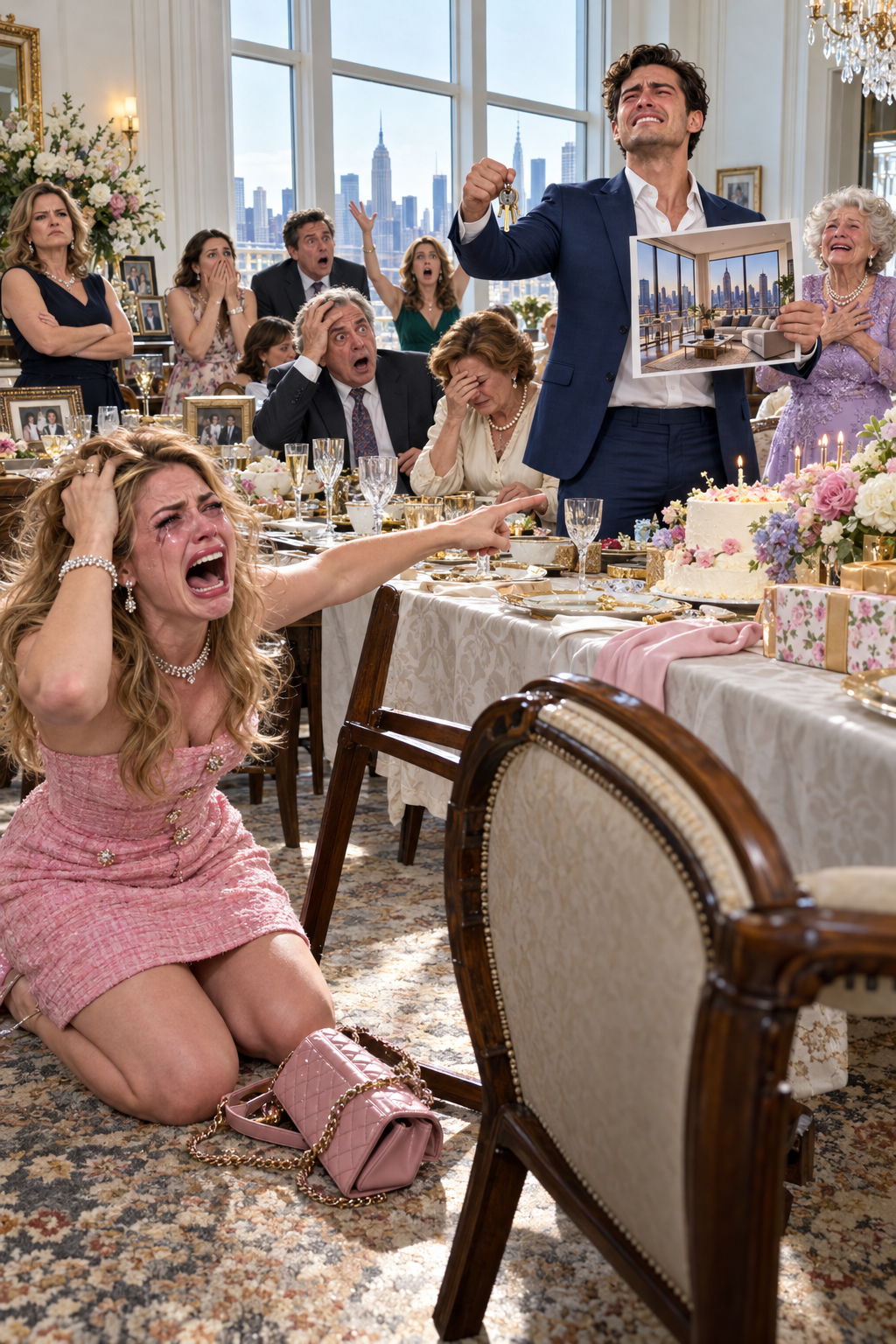
My Sister Got Everything Growing Up. Private School, A New Car, Vacations Every Summer. I Got A Part-Time Job At 15 And Never Complained. At Grandma’s Birthday, She Found Out I Bought A Place In Manhattan. She Started Crying And Said ‘Why Does He Get That And I Don’t. Mom Just Looked Away.
For twenty-nine years, my older sister got the schools, cars, vacations, tuition, and second chances while I learned not to ask for anything. At my grandmother’s birthday, she discovered I had quietly bought an apartment in Manhattan and burst into tears, demanding to know why I got something she didn’t. My mother looked away instead of defending either of us. Six weeks later, Grandma handed me an old envelope with my name on it, and I finally understood why Mom had been so afraid to look me in the eye.
Part 1
My name is Lauren Hale, I’m twenty-nine years old, and until last spring I thought I understood the worst thing my family had done to me. I thought it was the favoritism, the thousands of little choices that taught me my older sister, Madison, was the child worth investing in while I was the child expected to manage. Then Madison found out I owned an apartment in Manhattan, had a breakdown in front of half our extended family, and my mother’s reaction told me there was something underneath all those years of inequality that I had never been allowed to see.
We grew up in a comfortable house in Westchester County, the kind with cedar shutters, a finished basement, and a kitchen island my mother replaced twice before I finished high school. We weren’t wealthy enough for yachts or private planes, but there was always money for the things my parents considered important, and Madison was almost always at the top of that list. She attended Bellamy Academy, a private school whose tuition cost more than some people earned in a year, while I rode the yellow bus to our local public school with a backpack I used until one strap had to be stitched back on.
Whenever I asked why Madison’s school was necessary and mine wasn’t, Mom gave me the same answer. “Your sister has different needs, Lauren.” Different needs explained ballet lessons, a math tutor, summer programs in Vermont, a new laptop, SAT coaching, therapy, and eventually a white Volkswagen with a red bow stretched across the hood on her sixteenth birthday, while different needs apparently didn’t apply when I asked for art classes, a used car, or help paying for a graphing calculator.
Dad occasionally objected, but never long enough to change anything. He would say, “Lauren’s been asking about soccer,” or, “Maybe we should put something aside for her too,” and Mom would answer that Madison was struggling, Madison needed structure, Madison’s school fees were due, or Madison had an opportunity we couldn’t afford to waste. Dad would rub the back of his neck, look at me with something that resembled apology, and the conversation would disappear.
By fifteen, I understood that asking my parents for something meant either hearing no or watching them become irritated that I’d created another expense. So I stopped asking and took a job at a neighborhood Italian restaurant called Bellini’s, where I cleared plates, rolled silverware, filled water glasses, and came home smelling like garlic, fryer oil, and industrial dish soap. My first paycheck was $91.18, and I remember staring at the numbers in my checking account longer than was reasonable because that money represented something I’d never had before: a resource nobody else got to decide I didn’t deserve.
Madison wasn’t cruel to me then, at least not in the obvious way. She was three years older and existed in the comfortable certainty that whatever happened next would somehow work out for her, and when you’re raised inside that certainty, you don’t necessarily stop to ask who is paying for it. She borrowed my clothes without asking, complained when Mom bought the wrong brand of shampoo, and once told me I was “lucky” I didn’t attend Bellamy because the academic pressure was exhausting, then flew to Florida with three classmates for spring break while I covered an Easter Sunday shift at Bellini’s.
When I turned sixteen, Dad slipped fifty dollars into my birthday card, and Mom told me we could “talk about a car next year.” We never did. I used the money toward the calculator I needed for AP Statistics, and two weeks later Madison scraped the side of her Volkswagen against a parking garage pillar and Mom paid the deductible without mentioning money being tight.
That was the year something inside me hardened, though not in the dramatic way people describe in movies. I didn’t swear revenge, promise to become a millionaire, or stand in the rain making declarations to the universe; I just started keeping records. Paychecks, grades, scholarship deadlines, savings totals, college costs—I wrote everything down because numbers were calmer than feelings, and unlike people, they generally admitted what they were.
I graduated near the top of my class and got into Binghamton University with a strong academic scholarship. Madison had already gone to Boston for college with our parents covering tuition, housing, meal plans, and most of her spending money, but when I showed Mom my acceptance letter she smiled and said, “That’s wonderful, honey. We knew you’d figure something out.” Those six words stayed with me longer than congratulations would have.
I figured everything out. I worked during school, bartended on weekends once I was old enough, tutored accounting and economics, lived with roommates, and majored in finance because I’d spent my childhood watching money become a language of affection in my family and wanted to understand every word of it. Madison graduated with a communications degree, moved home for almost a year, and received what Mom jokingly called “a little launch money” when she finally got a marketing job—a five-thousand-dollar check, professional clothes, and the deposit on her first apartment.
When I graduated with honors and an analyst position already lined up in New York, Dad drove to campus to help me move. Mom couldn’t come because Madison was having a crisis with a boyfriend she’d dated for four months. As Dad loaded boxes into his truck, he looked at me and said, “You never make us worry about you,” intending it as a compliment, and I remember thinking that being easy to neglect was apparently my greatest childhood achievement.
My first apartment in New York was a cramped four-bedroom walk-up in Washington Heights with unreliable heat, a bathroom door that didn’t close properly, and roommates who considered cereal a legitimate dinner. I loved it. Every cracked tile and radiator hiss belonged to a life I had chosen, and for the first time no one was standing nearby explaining why my sister deserved something more urgently than I did.
I worked brutally hard for the next six years. I saved, invested, got promoted, changed firms once, learned from people smarter than me, and became the person my managers trusted with difficult accounts because I had spent most of my life being told, indirectly, that nobody was coming to rescue me. By twenty-seven, I was a senior analyst earning more money than anyone in my family realized, and I kept it that way.
The same year, I met Daniel Reyes at a rooftop birthday party in Brooklyn. He was an emergency physician with an exhausted smile, terrible dance moves, and a habit of asking questions and actually listening to the answers, which felt almost suspicious to me at first. Six months into our relationship, he asked why I rarely talked about my family, and I told him, “Because explaining them takes longer than knowing them.”
He eventually met them and understood within two dinners. On the drive home after the second one, he said, “Your mother asks Madison questions and gives you updates.” I looked over at him. “That may be the most accurate diagnosis you’ve ever made outside a hospital.”
By then I had also been quietly working toward something I had never told my family about. I wanted to buy in Manhattan—not because I needed to prove anything to them, but because ownership meant permanence, and permanence was something I had spent years creating for myself. At twenty-eight, after nearly a decade of saving and investing, I closed on a modest one-bedroom in the East Village with old hardwood floors, tall windows, a narrow kitchen, and a mortgage I could comfortably manage.
I sat on the empty living room floor the afternoon I got the keys and cried. Daniel came over with takeout and found me leaning against the wall with the closing folder beside me, laughing and wiping my face at the same time. “You bought a home,” he said, and I remember correcting him automatically: “I bought my home.”
I didn’t tell my parents. I knew Mom would immediately ask what Madison thought, whether Madison might want to move to the city someday, whether I had overextended myself, or why I hadn’t discussed such a major decision with the family. Mostly, though, I didn’t want the apartment dragged into the strange emotional accounting system I’d spent my life escaping.
For almost a year, it stayed private. Then Grandma June turned eighty-five.
And at a backyard birthday party in Connecticut, my father accidentally gave my mother a reason to look terrified of my success.
Part 2
Grandma June was my father’s mother and the only adult in my childhood who consistently treated Madison and me as two separate people instead of one child with needs and another child who would manage. She never made speeches about fairness; she simply practiced it, putting the same amount of cash in our birthday cards, asking about my school with the same attention she gave Madison’s, and quietly telling me at thirteen, “Being capable doesn’t mean you should always have to be.” I hadn’t understood how rare that sentence was until much later.
Her eighty-fifth birthday was held at Uncle Mark’s house in Connecticut on a bright April Saturday. There were rented tables on the lawn, yellow flowers in glass jars, trays of food under white tents, cousins I hadn’t seen in years, and Grandma June positioned beneath an umbrella like a tiny silver-haired queen receiving visitors. Daniel came with me, and Grandma liked him within thirty seconds because he brought her dark chocolate and didn’t talk down to her.
Madison arrived wearing a pale blue dress with fresh highlights and her boyfriend, Trevor, who sold medical equipment and spoke about networking events with the gravity normally reserved for international diplomacy. She hugged me quickly, looked at Daniel, then at me, and said, “You look skinny. Are you eating?” That was Madison’s version of affection: concern shaped like criticism.
The first two hours went surprisingly well. I drank lemonade, talked with cousins, helped Grandma open gifts, and almost convinced myself we could have one family gathering where nothing old and ugly crawled out from under the furniture. Then Aunt Colleen found me near the drink table.
Colleen was Dad’s younger sister and incapable of receiving information without immediately experiencing a moral obligation to redistribute it. She grabbed my forearm and said, “Lauren, why didn’t you tell anyone?” My stomach tightened before she even finished the question. “Tell anyone what?”
“That you bought an apartment in Manhattan.”
For half a second, every sound around me seemed to flatten. I looked at Daniel, who gave a tiny shake of his head because he knew exactly what I was asking without words. “Where did you hear that?” I asked.
“Your father mentioned it this morning. Apparently he saw your closing papers when he helped you move that bookshelf.” She beamed at me. “Honey, that’s incredible. At your age? In Manhattan?”
I’d forgotten about the bookshelf. Dad had visited a month earlier and helped me move an antique bookcase I’d bought secondhand, and while shifting it we’d knocked a stack of folders from my desk. I hadn’t noticed him reading anything, but apparently he’d seen enough.
A cousin overheard Colleen. Then another relative heard him. Within minutes the news traveled through the backyard with astonishing efficiency, and people I hadn’t spoken to in years were congratulating me and asking what neighborhood I lived in. I answered honestly because the secret was already dead.
Daniel leaned close. “How long until Madison hears?” he murmured.
“Three minutes.”
It took two.
I was pulling a ginger ale from a cooler when Madison appeared behind me with her arms folded tightly across her chest. Trevor hovered several yards away pretending to examine his phone. Her eyes were already wet.
“Is it true?” she asked.
“Is what true?”
“Don’t do that, Lauren. Did you buy an apartment in Manhattan?”
“Yes.”
Her face changed as though I had admitted to something insulting. “When?”
“Last year.”
“You’ve owned a Manhattan apartment for a year and didn’t tell us?”
“I didn’t really see a reason to make an announcement.”
“You didn’t see a reason?” Her voice rose enough that two nearby conversations stopped. “How did you even afford that?”
There it was. Not congratulations, not where is it, not are you happy. How could someone like you possibly have acquired something like that?
“I saved,” I said. “I invested. I’ve done well at work.”
“But Mom and Dad didn’t give you anything.”
“No.”
Madison stared at me. “Then how?”
I almost laughed, though nothing about the moment was funny. “By not having anything given to me, mostly.”
Her expression tightened. “That’s not what I meant.”
“I know exactly what you meant.”
She glanced around, perhaps realizing people could hear us, and lowered her voice. “I’ve been working for almost eight years, Lauren. I make good money and I can barely save because everything is so expensive. You can’t just casually buy property in Manhattan.”
“I didn’t casually do anything. I started working at fifteen, lived with roommates for years, saved most of what I made, invested, and worked my way up.”
“You’re acting like I’ve never worked.”
“I didn’t say that.”
“You’re implying it.”
“I’m explaining my own finances because you demanded an explanation.”
That should have ended it, but Madison had never been good at leaving an emotional wound alone. Her eyes filled completely and she whispered, “It doesn’t make sense.” Then she said something that changed the entire afternoon.
“Why do you get that when I don’t?”
The question came out louder than she intended. At least a dozen people heard it, including Grandma June, who was fifteen feet away holding a paper plate with a slice of chocolate cake. The backyard went silent enough that I could hear a sprinkler clicking somewhere beyond the fence.
I looked toward Mom.
She was standing beside the dessert table with Dad, and for one brief second our eyes met. I expected irritation, embarrassment, maybe even that familiar warning expression telling me to make things easier for Madison.
Instead, Mom looked frightened.
Then she turned away.
Madison started crying in earnest. Trevor guided her toward the house, relatives suddenly became fascinated by their drinks, and Dad stood rigid beside Mom with a look on his face I couldn’t interpret. Daniel came next to me but didn’t touch me until I reached for his hand first.
Grandma June kept watching my mother.
That detail bothered me more than Madison’s tears.
Mom eventually approached me near the end of the party. “You should have told us about the apartment,” she said quietly.
I stared at her. “That’s what you have to say?”
“Madison feels blindsided.”
“Madison feels blindsided because I own something?”
“It’s not that simple.”
“It actually is.”
“Lauren, please don’t turn this into a list of everything we did wrong when you were children.”
I hadn’t mentioned our childhood.
The sentence landed strangely between us.
“I wasn’t going to,” I said. “But it’s interesting that you thought I was.”
Her mouth tightened. Behind her, Dad looked toward us and then away.
I asked the question I’d been carrying since I was old enough to understand favoritism. “When was anyone in this family ever worried about blindsiding me?”
Mom’s face went pale.
She didn’t answer.
Daniel drove us home because I felt too drained to deal with traffic. I watched the highway lights streak past the passenger window and replayed Madison’s breakdown, but the more I thought about it, the less her reaction bothered me. Madison had always believed the family hierarchy was natural; learning I’d built something without their help had cracked that belief, and people often become angry when reality refuses to honor the role they’ve assigned you.
What stayed with me was Mom’s expression.
Fear.
Three days later, Grandma June called me.
She didn’t mention Madison.
She said, “Lauren, the next time you’re in Connecticut, I need you to come see me alone.”
“Is everything okay?”
There was a pause.
“Probably not,” she said.
Then she added, “Bring nothing. I have the papers.”
Part 3
I didn’t tell my parents about Grandma’s call. I barely told Daniel, partly because I didn’t know what “the papers” meant and partly because my childhood had trained me to become quiet whenever money and my family appeared in the same sentence. Daniel listened without speculating and said, “Whatever it is, you don’t have to decide what it means until you actually see it.”
Before I could visit Grandma, my phone began filling with messages about the birthday party. Aunt Colleen apologized for “accidentally detonating the backyard,” one cousin told me he was proud of me, and another sent a Zillow estimate of my neighborhood as if I didn’t know what my own home was worth. Madison sent nothing.
Mom called on Wednesday evening while Daniel and I were making stir-fry. Her tone had the careful calm she used when she wanted to define reality before anyone else had a chance.
“We need to talk about Saturday.”
“Okay.”
“Madison has been extremely upset.”
I waited.
“She thinks you were showing off.”
I looked at Daniel, who stopped chopping vegetables and raised his eyebrows.
“Mom, I didn’t tell anyone. Dad told Aunt Colleen.”
“Your father mentioned it privately.”
“Nothing involving Aunt Colleen has ever remained private since approximately 1987.”
Daniel coughed into his fist to hide a laugh.
Mom sighed. “That’s not the point.”
“What is the point?”
“The point is that Madison feels you’ve been keeping your life separate from the family, and she doesn’t understand how you could afford something like that when you’ve never come to us for help.”
I turned off the burner because suddenly I didn’t trust myself around hot oil. “You just answered your own question.”
“What does that mean?”
“It means I could afford it because I built my life around knowing there wasn’t help available.”
“Lauren, that’s unfair.”
“Is it?”
“We supported you.”
I leaned against the counter. “Madison went to private school. I went public. Madison got a new car at sixteen. I got fifty dollars and bought a calculator. You paid her college tuition. I worked two jobs. You paid the deposit on her first apartment and gave her five thousand dollars when she got her first real job.”
“Those were different circumstances.”
There it was, the phrase beneath all the other phrases.
“Different needs. Different circumstances. Same result.”
Mom was quiet.
I continued, not loudly. “I’m not asking you to apologize right now. I’m telling you why I stopped telling you things. Every good thing that happens to me gets compared to Madison, minimized because I didn’t need help, or turned into a discussion about how she feels. My apartment was mine before anyone in this family knew about it, and I liked it that way.”
She took a breath that trembled slightly. “I think you’re carrying a lot of resentment.”
“I think you’re surprised I remember.”
Another silence.
Then Mom said, “Your sister had issues you didn’t have.”
“I had issues. I just handled them privately because you’d already taught me the budget belonged to someone else.”
Daniel placed his hand gently between my shoulder blades.
Mom’s voice changed. “That’s an ugly thing to say.”
“Was it inaccurate?”
She didn’t answer.
Finally she said, “Maybe we all need some space.”
That was Mom’s traditional method of ending a conversation she could no longer control. I told her space was fine, hung up, and stood in my kitchen staring at the phone.
Daniel poured me a glass of water. “That sounded overdue.”
“It felt like pulling a nail out of my chest.”
“Better or worse?”
“Both.”
The following Saturday, I drove to Connecticut and met Grandma June at the assisted-living community where she’d recently moved into a small independent apartment. Her living room smelled faintly of lavender and furniture polish, and a baseball game played silently on the television because Grandma liked “watching pitchers think.” She poured coffee, offered me cookies, then reached into a desk drawer and removed a thick cream-colored envelope.
My full name was written across the front in my late grandfather’s handwriting.
Lauren Elise Hale.
I stopped breathing normally.
“What is this?”
Grandma sat across from me. “Your grandfather and I started putting money away when you girls were born. Not enormous amounts, but enough that we hoped neither of you would have to begin adult life buried in debt.”
I stared at the envelope.
“I don’t understand.”
“We gave your parents contributions every year. Some went directly into education accounts. Some were checks when school expenses came up. We were told both of you were benefiting.”
My fingers went cold.
Grandma slid several photocopies across the table. There were old letters, account summaries, and copies of checks with notes in the memo lines: Madison and Lauren—education. Girls’ college fund. Split equally.
I read the same words several times.
“My scholarship covered most of my tuition,” I said slowly.
“I know.”
“I paid the rest.”
“I know that now.”
The room felt suddenly too small.
Grandma pointed to a letter from my mother dated nearly twelve years earlier. In it, Mom thanked my grandparents for helping with “the girls’ education” and said their contributions had allowed “both daughters access to opportunities we otherwise couldn’t provide.”
Both daughters.
I looked up.
“Where did mine go?”
Grandma’s jaw tightened.
“That’s what I asked your father after the party.”
Something inside me dropped.
“He said most of the money was used over the years. He thought some had gone to you, but he wasn’t managing the household finances then. Your mother was.”
I remembered Mom paying Bellamy Academy. Madison’s tutors. Summer programs. Her car. Her college. Every “different need” suddenly had a shadow beneath it.
“Are you telling me they spent money meant for me on Madison?”
“I’m telling you I don’t know exactly what happened yet.”
That answer was somehow worse.
Grandma leaned forward. “Your mother knew I believed we had helped both of you. Your father knew you were receiving less, but I don’t think he understood the full accounting. After Madison’s outburst, I asked questions I should have asked years ago.”
I laughed once, sharply. “So Mom wasn’t embarrassed at the party.”
Grandma looked at me for a long moment.
“No.”
“She was scared.”
“That was my impression.”
I pushed the papers away because my hands had started shaking.
For years I’d told myself the favoritism was emotional, careless, unfair but simple. Madison needed more, Mom identified with her, Dad failed to intervene, and I became independent because someone had to.
But if Grandma was right, independence hadn’t merely been forced on me because my parents had chosen to give Madison more of their money.
They may have given her mine too.
As I left, Grandma handed me the original envelope.
Inside was one final document I hadn’t seen on the table.
It was a handwritten note from my grandfather, dated the year I turned fifteen.
“For Lauren’s future. Make certain she knows this belongs to her as much as Madison’s belongs to Madison.”
I sat in my car for nearly twenty minutes before turning the engine on.
Then my father called.
His first words were, “Your grandmother spoke to you, didn’t she?”
Part 4
I almost ignored Dad’s call. The old version of me would have answered immediately, reassured him I wasn’t angry, and made his guilt easier to carry because smoothing other people’s discomfort was another skill I’d developed young. Instead I watched his name flash across the screen twice before I picked up.
“Yes,” I said.
He exhaled. “Can I see you?”
“I’m already in Connecticut.”
“Come to the house.”
Mom wasn’t home when I arrived. Dad was sitting on the front porch with two coffee mugs on the small table between the chairs, the same porch where he’d taught Madison to drive using hand gestures while I watched from the steps. He looked older than he had at Grandma’s party.
For several seconds, neither of us spoke.
Then Dad said, “I failed you.”
I looked at him.
“That’s not enough.”
“I know.”
He wrapped both hands around his mug. “I saw what your mother was doing when you were kids. Maybe not all of it, but enough. Every time money went to Madison, I told myself there was a reason, and every time you handled something on your own, I used that as proof you didn’t need us as much.”
“That’s a very convenient system.”
His face tightened. “It was cowardly.”
That stopped me.
Dad had apologized before in vague, harmless ways—sorry we couldn’t make the game, sorry things were complicated, sorry your mother is stressed—but he’d never named himself as part of the problem. I waited.
“Your grandmother’s money,” he continued. “I didn’t know how much had been given. Margaret handled the accounts. I knew your grandparents sent checks, but I believed there were separate savings accounts for both of you.”
Margaret was my mother. Hearing him use her name instead of “your mom” made the conversation feel strangely official.
“When did you find out?”
“After the birthday party.”
“How?”
“Your grandmother called me the next morning and started asking for records.”
Dad looked toward the driveway, though no car was there.
“I went through old statements. Your mother had kept almost everything in filing boxes in the basement. Some of the money was used exactly the way your grandparents expected—school expenses, college costs—but the distribution wasn’t equal.”
“How unequal?”
He closed his eyes for a moment.
“Very.”
The word settled between us.
“Give me a number.”
“Lauren—”
“Give me a number.”
He swallowed. “From what I can reconstruct, more than eighty percent of what your grandparents contributed toward education and early-adult expenses went to Madison.”
I stared at him.
“Eighty percent.”
“Approximately.”
“And Mom knew Grandma believed it was equal.”
“Yes.”
“You knew I was working through college.”
“Yes.”
“You watched me work two jobs while there was money my grandparents had given you for me.”
“I didn’t understand that then.”
“But you understood Madison had everything paid.”
He nodded.
I stood because remaining seated felt impossible.
“Do you know what I did sophomore year when my laptop died?”
Dad looked down.
“I worked extra closing shifts at the bar for two weeks and borrowed a friend’s computer until I could buy a refurbished one. Mom told me you couldn’t help because you’d just paid Madison’s student housing fee.”
“I remember.”
“Did you ever ask where the money Grandma had sent for me went?”
“No.”
“Then you did understand, Dad. Maybe not the accounting. But you understood enough not to ask.”
His eyes filled.
I hated that seeing my father cry still activated the part of me trained to protect everyone else. I sat down again but kept my hands folded in my lap so I wouldn’t reach for him.
“I’ve spent my whole life telling myself you were the better parent,” I said. “You weren’t. You were the quieter one.”
He nodded slowly. “That’s fair.”
“No, it isn’t.”
He looked confused.
“None of this was fair.”
We sat in silence until the coffee went cold.
Eventually Dad told me something else. When I was seventeen, Grandma had sent a check intended to cover a summer pre-college program I’d been invited to attend at NYU. I remembered the program vividly because I’d thrown the brochure away after Mom told me it was too expensive.
The check had arrived before I ever showed my parents the brochure.
My mother had deposited it.
Two months later, Madison attended a study-abroad program in Paris.
I felt physically sick.
“Did Mom know what the money was for?”
“The memo line had your name and ‘NYU summer.’”
That was the moment the story changed for me.
Favoritism could be unconscious. Emotional blindness could become habitual. A parent could convince herself one child genuinely needed more support.
But you could not accidentally take money earmarked for your younger daughter’s opportunity, tell her the opportunity was unaffordable, and send her sister to Europe.
That required a decision.
“What happens now?” Dad asked.
I looked at him. “Why are you asking me?”
“Because I don’t know how to fix this.”
“You can’t.”
His face crumpled slightly.
I continued before guilt softened me. “That’s part of the problem. Everyone in this family waits for me to be the person who can handle things. I handled school. I handled college. I handled work. Now you’re asking me to handle finding out my mother redirected money intended for me and decide how everybody moves forward.”
“You’re right.”
“I know.”
I left without seeing Mom.
That night Madison finally texted.
Can we talk?
I stared at the message for several minutes.
Did you know? I typed.
Three dots appeared, disappeared, then appeared again.
Know what?
About Grandma and Grandpa’s money.
The typing bubble vanished.
Ten minutes passed.
Then twenty.
Finally my phone rang.
Madison.
I answered without saying hello.
Her voice sounded small. “Lauren, I didn’t know about the accounts.”
“That wasn’t my question.”
Silence.
“Did you know Mom used money intended for me on you?”
Another silence.
“I knew about one thing.”
I shut my eyes.
“What thing?”
“The Paris program.”
My grip tightened around the phone.
“How?”
“Mom told me.”
The room seemed to tilt.
“She told you what?”
“That Grandma had sent some money for a program you wanted to do, but Mom thought Paris would be better for my résumé and that you could do something later.”
I couldn’t speak.
Madison started crying quietly. “I was nineteen. I told myself Mom knew what she was doing.”
“You were nineteen, not nine.”
“I know.”
“You went.”
“I know.”
“You went to Paris knowing Grandma had sent that money for me.”
“Yes.”
Something inside me became very calm.
Madison kept talking, explaining that she’d felt guilty, that Mom had said I was practical and would understand, that I hadn’t even applied yet, that there would be other opportunities.
I interrupted.
“Stop.”
She stopped.
“For years I’ve wondered whether you noticed what was happening. I kept giving you the benefit of the doubt because you were a kid too. But you knew at least once, and once was enough.”
“I was young.”
“So was I.”
“Lauren, please.”
“No.”
That single word felt cleaner than anything I’d said to my family in years.
“I’ll talk to you eventually,” I said. “But not now.”
I ended the call.
Daniel found me sitting on the kitchen floor exactly where I’d sat after buying the apartment, except this time there was no joy in it. I told him about Paris, and he sat beside me without trying to turn the moment into a lesson.
Two days later, Mom sent an email.
Not a phone call.
Not an apology.
An email with the subject line: Family Finances Are More Complicated Than You Think.
I read the first paragraph.
Then I forwarded it to Grandma June.
Her reply came fifteen minutes later.
Do not respond yet. I found something else.
Part 5
Grandma’s “something else” turned out to be a cardboard file box my grandfather had stored with an attorney before his death. It contained copies of letters, canceled checks, notes from conversations with my mother, and an informal ledger he had kept because, as Grandma explained, “Your grandfather trusted people, but he trusted paperwork more.” That sentence would have made me laugh under different circumstances.
The records didn’t reveal theft in some dramatic criminal sense. What they revealed was more ordinary and, to me, more painful: year after year, my grandparents had given my parents money with clear instructions that it was meant to benefit both granddaughters, and year after year my mother had found reasons to direct the larger share toward Madison. When Grandpa occasionally asked about me, Mom replied that I was “self-sufficient,” “thriving in public school,” “not interested in expensive activities,” or “more comfortable earning her own way.”
Some of those statements contained just enough truth to become effective lies.
I had become self-sufficient because asking had stopped working. I had attended public school because my parents sent Madison private. I had worked because I wanted basic independence. Then my independence had been used as evidence that I hadn’t needed the support withheld from me in the first place.
The final item was a letter my mother wrote to Grandpa when I was seventeen.
Lauren has decided against the NYU program. She feels working this summer will be more valuable for her, and honestly I agree. Madison’s Paris program is a once-in-a-lifetime academic opportunity, so if you’re comfortable, we’d like to redirect the funds there.
I read the paragraph four times.
I had never decided against NYU.
I had been told we couldn’t afford it.
Grandma sat beside me at her dining table, furious in the quiet way people sometimes become after decades have taught them that shouting wastes energy. “Your grandfather believed you changed your mind,” she said.
“He died believing that?”
“Yes.”
That hurt more than I expected.
Grandpa had passed away during my junior year of college. I’d always wondered why he’d stopped asking about some of my academic plans during high school, and now I understood that he had been receiving a version of my life written by somebody else.
“What do you want to do?” Grandma asked.
It was the first time anyone in my family had asked that question without already preparing an answer for me.
“I don’t know.”
“Then don’t decide today.”
Mom’s email sat unanswered for another week.
She wrote that parenting decisions were complicated, that Madison’s anxiety required expensive interventions, that I had always seemed resilient, and that the money from my grandparents had been given to “the family,” not placed in legally separate accounts. She said she regretted if I felt overlooked but insisted every decision had been made out of love.
She never mentioned NYU.
She never mentioned telling Grandpa I had declined.
That omission mattered.
Dad moved into Uncle Mark’s guest room shortly after I sent him a photograph of the letter. He didn’t announce a separation, and I didn’t ask whether the marriage was ending. For once I refused to become the person managing the emotional logistics.
Madison asked to meet me again.
This time I agreed.
We met at a coffee shop in Tribeca on a rainy Saturday morning. She arrived without the polished armor she usually wore around family—hair in a ponytail, little makeup, old sweater, eyes tired. For several minutes we talked about nothing because both of us were afraid of the thing sitting between us.
Finally she said, “I knew more than I told you on the phone.”
I felt my body go still.
“How much more?”
“Not about the overall money. I swear. I didn’t know Grandma and Grandpa were sending things equally over the years.” She wrapped both hands around her cup. “But there were moments.”
“What moments?”
She looked at the table.
“When I got the car, I knew you’d asked for help buying a used one.”
I waited.
“When Mom paid my apartment deposit, I knew you were living with three roommates and doing everything yourself.”
“Everybody knew that.”
“I know.”
“What else?”
She swallowed. “When you graduated college, Mom gave me money that same month.”
I frowned. “For what?”
“I wanted to redo my bedroom at the apartment.”
For a moment I honestly thought I had misheard her.
“She gave you money to redecorate?”
Madison nodded.
The absurdity made me laugh, once.
“How much?”
“Three thousand.”
I looked out the window at pedestrians moving beneath umbrellas.
The month I graduated, I had paid a broker fee, security deposit, and moving expenses in New York using nearly everything left in my savings account after college. Mom had called to congratulate me, spent twenty minutes discussing Madison’s boyfriend, and never asked whether I needed help.
“I’m sorry,” Madison whispered.
“Are you?”
“Yes.”
“Because you were crying at Grandma’s party because I bought something you didn’t have.”
Her face flushed.
“I know.”
“You weren’t horrified because the family treated me unfairly. You were horrified because after receiving every advantage, I still ended up with something you wanted.”
She nodded slowly.
“That’s true.”
I appreciated the answer more than I wanted to.
Madison wiped her eyes. “Finding out about your apartment destroyed this story I had about myself. I always thought I was the successful one and you were the scrappy younger sister who liked doing everything the hard way.”
“I didn’t like doing everything the hard way.”
“I know that now.”
“No, Madison. That’s important. I didn’t enjoy working holidays at fifteen. I didn’t enjoy bartending until two in the morning and going to class at eight. I didn’t reject help because I had some noble independent streak. I adapted to the fact that help went somewhere else.”
She started crying.
I let her.
That was new for me.
“I benefited from it,” she said. “Even when I didn’t understand all of it, I benefited, and when I did notice pieces of it, I looked away because looking directly at it would have meant giving something up.”
“Yes.”
“I don’t know how to make that right.”
“You can’t make the past right.”
“Then what do I do?”
“Stop asking the person who was shortchanged to design your redemption.”
She flinched, but nodded.
We sat there for a while.
Eventually Madison said she’d started therapy after Grandma’s birthday. She’d also turned down Mom’s offer to help with credit-card debt and begun reviewing her own spending because, in her words, she had no idea what her lifestyle actually cost when someone had always been available to cushion the landing.
“Good,” I said.
She gave me a sad smile. “That sounded exactly like Dad.”
“Don’t insult me.”
She laughed despite herself.
Before we left, I told her one thing clearly.
“I don’t forgive you.”
Her smile disappeared.
“I may someday. I may not. You don’t get to decide how long it takes because you’re finally uncomfortable with what happened.”
“I understand.”
“I also don’t hate you.”
That seemed to hurt her even more.
Because hate would have meant she still occupied enormous emotional space.
What I felt instead was distance.
Three days later, Madison confronted Mom.
I know because at 11:14 that night, Mom called me seventeen times.
I didn’t answer.
On the eighteenth attempt, she left a voicemail.
“Lauren, your sister is making accusations about things she doesn’t understand, and your father has left the house. I need you to tell them this family is being torn apart over money.”
I listened twice.
Then deleted it.
The next morning, Grandma June called.
“Your mother came to see me.”
“How did that go?”
“Poorly.”
I could hear satisfaction in Grandma’s voice.
Then she became serious.
“Lauren, there’s one more issue. Your grandfather’s will had a provision nobody remembered because it never became relevant.”
I closed my eyes.
“What provision?”
“If either of your parents misrepresented how the education money was used, their share of a separate family trust can be reviewed.”
For the first time, my mother’s years of explanations were no longer only hurting me.
They had created consequences she couldn’t ask me to absorb.
Part 6
I had no interest in becoming wealthy through Grandma’s trust, and I told her so immediately. She responded by telling me not everything was about whether I personally wanted money, which was both irritating and correct. The issue, she explained, was accountability: Grandpa had created a modest family trust years earlier, and its instructions allowed the trustee to reduce future distributions to anyone who knowingly misused or misrepresented designated family funds.
Mom had spent years telling Grandpa his contributions were benefiting both daughters.
The records suggested otherwise.
An attorney reviewed everything. There were no police, no courtroom drama, no dramatic accusations of criminal fraud, because real life is usually less theatrical than people expect. There was simply paperwork, uncomfortable meetings, and the possibility that Mom’s future inheritance from Grandpa’s remaining trust would be significantly reduced and redirected toward Grandma’s care and charitable gifts.
When Mom understood that, she finally asked to see me in person.
I agreed on one condition.
We would meet in my apartment.
Daniel offered to disappear for the afternoon, but I asked him to stay nearby. “Not in the room,” I said. “I just don’t want to feel like I’m fifteen again.”
He kissed my forehead. “Then you won’t.”
Mom arrived carrying nothing.
That surprised me. She was the kind of person who brought food to difficult conversations because casseroles gave her hands something to do. She stepped into my living room, looked at the hardwood floors, the bookshelves, the framed photographs, the plants Daniel somehow kept alive, and stood silently taking in the home she’d only heard about through other people.
“It’s beautiful,” she said.
“Thank you.”
Her eyes filled.
I didn’t rescue her.
We sat across from each other.
“I read your grandfather’s letter again,” she began.
“Which one?”
Her face tightened because there were several.
“The one about NYU.”
“Okay.”
“I was wrong.”
Two words.
Twenty years too late.
I waited.
Mom twisted her wedding ring. “Madison was having a very difficult year. She was struggling academically and emotionally, and the Paris program had become incredibly important to her. You hadn’t applied to NYU yet, and I convinced myself you didn’t care as much.”
“You never asked.”
“No.”
“You told me we couldn’t afford it.”
“I know.”
“You told Grandpa I chose not to go.”
“I know.”
“Why?”
She looked at me, and for once there was no prepared explanation.
“Because if I’d told him the truth, he would have said no.”
That was the first honest answer.
I felt something inside me settle.
Not heal.
Settle.
“Thank you.”
She blinked. “For what?”
“For finally admitting you knew.”
Mom began crying.
“I loved you, Lauren.”
“I know.”
“I still love you.”
“I know.”
“I never meant for you to feel unwanted.”
“Intent isn’t magic.”
She covered her mouth briefly.
“I kept thinking Madison needed more. Every time something happened, she was the emergency. She was anxious, upset, struggling, heartbroken, overwhelmed. You would be disappointed and then make another plan.”
“So you punished the child who coped.”
Her eyes closed.
“Yes.”
The word surprised both of us.
Mom looked smaller after saying it.
“I told myself you were stronger.”
“I was seventeen.”
“I know.”
“No, I don’t think you do. Strength is something adults praise in children when they want permission to give them less.”
Mom stared at me.
I continued before I lost the nerve.
“When I worked at Bellini’s, you called me responsible. When I paid my own college expenses, you called me independent. When I stopped telling you things, you said I was private. Every adaptation I made to survive being second became another excuse for why putting me second wasn’t hurting me.”
She was crying openly now.
“I don’t know how to undo that.”
“You don’t.”
“Then what do you want from me?”
“Nothing.”
That frightened her more than anger would have.
“Lauren—”
“I spent years wanting you to notice. Then I wanted you to apologize. Then I wanted you to explain. I have the explanation now, and it doesn’t change anything.”
“Are you saying you don’t want a relationship with me?”
“I’m saying I’m not rebuilding one because you’re scared of losing Dad, Grandma’s trust, or Madison’s approval.”
“This isn’t about the trust.”
“Maybe not entirely.”
She flinched.
“I came because you’re my daughter.”
“And I was your daughter when I was seventeen.”
Mom had no answer.
We sat there in the home I’d bought without her, surrounded by evidence that my life had continued whether she paid attention or not. For years I’d imagined a confrontation like this ending with some huge emotional release, but what I actually felt was exhaustion mixed with clarity.
I wasn’t waiting anymore.
“I don’t forgive you,” I said.
Mom nodded slowly while tears slid down her face.
“I understand.”
“I may eventually forgive you for myself. But forgiveness won’t mean returning to the relationship we had.”
“What does it mean, then?”
“I don’t know yet.”
That was the truth.
She stayed another half hour, mostly talking about Dad. He had moved out temporarily and was considering whether decades of avoiding conflict had damaged their marriage beyond repair. Madison had stopped accepting financial help and told Mom she wouldn’t discuss reconciliation with me on Mom’s behalf.
For the first time, everyone had stopped making me responsible for making Mom comfortable.
Mom left quietly.
Daniel came out from the bedroom a minute later.
“How are you?”
I looked around the apartment.
“Fine.”
He smiled slightly. “Actual fine or Hale family fine?”
“Actual fine.”
And strangely, I was.
The trust review concluded two months later. Mom didn’t lose everything, nor did anyone suddenly hand me a fortune. Grandma and the trustee decided that a portion of the future money intended for Mom and Dad would instead remain reserved for Grandma’s long-term care, with another portion designated for scholarships at the public high school I’d attended.
That last part had been Grandma’s idea.
I loved it.
Mom hated the decision at first. Dad accepted it without argument.
Madison did something I didn’t expect.
She added five thousand dollars of her own money to the scholarship fund.
When she told me, I asked, “Why?”
“Because that’s roughly what Mom gave me when I got my first job, and you got nothing.”
I studied her face.
“You don’t have to buy forgiveness.”
“I’m not.”
“Good.”
“I figured somebody should get something useful out of the money.”
For the first time since the birthday party, I smiled at her without forcing it.
It wasn’t forgiveness.
It was recognition.
That winter, Madison’s life began falling apart in ways money couldn’t immediately repair.
And for the first time, my parents didn’t rush in to save her.
Part 7
Madison lost her job in November.
Not because of anything dramatic she’d done, but because her company restructured and eliminated several mid-level marketing roles. The old family pattern would have activated instantly: Mom paying rent, Dad making calls, Madison moving home until something better appeared, everyone organizing themselves around the crisis.
This time Madison called me before she called our parents.
“I got laid off,” she said.
“I’m sorry.”
“I’m trying not to panic.”
“That’s reasonable.”
She laughed weakly. “My therapist says I treat every problem like evidence my life is collapsing.”
“Your therapist sounds expensive but observant.”
“She’s both.”
I expected her to ask me for help.
She didn’t.
Instead she said, “Do you have fifteen minutes to look at my résumé sometime?”
That request mattered because it was specific, limited, and didn’t make me responsible for rescuing her. I told her to send it over.
Over the next two months, Madison did something I had never seen her do.
She struggled without immediately outsourcing the struggle.
She cut expenses, ended the lease on a car she didn’t need, picked up freelance marketing projects, sent dozens of applications, and accepted that being uncomfortable wasn’t the same as being abandoned. Mom offered to cover her rent twice, and Madison refused both times.
I knew because Mom complained about it during one of the rare phone calls I still accepted.
“I don’t understand why she’s making things harder than they need to be.”
“Maybe she wants to know she can do it.”
“There’s nothing wrong with accepting help.”
“No.”
I paused.
“There’s something wrong with help being used to decide who gets to develop independence and who doesn’t.”
Mom went quiet.
Our relationship after the apartment conversation was limited. I answered when I wanted to, visited occasionally for holidays, and stopped pretending every interaction needed to lead toward reconciliation. She was making changes, but I no longer measured my life by whether she made them quickly enough.
Dad moved into a small apartment twenty minutes from the house after he and Mom decided on a trial separation. He told me they were in counseling, then immediately added, “You do not need to have an opinion about this.” I almost laughed because that sentence represented more personal growth than I’d seen from him in the previous decade.
He apologized differently now too.
Not repeatedly.
Not theatrically.
Once, clearly, followed by changed behavior.
He started calling without needing a reason. When I told him I was busy, he said, “Talk later,” instead of making it sound like rejection. He came into the city one Saturday, helped Daniel install shelves, and stood in my kitchen drinking coffee as if being part of my life didn’t require a crisis.
Grandma June remained completely unimpressed with everyone’s emotional progress.
“People act like decency deserves a parade when they’ve spent years being foolish,” she told me.
I brought her cheesecake.
“That’s why you’re my favorite.”
“You are not supposed to have favorites.”
“I’m eighty-six. I’ll do what I want.”
The scholarship created from the reduced trust distribution was announced in January. It would support two graduating students from my old public high school each year, with preference for students who worked significant hours while maintaining strong grades.
Grandma named it after Grandpa.
I asked her not to include my name.
The first time I attended the selection meeting, I read applications from teenagers describing grocery-store shifts, younger siblings they cared for, restaurants where they worked late, and parents who were doing their best but couldn’t offer much financially. One girl’s essay said she did homework during her break at a diner because the house she shared with six relatives was too loud to study.
I thought about Bellini’s.
The fryer smell.
The calculator.
The paycheck for $91.18.
For years I had interpreted those memories only as evidence of what I lacked.
Now some of that history was becoming useful to people who had nothing to do with my family.
That felt better than revenge.
Madison got a new job in February as a brand manager for a consumer-products company in Brooklyn. The offer paid more than her previous position, and she negotiated an additional eleven thousand dollars after I told her the first offer was likely not the final one.
When she called, she was nearly shouting.
“They came up eleven thousand!”
“See?”
“I thought they were going to withdraw the offer.”
“Companies generally don’t collapse because a qualified woman asks to be paid more.”
“I hate that you’ve been right about so many things lately.”
“It’s one of my worst qualities.”
She moved to Brooklyn three months later.
Mom offered to pay her security deposit.
Madison said no.
Dad offered to help carry furniture.
Madison said yes.
That distinction told me she was finally understanding something our family had confused for years: support and rescue were not the same thing.
Daniel and I went to her apartment for dinner about a month after she moved. It was small, slightly crooked, and furnished with a mixture of thrift-store pieces and furniture she had assembled herself badly enough that one dining chair visibly leaned.
“Do not sit there,” she warned Daniel.
He examined it. “As a physician, I appreciate informed consent.”
Madison rolled her eyes.
While she cooked, I stepped onto the tiny balcony. There was a plant in the corner and a view of brick walls, fire escapes, and one narrow strip of sky.
Madison joined me.
“I get it now,” she said.
“What?”
“Why you cried when you bought your place.”
I looked at her.
She leaned on the railing.
“This apartment isn’t impressive. Mom hates the kitchen. The bedroom barely fits my bed. But every single thing in here exists because I figured it out.”
“Feels different.”
“Yeah.”
We stood quietly.
Then she said, “I’m still sorry.”
I nodded.
“I know.”
“Do you think you’ll ever forgive me?”
I considered lying.
Instead I said, “Maybe parts of it.”
She looked disappointed but accepted it.
“I don’t think we’re going back to being the sisters we were before.”
“We weren’t very good sisters before.”
“No.”
That made us both laugh.
“What are we now?” she asked.
“I don’t know.”
“Okay.”
For once, she didn’t push.
Daniel proposed to me in June on the rooftop of our building. He had planned a speech and forgotten half of it, I started crying before he finished, and a neighbor’s dog barked through the entire thing.
I said yes.
We decided on a small wedding.
When Mom heard, she immediately offered money.
I thanked her and declined.
She didn’t argue.
That was progress too.
Then, three weeks before Grandma June’s eighty-sixth birthday, Dad asked me to meet him for lunch.
He slid an envelope across the table.
Inside was a check.
I pushed it back.
“No.”
“Read the note.”
I unfolded the paper beneath it.
Dad had calculated, as closely as he could, the difference between what my parents spent helping Madison launch her adult life and what they spent on me.
The number was enormous.
“I can’t make the past equal,” he had written. “This isn’t repayment. It is evidence that I finally stopped pretending the difference was invisible.”
I looked at him.
“I don’t want your money.”
“I know.”
“What am I supposed to do with this?”
“Whatever you want.”
I thought about it.
Then I smiled.
“I actually know exactly what I want.”
Part 8
I didn’t deposit Dad’s check.
Instead, I asked whether he would redirect it to Grandpa’s scholarship fund over several years.
Dad stared at me for a moment, then smiled.
“Your grandfather would like that.”
“So would I.”
“Your mother might contribute too.”
“That’s between her and the fund.”
That boundary had become one of the most important changes in my life. I stopped using every event as a test of whether Mom had finally become the mother I’d wanted, because that still gave her too much power. She could improve, fail, apologize, relapse into old habits, or genuinely change, and I no longer had to organize my emotional world around the result.
Mom did contribute eventually.
Quietly.
No announcement, no family group message, no insistence that Grandma praise her.
I heard about it from the scholarship coordinator months later.
I appreciated the action.
I did not interpret it as repayment.
Some debts aren’t meant to be settled.
Grandma June’s eighty-sixth birthday looked almost identical to the party that had started everything: same uncle’s backyard, same white tables, same loud cousins, same chocolate cake. The difference was that nobody had to pretend our family was simpler than it was.
Madison arrived from Brooklyn carrying a cake she’d baked herself.
It leaned.
Grandma looked at it and said, “What happened to the left side?”
“Gravity.”
“Gravity has been around a long time. Bakers generally plan for it.”
I laughed so hard I nearly spilled my drink.
Mom arrived separately from Dad.
They were still married but living apart and attending counseling. I had no idea whether they’d stay together, and I genuinely didn’t need to know until they decided.
That freedom felt enormous.
At one point Mom approached me near the garden.
“You look happy,” she said.
“I am.”
She glanced toward Daniel, who was arguing with Uncle Mark about baseball.
“He’s good to you.”
“Very.”
“I’m glad.”
“Thank you.”
There was an awkward pause.
Old me would have filled it.
Current me let it exist.
Mom finally said, “I know you haven’t forgiven me.”
I looked at her.
“I don’t say that to pressure you.”
“Okay.”
“I just want you to know I’m going to keep trying whether you forgive me or not.”
That was probably the most useful thing she could have said.
“Good.”
Her eyes became watery, but she smiled.
Then she walked away.
No hug.
No dramatic reconciliation.
No miracle.
And I was completely comfortable with that.
Later, Madison sat beside me at a picnic table.
“You realize this is the anniversary of my public humiliation.”
“It’s Grandma’s birthday.”
“Both things can be true.”
“You were pretty dramatic.”
“I was having an existential crisis.”
“You asked why I got an apartment you didn’t.”
She covered her face.
“I know. I’m considering changing my name.”
“Probably wise.”
She lowered her hands, smiling.
Then her expression became serious.
“I’m glad Dad told Aunt Colleen.”
“So am I.”
“That’s weird, right?”
“Extremely.”
But it was true.
If Aunt Colleen hadn’t broadcast the apartment news, Madison might never have exploded. If Madison hadn’t exploded, Grandma might never have questioned Mom’s reaction. If Grandma hadn’t asked questions, the old checks and letters might have remained in boxes until nobody alive remembered what they meant.
My mother’s favoritism created the imbalance.
Her attempts to hide it created the evidence.
Madison’s entitlement exposed the contradiction.
And my apartment, ironically, wasn’t the cause of any of it.
It was simply the thing successful enough to make the old family story impossible to maintain.
That distinction mattered to me.
I hadn’t won because I bought property in Manhattan.
Life wasn’t a scoreboard where my mortgage defeated Madison’s rent.
I had won something much more useful: the right to stop participating in a family role that had been assigned to me before I was old enough to recognize it.
I was no longer the strong child who required nothing.
I required respect.
I required honesty.
And when those things weren’t available, I had learned to leave without begging.
Daniel and I married that fall in a small ceremony overlooking the Hudson. Grandma sat in the front row wearing a navy dress and complained that the chairs were too hard. Dad cried before I reached the aisle, which shocked everyone except me.
Madison attended.
She wasn’t my maid of honor.
That role went to my college roommate, Tessa, the woman who had driven me to work during a snowstorm when my carpool canceled and once lent me grocery money without making me feel ashamed.
Madison understood.
That meant something.
Mom attended too.
She didn’t try to control the guest list, the flowers, the food, or my relationship with Madison. She gave us a handwritten card and a small framed photograph of Grandpa holding me as a baby.
On the back she had written one sentence.
He always believed in you. I’m sorry I made it harder for you to know that.
I cried when I read it.
Then I put the frame on my bookshelf.
Crying did not mean forgiveness.
Keeping the photograph did not mean the past had been repaired.
People confuse healing with restoration because restoration sounds prettier. Sometimes healing means accepting that something will never be restored and discovering your life can still become whole.
A year after Grandma’s birthday meltdown, I was promoted to vice president at my firm. Daniel and I refinanced the apartment, painted the bedroom, and finally replaced the cheap dining table I’d owned since my first year in the city.
Madison continued therapy.
She kept her Brooklyn apartment, advanced at work, and stopped calling our parents every time something went wrong.
We saw each other maybe once a month.
Sometimes less.
Our relationship became surprisingly peaceful once neither of us expected it to resemble what sisters were supposedly meant to have.
She occasionally asked me for career advice.
I occasionally asked her for marketing help.
We sent each other ridiculous videos.
We did not become best friends.
I never forgot Paris.
I never forgot that she knew.
Maybe one day that memory will lose its sharpest edge.
Maybe it already has.
But forgiveness, if it comes, will belong to me.
Not to Madison.
Not to Mom.
Not to the version of family harmony everyone else would find more comfortable.
Dad became more present in my life than he’d ever been before. He never asked me to absolve him, which made being around him easier. Sometimes responsibility is the closest thing to an apology that actually lasts.
Grandma June remains Grandma June.
At eighty-seven, she still plays poker badly enough to appear innocent and well enough to take everyone’s money.
The scholarship in Grandpa’s name has now helped four students.
I met the first two at their graduation ceremony.
One was headed to SUNY Albany to study nursing.
The other planned to study engineering at Buffalo.
Both had worked throughout high school.
When the nursing student shook my hand, she said, “This changes everything for me.”
I had to look away for a second.
Not because I was thinking about the Manhattan apartment.
I was thinking about an envelope with my name written across the front.
About a summer program I never attended.
About a grandfather who had believed I’d chosen not to go.
About all the ways adults can rewrite a child’s choices until the child begins believing the rewritten version too.
My story could easily have become a story about proving everyone wrong.
For a while, I thought it was.
The neglected daughter works harder, becomes successful, buys a Manhattan apartment, and watches the golden child fall apart.
That’s satisfying for about five minutes.
Then real life begins again.
The apartment didn’t give me back the things I’d missed.
Money couldn’t return the summers I worked, the college nights I worried about rent, the seventeen-year-old girl who believed she was asking too much whenever she wanted something.
Success did something else.
It created enough distance for me to finally see the system clearly.
Mom didn’t favor Madison because Madison was better.
Madison wasn’t more deserving because she received more.
I wasn’t stronger because I received less.
We were children responding to decisions adults made around us.
The difference is that once we became adults, those decisions became ours to repeat or reject.
Madison spent years accepting the advantages.
Eventually, she chose to stop.
Dad spent years staying quiet.
Eventually, he chose to speak.
Mom spent years explaining her behavior.
Eventually, she chose to admit it.
And I spent years waiting to be treated like I mattered.
Eventually, I chose to stop waiting.
That’s the choice that changed my life.
I still own the apartment in the East Village.
Sometimes on Sunday mornings, Daniel makes coffee while sunlight hits the old hardwood floors, and I remember sitting there alone the day I got the keys.
Back then, I thought I was crying because I’d built something without my family.
Now I understand I was crying because some part of me had finally discovered what safety felt like.
My name is Lauren Hale.
My sister got private school, the car, the tuition, the trips, the deposits, and most of the help our grandparents intended for both of us.
I got a job at fifteen.
For years, everyone called that proof I didn’t need anything.
They were wrong.
I needed what every child needs.
To be seen.
To be considered.
To know that being capable wouldn’t be used as permission to give my share away.
I can’t go back and give that to the girl I was.
But I can protect the woman she became.
So no, my mother and I did not hug in my Manhattan living room and erase twenty years.
My sister and I did not become inseparable.
My father didn’t get absolved because he finally found his courage.
We became something less perfect and more honest.
And when people ask whether buying that apartment was the best thing I ever did, I usually say no.
The best thing I ever did was much quieter.
I stopped confusing being needed by my family with being loved by them.
Then I built a life where I never had to compete for a place again.
THE END!