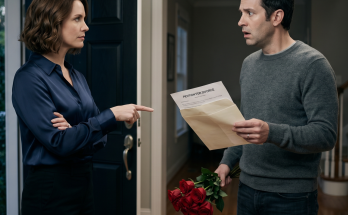
At Sunday Lunch, My Son’s New Fiancée Demanded $2M For A Luxury Wedding. I Was About To Agree When My Son Kicked My Foot Under The Table And Slipped Me A Note: “Dad, She’s A Con Artist. Help.” I Smiled, Calmly Took A Sip Of Wine, And Said Two Words. Twenty Minutes Later…
Part 1
My name is Richard Vernon Porter, and for thirty-eight years, I made a living watching people lie.
Not little lies, the kind people tell to spare feelings or get out of dinner plans. I mean the polished kind. The practiced kind. Lies with pressed suits, fake tears, matching invoices, and signatures copied just well enough to fool a man who wanted badly to believe.
I was sixty-eight years old, retired in Dallas, and I thought I had left all of that behind.
My wife, Elaine, had been gone eleven years. My only son, Kevin, was thirty-five, successful, steady, and so careful with his heart that I used to worry he would grow old in an apartment full of work laptops and untouched takeout containers. So when he told me he was engaged, I wanted to be happy for him.
Vanessa Morales was beautiful in a way that made waiters stand straighter. Long dark hair, smooth voice, designer dress, eyes that warmed and cooled whenever she chose. Her mother, Patricia, carried herself like a woman who had spent her entire life studying which doors money could open.
That Sunday lunch was at The French Room inside the Adolphus Hotel. The room smelled faintly of butter, lemon, and expensive perfume. Sunlight bounced off crystal glasses, and the white tablecloth was so clean it made every movement feel like evidence.
Kevin was already seated when I arrived.
He smiled, but it was wrong. Too tight. Too fast. His left hand kept worrying the edge of his napkin, folding and unfolding the same corner until the cloth looked bruised.
“Dad,” he said, standing halfway. “Glad you made it.”
Vanessa leaned forward. “Richard, we’re so excited. We have something important to discuss.”
Patricia gave me a gracious little nod, the sort you give a donor at a charity auction.
I ordered my usual scotch and asked what the news was.
Vanessa placed a leather portfolio on the table.
Not a folder. Not a notebook. A portfolio. Smooth black leather, gold clasp, the kind of prop a person brings when they want the room to understand that this is no longer lunch.
“We’ve been working with a wedding planner,” she said. “And we’ve finally determined what our dream wedding will require.”
Kevin stared into his water glass.
I watched him first, then her. “Require?”
Vanessa smiled wider. “Two million dollars.”
The waiter set down my scotch at that exact second. The ice clicked against the glass like a small warning bell.
I didn’t blink. “That’s a very specific number.”
“Oh, it’s actually conservative.” She opened the portfolio and slid glossy pages toward me. “Eight hundred thousand for the venue and guest experience. Four hundred thousand for florals and custom installations. Three hundred thousand for the dress and fittings. Then photography, music, imported champagne, security, designer invitations…”
“Security,” I repeated.
“For privacy,” Patricia said smoothly. “Our family has certain standards.”
I looked at Kevin. The color had left his face.
“Kevin,” I said, “is this what you want?”
Vanessa answered before he could. “Kevin wants me to be happy. Don’t you, honey?”
Her hand landed on his. He did not move his fingers.
That was the first real crack.
I had seen defendants do the same thing in court. Touch the witness. Smile at the jury. Control the silence before someone else filled it with truth.
Patricia tilted her head. “Richard, you understand, don’t you? This is your only son. A wedding is not just a party. It’s a statement.”
“A statement of what?” I asked.
Vanessa’s eyes sharpened. “Family commitment.”
There it was. Not a request. A test. Pay, or you don’t love your son. Question me, and you become the villain.
I felt something brush against my knee under the table.
Kevin’s hand.
A tiny folded scrap of paper slid into my palm.
I did not look down. I tucked it beneath my napkin and kept my face calm while Vanessa continued explaining why cherry blossoms had to be flown in, why a famous designer needed to be paid immediately, why deposits could not wait.
Under the table, I unfolded the paper with my thumb.
The words were pressed hard enough that I could feel them before I read them.
Dad, she’s a scammer. Help.
For a moment, the room went very quiet inside me.
The smell of butter disappeared. The crystal faded. All I saw was my son at ten years old, standing in my office after breaking a neighbor’s window, scared not of punishment but of disappointing me.
I looked at the man across from me now. Tired eyes. Tight jaw. The face of someone drowning politely.
Vanessa was still talking.
“We’ll need the first million released this week,” she said. “The planner says luxury vendors move quickly.”
I lifted my glass, took one slow sip, and set it down.
Then I smiled.
Not my fatherly smile. Not my retired-man smile.
The old courtroom smile.
“Prove it,” I said.
Vanessa blinked. “Excuse me?”
“Prove it. Show me signed estimates. Vendor contracts. Tax IDs. Payment schedules. Anything that shows this wedding costs two million dollars.”
Patricia’s smile vanished first.
Vanessa’s followed a second later.
I saw the mask slip, and what stood behind it was not hurt.
It was fury.
### Part 2
Vanessa recovered quickly, which told me more than panic would have.
A normal woman, honestly surprised by a father asking for proof of a two-million-dollar wedding budget, might have laughed awkwardly or reached for her planner’s contact information. Vanessa went still. Her shoulders lowered. Her eyes measured me.
“This is insulting,” she said.
“No,” I replied. “It’s accounting.”
Patricia’s voice turned syrupy and sharp at the same time. “Richard, surely you’re not accusing my daughter of anything.”
“I’m asking for documents.”
“For family?” Vanessa said softly. “You need paperwork from family?”
“Especially from family,” I said.
Kevin shut his eyes.
I hated myself for not noticing sooner. I had dismissed his weight loss as work stress. His unanswered calls as busyness. The way he stopped mentioning friends as one of those adult phases where people drift apart.
But isolation has a smell if you’ve been around it long enough. It smells like constant apology. Like checking your phone before you answer a question. Like asking permission without using the word permission.
Vanessa leaned back. “Maybe Kevin and I should elope. Save everyone the humiliation.”
Kevin flinched.
There was the hook.
She wasn’t talking to me anymore. She was yanking the line attached to him.
I kept my voice gentle. “You have seventy-two hours.”
Patricia stared. “For what?”
“For documentation. Every vendor. Every quote. Every deposit. If this is real, that should be easy.”
Vanessa’s lips parted.
I stood and placed enough cash on the table to cover lunch. “Kevin, walk me out.”
Vanessa grabbed his forearm. “Kevin, don’t you dare let him bully us.”
Us.
Not you. Us.
A team, then.
Kevin looked at her hand on his arm. Slowly, he pulled away.
In the hallway outside the dining room, the hotel carpet swallowed our footsteps. I did not speak until we reached the lobby, where the air smelled of polished wood and lilies.
Kevin whispered, “I’m sorry.”
“For what?”
“For being stupid.”
I turned on him harder than I intended. “Don’t say that again.”
His eyes shone, but he nodded.
“You’re coming to my house tonight,” I said. “And you’re going to tell me everything.”
He arrived at seven. He looked smaller when he stepped into my study, though he was an inch taller than me. My study had always been the safest room in the house. Old law books, green banker’s lamp, leather chairs, the faint smell of dust and binding glue. Elaine used to tease me that I kept more company with dead judges than living people.
Kevin sat and held a whiskey without drinking it.
“It started small,” he said.
It always does.
They had met at a charity gala. Vanessa laughed at his dry jokes. Asked about his work. Remembered details. Complimented his discipline. Told him her last boyfriend had been careless with money and that financial responsibility mattered to her.
“Second date?” I asked.
“What?”
“The money questions. When did they begin?”
He rubbed his forehead. “Second date.”
Neighborhood. Salary range. My retirement. Whether his mother had left anything. Whether I still had the house. Whether he invested. Whether he had debt.
“She made it feel normal,” he said. “Like she was admiring me for being responsible.”
Then came the emergencies.
Twelve thousand for a car repair after an accident. Eight thousand for Patricia’s “medical bill.” Fifteen thousand toward a boutique Vanessa claimed her friend was opening. Each time, there was urgency, tears, promises to repay, and then a shift in subject.
“Did she repay anything?” I asked.
“No.”
“Did you ask?”
“Once.”
“And?”
“She cried for two hours.”
I made a note on a yellow legal pad.
He watched my pen move. “You look like you’re building a case.”
“I am.”
His face changed. Some fear left it, but shame rushed in to fill the space.
“Kevin,” I said, “listen to me carefully. Con artists don’t win because victims are dumb. They win because victims are human. They study need. Loneliness. Hope. Loyalty. Then they turn those virtues into handles.”
He swallowed.
“What about your friends?”
He gave a humorless laugh. “Matt was jealous. Jessica secretly wanted me. Derek was immature. Every time I saw someone, Vanessa found a reason it hurt her.”
“And Patricia?”
“Always there. Always backing her up. If Vanessa cried, Patricia explained why I caused it. If Vanessa wanted money, Patricia said it was how serious families behaved.”
I sat back.
My son had not fallen into a romance.
He had been processed.
“Do you still have records?” I asked. “Texts, transfers, emails?”
“Yes.”
“All of them?”
“I think so.”
“Good.”
His phone buzzed. He looked down, and I saw dread cross his face before he showed me.
Vanessa: I hope your father is proud of himself. I have never been so humiliated.
Another message arrived.
Vanessa: If you love me, you’ll fix this tonight.
Kevin stared at the screen.
“What do I say?” he asked.
“Nothing.”
“But she’ll—”
“She’ll escalate,” I said. “And when she does, we’ll learn more.”
His phone buzzed again.
Patricia this time.
Patricia: A man who lets his father disrespect his fiancée is not ready to be a husband.
Kevin went pale.
I felt the old fire stir under my ribs, the one I thought retirement had buried.
I picked up my phone and scrolled to a number I hadn’t called in years.
Gerald Lawrence, private investigator.
Because the moment I saw Patricia texting my son like a handler instead of a future mother-in-law, I knew Vanessa was not working alone.
And if there were two of them, there might have been others before Kevin.
### Part 3
Gerald answered on the second ring.
“Richard Porter,” he said, sounding amused. “Either retirement bored you to death, or someone did something stupid.”
“My son’s fiancée wants two million dollars.”
“That’s either a wedding or a kidnapping.”
“Maybe both.”
I gave him names, addresses, phone numbers, every detail Kevin remembered. Vanessa Morales. Patricia Morales. Possible former name: Gutierrez, according to something Kevin had once seen on a package label and never thought about again.
Gerald got quiet when I mentioned that.
“You want deep background?”
“I want the kind that makes people sweat.”
“Official or personal?”
“My son.”
“I’ll call you when I have something ugly.”
After Kevin left, I stayed in my study and built a timeline.
There was comfort in the work. Dates on a yellow pad. Bank transfers. Text messages. Lunches. Apologies. Every manipulation laid out in ink looked less like romance and more like engineering.
At two in the morning, rain began tapping against the windows. Dallas rain has a dry smell when it starts, like dust being forced to confess. I sat beneath the green lamp and read Kevin’s forwarded messages until my eyes burned.
Vanessa loved him desperately whenever he hesitated.
Vanessa was wounded whenever he questioned money.
Vanessa was proud whenever he obeyed.
By dawn, I had three columns: Demand, Pressure, Reward.
The pattern was ugly.
The next day, Vanessa sent the first document.
Not proof. A mood board.
Sixteen pages of flowers, staircases, champagne towers, European lace, candlelit ballrooms, and one photograph of a smiling couple who looked nothing like Kevin and Vanessa. No vendor names. No addresses. No estimates.
Just desire presented as invoice.
I replied by email, copying Kevin.
Vanessa, thank you. This is visual inspiration, not financial documentation. Please send signed estimates and vendor information within the remaining time.
Her response came seven minutes later.
Richard, I’m disappointed that you are turning a joyful family process into a hostile audit.
I smiled.
People with real paperwork usually send paperwork. People without it write paragraphs about trust.
Patricia called Kevin that afternoon. He put her on speaker in my study with my permission.
“Sweetheart,” Patricia said, voice soft enough to fool a stranger, “your father is creating a power struggle. Men like him can’t stand not being in control.”
Kevin closed his eyes.
“He’s just asking for proof.”
“He is asking your future wife to beg for dignity.”
I wrote that down. Beg for dignity.
Good phrase. Rehearsed.
Patricia continued, “Vanessa has other options, Kevin. Men who would feel blessed to marry her. I hope you understand what you’re risking.”
Kevin looked at me.
I shook my head once.
He said, “I need to go.”
When the call ended, he exhaled shakily. “That was new.”
“No,” I said. “That was old. You’re just hearing it clearly now.”
On the third day, hour seventy-one, Vanessa sent an email titled Final Wedding Budget.
Twenty-three pages.
It looked professional. Too professional. Neat columns. Vendor names. Deposits due. Payment instructions. The total came to $2,103,775.
“Close enough to two million to look organic,” I murmured.
Kevin sat beside me, jaw tight.
“Is it real?”
“I doubt it.”
I forwarded it to Gerald.
He called back before lunch.
“Eleven companies don’t exist,” he said. “At least not legally. Four have websites created in the last month. Three share the same mailing address with a mailbox store in Plano. Two bank accounts route through entities tied to Patricia Morales. The legitimate vendors I called have never heard of Vanessa.”
I closed my eyes.
There it was.
Not suspicion. Structure.
“Anything else?” I asked.
Gerald paused.
“Yes. Vanessa Morales was born Vanessa Christine Gutierrez. Three prior engagements in seven years, maybe more. Houston, Austin, San Antonio. All wealthy men. All called off within a month of the ceremony. All had money moved to wedding vendors that later became very hard to find.”
My hand tightened around the phone.
“Names?”
“Marcus Webb. Daniel Crawford. Steven Richards.”
“Amounts?”
“Three hundred forty thousand. Two seventy-five. Four ten.”
Kevin stood up so fast his chair scraped the floor.
Gerald kept talking. “And Richard?”
“Yes?”
“There are traces of Dallas and Fort Worth victims too. Earlier. Smaller amounts. Same mother-daughter routine.”
I thanked him and hung up.
Kevin was staring at me like the room had tilted.
“She’s done this before,” he said.
“At least five times.”
His face broke in a way I will never forget. Not crying exactly. Something quieter. The collapse of a dream he had kept defending even after it cut him.
“I almost married her.”
“But you didn’t.”
He looked at the budget on my screen.
“What happens now?”
I stood and went to the shelf where I kept my old trial briefcase. The brown leather was scuffed at the corners, but the clasps still snapped shut with a sound I loved.
“Now,” I said, “we stop reacting.”
Kevin wiped his face with both hands. “And start what?”
“Building.”
Because Vanessa had finally given me the thing every fraud case needs.
A paper trail.
### Part 4
The first previous victim I called was Marcus Webb.
He was a Houston tech entrepreneur, forty-two, divorced now, with the clipped voice of a man who had spent years telling himself he had moved on.
“Mr. Webb,” I said, “my name is Richard Porter. I’m a retired assistant U.S. attorney. I believe Vanessa Morales and Patricia Morales are trying to do to my son what they did to you.”
Silence.
Then one word.
“Vanessa.”
His voice changed when he said her name. Some people spit. Marcus froze.
“You remember her,” I said.
“I remember every dollar.”
He did not agree to help right away. I respected that. Shame is not logical, but it is powerful. He asked what I had. I sent him a summary Gerald had prepared, with sensitive information redacted.
He called back that night.
“I’ll testify,” he said. “I kept everything. Emails. Transfer receipts. Texts. Even the fake contract.”
“Why didn’t you pursue it?”
“I did. My lawyer told me it would eat three years of my life and maybe get nowhere. Vanessa said she had paid vendors in good faith. Patricia said I was punishing a heartbroken woman. I was tired.”
Tired.
The most useful weapon scammers have is exhaustion.
Daniel Crawford in Austin took longer. He had remarried and wanted nothing to do with Vanessa’s name. But when I told him Kevin was the current target, his anger returned.
“She always brought her mother,” he said. “Did she do that with your son?”
“Yes.”
“That woman is worse than Vanessa.”
Steven Richards from San Antonio nearly laughed when I called.
“I knew someone would connect them eventually,” he said. “I just didn’t know it would be a federal prosecutor.”
“Former.”
“Not from the sound of you.”
By the end of the week, I had five victims willing to provide affidavits.
I also had help.
Edward Grant, a family and civil attorney with the patience of a chess player and the instincts of a street fighter, agreed to represent Kevin.
Thomas Chen, a forensic financial analyst, agreed to trace the money.
Gerald continued digging.
My dining room table became a war room. Folders spread across the wood where Elaine used to arrange Thanksgiving pies. I felt guilty about that for half a second, then imagined what Elaine would have said.
Help your son first. Polish the table later.
Kevin came over every night after work. At first, he sat quietly while the rest of us talked. But as the evidence grew, his posture changed. He stopped looking like a man waiting to be sentenced and started looking like a man learning the locks on his own cage.
One evening, Thomas arrived with a laptop and three printed charts.
“I have the money trail,” he said.
He projected it onto my study wall.
Lines connected victims to fake vendors, fake vendors to shell accounts, shell accounts to withdrawals and transfers. Patricia’s name appeared directly on two entities. Vanessa’s phone number was attached to one vendor website. The same mailbox address appeared again and again like a fingerprint left by an arrogant thief.
Kevin stared at the chart.
“It looks so obvious now,” he said.
“It always does afterward,” Thomas replied gently.
Edward tapped a vendor name with his pen. “This one appeared in three separate engagements?”
“Four,” Thomas said. “Same bank account, different business names.”
Edward looked at me. “Pattern evidence will be strong.”
“Civil or criminal?”
“Both, if we handle it properly.”
Kevin looked between us. “Are we going to the police?”
“Yes,” I said. “But timing matters.”
He frowned. “Why?”
“Because right now Vanessa thinks she still controls the story. I want her comfortable enough to make one more mistake.”
That mistake arrived the next morning.
Vanessa texted Kevin.
Fine. Since your father needs proof like I’m some criminal, let’s meet with our wedding coordinator. Thursday. Two o’clock. Elite Wedding Designs.
Kevin forwarded it to me.
Below her message was an address in the Dallas Design District.
Gerald checked it within the hour.
The suite had been vacant for three months.
No Elite Wedding Designs was registered in Texas.
No wedding planner by the name Vanessa gave had a business license, website history beyond three weeks, or tax records.
“She’s staging a meeting,” Edward said.
“Yes,” I replied.
Kevin’s face tightened. “Why would she do that?”
“To overwhelm you,” I said. “She’ll put a person at a desk, hand you polished fake paperwork, maybe cry if questioned. The goal is not proof. The goal is pressure.”
He swallowed. “Do I have to go?”
“No.”
Kevin looked down.
Then slowly, he said, “I want to.”
I studied him.
“Why?”
“Because I need to see it. I need to stop wondering if some part of this is still a misunderstanding.”
That hurt to hear, but I understood it.
Hope does not die because facts arrive. Hope dies when the person who fed it shows you the knife.
Thursday came hot and bright. I wore my old charcoal courtroom suit. Edward joined us. Gerald waited nearby, out of sight, with a camera.
When we reached Suite 140, a temporary paper sign had been taped to the glass.
Elite Wedding Designs.
The tape was crooked.
Kevin saw it and went still.
Then Vanessa’s Mercedes pulled into the lot, and Patricia stepped out behind her daughter with a smile already loaded.
But when Vanessa saw Edward’s briefcase, her face flickered.
For the first time, she looked unsure.
### Part 5
Vanessa crossed the parking lot like a woman walking onto a stage.
“Kevin, darling,” she said, arms open.
Kevin did not move into them.
Her smile trembled, then hardened. “Richard. I see you brought a lawyer to a wedding meeting.”
Edward extended a hand. “Edward Grant.”
Patricia ignored it. “This is absurd.”
“Then it should be easy to clear up,” I said.
Inside, Suite 140 smelled of fresh paint and empty carpet.
There was no reception desk. No sample books. No framed wedding photographs. No floral mockups. No staff.
Just a folding card table and four metal chairs in the middle of a vacant room.
A cheap vanilla candle burned on the windowsill, fighting a losing battle against the smell of dust.
Kevin stared at the empty walls.
I saw the moment something inside him finally broke loose from Vanessa.
“Oh,” Vanessa said brightly. “Michelle must be running late. She’s moving into this office, so everything’s a bit transitional.”
“Michelle Lawson,” I said.
“Yes. Our coordinator.”
I opened my briefcase and removed the first folder.
“Michelle Lawson does not appear in Dallas County business records. Elite Wedding Designs is not registered with the Texas Secretary of State. This suite is currently vacant and listed for lease.”
The air conditioner clicked on with a tired hum.
Patricia said, “Small businesses don’t always show up where old men expect them to.”
I smiled. “They do when they want two million dollars.”
Vanessa’s eyes flashed. “I have tried so hard to be patient with your hostility.”
“No,” I said. “You’ve tried to make reasonable questions look like cruelty.”
Edward placed a small recorder on the table. “For accuracy, we’ll be documenting this conversation.”
Vanessa looked at it, then at Kevin. “You’re allowing this?”
Kevin’s voice was quiet. “I asked for honesty.”
She recoiled as though he had slapped her.
Good. That meant the sentence landed.
I opened the folder.
“Let’s begin with the budget you sent. Twenty-three vendors. Eleven don’t exist. Five were incorporated within the last month. Four share either a mailing address or bank routing path with entities connected to Patricia. The legitimate vendors deny any relationship with you.”
Patricia’s face went flat.
Vanessa laughed once. “This is insane.”
“It is,” I said. “But not in the way you mean.”
I slid photographs across the table: fake websites, mailbox receipts, state records, bank connections Thomas had mapped so clearly a child could follow them.
Kevin stood beside me, silent.
I wanted to shield him from every word, but that was no longer my job. My job was to stand next to him while the truth finished what the lie had started.
“Marcus Webb,” I said.
Vanessa’s pupils widened.
“Houston. Three hundred forty thousand.”
Patricia shifted toward the door.
“Daniel Crawford. Austin. Two hundred seventy-five thousand.”
Vanessa whispered, “Coincidences.”
“Steven Richards. San Antonio. Four hundred ten thousand.”
She stopped breathing for a second.
I continued. “Two earlier victims in Dallas and Fort Worth. Smaller takes. Same structure. Same mother present. Same vanished vendors.”
Patricia’s voice cracked through the room. “You can’t prove intent.”
I turned to her. “There you are.”
She blinked.
“An innocent person says, ‘That didn’t happen.’ A practiced fraudster says, ‘You can’t prove intent.’”
For the first time, Patricia looked frightened.
Vanessa turned to Kevin. Her face softened violently, like someone yanking a curtain closed over a broken window.
“Kevin,” she whispered. “Baby, please. Your father is twisting things. You know me.”
Kevin looked at her for a long time.
I watched him search her face, maybe for the woman who had laughed at his jokes, kissed him in elevators, told him he was safe with her.
“What was the boutique owner’s name?” he asked.
Vanessa froze.
“The friend I gave fifteen thousand dollars to,” he said. “You said she was like a sister. What was her name?”
Vanessa swallowed. “This isn’t fair. I’m under attack.”
“What was her name?”
Patricia snapped, “Enough.”
Kevin flinched, but he did not back down.
Vanessa looked at me with pure hatred.
“You think you’re so noble,” she said. “But your son is a grown man. He gave me gifts.”
“And the fake wedding deposits?” I asked.
Her mouth opened.
No sound came out.
Edward stepped forward. “My client is ending the engagement. Neither of you will contact him again. Any further communication goes through counsel.”
Patricia gave a brittle laugh. “You people are making a terrible mistake.”
“No,” Kevin said.
Everyone turned to him.
He removed the engagement ring from his jacket pocket. I had not known he brought it.
He placed it on the card table.
The tiny sound it made on the cheap surface seemed louder than a gavel.
“I made the mistake eight months ago,” he said. “I’m correcting it now.”
Vanessa stared at the ring.
For one second, I saw rage. Not grief. Not heartbreak. Rage at a lost investment.
Then she looked up.
“You’ll regret humiliating me.”
I leaned forward.
“Vanessa, I spent thirty-eight years with people threatening to make me regret doing the right thing. I’m still waiting.”
Patricia grabbed her daughter’s arm. “We’re leaving.”
They moved fast, heels striking the bare floor. Outside, through the glass, I watched Patricia drop her keys twice before unlocking the Mercedes.
Kevin remained in the empty office, staring at the ring.
Then he whispered, “It was all fake.”
I wanted to tell him no, that some part had been real. But fatherhood sometimes requires mercy, and sometimes it requires not lying.
Edward checked the recording and nodded.
“We have enough for a clean break,” he said.
I looked out the window as Vanessa’s car tore out of the lot.
“No,” I said. “We have enough for the first move.”
Because angry scammers rarely walk away quietly.
And the look Vanessa gave Kevin before she left told me she was already planning revenge.
### Part 6
The certified letter arrived two days later.
Kevin brought it to my house unopened, though his name was typed clearly across the front. He stood in my doorway with the envelope in one hand and the expression of a man who had found a snake on his porch.
“She sued me,” he said.
We opened it in my study.
Vanessa Morales v. Kevin Porter.
Breach of promise to marry. Emotional distress. Damage to reputation. Lost opportunities. Interference by family.
Demand: $1.5 million.
Kevin read the first page twice.
“Can she do that?”
Edward arrived thirty minutes later, still in shirtsleeves, tie loosened, expression grim but not surprised.
“In Texas, breach of promise claims are rare, but not impossible,” he said. “Her lawyer is trying to frame Kevin as a coward who abandoned a loving fiancée because his father controlled him.”
Kevin laughed once, sickly. “Loving.”
I read the complaint.
It was clever in the way cheap perfume can be clever. Strong at first. Sickening after a minute.
Vanessa claimed Kevin had promised forever. Claimed she had rearranged her life around him. Claimed I had humiliated her, intimidated her, and destroyed a wedding built on trust. There was no mention of fake vendors, previous victims, or Patricia’s mailbox companies.
Of course not.
Fraudsters love narrow stories.
“Who’s her attorney?” I asked.
Edward grimaced. “Roland Hutchkins.”
I knew the type. Not criminal. Not brilliant. Just hungry enough to take a case if the check cleared.
“She thinks civil court will muddy the facts,” I said.
Edward nodded. “If she can become the injured party on paper, criminal investigators may see the rest as a messy romantic dispute.”
Kevin sat down heavily. “So she’s still controlling the story.”
“Trying to,” I said.
Then I remembered something.
“Kevin, your recordings.”
His head lifted.
“What recordings?” Edward asked.
I turned to him. “After the lunch, I told Kevin to ask Vanessa whether they could record certain conversations for ‘relationship transparency.’”
Kevin looked embarrassed. “She said yes immediately. Said honest couples shouldn’t hide anything.”
Edward stared at me.
“You planned that?”
“I prepared for the possibility she would continue lying.”
He rubbed his forehead, then smiled despite himself. “Richard, remind me never to date anyone related to you.”
Kevin opened his cloud folder. Fifteen audio files. Phone calls, in-person conversations, voice notes. Most were manipulative but not criminal. Vanessa crying. Vanessa accusing. Vanessa insisting love meant trust.
Then Kevin played the one from five days before the empty office meeting.
At first there was muffled sound, like the phone had been set on a kitchen counter.
Vanessa’s voice came through clearly.
“He’s going to cave, Mom. Kevin is weak. He always feels guilty. I just have to make him think losing me is his fault.”
Patricia answered, “And if the father doesn’t cave?”
“Then we cut losses. Thirty-five thousand is still thirty-five thousand.”
Kevin went white.
Vanessa continued, laughing lightly. “If we’d gotten the wedding deposit, we’d be gone already.”
Patricia said, “Austin is too familiar now. Maybe Colorado next.”
Edward held up a hand. “Pause it.”
Kevin stopped the recording.
The room was silent.
“That,” Edward said slowly, “is an admission.”
I nodded.
Kevin looked like someone had opened a trapdoor beneath him.
“She knew,” he whispered. “The whole time.”
“Yes.”
He pressed his fists against his eyes.
I gave him a minute.
Then I said, “Play the rest.”
He did.
They talked about fake vendors. About deposits. About signatures. About how men rarely pursued legal action because they were embarrassed. About how mothers gave legitimacy to daughters. Patricia said that last part. I wrote it down with a rage so cold it steadied my hand.
Edward stood. “We file a motion to dismiss, counterclaim for fraud, request fees, attach the recordings and financial summaries. We also send this to law enforcement.”
“Already planned,” I said.
That night, I assembled the package.
Gerald’s report. Thomas’s charts. Victim affidavits. Bank records. Fake vendor pages. Vanessa’s demand emails. Patricia’s texts. The empty office recording. The phone recording.
I indexed it the way I had indexed federal fraud cases for decades. Clean. Numbered. Ruthless.
One copy went to Edward.
One went to the Dallas County District Attorney’s fraud unit.
One went to the Texas Attorney General’s Consumer Protection Division.
The next morning, my phone rang.
“Richard Porter?” a man said.
“Yes.”
“James Patterson. Financial Crimes Division.”
I sat straighter. “James. Been a long time.”
“Not long enough for you to lose your touch, apparently. This package is immaculate.”
“Will you move on it?”
“We already had one complaint tied to Patricia Morales. Your file connects the structure. We’re opening a criminal investigation immediately.”
I looked through the study window. My roses needed pruning. Elaine had planted them the summer Kevin graduated college.
“What do you need?”
“Authenticated recordings. Full statement from Kevin. Cooperation from prior victims.”
“You’ll have it.”
“One more thing,” James said. “Do not underestimate them. People this organized often panic badly when cornered.”
After he hung up, Kevin came into the study holding his phone.
His face was tight.
“What now?”
He handed it to me.
Vanessa: I still love you. Drop this lawsuit response and we can talk.
A second message.
Vanessa: Your father doesn’t know what kind of people he’s provoking.
Then a third.
Vanessa: Some fights are not worth winning.
Kevin looked at me, afraid and angry at once.
For the first time, Vanessa had stopped pretending to be heartbroken.
And started sounding like someone with something to hide.
### Part 7
Edward filed for a protective order that afternoon.
James Patterson asked for screenshots of every threat. I sent them with timestamps. Vanessa had always counted on emotions making men sloppy. Kevin, to his credit, had become precise. He saved everything. Forwarded everything. Responded to nothing.
Silence can be a weapon when the other side needs you to panic.
The hearing on Vanessa’s civil lawsuit was scheduled for the following Tuesday.
Three days before it, she made her public move.
Her social media post was long, tearful, and professionally framed. A photo of her looking out a window. A caption about love destroyed by control. A grieving fiancée. A cruel father. A weak man manipulated by wealth.
She wrote that she was “fighting for women whose voices are silenced by powerful families.”
I nearly admired the nerve.
Nearly.
By noon, the post had hundreds of comments.
By one, Marcus Webb saw it.
His comment was simple.
Did you use the same speech before taking $340,000 from me?
Daniel Crawford followed.
This is a con artist. Same wedding scam. Same mother. Same fake vendors.
Steven Richards posted a screenshot of an old fake invoice with one line.
Ask her about San Antonio.
The internet did what court systems do slowly. It connected dots.
By evening, Vanessa deleted the post, but screenshots had already spread through Dallas wedding groups, neighborhood forums, and legal circles. Two more potential victims contacted Gerald. A man from Fort Worth. Another from New Mexico whose story smelled identical.
Kevin sat in my study watching the screenshots circulate on his phone.
“She wanted sympathy,” he said.
“She got witnesses.”
He almost smiled.
The morning of the hearing, the sky was washed-out gray. Civil courtrooms do not have the drama people imagine. No grand speeches. No gasps from juries. Just fluorescent lights, tired clerks, lawyers pushing rolling bags, and people realizing that paperwork has consequences.
Vanessa sat at the plaintiff’s table in a cream suit, hair neat, eyes lowered. She had chosen wounded elegance. Patricia was absent.
Interesting.
Her attorney, Roland Hutchkins, looked like a man who had slept badly after Googling his own client.
Judge Margaret Sanchez took the bench at nine.
Hutchkins began with emotion.
“Your Honor, Miss Morales believed she had found her life partner. She planned a future, made commitments, turned down other opportunities, and suffered devastating humiliation when Mr. Porter abandoned her under pressure from his father.”
Kevin sat very still beside Edward.
I watched Vanessa. She dabbed under one eye with a tissue, but there were no tears.
Hutchkins continued. “This case is about promises. About reliance. About a woman discarded after giving her heart.”
Judge Sanchez made notes without expression.
Then Edward stood.
“Your Honor, the defense moves to dismiss with prejudice and requests sanctions, attorneys’ fees, and referral for criminal investigation. The plaintiff’s claim is not a heartbreak case. It is an extension of an ongoing fraud.”
Vanessa looked up.
There it was again. The flicker.
Edward handed the clerk a flash drive and paper exhibits.
“With the court’s permission, I will play a brief recording made with the plaintiff’s consent during the relevant period.”
Hutchkins stood. “Your Honor, we object. We have not had time to—”
Judge Sanchez looked over her glasses. “Counsel, your client filed this action. Sit down unless you have a legal objection.”
He sat.
Edward played the recording.
Vanessa’s voice filled the room.
Kevin is weak. He always feels guilty.
Patricia’s voice followed.
And if the father doesn’t cave?
Then we cut losses. Thirty-five thousand is still thirty-five thousand.
Nobody moved.
Even the clerk stopped typing.
The recording continued just long enough to mention fake vendors and moving to another state.
Edward stopped it.
“Your Honor, we have affidavits from five prior victims, documentation of fake vendor entities, financial analysis tying bank accounts to the plaintiff and her mother, and evidence that the requested two-million-dollar wedding budget was fabricated.”
He walked the judge through it cleanly.
Marcus. Daniel. Steven. Dallas. Fort Worth. Money. Fake vendors. Broken engagements. Same timeline. Same mother.
Vanessa’s tissue trembled in her hand.
Judge Sanchez’s face hardened page by page.
When Edward finished, she turned to Hutchkins.
“Counsel?”
He stood slowly. “Your Honor, we request a continuance to review these materials.”
“You filed a lawsuit without reviewing your client’s background?”
He swallowed. “The prior relationships are not relevant to whether—”
“They are relevant to whether the engagement was entered into in good faith,” Judge Sanchez said. “They are relevant to damages. They are relevant to credibility. And they are especially relevant when your client asks this court to reward her for conduct that appears fraudulent.”
Vanessa whispered something to him.
He ignored her.
Judge Sanchez looked directly at Vanessa. “Miss Morales, your complaint is dismissed with prejudice. The court awards defendants attorneys’ fees and costs in the amount of eighteen thousand four hundred dollars. I am also referring this matter to the Dallas County District Attorney and the Texas Attorney General.”
Vanessa made a small sound.
Not grief.
Shock.
She had believed courts were just another room she could perform in.
As we stood, Hutchkins gathered his files without looking at her.
Outside the courtroom, Kevin exhaled for what felt like the first time in months.
“It’s over?” he asked.
“The civil part,” Edward said.
My phone buzzed.
James Patterson: Warrants signed. Vanessa and Patricia Morales. Arrests today.
I showed Kevin.
Through the courthouse glass, two officers entered the hallway.
Vanessa saw them at almost the same moment I did.
Her face changed completely.
For the first time since Sunday lunch, she had no mask ready.
### Part 8
They arrested Vanessa in the courthouse hallway.
No shouting. No dramatic confession. Just two officers, a quiet explanation, and the metallic click of handcuffs closing around wrists that had once slid across white tablecloths demanding two million dollars.
Patricia was arrested twenty minutes later at her apartment in Uptown, trying to leave with two suitcases and a passport.
Gerald sent me that detail.
I read it twice and felt no surprise.
People who make a living disappearing always keep a bag half-packed.
The criminal charges moved quickly because the file was strong and the victims were ready. Wire fraud. Organized criminal activity. Theft by deception. Fraudulent business filings. More charges were possible, but prosecutors prefer clean cases over crowded ones.
I knew that better than anyone.
Kevin and I attended the arraignment in federal court.
I warned him before we went in.
“She won’t look like the woman you knew.”
He said, “Good.”
But when Vanessa entered in custody, wearing plain jail clothing, hair limp, face bare of makeup, Kevin went rigid beside me.
Not because he missed her.
Because the mind struggles when a fantasy and a fact stand in the same room.
Patricia walked in behind her, older than I remembered. Without the perfume, the pearls, the slow Southern smile, she looked like what she was: a tired criminal who had taught her daughter to treat affection as a hunting ground.
They pleaded not guilty.
Defendants usually do.
The prosecutor, Sarah Mitchell, was young enough to have been one of my junior attorneys near the end of my career, but she had the steady voice I trusted. She summarized the evidence without exaggeration.
Seven victims. Documented losses over $1.4 million. Repeated engagement fraud. Fake wedding vendors. Shell accounts. Recorded admissions. Attempts to intimidate the current victim.
Judge Chen denied a bail reduction.
“Given the alleged pattern of moving between cities and the defendant Patricia Morales’s attempt to leave after warrants were issued,” he said, “the court finds both defendants present a flight risk.”
Vanessa looked back once.
Her eyes found Kevin.
Then me.
There was hatred there, but hatred had shrunk. It no longer filled the room. It sat behind bars of consequence, pacing.
Outside, Kevin and I walked to the car without speaking.
Finally he said, “Was any of it real?”
The question hit harder than I expected.
I could have given him comfort. I could have said maybe some moments were real, that even bad people feel something. But I had spent too many years watching victims cling to crumbs because crumbs were less painful than hunger.
“I don’t know,” I said. “But I know this: real love does not require you to ignore your own fear.”
He looked out over the courthouse steps.
“She made me feel guilty for asking questions.”
“That was the point.”
Three weeks later, Vanessa and Patricia changed their pleas.
Guilty.
Sarah called Edward first. Edward called me.
“They took the deal,” he said. “Vanessa gets twelve years. Patricia gets fifteen. Restitution to all documented victims.”
I sat in my study with the phone against my ear and looked at Elaine’s photograph on the shelf.
“Twelve,” I repeated.
“She’ll be forty-four when she gets out.”
“And Patricia?”
“Seventy-four.”
The allocution hearing was the closest thing to a confession we would ever get.
Vanessa stood before Judge Chen and read from a prepared statement.
“I knowingly participated in a scheme to defraud multiple individuals by entering romantic relationships and engagements without intent to marry, requesting money for wedding expenses and personal emergencies, and directing payments to fake or controlled vendor entities.”
Her voice was flat. Not sorry. Managed.
She named Marcus Webb. Daniel Crawford. Steven Richards. Kevin Porter. Others.
Kevin’s hand tightened on the bench when she said his name.
Patricia went next.
“I helped my daughter coordinate payments and vendor communications,” she said. “I understand that my actions caused harm.”
Judge Chen leaned forward.
“Ms. Morales, you did more than help. The evidence shows you trained, organized, and reinforced this scheme. You were not a concerned mother. You were a partner in greed.”
Patricia’s mouth folded inward.
For one brief second, she looked old enough to be pitied.
Then I remembered the texts she sent Kevin, the way she told him a real man would pay, the way she pressed on his shame until money came out.
My pity passed.
Restitution was ordered jointly and severally. Over $1.4 million plus interest. In practical terms, both women would carry that debt like a chain long after prison.
As marshals led them away, Vanessa looked back again.
This time she stared only at Kevin.
He did not look away.
That mattered.
Outside the courthouse, Marcus Webb was waiting. He shook Kevin’s hand first.
“I’m sorry,” Marcus said. “You didn’t deserve it.”
Kevin nodded. “Neither did you.”
Daniel had flown in from Austin. Steven from San Antonio. The men stood awkwardly together, strangers connected by humiliation and justice.
Nobody cheered.
That’s not how healing sounds.
Healing sounds like men clearing their throats, exchanging numbers, admitting they should have spoken sooner, then realizing shame had kept each of them alone.
Marcus turned to me. “You know what finally got them?”
“The recordings helped,” I said.
“No,” he replied. “Kevin asking for help.”
I looked at my son.
He heard it too.
For months, Vanessa had convinced him needing help made him weak.
But asking for help was the one thing that saved him.
### Part 9
The house felt different after the plea hearing.
Not brighter exactly. More breathable.
Kevin started coming over on Sundays again, but not like before. He no longer arrived tense, checking his phone, bracing for some emotional invoice from Vanessa. He brought groceries. He complained about work. He told me Matt had invited him to a Mavericks game and Jessica had forgiven him for disappearing after he apologized without excuses.
Small repairs.
That is what recovery is made of.
Not one grand moment. A hundred small ones.
One Sunday, we grilled steaks in the backyard because neither of us wanted to see the inside of The French Room again. The air smelled of charcoal and cut grass. My neighbor’s dog barked at nothing. Kevin stood beside the grill holding a soda, sunlight catching the gray that had started showing at his temples.
“I keep remembering things,” he said.
“What kind of things?”
“Red flags. Little ones. She hated when I paid with a card she couldn’t see. She always wanted to know who texted me. She’d compliment me in public and tear me apart in the car.”
I turned the steaks.
“That’s normal.”
“Feeling stupid?”
“Replaying evidence.”
He gave me a tired smile. “You’re still a prosecutor.”
“Afraid so.”
He leaned against the railing. “She used to say you were emotionally unavailable. That I was desperate for your approval.”
I waited.
“Was she right?”
A lesser father might have defended himself too quickly.
I thought about the years after Elaine died. How the house had gone quiet and I had let it stay that way. How Kevin invited me to dinners I declined because work was easier than grief. How retirement gave me time but not always courage.
“Maybe partly,” I said.
He looked at me.
“I was not as present as I should have been after your mother died. That doesn’t excuse what Vanessa did. But if she found loneliness in you, some of that loneliness may have had my fingerprints on it.”
Kevin stared into the yard.
Then he nodded once.
“I missed Mom,” he said.
“So did I.”
We had never said it that plainly to each other.
The steaks hissed. Smoke rose between us.
For a few minutes, neither of us spoke. The silence was not empty this time. It was occupied by Elaine, by all the years we had survived badly and loved quietly and mistaken distance for strength.
Then Kevin said, “I’m seeing someone.”
I nearly dropped the tongs.
He laughed. “Not like that. It’s early. Her name is Rachel. She teaches fifth grade. Matt introduced us.”
“What does she want for a wedding?”
Kevin groaned. “Dad.”
“I’m asking professionally.”
“She thinks big weddings are ridiculous. Her exact words were, ‘If I ever get married, I’d rather spend money on a house or a long trip.’”
“I like her already.”
“We went hiking. She brought trail mix in a plastic bag and made me pay for my own coffee.”
“Marry her immediately.”
He laughed for real.
A sound I had not heard in almost a year.
The restitution process crawled, as it usually does. Assets were seized. Accounts frozen. Most of the money was gone, of course. Fraud money moves fast and returns slowly, if at all.
Still, several weeks later, Edward called.
“We got the fee award.”
The check arrived by certified mail.
Eighteen thousand four hundred dollars.
Kevin came over to see it. We stood in my study, looking at the cashier’s check on my desk.
“That’s Gerald, Thomas, and Edward,” I said. “Every dollar we spent fighting her civil stunt.”
Kevin touched the edge of the check but didn’t pick it up.
“I don’t want it.”
“It’s yours.”
“I know. But I don’t want anything connected to her.”
I understood.
So we made a decision.
Half went to a local fraud victim assistance fund. Half went toward a dinner for the victims and their families. Not a celebration. A closing of the circle.
We held it at a quiet restaurant in Dallas with warm lighting and no white tablecloths.
Marcus came. Daniel came. Steven came. The Fort Worth victim, Aaron, brought his sister. The New Mexico man, Paul, attended by video because he couldn’t travel. Kevin introduced himself to each of them without hiding.
“I’m sorry this happened to you,” he said every time.
Most said the same back.
By dessert, the stories had changed tone. Less confession, more comparison. The same phrases Vanessa used. The same tears. Patricia’s same speeches about family standards. One man remembered the same vanilla perfume Vanessa wore. Another remembered Patricia tapping her spoon against a glass whenever she wanted to redirect conversation.
Details returned.
Shame loosened.
At the end of the night, Marcus raised his glass.
“To asking questions,” he said.
Steven added, “And to answering them honestly.”
Kevin looked at me.
“To fathers who know when to say prove it,” he said.
Everyone laughed.
I pretended to be annoyed, but I wasn’t.
### Part 10
Months passed before I stopped expecting another move from Vanessa.
That happens after a case. Even when the verdict is final, some part of your mind keeps checking locks.
But prison has a way of quieting even the loudest performers.
Vanessa appealed nothing because her plea agreement allowed almost no room. Patricia tried once to complain through a letter that she had been pressured, but Judge Chen rejected it so thoroughly even her public defender sounded relieved.
The world moved on.
That is both cruel and merciful.
Kevin kept seeing Rachel.
The first time he brought her to my house, she arrived in jeans, carrying a grocery-store pie and apologizing because the crust was “probably a structural failure.” She had freckles, practical shoes, and the kind of laugh that arrived before she could stop it.
I watched Kevin with her.
Noticed what was absent.
No flinching when his phone buzzed. No scanning her face before answering me. No nervous explanations for ordinary choices.
At dinner, Rachel asked about my book restoration hobby and actually listened while I described leather conditioning, spine repair, and why nineteenth-century legal paper survives better than modern cheap stock.
Kevin mouthed, Sorry, behind her back.
Rachel saw him in the window reflection.
“Don’t apologize for your dad being interesting,” she said. “That’s rare.”
I liked her very much.
After dessert, while Kevin loaded dishes, Rachel joined me in the study doorway.
“He told me what happened,” she said.
“All of it?”
“Enough. He said you saved him.”
I looked toward the kitchen, where Kevin was pretending not to listen.
“He saved himself by passing me that note.”
Rachel nodded. “That sounds like him. He waits too long, but he tells the truth when it matters.”
A teacher’s diagnosis. Gentle. Accurate.
Later that night, after they left, I sat in the study and opened the old 1887 criminal procedure treatise I had been restoring before Vanessa interrupted my retirement.
The spine was nearly repaired. The leather had softened. The pages still smelled faintly of dust and time.
I ran my fingers over a passage about evidence.
Evidence, the book said in old-fashioned phrasing, is the means by which truth is made visible.
I thought about that for a long while.
Truth had been visible long before I named it. In Kevin’s hands twisting his napkin. In Vanessa’s smile freezing when asked for paperwork. In Patricia’s perfect timing. In the vacant office and crooked tape sign. In every man who had stayed silent because embarrassment convinced him silence was safer.
The evidence was always there.
We just had to stop looking away.
The final restitution statement arrived near Christmas. The victims would receive small distributions from seized funds. Not enough. Never enough. But something.
With it came a letter from Marcus.
Richard, I used to think justice meant getting my money back. It doesn’t. It means she can’t sit across from another man’s family and do it again.
I put the letter in the case file.
Yes, I still kept a case file.
Retired prosecutors are sentimental in strange ways.
On Christmas Eve, Kevin came over early. Rachel came too. She brought cookies, homemade this time, and announced the structure had improved.
We ate in the kitchen under warm yellow light. Rain tapped the windows. Somewhere in the living room, an old jazz record played, one Elaine used to love.
Kevin seemed peaceful.
That was the gift.
After Rachel went to call her parents, Kevin handed me a small box.
Inside was a new brass nameplate for my study door.
Richard Vernon Porter
Retired, Technically
I laughed so hard I had to sit down.
“You earned it,” he said.
I held the nameplate in my hands, feeling the engraved letters.
“I’m proud of you,” I said.
He looked startled.
Maybe I had not said it enough.
So I said it again.
“I’m proud of you. Not because you avoided being fooled. Everyone can be fooled. I’m proud because you chose truth once you saw it.”
His eyes reddened.
“Thanks, Dad.”
Outside, the rain softened.
Inside, the house no longer felt like a museum of what Elaine and I had lost. It felt lived in again. Imperfect. Warm. A little loud when Rachel laughed from the hallway.
A home.
### Part 11
People like Vanessa count on one simple belief.
They believe love makes people blind.
They are wrong.
Need makes people blind. Fear makes people blind. Shame makes people blind. Love, real love, eventually does the opposite. It makes one person slide a note under a table because some surviving part of him still trusts his father. It makes that father put down his scotch, smile at a predator, and ask for proof.
The Sunday lunch became family legend.
Not because of the money. Not because of the courtroom. Not even because Vanessa and Patricia went to prison.
Because of the two words.
Prove it.
Kevin told me once that those words changed the air in the room. Until then, Vanessa’s feelings had been treated like law. Her wishes became obligations. Her tears became invoices. Her anger became weather everyone else had to survive.
Then two words returned gravity.
Prove it.
Rachel loved that story, though she said I probably enjoyed the dramatic timing too much.
She was right.
A year after the plea, Kevin invited me to lunch. Not at The French Room. Never there. A small place near White Rock Lake with chipped mugs, good coffee, and waitresses who called everyone honey without calculation.
He looked nervous.
For one wild second, I thought, Not another Vanessa.
Then he slid a small box across the table.
“Before you panic,” he said, “it’s not what you think.”
Inside was not a ring.
It was a folded note, framed behind glass.
Dad, she’s a scammer. Help.
I stared at it.
Kevin scratched the back of his neck. “I know it’s weird.”
“It is.”
“I kept the original. Not because I want to remember her. Because I want to remember that I asked for help before it was too late.”
My throat tightened.
“I thought maybe you should have it.”
I looked at the note. Six words. Cramped handwriting. Fear pressed into paper.
The beginning of a rescue.
“I’ll keep it in the study,” I said.
“Next to the legal books?”
“Above them.”
He smiled.
Then he grew serious. “Rachel and I are talking about moving in together.”
“Good.”
“That’s it? No interrogation?”
“Does she have fake vendors?”
“No.”
“Does she demand imported cherry blossoms?”
“She owns one houseplant and it’s dying.”
“Then you have my blessing.”
He laughed.
After lunch, we walked by the lake. The wind smelled of water and sun-warmed dirt. Families pushed strollers. A boy threw bread at ducks despite a sign clearly telling him not to. His father pretended not to see.
Kevin watched them.
“I used to think love meant proving I’d do anything,” he said.
“That’s a dangerous definition.”
“I know now.”
“What does it mean now?”
He thought for a while.
“It means I can say no and still be loved.”
That answer was worth more than any court award.
Years earlier, when Elaine was sick, she told me she worried I had taught Kevin strength but not softness. At the time, I took offense. I told her our son was kind, responsible, decent.
She touched my hand and said, Yes, but does he know he can need people?
I had no answer then.
I had one now.
He was learning.
So was I.
That evening, I mounted the framed note in my study, right beneath the brass sign.
Richard Vernon Porter
Retired, Technically
Below it, six words.
Dad, she’s a scammer. Help.
Together, they made a strange little monument.
Not to fraud.
To trust.
I stood there a long time, listening to the quiet house.
For once, the quiet did not feel lonely.
### Part 12
Vanessa Morales will be in prison for twelve years.
Patricia Morales will be there for fifteen.
That is the legal ending.
But life rarely ends where the court record stops.
The real ending came slowly.
It came when Kevin stopped apologizing before speaking.
It came when he reconnected with friends Vanessa had labeled threats.
It came when Marcus started a small online group for romance fraud victims and asked Kevin to help moderate it. Kevin said yes, though he admitted it scared him. I told him useful things often do.
It came when Rachel’s dying houseplant finally gave up, and Kevin hosted a small funeral for it on his balcony because Rachel insisted the plant had “tried its best.”
It came when I went three whole days without checking whether Vanessa had filed some desperate motion.
It came when I restored the 1887 legal treatise and placed it back on my shelf, its spine repaired, its pages clean, its old wisdom intact.
On the inside cover, I wrote a line in pencil.
Truth survives handling.
I don’t know whether antique book collectors approve of that sort of thing. I no longer care.
One quiet Sunday afternoon, Kevin and Rachel came over for lunch. Nothing fancy. Tomato soup, grilled cheese, iced tea. Rachel said it was the perfect meal because nobody had ever committed fraud over grilled cheese.
I told her not to underestimate people.
After lunch, Kevin helped me carry a box of old files to the garage. The Vanessa file was on top, thick and labeled.
He touched it lightly.
“Do you ever think about throwing it away?”
“No.”
“Why?”
“Because some lessons should remain available.”
He nodded.
“Do you hate her?” he asked.
I considered that.
“No.”
That surprised him.
“I did for a while,” I admitted. “When I saw what she did to you. But hate keeps people in the room after they’ve already left. I prefer records. Records don’t require emotion.”
Kevin smiled. “That is the most prosecutor thing you’ve ever said.”
“Retired, technically.”
He shook his head.
A few months later, Kevin proposed to Rachel.
Not in a ballroom. Not beneath imported flowers. Not with a photographer hiding behind a fountain.
He proposed during a hike, after Rachel slipped on mud, cursed at a tree root, and laughed so hard she had to sit on a rock.
The ring was modest. The answer was yes.
Their wedding was held in a public garden with forty-two guests, folding chairs that did not pretend to be anything else, and flowers bought locally by a woman named Denise who showed Kevin her business license before he could ask.
Rachel walked down the aisle in a simple dress and hiking boots under it.
I officiated.
When it came time for vows, Kevin’s voice shook only once.
“I promise never to confuse love with performance,” he said. “I promise to ask, to listen, and to tell the truth before fear tells me not to.”
Rachel cried. I pretended not to.
At the reception, which cost less than Vanessa’s imaginary ice sculptures, Marcus Webb sent a bottle of champagne with a note.
For the wedding that actually happened.
Kevin laughed until he had to wipe his eyes.
Later, during the father-son dance Rachel insisted we include as a joke and Kevin insisted we take seriously, he leaned close and said, “Thanks for not giving her the money.”
“I was never giving her the money.”
“I know. Thanks for giving me time to realize I didn’t have to either.”
I looked around the garden.
Rachel was dancing badly with Matt. Jessica was taking pictures. Edward was arguing with Gerald about barbecue. Thomas Chen was explaining fraud risk to a bridesmaid who seemed far too interested.
The evening smelled of grass, cake, and rain coming somewhere far off.
No crystal chandeliers. No imported cherry blossoms. No designer performance of love.
Just people who had shown up because they meant to.
That was the difference.
When someone truly loves you, they do not ask what you can pay to prove it. They ask whether you are warm enough, whether you got home safe, whether you want the last piece of cake.
Vanessa never understood that.
Maybe she never will.
But my son does.
And as I stood under soft garden lights watching him dance with his new wife, I realized the old prosecutor in me could finally rest.
Not retire.
Never quite that.
But rest.
Because the case was closed, the truth had held, and the boy who once slipped me a desperate note under a table had found a love that needed no invoice at all.
THE END!
Disclaimer: Our stories are inspired by real-life events but are carefully rewritten for entertainment. Any resemblance to actual people or situations is purely coincidental.