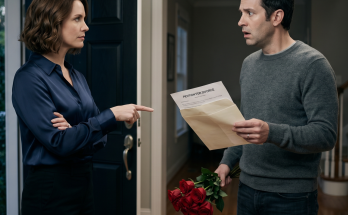
My Sister Gave Birth, So I Went To The Hospital. But As I Walked Down The Hallway, I Heard My Husband’s Voice: “She Has No Clue. At Least She’s A Good Cash Cow.” Then, My Mother Spoke: “You Two Deserve Happiness. She’s Just A Useless Failure.” My Sister Laughed: “Thanks! I’ll Make Sure We’re Happy!” I Said Nothing And Turned Around. But What Happened Next Shocked Them All.
Part 1
The bill from the fertility clinic sat on my desk like a dare.
I had seen expensive paper before. I worked as a fashion buyer in Chicago, which meant half my life was spent touching silk samples, arguing over Italian leather, and pretending a $900 blouse was a reasonable business decision. But this thin white envelope made my throat tighten in a way no designer invoice ever had.
I smoothed the crease with my thumb and stared at the number at the bottom.
Again.
I turned my chair toward the window. From the thirty-sixth floor, Chicago looked polished and untouchable, the river cutting through the city like a strip of green glass. Tiny cars slid between buildings. People hurried below with coffee cups, umbrellas, headphones, places to be. Everyone looked like they were moving forward.
I felt stuck in the same room I had been in for five years.
On the corner of my desk was a wedding photo of Brian and me. He stood behind me with both hands on my waist, smiling like he had won something rare. I had loved that smile once. I had trusted it. In the picture, my cheeks were rounder, my eyes brighter, my white dress catching the summer light.
Now, when I looked at that photo, I mostly noticed the space between us.
My assistant knocked on the glass wall. “Melissa? The Milan call got moved to three.”
“Thanks, Jess,” I said, flipping the clinic bill facedown as if it could be embarrassed.
She glanced at me a second too long. “You okay?”
I gave her the smile I used with vendors who sent the wrong fabric. “Perfect.”
That was the word people liked for me. Perfect Melissa. Responsible Melissa. The daughter who never caused problems. The sister who always remembered birthdays. The wife who scheduled appointments, paid bills, kept dinner warm, and never raised her voice unless a shipment was late.
By the time I got home that evening, my feet hurt from heels and my head ached from pretending.
Brian was already at the dining table, still in his navy suit, his tie loosened just enough to look effortless. His phone lay facedown beside his wineglass. That had become new. He used to leave it anywhere. Now it was always turned over, always within reach.
“The clinic costs went up again,” I said after we had eaten in silence for several minutes.
He looked at me without really looking. “How much?”
I told him.
His jaw tightened, just for a second. Then he lifted his glass. “We’ll manage.”
“You keep saying that.”
“Because we will.”
I set down my fork. “The joint account balance keeps dropping, Brian.”
He blinked, then reached for his napkin. “Business expenses.”
“Your company reimburses business expenses.”
“Not all of them. I told you, I’m putting money into some bigger deals. Sometimes you have to spend first.”
His voice was smooth, practiced. Too smooth.
I studied him across the candlelit table. He still looked like my husband. Same dark hair, same clean shave, same little crease beside his left eye when he forced a smile. But something about him had become slippery, like trying to hold water in my hands.
Before I could ask more, my phone rang.
Vanessa.
My younger sister’s name flashed on the screen with a photo of her laughing at a rooftop bar, blonde hair flying, drink in hand, not a worry in the world.
I almost let it go to voicemail. Then guilt, that old family leash, pulled my finger to accept.
“Hey,” I said, standing and walking into the kitchen.
“Can you talk?” Vanessa’s voice trembled, but not with sadness. With excitement.
“What happened?”
She took a breath loud enough for me to hear. “I’m pregnant.”
The refrigerator hummed behind me. Somewhere below our apartment, a siren wailed and faded into traffic.
I pressed my palm against the marble counter. It felt cold enough to hurt.
“Melissa?” she said. “Are you there?”
“Yes.” My voice came out thin. “I’m here. Congratulations.”
I meant to ask who the father was in a normal tone. I failed.
“Who’s the father?”
A pause.
“That’s complicated.”
“Complicated how?”
“I can’t say right now. Personal reasons.”
I stared through the kitchen doorway at Brian. He had picked up his phone. His shoulders were tense.
“Have you told Mom and Dad?” I asked.
“Just did. Mom cried. Dad was quiet, but happy, I think. We’re doing a small celebration Saturday. You and Brian have to come.”
Of course we did.
After we hung up, I stayed in the kitchen, listening to Brian’s low voice from the dining room. He wasn’t talking to me. He had stepped near the window, one hand in his pocket, murmuring something I couldn’t make out.
When he turned and saw me watching, he ended the call too quickly.
“Everything okay?” he asked.
“Vanessa’s pregnant.”
His face changed.
Not much. Not enough that anyone else would catch it.
But I did.
His eyes widened, then softened into something like relief before he rearranged his expression into surprise.
“Wow,” he said. “That’s… big news.”
“Yes,” I said. “Very big.”
He looked past me toward the sink. “Did she say who the father is?”
“No.”
Brian nodded slowly. “That’s Vanessa.”
That night, I lay awake beside him, listening to his breathing. It was too even. Like he was pretending to sleep.
The room smelled faintly of his cologne and the lavender spray I used on the sheets. Outside, light from passing cars slipped across the ceiling and disappeared.
For the first time in my marriage, I wondered if the man beside me was not hiding one thing, but an entire life.
And when his phone buzzed once under his pillow, he reached for it before I could even move.
### Part 2
Saturday at my parents’ house smelled like roast chicken, lemon polish, and betrayal I did not yet have a name for.
My mother, Elaine, had always believed in staging family moments as if they were magazine spreads. The dining room table was covered in ivory linen. Fresh tulips stood in crystal vases. Silverware lay in perfect formation beside plates we only used when my father’s business partners came over.
For Vanessa, there were pink balloons tied to the backs of chairs.
For me, there had once been careful silence.
“Melissa,” my mother said when I walked in, kissing the air beside my cheek. “You look tired.”
“Good to see you too, Mom.”
She gave me a tight smile. “I just mean you work too hard.”
Vanessa swept into the room wearing a cream sweater dress that hugged her still-small stomach. She had always been beautiful in an easy, careless way. Even messy, she looked styled. Even irresponsible, she looked charming. People forgave Vanessa before she apologized.
“Missy!” she sang, wrapping her arms around me.
I stiffened at the childhood nickname. She smelled like vanilla perfume and expensive shampoo. Expensive, though she hadn’t kept a steady job in years.
“Congratulations,” I said.
She pulled back and searched my face. “You’re happy, right?”
It was such a Vanessa question. Not “How are you?” Not “Is this hard for you?” Just a demand that I play the correct role.
“Of course.”
Brian came in behind me carrying a bottle of wine. My father Walter took it from him with a firm handshake. Dad had always liked Brian. He liked men who wore polished shoes and spoke in complete sentences. He thought Brian was stable.
“Good man,” Dad said. “Always thoughtful.”
Brian smiled. “Wouldn’t miss this.”
My mother clapped her hands. “Everyone, sit. Vanessa, you take the head of the table.”
The head of the table.
My father’s seat.
He moved without complaint.
I watched it happen with a strange pressure building behind my ribs. Vanessa lowered herself into the chair like a queen accepting a crown. My mother placed both hands on her shoulders and bent to kiss the top of her head.
“Our first grandchild,” she whispered.
The words landed on me like a slap.
I lowered myself into my chair. Brian sat beside me, but not close enough for our elbows to touch. During the meal, he barely ate. His phone appeared in his hand under the table again and again. Twice, he excused himself.
“Work?” I asked when he returned the second time.
“Big client,” he said.
Vanessa glanced at him, then quickly looked down at her plate.
A tiny movement. A shared flicker.
I told myself not to be paranoid. Pain can make patterns where there are none. Years of clinic visits had trained me to fear other people’s joy, and I hated that about myself.
Still, I noticed things.
My mother refilled Brian’s glass before he asked.
Vanessa didn’t ask Brian any questions, yet seemed to know when he would laugh.
My father asked, “So, Vanessa, are you going to tell us anything about the father?”
The room changed.
Forks paused. My mother’s smile froze. Brian coughed softly and reached for water.
Vanessa placed one hand over her stomach. “Not tonight, Daddy. Please.”
Daddy.
She only called him that when she wanted protection.
Dad frowned. “A child deserves—”
“Walter,” my mother cut in, voice sharp beneath the sugar. “Not now.”
I looked at her.
She avoided my eyes.
That was when something cold began to spread inside me. My parents had spent my entire life demanding explanations. If I got an A-minus, they wanted to know why. If I came home ten minutes late at sixteen, my father checked the clock. If I bought an apartment downtown after my promotion, my mother asked whether I was becoming selfish.
But Vanessa could arrive pregnant by an unnamed man, and no one pressed.
After dessert, I carried plates into the kitchen to escape the performance. Through the window over the sink, I could see the backyard where Vanessa and I used to play. I remembered her crying because she broke a neighbor’s garden statue, and me saying I did it because she looked so scared. I was grounded for two weeks. She brought me cookies and told me I was the best sister in the world.
Back then, I thought love meant taking the blame.
I heard footsteps behind me.
Brian.
“You okay?” he asked.
I rinsed a plate slowly. “You’ve asked me that three times today.”
“You seem tense.”
“My younger sister is pregnant and won’t name the father. My mother is acting like the Virgin Mary just moved in. And my husband keeps disappearing to take calls. Tense seems reasonable.”
His expression hardened. “Don’t make this about us.”
I turned off the water. “Is it about us?”
“What does that mean?”
“I don’t know yet.”
For a moment, neither of us moved. The kitchen light buzzed overhead. From the dining room came Vanessa’s laugh, bright and careless.
Brian stepped closer. “Melissa, I know this is hard for you.”
I hated the gentleness in his voice. It sounded borrowed.
“Do you?”
“Yes.”
“Then stop lying to me about money.”
His eyes flashed. “I’m not lying.”
Before I could answer, Vanessa appeared in the doorway. “Mom wants pictures.”
Brian stepped back too quickly.
Vanessa’s gaze dropped to the space between us, then lifted to my face. Her smile was soft, almost pitying.
That smile stayed with me all night.
Later, when Brian and I drove home through streets slick with rain, he said nothing. His phone lit up in the cup holder.
A message preview appeared before he snatched it away.
I only saw three words.
Miss you already.
### Part 3
By the seventh month of Vanessa’s pregnancy, my marriage had become a house with locked rooms.
Brian still came home, still kissed my forehead, still asked about my day. But his body was rarely present where his voice was. He showered before touching me. He took calls in the hallway. He bought new shirts and said they were for client meetings. He smelled sometimes of a floral detergent we did not use.
I learned not to ask questions at night because night made me weak.
Morning was safer.
In the morning, I made coffee, reviewed bank statements, and told myself facts mattered more than fear. The problem was, the facts had started behaving badly.
Withdrawals from the joint account. Not huge enough to explode over. Not small enough to ignore. Eight hundred here. Twelve hundred there. Cash. Transfers with vague labels. Client dinner. Deposit. Advance.
When I asked, Brian always had an answer.
“You know real estate is relationship-based.”
“You don’t understand how commissions work.”
“I’m trying to build something for us.”
For us.
That phrase became a locked drawer I wanted to pry open.
At work, I was sharp. Better than sharp. Ruthless. I caught errors before my team noticed them. I negotiated discounts from vendors who usually made buyers beg. People praised my focus.
They didn’t know focus was what happened when grief had nowhere else to go.
One Thursday, I came home early from a trunk show and found Brian’s laptop open on the dining table. He had left in a hurry. His coffee was still half full, a brown ring staining a folder beneath it.
I stood there with my coat still on, listening to the apartment.
Silence.
My heart began to pound.
I knew his password. Or I had known it. Our anniversary. He had never changed it because we were the kind of couple who supposedly had nothing to hide.
I touched the trackpad.
The screen woke.
Email.
I should have walked away. A better person might have. A calmer wife. A more trusting woman.
But trust had become a cracked floor under my feet.
Most of the messages were ordinary. Listings, contracts, newsletters, calendar reminders. Then I saw a folder labeled V.
Just one letter.
My hand went cold on the mouse.
I clicked.
Empty.
Too empty.
No emails, no drafts, no trash. The kind of empty that meant someone had cleaned it.
Then the apartment door opened.
I shut the laptop so fast the sound cracked through the room.
Brian stepped in carrying dry cleaning. He stopped when he saw me.
“You’re home early.”
“So are you,” I said.
“I forgot a file.”
“Which file?”
His eyes moved to the table. “A work file.”
I picked up the folder under his coffee. The tab was blank. Inside were printed property listings, but tucked between them was a receipt.
A baby store.
A crib.
A delivery address I recognized.
Vanessa’s apartment.
My pulse beat in my ears.
Brian crossed the room and took the receipt from my hand. “It’s a gift.”
“A crib?”
“Your parents asked me to handle it. They said you were busy.”
“My parents asked you.”
“Yes.”
“Why didn’t they ask me?”
He rubbed the bridge of his nose. “Because every conversation about the baby upsets you.”
That hurt because it was partly true. The best lies always carry a little truth in their pockets.
I swallowed. “I’m upset because everyone is acting strange.”
“No, Melissa. You’re upset because Vanessa got pregnant and you didn’t.”
The room went very still.
He looked sorry immediately, but sorry did not pull the knife out.
“Wow,” I whispered.
“I didn’t mean—”
“Yes, you did.”
His face tightened. “I mean I’m tired. I’m tired of everything being measured against this one thing we can’t control. I’m tired of bills and appointments and calendars. I’m tired of feeling like our life is a waiting room.”
I stepped back.
There it was. The thing he had been too polished to say.
A waiting room.
That was what my pain had become to him. A delay. An inconvenience. A hallway he wanted to escape.
“You should go get your file,” I said.
“Melissa—”
“I have work.”
I walked past him into the bedroom and closed the door with a calmness that frightened me.
That night, Brian slept on the couch. Or pretended to. Around 1 a.m., I woke to the soft sound of the front door closing.
I got up and went to the window.
His black sedan pulled out of the garage and turned onto the street, taillights bleeding red across the wet pavement.
I watched until the car vanished.
Then I opened the closet, pulled down the old shoebox where I kept tax documents, and began making copies of every financial record I could find.
At 2:14 a.m., my phone buzzed.
It was a text from my mother.
Vanessa needs peace right now. Please don’t stress her with your jealousy.
I stared at the word jealousy until the letters blurred.
Then another message arrived, but not from my mother.
From an unknown number.
You should ask where your husband goes when he says he’s working late.
### Part 4
The unknown number never replied.
I called it twice from my office phone the next morning. Both times, it went straight to a voicemail box that had not been set up. I searched the number online and found nothing except a carrier location somewhere in Illinois.
A prank, I told myself.
Except my body didn’t believe that.
For the rest of the day, every sound made me jump. The elevator ding. A rack rolling across the showroom floor. My own phone vibrating against my desk. By four, I had approved a resort collection I barely remembered seeing and rejected a line of handbags because the stitching looked “emotionally dishonest,” which made Jess stare at me like I had finally cracked.
“Melissa,” she said gently, “go home.”
Home.
The word had become suspicious.
Instead, I drove to Vanessa’s apartment.
I didn’t plan to go inside. I told myself I only wanted to look at the building, to confirm something I could not name. Her place was in a renovated brick building near Lincoln Park, the kind of rental she could not afford unless my parents were covering more than groceries.
The lobby lights glowed warm against the early winter dark. A wreath hung crookedly on the door. Someone had spilled coffee on the front steps, and the bitter smell rose in the cold air.
I parked across the street and waited.
At 6:22, Brian’s black sedan turned the corner.
For a few seconds, my mind refused to understand what my eyes were seeing. It was like watching a stranger wear my husband’s face.
He parked half a block down, checked his reflection in the mirror, and got out carrying a paper bag. Not flowers. Not a file. Something from a pharmacy or convenience store, folded carefully at the top.
Vanessa opened the building door before he buzzed.
Before he reached it.
She had been waiting.
Her hair was loose around her shoulders. She wore leggings and a long cardigan stretched over her stomach. When Brian stepped close, she smiled up at him in a way I knew too well because I had smiled at him like that once.
He touched her belly.
Not awkwardly. Not like an uncle. Not like a brother-in-law offering polite congratulations.
Tenderly.
Possessively.
My hand flew to my mouth, but no sound came out.
Then he bent and kissed her.
The street kept moving. A cyclist passed. Someone laughed near the corner. A dog barked from an upstairs window. The world did not stop to acknowledge that mine had split open.
I fumbled for my phone and took pictures. My fingers shook so badly the first three were blurred. The fourth caught them clearly, framed by the golden lobby light, his hand still on her stomach.
They went inside.
I sat there for forty minutes.
I do not know what I expected. Maybe for him to come out and turn back into the man I married. Maybe for Vanessa to appear crying, chased by regret. Maybe for the whole thing to rearrange itself into something survivable.
Instead, my phone rang.
Mom.
I let it ring until it stopped.
Then Dad.
I answered because I had always answered my father.
“Melissa,” he said, “your mother tells me you’ve been difficult with Vanessa.”
I laughed once. It came out sharp and ugly.
“Difficult?”
“She’s emotional. Pregnancy is hard.”
“I wouldn’t know, would I?”
He sighed. “Don’t do that.”
“Do what?”
“Turn pain into bitterness.”
I stared at Vanessa’s building. In one window on the third floor, a lamp switched on. A shadow crossed the curtain. Tall. Male.
“Did Mom tell you to call me?” I asked.
There was a pause.
“She’s worried.”
“About me?”
“About the family.”
Family. That word again. They used it like a tablecloth, throwing it over rot and calling the room clean.
“Dad,” I said quietly, “do you know who the father is?”
“Vanessa said it’s complicated.”
“And that was enough for you?”
He exhaled. “No. But your mother said pushing her would make things worse. I’m trying to keep peace.”
Peace, I had learned, usually meant the loudest liar got protected.
“Okay,” I said.
“Okay?”
“Yes. I understand.”
I hung up before he could ask what I meant.
At 8:03, Brian came out of the building. His hair was slightly mussed. He stood on the sidewalk and looked around, not with guilt exactly, but with caution. Then he walked to his car.
I ducked low in my seat like a criminal.
When he drove away, I followed.
Not all the way home. Just long enough to watch him stop at a grocery store, buy a bottle of wine, and return to our apartment carrying it like a husband who had merely worked late and decided to be thoughtful.
I waited ten minutes before going upstairs.
Brian was in the kitchen opening the wine.
“Long day?” he asked.
“Very.”
He kissed my cheek. I smelled Vanessa’s vanilla perfume on his coat.
Something inside me went silent.
Not broken. Not screaming.
Silent.
And in that silence, I realized I was no longer trying to save my marriage.
I was trying to understand how much of it had been stolen before I burned it down.
### Part 5
Vanessa went into labor at 2:37 on a Tuesday morning.
My mother called first. I remember the exact time because the blue digits on my nightstand clock looked too bright in the dark, like they were accusing me of being awake.
“Melissa,” Mom said, breathless with excitement. “Vanessa’s at Chicago Memorial. The baby’s coming.”
I sat up.
Brian’s side of the bed was empty.
The sheet was cold.
“When did she go in?” I asked.
“About an hour ago. We’re on our way now.”
“Is Brian with you?”
The silence that followed was tiny.
But it had teeth.
“Brian? Why would Brian be with us?”
“I don’t know,” I said. “Why would he?”
My mother’s voice sharpened. “Don’t start tonight. This is your sister’s moment.”
“Of course.”
“Come in the morning. Not now. She needs calm.”
Calm.
I looked at the empty pillow beside me and felt something hard settle in my stomach.
After we hung up, I walked through the apartment turning on lights. Bathroom. Kitchen. Living room. Every room answered with emptiness.
Brian’s coat was gone.
So were his dress shoes.
His phone went straight to voicemail.
I made tea and forgot to drink it. I sat on the sofa until dawn, watching the sky lighten from black to bruised purple to gray. My thoughts moved in circles, but my body felt strangely steady, like it had been preparing for this longer than I knew.
At six, I showered.
I dressed carefully. Black trousers, cream blouse, camel coat. Small gold earrings. Hair smooth. Makeup light enough that no one could say I looked dramatic, heavy enough to hide the night.
In the mirror, I looked like myself from a distance.
At Chicago Memorial, the parking garage smelled of exhaust, wet concrete, and old snow. I found a spot on the third level and turned off the engine.
Then I saw it.
Brian’s black sedan.
Parked two rows over.
For a second, I simply stared. The car looked ordinary. A coffee cup in the holder. A gym bag in the back seat. A tiny scratch near the rear bumper from when I had backed into a planter the year before and cried harder than the damage deserved.
Proof can be quiet.
I took a picture of the license plate with the hospital sign visible behind it.
Inside, the maternity ward was painted a soft green that made everyone look faintly ill. Nurses moved with brisk tenderness. A newborn cried somewhere behind a closed door, thin and furious. The smell of disinfectant mingled with coffee from a vending machine.
I stopped at the desk.
“Vanessa Johnson,” I said. “I’m her sister.”
The nurse checked her screen. “Room 417. But only immediate family right now.”
I almost laughed.
Immediate family had become a flexible phrase.
I walked down the hall, counting room numbers. 409. 411. 413. A man slept in a chair with a pink balloon tied to his wrist. A grandmother whispered into a phone. Somewhere, a machine beeped steadily, like a small mechanical heart.
Near the corner before 417, I heard laughter.
Brian’s laughter.
I stopped so abruptly my heel squeaked against the floor.
“She has no idea,” he said.
My breath caught.
I moved closer to the wall, hidden by the corner.
My mother answered, her voice low and pleased. “At least she was useful for something. All that money sitting there, and no baby to show for it.”
Vanessa laughed softly. “Don’t be mean, Mom.”
“You were mean first,” Brian said, amused. “You gave me a daughter before my wife could.”
My vision narrowed.
A nurse passed behind me, carrying towels. “Ma’am? Are you okay?”
I forced a smile without turning. “Yes. Just a little dizzy.”
“Sit if you need to.”
“I’m fine.”
I was not fine.
Inside the room, my mother said, “The baby has your nose, Brian. And that chin. There’s no denying it.”
“No need,” he said. “She’s mine.”
The hallway tilted.
I pressed one hand flat against the wall. The paint felt cool and slightly textured under my palm. My body wanted to collapse, but something deeper, older, angrier ordered me to stay standing.
Vanessa sighed happily. “I still can’t believe we pulled it off.”
Pulled it off.
Those three words did what heartbreak could not.
They clarified the room.
My hand went to my purse. I took out my phone, opened the recording app, and pressed start.
Inside, my mother began to speak again.
And every word that followed turned my grief into evidence.
### Part 6
At first, their voices sounded far away, like I was underwater.
Then the words sharpened.
“What are we going to tell Melissa?” Vanessa asked.
Brian snorted. “Nothing.”
“She’ll find out eventually.”
“She won’t. Not unless one of you panics.”
My mother made a soft disapproving sound. “Melissa always thinks she’s smarter than everyone, but she sees only what fits into her little schedule. Work. Clinic. Work. Clinic. That’s her whole life.”
My mouth went dry.
Vanessa said, “She did ask about the father.”
“And you handled it,” Mom replied. “Good girl.”
Good girl.
My mother had not called me that since I was twelve and won a regional debate competition after practicing until my voice cracked.
Brian’s voice dropped. “The money was the risky part.”
I held the phone tighter.
“What money?” Vanessa asked, though her tone said she knew.
“The joint account. I’ve been moving small amounts for months. Delivery costs, your rent, the baby things. Melissa noticed some withdrawals, but I told her it was business.”
Vanessa laughed. “She paid for my apartment?”
“Part of it,” Brian said. “Don’t sound so proud.”
“I’m not proud. I’m impressed.”
My mother joined in, and their laughter rolled into the hallway like smoke.
I felt my stomach twist.
All those evenings I had stared at clinic bills and cut back on things for myself. All those times I packed lunch instead of buying it, skipped trips, canceled a weekend in Napa because “we should save for treatments.” I had been saving for my husband’s affair. I had been funding my sister’s nursery.
Mom said, “It was only fair. Vanessa gave this family what Melissa couldn’t.”
Something inside me cracked cleanly.
Couldn’t.
Not wouldn’t. Not refused.
Couldn’t.
A condition of my body had become a moral failure in their mouths.
Brian sighed. “Melissa and I were done anyway.”
Were we?
I thought of him kissing my forehead while I slept. Bringing me soup when I had a fever. Standing beside me at my grandmother’s funeral, hand firm at my back. Had he been done then? Or only after Vanessa made betrayal convenient?
Vanessa’s voice softened. “Do you love her?”
Silence.
For one terrible second, I wanted the answer.
Then Brian said, “I loved the idea of her. Successful wife, beautiful apartment, smart conversations. But a man wants a real family.”
My mother murmured approval.
Vanessa said, “And now you have one.”
“Yes,” Brian replied. “Now I have one.”
I looked down at my phone. The red recording timer kept counting. Twenty-nine seconds. Thirty. Thirty-one. Calm, obedient, capturing what my heart could barely survive.
Then my father’s voice entered the room from farther away.
“How is my granddaughter?”
I stiffened.
Did he know?
My mother’s tone changed instantly, bright and performative. “Walter, come see her. Isn’t she perfect?”
There were footsteps, then my father’s voice, thick with emotion. “She’s beautiful.”
“Look at her nose,” Mom said.
“Elaine,” Dad warned gently. “Newborns all look like potatoes at first.”
Everyone laughed.
Not Brian.
Not me.
My father asked, “Where’s Melissa?”
My mother answered too quickly. “Probably working. You know how she is.”
A pause.
“She said she’d come.”
“She always says things.”
My father said nothing.
I heard the squeak of a chair. The rustle of blankets. A baby made a small birdlike sound, and despite everything, tears filled my eyes. She was innocent. That tiny child had not chosen her entrance into this wreckage.
But everyone else had.
Vanessa said, “We named her Elaine.”
My mother gasped. “Oh, sweetheart.”
My father sounded surprised. “After your mother?”
“Of course,” Vanessa said. “She’s been there for me through everything.”
Through everything.
Through stealing my husband. Through draining my account. Through smiling at me across dinner while my life was being gutted behind my back.
My mother began to cry.
I stopped recording.
My legs felt unsteady, but my mind was suddenly clear.
I did not burst into the room. I did not scream. I did not throw anything or demand answers from people who had already given them when they thought I could not hear.
I turned and walked away.
Every step down that hospital corridor felt like leaving a burning building with my skin still intact. The nurses’ station blurred past. The elevator doors opened with a soft chime. An older woman inside smiled at me, holding a blue teddy bear.
“Going down?” she asked.
“Yes,” I said.
All the way.
In the parking garage, I reached my car and sat behind the wheel. My hands were steady now. That frightened me more than shaking would have.
My father called as I started the engine.
I answered.
“Melissa, where are you?” he asked. “Vanessa had the baby. A girl.”
“I’m sorry, Dad,” I said. “Something urgent came up.”
“At work?” His disappointment was immediate.
I looked at Brian’s car through my windshield.
“Yes,” I said. “Work.”
“Melissa, this is family.”
I smiled then. Not because anything was funny, but because something had finally become simple.
“Sometimes work is more important than family,” I said. “Especially when family isn’t really family.”
“Melissa, what does that mean?”
I hung up.
Then I drove out of the garage into the pale morning sun, carrying a recording that could destroy them all.
And for the first time in years, I did not feel weak.
### Part 7
I went home and made coffee.
That sounds ridiculous, but betrayal does strange things to the body. Some people scream. Some collapse. I measured grounds into the machine, filled the reservoir, and waited while it gurgled like any ordinary morning.
The apartment smelled of dark roast and Brian’s cologne.
I hated that his scent still belonged to the rooms.
I set my phone on the kitchen counter and played the recording once. Only once. Their voices filled the apartment. Brian amused. Vanessa smug. My mother cruel in the casual way only someone certain of forgiveness can be cruel.
When it ended, the silence felt different.
Before, silence had been fear.
Now it was strategy.
I took out a yellow legal pad and wrote four words at the top.
Facts. Evidence. Exit. Consequences.
Then I began.
Bank statements first. I logged into our joint account and downloaded everything from the past three years. My hands moved automatically, like I was building a seasonal buying report. Dates. Amounts. Descriptions. Patterns.
Cash withdrawals increased around the time Brian started “working late.”
Transfers matched Vanessa’s rent due dates.
Large purchases appeared near baby-related milestones.
I made folders on an external drive. I backed everything up twice. I photographed documents. I scanned receipts. I moved through the apartment quietly, opening drawers I had been too polite to search before.
In Brian’s nightstand, under a stack of old watches, I found a receipt from a jewelry store.
A necklace.
Not mine.
In his office drawer, I found a lease guarantor document for Vanessa’s apartment. Brian’s signature sat at the bottom, confident and black.
In the closet pocket of his gray overcoat, I found a hospital visitor sticker dated that morning.
I laid everything on the dining table.
By noon, my marriage looked like a crime board.
My phone buzzed.
Brian: Long day. Staying near the hospital to support your family. Love you.
I stared at the message until the word love became meaningless.
Then I replied: Thank you for being there.
It was the first lie I told with pleasure.
At 1:15, I called Laura Carter.
Laura and I had met in college before life sorted us into different kinds of ambition. She went to law school and became the kind of divorce attorney wealthy men feared and betrayed women whispered about. We exchanged Christmas cards and occasional lunch invitations neither of us had time to accept.
She answered on the third ring. “Melissa?”
“Laura,” I said. “I need help.”
Something in my voice must have told her not to make small talk.
“Are you safe?”
“Yes.”
“Is this about Brian?”
“Yes.”
“Do you want to come to my office?”
“No. I need you to come here.”
She arrived in forty minutes wearing a charcoal coat, rain in her hair, and the expression of a woman who had seen every variety of human ugliness and still took notes.
I played the recording.
Laura did not interrupt. She sat at my dining table with both hands folded, eyes fixed on nothing, listening as my husband and mother explained my usefulness like accountants reviewing a budget.
When it ended, she exhaled through her nose.
“Melissa.”
“I know.”
“No,” she said. “You don’t. This is more than infidelity.”
I slid the bank statements toward her.
She reviewed them page by page. Her face hardened.
“Misuse of marital funds. Possible concealment of assets. Intentional dissipation. Depending on what else we find, there may be civil claims connected to fraud. Your mother’s involvement complicates things, but it also gives us leverage.”
“Good.”
Laura looked up. “Good?”
“I want leverage.”
For the first time, her professional mask softened. “You’re in shock.”
“Probably.”
“You should not confront them yet.”
“I wasn’t planning to.”
“Good. Because people like this destroy evidence when they get scared.”
I glanced at the wedding photo still sitting on the sideboard. Brian’s frozen smile watched us.
“What do I do?”
Laura took out a pen. “First, open an account in your name only. Move your direct deposit immediately. Do not empty the joint account in a way that can be used against you, but protect your income going forward. Second, gather everything. Statements, texts, photos, receipts, property documents. Third, behave normally.”
“Normally.”
“Yes. Smile. Ask about the baby. Let him lie. Every lie after today helps us.”
I nodded.
“Can you do that?”
I thought of my mother’s voice saying I was useful for something.
“Yes,” I said. “I can do that.”
That evening, Brian came home carrying hospital cafeteria coffee and the face of a tired hero.
He hugged me.
I let him.
His cheek brushed mine. “I’m sorry I wasn’t here last night.”
“I understand,” I said.
He pulled back, searching my face.
I smiled gently. “Family emergency.”
Relief moved through him like sunlight.
He believed me.
That was when I understood the advantage of being underestimated.
### Part 8
For six weeks, I became the best actress in Chicago.
I made Brian breakfast. I asked about his listings. I let him complain about sleepless nights, though he never explained why a brother-in-law needed to lose sleep over a newborn. I sent Vanessa a pale pink cashmere blanket with a handwritten card that said, She’s beautiful. Congratulations.
Vanessa replied with a photo of the baby.
Tiny fist. Dark hair. Brian’s chin.
I stared at that chin for a long time.
Then I saved the photo in my evidence folder.
Laura and I met twice a week. Sometimes in her office, sometimes in quiet hotel lounges where no one from my family would appear. She taught me a new language: dissipation, discovery, injunction, subpoena. Words with clean edges. Words that did not care whether I cried.
“I found another account,” I told her one rainy evening.
Laura looked up from her tea. “Brian’s?”
“Partially. It’s under an LLC connected to one of his real estate contacts. But payments from our joint account went there, then payments went out to Vanessa’s landlord and a baby boutique.”
Laura’s mouth tightened. “Can you prove the chain?”
I opened my laptop and turned it toward her.
She smiled without warmth. “You missed your calling.”
“No,” I said. “I’m very good at buying expensive things from people who don’t want to explain their margins.”
She laughed once. “Useful skill.”
Useful.
The word no longer wounded me the same way. I was making it mine.
At home, Brian relaxed around me. That was the ugly miracle of my silence. He became careless.
He left his phone unlocked while showering one night.
I did not hesitate.
Their messages were not dramatic. That almost made them worse.
Did she suspect anything?
No.
Mom says don’t bring the baby by yet.
I miss you.
She asked about money again. Need to be careful.
Elaine looks like you when she frowns.
I photographed everything.
Then I saw a message from my mother to Brian.
Melissa has always been cold. Vanessa needs love more than she does.
I sat on the edge of the bed holding his phone while shower steam curled under the bathroom door.
Cold.
I remembered being eight years old, warming Vanessa’s socks on the radiator because she hated cold mornings. Twelve, saving allowance to buy Mom a birthday scarf when Dad forgot. Seventeen, skipping a school trip because Vanessa crashed Mom’s car and I said I needed the money for college applications.
Cold was what they called you when you stopped burning yourself for them.
I put the phone back exactly where it had been.
The next step was my father.
I resisted it longer than Laura liked. Not because I thought he was innocent. I didn’t know. That was the problem. My father had spent his life valuing honesty, but he had also spent it believing my mother’s version of our family because that version was convenient.
Still, I needed to know.
I called him on a Sunday morning when Mom would be at church.
“Dad,” I said, “can we meet?”
“Of course. Is everything all right?”
“No.”
A pause. “Does your mother know you’re calling?”
“No. Please don’t tell her.”
The next morning, we met at a downtown café with fogged windows and the smell of burnt espresso. Dad was already there, wearing his old wool coat, turning his wedding ring around his finger.
“You’re scaring me,” he said as I sat.
I placed a folder on the table.
“I’m sorry,” I said. “This will hurt.”
He opened his mouth, then closed it.
I told him everything.
At first, disbelief hardened his face. Then anger. Then shame. When I played the hospital recording, he removed his glasses and covered his eyes with one hand.
My father had always seemed large to me. Even sitting down, he filled a room. But listening to my mother praise Vanessa for giving Brian a child, he seemed to shrink inside his coat.
“I didn’t know,” he whispered.
I watched him carefully. “You truly didn’t?”
His eyes filled. “Melissa, I swear on whatever I have left, I did not know Brian was the father. Elaine told me Vanessa had been abandoned. She said the father was unsuitable, that Vanessa was humiliated, that we needed to protect her.”
“And the money?”
“I gave Vanessa money because your mother said she needed help with rent. I thought…” He swallowed. “I thought I was helping my daughter stand on her own.”
“So did I.”
That broke him.
He reached across the table and took my hand. His palm was dry and trembling.
“I failed you.”
“No,” I said, though part of me wanted to say yes. “They lied to both of us.”
“What are you going to do?”
“File. Expose the money. Divorce Brian. Recover what I can. And then I’m done.”
“With him?”
“With all of them.”
He nodded slowly. “Your mother too?”
“Especially her.”
Pain crossed his face, but he did not argue.
For once, no one asked me to be bigger than what had been done to me.
Dad looked down at the folder. “What do you need from me?”
“Truth,” I said. “And patience. Pretend you don’t know until Laura is ready.”
His jaw set.
“I can do that.”
When we left the café, he hugged me on the sidewalk. Not a formal father hug. A real one. His coat smelled like cedar and coffee, the way it had when I was small.
“I’m proud of you,” he said into my hair.
I almost cried then.
Not from grief.
From the shock of finally being believed.
But as I drove away, my phone rang.
Vanessa’s name lit the screen.
And this time, I answered.
### Part 9
“Missy,” Vanessa said, bright as broken glass. “You’ve been distant.”
I almost admired her nerve.
“I’ve been busy.”
“You’re always busy.”
I parked outside my building and watched pedestrians hurry through a thin curtain of snow. “New baby keeping you up?”
She laughed softly. “You have no idea.”
“No,” I said. “I don’t.”
There was a pause. She heard the edge.
“Listen,” she said, “Mom thinks maybe you should come over this weekend. Spend time with Elaine. It might be healing for you.”
Healing.
I gripped the steering wheel.
“Why would holding your baby heal me?”
“I didn’t mean it like that.”
“How did you mean it?”
Vanessa sighed, annoyed now. The sweet voice was always the first costume she removed when charm didn’t work.
“You’ve been weird since I got pregnant. Everyone sees it.”
“Everyone.”
“Yes. Mom is worried. Brian too.”
There it was. His name, offered casually, like she had a right to place him between us.
“Brian talks to you about me?”
“Well, we’re family.”
I looked at the snow collecting on my windshield. Each flake landed whole, then vanished.
“Right,” I said. “Family.”
“Don’t be mad because people are happy.”
“I’m not mad people are happy, Vanessa.”
“Then what?”
I closed my eyes. Laura had told me not to reveal anything. Let them lie. Let them relax. Let them walk themselves into court with clean shoes and dirty hands.
So I made my voice soft.
“I’m tired,” I said. “The treatments, work, money. It’s been a lot.”
Vanessa’s silence changed shape.
Pleased.
“I know,” she said. “Mom says you should maybe stop putting yourself through all that. Some things aren’t meant to be.”
My eyes opened.
Some things.
“Maybe she’s right,” I said.
“She usually is.”
“Are you happy, Vanessa?”
The question slipped out before I could stop it.
She hesitated. “Of course.”
“With everything?”
“What does that mean?”
“It means what I asked.”
Her laugh came back, but thinner. “I have a beautiful daughter. Mom’s thrilled. Dad’s coming around. Brian’s been helpful. So yes, I’m happy.”
Helpful.
I imagined Brian holding the baby, warming bottles, smiling that gentle false smile.
“Good,” I said. “Enjoy it.”
“Melissa—”
“I have to go.”
I ended the call before my anger could become useful to her.
That weekend, I did not go to Vanessa’s apartment. I went to mine.
Not the apartment I shared with Brian. My new one.
It was smaller, high-ceilinged, and unfurnished except for a mattress, a folding table, and six sealed boxes. Sunlight came through tall windows and fell across the hardwood floor in bright rectangles. The previous tenant had left a tiny chip in the kitchen tile and a nail hole beside the bathroom mirror.
It was imperfect.
I loved it immediately.
Laura’s recommended locksmith changed the locks. A moving company transferred my personal documents, jewelry, work archives, and the things that were mine before marriage. I took my grandmother’s pearl earrings, my sketchbooks from college, the blue bowl Dad bought me in Santa Fe, and one framed photograph of myself at twenty-two standing alone in Paris.
I left the wedding photo.
Brian could keep the woman in it. I had outgrown her.
The day before the filing, Laura and I reviewed everything in her office. Outside, traffic hissed over wet streets. Inside, her desk was covered in labeled folders.
“Once he’s served, things may get ugly,” she said.
“They’re already ugly.”
“Uglier, then.”
“I’m ready.”
She studied me. “Are you?”
I thought about that carefully.
No, I was not ready for the phone calls. Not ready for my mother’s tears turning into accusations. Not ready for Brian to become desperate. Not ready for Vanessa to discover that winning a stolen husband came with bills, subpoenas, and a crying baby.
But readiness was overrated.
“I’m done waiting,” I said.
Laura nodded. “Then we file tomorrow.”
Brian came home late that night carrying flowers.
White roses.
The same flowers from our wedding.
“I know things have been hard,” he said, placing them on the counter. “I thought maybe we could reconnect.”
Reconnect.
I looked at the roses. Their petals were flawless, their stems thorned beneath glossy leaves.
“They’re beautiful,” I said.
He smiled with relief. “Dinner this weekend?”
“Sure.”
He stepped closer. “I miss us.”
For one mad second, I wanted to ask which us he meant. The one before Vanessa? The one where I paid for his lies? The one where he loved the idea of me but not the woman?
Instead, I touched one white petal.
It was soft and cold.
“I miss a lot of things,” I said.
The next morning, while Brian was in the shower, I left the apartment for the last time as his wife.
On the dining table, I placed a brown envelope with his name written across the front.
Inside were the divorce papers.
And beneath them, a printed still from the hospital video, showing his car in the parking garage.
### Part 10
Brian called seventeen times before noon.
I did not answer.
By one, he was texting.
Melissa, what is this?
Call me.
This is insane.
We need to talk.
You misunderstood.
That one made me laugh in the middle of a meeting with a luxury outerwear vendor. The designer paused mid-sentence, unsure whether her cashmere blend had amused me.
“Sorry,” I said. “Please continue.”
At 3:40, Brian appeared in my office lobby.
Jess called me from reception, voice low. “Your husband is here.”
“Soon-to-be ex-husband,” I said.
A small silence. “Oh.”
“Put him in conference room B.”
“Do you want security nearby?”
I looked through the glass wall of my office. Brian stood in the lobby wearing the same navy coat he wore to Vanessa’s building. He looked pale, but not broken. Not yet. Men like Brian believed disaster was a negotiation.
“Yes,” I said. “Nearby.”
When I entered the conference room, he stood.
“Melissa.”
I closed the door behind me. “Brian.”
He looked at me as if my calm offended him. “Divorce papers? Really?”
“Yes.”
“You didn’t even talk to me.”
“I listened first.”
His face changed.
I placed my phone on the table and pressed play.
The hospital recording filled the room.
She has no idea.
Good cash cow.
A real family.
The baby is definitely mine.
Brian sat down slowly.
I let it play longer than necessary. Not because I needed to hear it, but because he did.
When I stopped it, he stared at the table.
“That was private,” he said.
I almost smiled. “So was my marriage.”
He flinched.
“Melissa, I can explain.”
“No. You can confess. There’s a difference.”
He rubbed both hands over his face. “I never meant for it to go this far.”
“Which part? Sleeping with my sister? Having a child with her? Taking money from our account? Letting my mother call me useless?”
“Don’t twist this.”
The temperature in my body dropped.
“Careful,” I said.
He heard it. For once, he stopped.
“I was lonely,” he said after a moment. “You were always working or crying or dealing with appointments. Vanessa was there. She listened. She made me feel wanted.”
“Then you should have left.”
“I didn’t want to hurt you.”
I looked at him, truly looked.
The polished hair. The expensive watch I bought for our anniversary. The soft mouth that had kissed me while lying. How small he seemed now, hiding cruelty behind weakness.
“You didn’t want consequences,” I said. “You hurt me just fine.”
His eyes reddened. “I made mistakes.”
“You made a daughter.”
He looked away.
“Does Vanessa know you’re here?” I asked.
“No.”
“Does Mom?”
“No.”
“Good. Then you can tell them Laura will be contacting everyone involved.”
His head snapped up. “Everyone?”
“Yes.”
“Your mother is your mother, Melissa.”
“No. She’s a witness. Maybe more.”
“You can’t drag family into court.”
I leaned forward. “Brian, you had a baby with my sister and used my money to pay for it. Family is already in court. It walked there holding your hand.”
His mouth opened, but no words came.
“You need to leave the apartment,” I said. “Today.”
“Where am I supposed to go?”
I shrugged. “Vanessa’s. You said she gave you a real family.”
Panic flickered across his face so quickly I almost missed it.
There it was.
He wanted the fantasy, not the rent.
“Melissa,” he said, voice softening. “Please. We can fix this. I’ll end things with Vanessa. I’ll sign whatever you want. We can start over somewhere else.”
I stared at him.
He thought I wanted him back.
Even now.
Even with the recording on the table between us, even with a newborn daughter across town, even after reducing me to a bank account and a failed womb, he believed my love would crawl toward him if he sounded sorry enough.
“No,” I said.
His lips parted.
“No?”
“No.”
“It’s five years, Melissa.”
“It was.”
“You loved me.”
“I did.”
“And now?”
I picked up my phone.
“Now I love myself more.”
Security escorted him out ten minutes later after he began raising his voice.
By evening, my mother had called twenty-six times.
Her messages progressed exactly as Laura predicted.
Confusion.
Melissa, Brian says you’re upset. Call me.
Concern.
Sweetheart, don’t make decisions while emotional.
Anger.
How dare you humiliate this family?
Then finally, the truth beneath all of it.
You always had to ruin things for Vanessa.
I listened to that one twice.
Not because it hurt.
Because it explained everything.
At 9:12 p.m., Dad called.
“I heard,” he said.
“Yes.”
“Your mother is hysterical.”
“I imagine.”
“She wants me to tell you to stop.”
“And will you?”
He was quiet for a long moment.
“No,” he said. “I told her to get a lawyer.”
For the first time that day, my eyes burned.
“Thank you.”
“Don’t thank me yet,” he said. His voice sounded tired, older. “She told me something tonight. Something about the money.”
I stood in the middle of my new apartment, surrounded by half-unpacked boxes.
“What?”
“She said Brian wasn’t the only one moving funds.”
My grip tightened around the phone.
“Who else?”
Dad exhaled shakily.
“Vanessa.”
### Part 11
Vanessa had not merely received money.
She had requested it, tracked it, and joked about it.
Discovery is a polite legal word for digging through the graveyard of other people’s lies. Within two weeks, Laura had records, messages, and bank transfers that turned my sister from passive beneficiary into active participant.
Vanessa texted Brian lists.
Rent due Friday.
Doctor bill.
Mom says use the joint card then replace it later.
Don’t let Miss Perfect see.
Miss Perfect.
That was my name in their little kingdom.
One message came with a laughing emoji after Vanessa wrote, Consider it emotional damages for growing up in her shadow.
I read that one in Laura’s office and felt nothing at first.
Then I remembered Vanessa at fourteen, crying because she thought Dad loved my report cards more than her paintings. I had taken her to a diner and bought her pancakes with money from my babysitting job. I told her she didn’t need to be me. I told her she was brighter, funnier, freer.
Apparently, freedom had not been enough.
She wanted my life too.
The hearing was scheduled for early spring. Snow melted into dirty slush along the sidewalks, and Chicago entered that gray season where everything looked tired of surviving. Reporters were not there; we were not famous enough for that. But shame has its own audience.
Brian arrived first with his attorney, a compact man with shiny shoes and a tight smile.
Vanessa came next, pushing a stroller. My mother walked beside her, chin high, wearing pearls as if jewelry could testify to character. When Mom saw me, her face folded into practiced sorrow.
“Melissa,” she whispered. “Please don’t do this.”
I looked at her. “Don’t do what?”
“Destroy us.”
I almost admired the phrasing.
Not expose us. Not hold us accountable.
Destroy us.
Vanessa stepped forward. She looked thinner, her hair pulled into a messy bun, dark circles beneath her eyes. For a second, I saw my little sister again. The girl who crawled into my bed during thunderstorms. The girl who borrowed my sweaters and never returned them. The girl I had protected until protection became entitlement.
“Can we talk?” she asked.
“No.”
“Please. Just sisters.”
My laugh was quiet. “We stopped being sisters when you started sleeping with my husband.”
Her face flushed. “You don’t understand what it was like.”
That sentence exhausted me.
“What what was like?”
“Being second to you. Always. Melissa got the grades. Melissa got the job. Melissa got the perfect wedding. Mom compared me to you constantly.”
“And your solution was Brian?”
She flinched.
“He came to me,” she said. “He was unhappy.”
“So you comforted him naked?”
My mother gasped. “Melissa!”
I turned to her. “You don’t get to be offended by words after what you did with actions.”
Mom’s eyes filled. “I wanted a grandchild.”
“You wanted control.”
“I wanted this family to continue.”
“You chose one daughter’s betrayal over another daughter’s pain.”
Her tears hardened into anger. “You had everything.”
There it was.
The family math.
If I had career, discipline, a nice apartment, I could be robbed of love and still be considered overpaid.
“No,” I said. “I had what I built. You tried to give it away.”
The courtroom was colder than I expected. Not physically. Emotionally. Wood benches, fluorescent lights, papers shuffling, voices reduced to facts. It comforted me. Nobody cared who cried prettiest.
Laura was brilliant.
She laid out the affair timeline. The financial transfers. The messages. The hospital recording. The hidden account. The lease. The baby expenses paid from marital funds.
Brian’s attorney tried to paint him as emotionally neglected.
Laura asked, “Did emotional neglect require you to use your wife’s earnings to support your affair partner?”
Brian stared at the table.
“No.”
Vanessa claimed she believed Brian and I were separating.
Laura displayed messages where Vanessa wrote, She still thinks he’s working late. I know, I’m awful.
Vanessa began crying.
The judge did not look impressed.
Then my mother testified.
She tried dignity first. Then confusion. Then maternal concern.
Laura let her speak until she tangled herself.
“You believed Melissa was too focused on work to value family?” Laura asked.
“Yes, I worried about her priorities.”
“So you encouraged your younger daughter’s relationship with Melissa’s husband because you believed that demonstrated family values?”
The silence was surgical.
Mom’s mouth opened.
Closed.
My father testified last.
He looked devastated but steady. He confirmed he had been misled. Confirmed funds were requested under false pretenses. Confirmed he had not known Brian was the father until I told him.
When he stepped down, he looked at me.
I nodded once.
That was all we could afford in that room.
The judge’s temporary orders were brutal for Brian. Financial restraints. Disclosure requirements. Exclusive use of the marital residence granted to me pending sale or settlement. Restrictions against further dissipation. The final property division would come later, but the direction was clear.
Outside the courtroom, Brian approached me.
He looked smaller without confidence.
“Melissa,” he said. “Please. I can’t afford what they’re asking.”
I looked at the man who had called me a cash cow.
“I know.”
Vanessa stood behind him holding the baby, eyes wide with fear.
My mother clutched her pearls.
For one moment, all three of them looked at me as if I were the cruel one.
That was the last gift they gave me.
They showed me I could win and still be blamed.
So I walked away without defending myself.
### Part 12
The divorce finalized in late June, on a day so bright it felt almost rude.
By then, Brian had lost his job. His company said it was due to “restructuring,” but Chicago real estate circles are smaller than they pretend to be. A man caught hiding money from his wife to fund a secret child with her sister becomes difficult to place at client dinners.
The settlement was not magical. Life is not a movie where betrayal converts neatly into millions. But it was fair enough to feel like air returning to my lungs.
I recovered a significant portion of the misused marital funds. Brian was ordered to pay additional compensation tied to the dissipation. The hidden account was exposed. My mother’s role damaged her socially more than legally, which bothered me at first until I saw how much she valued reputation.
Then it seemed fitting.
Vanessa got Brian, exactly as she wanted.
That was punishment enough.
They tried living together for three months.
I knew because people told me things even when I did not ask. A former neighbor saw Brian carrying boxes into Vanessa’s building. My mother’s friend cornered Dad after church and asked whether it was true Elaine’s younger daughter had “taken up with” Melissa’s ex-husband. Jess saw Vanessa arguing with Brian outside a grocery store, the baby crying in the stroller between them.
I did not seek updates.
But I did not look away from them either.
Consequences matter. Witnessing them quietly is not the same as revenge.
My mother sent letters.
The first was six pages. She wrote that she had made mistakes but everything she did was “from love.” She said motherhood made women desperate. She said I would understand if I ever became a mother.
I threw it away.
The second included a photo of baby Elaine.
I returned it unopened.
The third simply said, You only get one mother.
I wrote back once.
You only had one Melissa.
Then I blocked her.
My father moved out in August.
Not dramatically. No shouting scene, no slammed doors. He signed a lease for a modest apartment near the lake and packed his books, winter coats, and the old chess set his father had carved by hand. Mom told relatives he was abandoning her during a crisis. Dad told me, “A crisis reveals what was already true.”
We had dinner every Thursday.
At first, we talked about practical things. Work. His apartment. The Cubs. Safe subjects. Then slowly, the real conversations came.
“I let your mother define the temperature of the house,” he admitted one night over takeout noodles. “If she was happy, I called it peace. If you were hurt, I called it sensitivity.”
I twirled noodles around my fork. “I wanted you to notice.”
“I know.”
“You didn’t.”
“I know.”
He did not defend himself.
That made forgiveness possible.
Not instant. Not complete. But possible.
By fall, I had left my corporate job.
Everyone thought I was reckless. After all the legal fees and emotional wreckage, stability seemed sensible. But I had spent years being sensible while people gutted me from the inside. I wanted one decision that belonged only to me.
I opened Melissa Johnson Style Consulting in a narrow office on Maple Street.
The sign went up on a windy October morning. Gold letters on cream backing. Simple. Elegant. Mine.
Jess came with me.
“You’re sure?” I asked her for the third time as we stood among unopened boxes.
She rolled her eyes. “Melissa, I have watched you destroy a lying husband, out-negotiate Milan, and identify fake cashmere by touch. I’m sure.”
We laughed until we cried a little.
The business grew faster than I expected. Private clients. Boutique hotels. Professional women rebuilding wardrobes after divorce, promotion, grief, motherhood, retirement. I understood transformation now. Not the glossy kind. The kind where a woman stands in front of a mirror and says, I don’t know who I am anymore, and you help her choose a jacket because sometimes identity starts with one clean line across the shoulders.
That winter, I met David Clark.
He was an investment advisor recommended by Laura, careful with numbers and gentle with silence. He had kind eyes, which made me suspicious at first. Kindness can be a mask. I knew that now.
But David never rushed me.
On our third dinner, I told him the short version of my divorce. Not the polished version. The real one.
He listened without reaching for my hand like he wanted credit for being understanding.
When I finished, he said, “That should never have happened to you.”
Simple.
No advice. No silver lining. No “everything happens for a reason.”
Just the truth.
I liked him for that.
Months later, when I told him I was considering adoption, he did not ask whether I had “given up.” He asked what kind of support I needed.
That was when I understood love could feel calm.
Not boring. Not small.
Calm.
Like a door that stayed open without needing to be guarded.
### Part 13
A year after the hospital, I saw Vanessa in a coffee shop.
It was raining, one of those cold Chicago rains that turns the sidewalks black and makes every umbrella look defeated. I had ducked inside between client meetings, my coat damp at the shoulders, my mind full of fabric samples and invoices.
She was at a corner table with the baby.
Elaine was bigger now, round-cheeked and solemn, banging a spoon against a plastic lid. Vanessa looked exhausted. Her hair was tied back badly. No makeup. A stain on one sleeve. Her phone lay on the table, screen cracked across the corner.
For a moment, I felt the old reflex.
Help her.
Buy her coffee. Hold the baby. Ask if she had slept. Slide into the role I had been trained for before I could think.
Then Vanessa looked up and saw me.
Everything stopped.
Her face went pale, then hopeful in a way that made me sadder than anger would have.
“Melissa,” she said.
I could have pretended not to hear. Instead, I walked over.
“Vanessa.”
Elaine stared at me with Brian’s eyes.
That hurt less than I expected.
Vanessa’s fingers tightened around her cup. “You look good.”
“I am good.”
Her mouth trembled. “Brian left.”
I said nothing.
“Three weeks ago. Maybe four. He said he had work in Ohio, but he blocked me. Mom says I should file for support, but he barely pays anything anyway.”
Elaine dropped the spoon. It clattered onto the floor.
Vanessa bent to pick it up, and when she straightened, tears had gathered in her eyes.
“I know you hate me.”
“I don’t think about you enough to hate you.”
She flinched harder than if I had shouted.
“I made a mistake,” she whispered.
“No,” I said. “You made choices.”
Her tears spilled over. “I was jealous of you.”
“I know.”
“Mom always made me feel like I was nothing next to you.”
“I know that too.”
“Then you understand.”
There it was again. The bridge she wanted me to build from her wound to my forgiveness.
I looked at my sister, really looked at her. Not as the villain in my story, not as the baby of the family, not as the thief of my marriage. Just as a woman sitting in a coffee shop with the life she had insisted on and no idea what to do with it.
“I understand why you were hurt,” I said. “I do not accept what you did with that hurt.”
She began to cry harder. People glanced over. The barista pretended not to.
“Can we ever be sisters again?” she asked.
The old Melissa would have softened. She would have seen the baby, the rain, the trembling hands. She would have thought healing meant reopening the door.
But I had learned something important.
A closed door is not always bitterness.
Sometimes it is a boundary doing its job.
“No,” I said gently.
Vanessa covered her mouth.
“I hope you become a better mother than Mom was to us,” I continued. “I hope Elaine grows up loved and protected. I hope you learn to stand on your own. But I will not be part of your life.”
“Melissa, please.”
“No.”
I turned and walked to the counter, ordered my coffee, and left without looking back.
Outside, the rain had softened to mist.
My hands were shaking, but my heart was steady.
That evening, Dad came over for dinner. David was there too, chopping vegetables in my kitchen while pretending not to listen as Dad complained about his new neighbor’s loud television. My apartment smelled like garlic, rosemary, and warm bread. On the side table sat a stack of adoption paperwork, clipped neatly, waiting for my final review.
Dad noticed me looking at it.
“Still sure?” he asked.
“Yes.”
David glanced up. “Nervous?”
“Terrified.”
“Good,” Dad said. “Means you understand it matters.”
I smiled.
Later, after dinner, I stood by the window alone. Chicago glittered below, restless and alive. Somewhere in the city, Brian was running from the wreckage he had helped create. Somewhere, my mother was probably telling herself I was cruel. Somewhere, Vanessa was learning that stolen things do not become blessings just because you hold them tightly.
And I was here.
Not fixed. Not untouched. Not magically healed.
But free.
The woman in my wedding photo had believed love meant endurance. She believed family was something you owed, even when it emptied you. She believed being chosen by others was proof she had value.
I wished I could reach back and take her hand.
I would tell her that betrayal does not make you foolish for having trusted. It makes the betrayers guilty. I would tell her that losing people who only loved your usefulness is not abandonment. It is rescue arriving in a brutal disguise.
Most of all, I would tell her this:
The life waiting after the truth is not the life you planned.
Sometimes, it is better.
The next morning, I signed the final adoption documents with sunlight pouring across my desk. My hand did not tremble. David stood beside me. Dad waited in the hall with coffee. Jess had left a note on my office door that said, New chapter. Same boss energy.
I laughed when I saw it.
Then I walked into my office, looked at the gold letters on the glass wall, and felt something I had not felt in years.
Not revenge.
Not victory.
Peace.
Real peace.
The kind no one else had to lose for me to have.
THE END!
Disclaimer: Our stories are inspired by real-life events but are carefully rewritten for entertainment. Any resemblance to actual people or situations is purely coincidental.