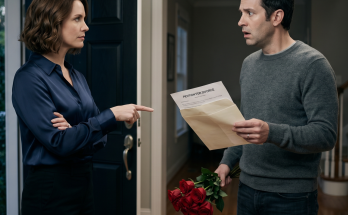
At 5:47 A.M., My Banking App Flashed One Red Line: “Access Denied.” My $520,000 Trust Fund Was Frozen Overnight. I Called My Mother. My Father Said Softly: “We Had To Step In. Family First.” My Mother Added: “You’re Not Thinking Clearly. Let Us Manage It.” I Didn’t Argue. I Put On My Blazer, Drove To The Bank, And Set My ID On The Counter. The Manager Clicked Once, Turned The Monitor Toward Me, And Asked: “Who Signed This Power Of Attorney Four Days Ago?” Then He Pulled Up The Metadata And Went Silent When…
Part 1
The text came in at 5:37 a.m., when the world outside my bedroom was still bluish and quiet and my old gray cat, Mabel, was pressed against the bend of my knee like a warm sandbag.
Your account access has been temporarily suspended pending verification of recent authorization changes.
I stared at the sentence until the words stopped looking like English.
Then I opened my banking app.
A red banner flashed across the screen.
ACCESS DENIED.
I sat up so fast Mabel slid off the bed with a thump. My heart began beating in that hard, stupid way it does when your body understands danger before your mind has the facts.
The account in question was not a checking account. It was not a savings account with a few months of emergency money.
It was my trust.
Five hundred and twenty thousand dollars.
My grandfather had set it up when I was nineteen, after he found me crying in his kitchen over a college bill I could not pay because my parents had “borrowed” from my work-study checks again.
He had not yelled. He had not called my mother. He had just poured black coffee into a chipped mug, sat across from me, and said, “Hazel, people who love you can still be dangerous with your money.”
At the time, I thought that was dramatic.
At thirty-six, sitting on the edge of my bed with my phone glowing red in my hand, I realized he might have been the only person in my family who had ever told me the truth.
I called my mother first.
That was my first mistake.
She picked up on the second ring.
“Hazel,” she said.
Not Honey. Not What’s wrong? Just my name, flat and ready.
“Mom,” I said, my voice rough from sleep. “My bank account is frozen. The trust account. Do you know anything about this?”
Silence.
Not confused silence.
Planning silence.
Then she sighed. “Your father and I were going to speak with you today.”
The bedroom seemed to tilt.
“Speak with me about what?”
“We’ve been worried about you,” she said. “The stress from the hospital. The breakup with Joel. You’ve been isolated. We felt it was time to step in before you made a decision you couldn’t undo.”
I stared at the wall across from my bed, at the tiny crack in the plaster shaped like a lightning bolt.
Joel and I had broken up eleven months earlier. I had mentioned it to her once, during a four-minute phone call in February, while she was clearly unloading a dishwasher.
“The bank says there were authorization changes,” I said. “What did you do?”
My father’s voice came from the background.
“Put her on speaker.”
My mother did.
My father’s voice arrived calm and soft, the way it used to sound when he explained why my feelings were unreasonable.
“Hazel, we did what any responsible parents would do. We had a power of attorney prepared. There is a medical letter on file. This is temporary, and it’s for your protection.”
I heard the refrigerator hum. I heard Mabel scratching at the door. I heard my own breathing get sharp.
“What medical letter?”
My mother said, “Sweetheart, don’t spiral.”
That word.
Spiral.
She used it whenever I noticed something she wanted hidden.
“Who signed it?” I asked.
“You’re proving our point right now,” my father said gently. “You’re upset. You’re not thinking clearly.”
I hung up.
For ninety seconds, I shook so hard my teeth clicked.
Then something inside me went still.
I showered. I put on my navy blazer, the one I wore to disciplinary meetings at the hospital. I put on my small gold earrings, the ones my grandfather gave me for graduation. I called the bank and said, “I am coming in when you open. This is fraud.”
At 8:47, I parked outside the branch and gripped the steering wheel until my knuckles turned white.
I promised myself three things.
I would not cry.
I would not apologize.
And I would not call it a misunderstanding.
At exactly 9:00, the doors unlocked.
I walked in, placed my ID on the manager’s desk, and watched him turn his monitor toward me.
There, at the bottom of a power of attorney dated four days earlier, was a signature pretending to be mine.
And the H in Hazel was wrong.
### Part 2
My H has a little hook at the top.
It has since I was thirteen, when I decided plain handwriting made me look boring. Every birthday card, every mortgage form, every nurse certification renewal, every check I had ever signed carried that same tiny hook.
The signature on the document tried to copy my slant. It almost got the pressure right. But the H stood stiff and plain, like somebody had practiced from an old Christmas card and missed the one thing that mattered.
“I didn’t sign that,” I said.
The branch manager, Mr. Holbrook, did not look surprised.
He was in his fifties, with silver at his temples and a careful face. The kind of man who had learned not to react too quickly around scared people.
“I believe you,” he said. “But I need to show you everything.”
He scrolled.
Attached to the power of attorney was a letter on medical letterhead. It claimed I had been evaluated for acute emotional distress and was temporarily unable to manage my financial affairs. It recommended that immediate family be allowed to act on my behalf.
The letter was signed by a psychiatrist named Dr. Ainslie Pruitt.
I had never heard that name.
I had never been to that office.
I had not seen any psychiatrist in my life.
“The number listed here goes to a voicemail with no name,” Mr. Holbrook said. “We called yesterday. No response.”
“Yesterday?” I said. “You knew yesterday?”
He folded his hands on the desk. “The document triggered internal review because of the size of the account and because the trust has restrictions. We suspended access before allowing any transfer.”
My throat tightened.
“So no money moved?”
“Not yet.”
Not yet.
Those two words landed like cold water down my back.
He scrolled again and pointed to the fax header.
“The letter and power of attorney were submitted from a UPS store two hours north of here.”
I sat very still.
My parents hated driving more than twenty minutes unless somebody else was paying for dinner.
My sister, Laurel, however, lived about forty minutes from that town. Her husband, Grant, did remote contract work from a home office full of printers, scanners, and equipment he loved explaining to people who had not asked.
A small memory slid into place.
Two months earlier, at Easter, Laurel had cornered me by the dessert table while her kids hunted plastic eggs in my parents’ yard.
“Must be nice,” she said, watching me slice lemon cake.
“What?”
“To not have real responsibilities.”
I looked at her.
She smiled without her eyes. “You know. No husband. No kids. Just your little house and your little hospital job.”
“I work sixty hours a week some months.”
“Right,” she said. “But it’s different. You only have yourself.”
Then she asked if I would co-sign a private tutoring loan for my niece.
I said no.
Her smile stayed on, but something behind it went black.
In Mr. Holbrook’s office, I looked at the fake medical letter and suddenly smelled lemon frosting.
“There’s one more thing,” he said.
He clicked into the document properties.
“Most people don’t realize scanned PDFs can retain device metadata.”
The screen changed.
A device name appeared.
GRANT-MARSHALL-OFFICEJET.
My sister’s husband.
For a moment, the room went soundless.
Not quiet.
Soundless.
The humming lights, the teller voices, the distant printer, all of it seemed to fall away.
My parents had not just “stepped in.”
They had planned.
Someone had created documents. Someone had invented a doctor. Someone had driven to a UPS store to fax them. Someone had practiced my signature and forgotten the hook on the H.
Mr. Holbrook looked at me gently.
“Hazel, I need to ask you something. Do you want to file a fraud claim today? Because once we begin, this becomes a criminal matter.”
My phone started buzzing on the desk.
Mom.
Then Dad.
Then Mom again.
Then a text from Laurel.
Mom says you’re acting scary. Please don’t make this worse.
I turned the phone face down.
Mr. Holbrook waited.
Outside the glass wall, morning sun spilled across the bank lobby in bright rectangles. People were depositing checks, sipping coffee, checking watches. Ordinary life continued as if mine had not just split open.
“Yes,” I said. “File it.”
He nodded once and reached for his phone.
Then my phone buzzed again.
This time the text was from my mother.
We’re coming to get you before you embarrass yourself.
And as I read it, the bank’s front doors opened.
### Part 3
At first, it was only a reflection in the glass wall.
Cream sweater. Pearl earrings. My mother’s Sunday face.
She always had different faces.
A church face. A hostess face. A disappointed face. A wounded face. A face for people she wanted to impress and a face for me when nobody else was watching.
That morning, walking into the bank, she wore the face of a mother bravely handling a troubled daughter.
My father came two steps behind her, one hand hovering near her elbow. Protective. Noble. The reasonable husband beside the suffering wife.
They did not see me at first.
My mother went straight to the teller window.
I could hear her through the glass.
“I’m here about my daughter, Hazel Whitaker,” she said softly. “She’s been having a very difficult episode. Her father and I have legal authority over her financial affairs now, and we believe she may be here causing confusion.”
The teller, Camille, glanced toward Mr. Holbrook’s office.
Mr. Holbrook had already called the police non-emergency line. Officer Reyes had arrived fifteen minutes earlier, a brown-haired woman about my age with a notebook and eyes that missed nothing.
Before my parents came in, I had told her exactly what they would do.
“My mother will cry,” I said. “My father will stay calm. They’ll say I’m unstable. They’ll claim I signed willingly. They’ll make it sound like love.”
Officer Reyes had written that down.
Now she stepped out from the back office.
“Ma’am,” she said to my mother, “can I see your identification?”
My mother’s face flickered.
It lasted half a second.
A tiny adjustment, like a stage light changing color.
Then concern returned.
“Officer, thank goodness. Yes, of course. We’re very worried about our daughter.”
My father added, “She’s a nurse. High-stress job. She hides things well.”
I almost laughed.
Nine years as a cardiac charge nurse, and the only time my father had ever mentioned my job with pride was while using it against me.
Officer Reyes looked at both IDs, then said, “I need you to come with me. We have questions about documents submitted to this bank.”
My mother pressed a hand to her chest.
“Documents we submitted in good faith.”
My father nodded. “Everything is legal.”
They followed Officer Reyes toward the back.
That was when my mother saw me through the glass.
Her eyes landed on my face.
She did not stop walking.
She did not say my name.
She simply looked at me the way a person looks at a stain they intend to deal with later.
That hurt worse than the forged signature.
I had thought some part of her might crack when she saw me. Even then, after everything on the screen, some childish piece of me had waited for her to become my mother.
Instead, she walked past.
The old hope inside me died without making a sound.
In Mr. Holbrook’s office, I signed the fraud affidavit. My hand was steady. Too steady.
Through the closed door down the hall, voices rose and fell.
Officer Reyes asked them separately what day I had supposedly signed the power of attorney.
My mother gave Monday.
My father gave Saturday.
Officer Reyes asked where.
My mother said her kitchen.
My father said their dining room.
Officer Reyes asked about Dr. Ainslie Pruitt.
My mother said she was a family friend.
My father said she was referred by “someone at church.”
My mother said I had spoken to the doctor by video call.
My father said it was by phone.
With every answer, their story frayed.
My phone vibrated again.
Laurel.
I didn’t answer.
Then another message appeared.
Hazel, stop. You have no idea what you’re about to ruin.
I stared at the words.
Not deny.
Not apologize.
Not ask what happened.
Stop.
Like I was the one holding a weapon.
Like the crime was not the forgery, but my refusal to swallow it.
Then Laurel sent one more text.
Think about the kids.
There it was.
The hook.
The reason.
I turned the phone toward Mr. Holbrook and Officer Reyes when she returned.
Officer Reyes read the messages, her jaw tightening just slightly.
“Do you know why your sister would be involved?” she asked.
I looked through the glass at my mother’s cream sweater disappearing behind the hallway wall.
“Yes,” I said. “But I think she’s going to make me say it first.”
At that exact moment, my mother’s voice rang out from the back room.
“That money was never supposed to be only hers.”
### Part 4
The first time my mother told me I was selfish, I was eight.
It was my birthday, and my grandfather had given me a red bicycle with white streamers on the handles. I rode it up and down the driveway until my legs burned. That evening, Laurel cried because she wanted a turn. She was thirteen and too tall for it, but my mother said, “Hazel, don’t be selfish. Your sister has feelings too.”
Laurel rode it into the curb, bent the front wheel, and blamed me for leaving the driveway “too narrow.”
My mother made me apologize.
That memory came back while I sat in the bank office and listened to my mother say the trust was never supposed to be only mine.
I used to think families exploded because of one huge betrayal.
They don’t.
They crack slowly, over years, in small unfair moments everyone tells you to forget.
Officer Reyes came back into the office and closed the door behind her.
“They’re denying intent,” she said. “But they’ve made inconsistent statements. Your father is asking for an attorney now.”
“Good,” I said.
The word surprised me.
Officer Reyes studied me. “Are you okay?”
“No,” I said. “But I’m done being useful.”
She nodded like that made perfect sense.
By noon, my parents were being transported for formal questioning. I did not watch them leave. I signed more forms. I changed security passwords. I froze associated accounts. Mr. Holbrook walked me through every step with the patience of a man defusing a bomb.
At 12:18, Laurel called.
I let it ring.
At 12:19, she called again.
At 12:20, Grant called.
At 12:22, Laurel sent a voice memo.
I played it on speaker with Officer Reyes in the room.
Laurel’s voice filled the office, sharp and whispery.
“You are blowing this out of proportion. Mom and Dad were trying to protect you, and now police are involved? Are you insane? Do you understand what happens to my children if Grant gets dragged into this? You can’t just destroy a family because you’re mad about paperwork.”
Paperwork.
I looked at the forged signature still open on the screen.
Officer Reyes asked, “May I save that?”
“Yes.”
Laurel sent another message.
You owe me after everything Mom and Dad spent on you.
I blinked.
Everything they spent on me?
I paid my own rent through nursing school. I worked night shifts. I skipped meals. I bought used textbooks with cracked spines and coffee stains. My parents gave Laurel a wedding, a down payment, two cars, and private school tuition for her kids. They gave me guilt and called it character-building.
I called Laurel back.
Officer Reyes lifted an eyebrow.
“I want her to talk,” I said.
Laurel answered immediately.
“Finally,” she snapped.
I put her on speaker.
“Laurel,” I said. “Did Grant make the power of attorney?”
Silence.
Then, too quickly, “What are you talking about?”
“The PDF metadata has his office printer on it.”
A sound came through the phone. Not a word. A breath knocked loose.
Then she recovered.
“Grant helped Mom scan something. That’s not a crime.”
“Forging my signature is.”
“You’re being dramatic.”
There it was again, the family hymn.
“You invented a psychiatrist,” I said.
“You don’t know that.”
“I know Dr. Ainslie Pruitt doesn’t exist.”
Laurel laughed once, ugly and thin. “You think you’re so smart because Grandpa liked you best.”
My chest tightened.
“He didn’t like me best. He protected me because he knew Mom.”
“You poisoned him against us.”
“I was nineteen.”
“You always played victim.”
I stared at my reflection in the dark computer monitor. Navy blazer. Gold earrings. Pale face. Calm eyes.
For the first time, I did not recognize myself as the girl in their stories.
“I’m filing charges,” I said.
Laurel’s voice changed.
Not softer.
Lower.
“If you do this, you will never see my children again.”
I thought of my niece, Sophie, who liked drawing cats on napkins. I thought of my nephew, Ben, missing his front tooth and asking me once why Grandma only yelled when doors were closed.
“I love them,” I said. “But you don’t get to use them as hostages.”
Laurel inhaled sharply.
Then she said, “You have no idea what we already did.”
The line went dead.
Officer Reyes and I looked at each other.
“What does that mean?” she asked.
My hands had gone cold again.
“I don’t know,” I said.
But I knew where to start looking.
### Part 5
I drove home with every mirror checked twice.
Not because I thought my parents were hiding behind bushes or Grant was waiting in a van. Real fear is rarely that cinematic. It is smaller. It is the sudden certainty that every door you thought was locked might not be.
My little brick house on Wren Street looked the same when I pulled in.
Peeling white trim. Two clay pots by the steps. A porch light I always forgot to turn off. Mabel’s face appeared in the front window, annoyed and judgmental, as if I had personally delayed breakfast.
Inside, the air smelled like coffee grounds and lavender detergent.
I locked the door behind me.
Then I stood in my living room and looked at my life.
The blue couch I bought secondhand. The framed photo of my grandfather in his fishing hat. The stack of nursing journals on the side table. The ceramic bowl by the door where I kept spare keys.
Spare keys.
My stomach dropped.
I went to the bowl.
My emergency key was gone.
The one with the green rubber cap.
My mother had once had a copy. Years ago, after I bought the house, she insisted.
“What if you fall in the shower?” she had said.
“I’m twenty-eight.”
“Hazel, don’t be difficult.”
After a month of her letting herself in “just to drop things off,” I took the key back.
Or I thought I had.
I checked drawers. Coat pockets. The jar in the laundry room. Nothing.
Then I noticed the photo of my grandfather on the bookshelf was crooked.
Barely.
An inch to the left.
I do not leave things crooked. My job had trained me to notice tiny changes: a patient’s breathing, a monitor rhythm, the smell of infection under antiseptic.
I walked slowly through the house.
Nothing obvious was missing.
Laptop still on the desk. Jewelry box untouched. TV there.
Then I entered my bedroom.
The bottom drawer of my nightstand sat open by half an inch.
Inside, beneath old birthday cards and spare chargers, I kept a fireproof envelope with copies of financial documents. Mortgage papers. Trust paperwork. My grandfather’s letter.
The envelope was there.
But the flap was tucked differently.
I opened it.
The trust paperwork remained.
My grandfather’s letter remained.
But one thing was missing.
A photocopy of my driver’s license.
My mouth went dry.
I called Officer Reyes.
She answered on the third ring.
“My house may have been entered,” I said. “A copy of my ID is missing.”
“Are you safe right now?”
“I think so.”
“Go outside. Sit in your car. Lock the doors. I’m sending someone.”
I grabbed Mabel, who protested loudly, shoved her into her carrier, and sat in my car with the engine running and my hands clenched around the steering wheel.
Twenty minutes later, two officers arrived.
They found no broken window. No forced lock.
Which meant key.
One officer dusted the nightstand drawer, though he warned me it might not show anything useful. The other asked if anyone besides my parents had access to the house.
“My best friend has a key,” I said. “But she’s a nurse working a double today.”
“Anyone else?”
I thought of Laurel standing in my kitchen last Thanksgiving, opening cabinets without asking. Grant fixing my Wi-Fi router in the hallway while my parents commented on how small my house was.
“Maybe,” I said.
After they left, I changed the locks. The locksmith was a man with tattooed knuckles and a gentle voice. While he worked, Mabel glared at him from the stairs.
By evening, my phone battery was at nine percent and my mind felt rubbed raw.
Then an email arrived from an address I did not recognize.
Subject line: Final Notice Before Disbursement.
I opened it.
It was from a private lender.
Attached was an application in my name for a $75,000 line of credit.
The supporting document was a copy of my driver’s license.
The emergency contact listed was my sister.
And the application had been submitted before dawn, forty minutes before my bank froze my trust.
At the bottom of the email was a message from the lender’s fraud department.
Please confirm whether you authorized this application. We have paused processing due to discrepancies in employment verification.
I stared at the screen.
Laurel had been wrong.
I did have an idea what they had already done.
And it was worse than the bank knew.
### Part 6
I did not sleep that night.
I sat at my kitchen table with every light on while Mabel slept in a loaf shape on the chair beside me. Outside, June bugs tapped against the screen door like fingernails.
I made a list.
Not an emotional list. A nurse list. Clean, ugly, useful.
Bank fraud.
Forged power of attorney.
Fake medical letter.
Missing ID copy.
Attempted line of credit.
Possible unauthorized entry.
Known suspects: Mother, Father, Laurel, Grant.
Then I added one more line and stared at it for a long time.
Motive.
My parents had always wanted access. That part was easy.
Laurel needed money. That part was easier.
But $520,000 was not tutoring money. It was not “between jobs” money. It was not private school tuition money.
It was desperation money.
The next morning, I called the private lender and asked for their fraud department. A woman named Denise listened without interrupting, then verified my identity using questions my family would not know.
“What flagged the application?” I asked.
“Employment verification,” she said. “The application stated you had recently left your position at St. Agnes Hospital.”
“I have not.”
“It also listed a secondary phone number for you.”
She read it aloud.
I recognized it.
Laurel’s.
“Can you send everything to Officer Reyes?”
“With a police report number and written authorization, yes.”
By ten, I was at the station.
Officer Reyes met me in a small interview room that smelled like burnt coffee and floor cleaner. I gave her the lender email, the list, the voice memos, the screenshots.
She read everything carefully.
“This changes the scope,” she said.
“What does that mean?”
“It means this may not be one attempt to access one trust. This may be broader identity fraud.”
I leaned back in the plastic chair.
“Can you look at Grant?”
“We already are.”
Something in her voice made me sit forward.
“What did you find?”
“I can’t share everything yet. But your brother-in-law has had financial complaints before. Civil, not criminal. A car title dispute. A lease modification dispute. Both involved signatures people later questioned.”
Grant.
Grant with his soft hands and expensive watch. Grant who said “technically” before lying. Grant who always volunteered to scan forms, set up accounts, handle passwords, fix routers.
I remembered Christmas three years earlier.
My father had been complaining about property taxes. Laurel had said, “Well, Hazel’s sitting on more money than all of us combined.”
The room went quiet.
I had looked at my mother.
“How does Laurel know that?”
My mother waved a hand. “Everyone knows Grandpa left you something.”
“Not the amount.”
Laurel had smiled into her wineglass.
“Relax. Nobody’s robbing you.”
I had laughed because everyone else laughed.
Now, in the police station, that memory felt like a hand closing around my throat.
Officer Reyes said, “We’re requesting records from the UPS store. Security footage, fax transaction logs. We’re also asking the lender to preserve IP data.”
“Will they arrest Laurel and Grant?”
“If evidence supports it.”
I nodded.
My phone buzzed.
A number I did not know.
Then another.
Then my hospital supervisor, Brenda, called.
I answered immediately.
“Hazel,” she said, “are you safe?”
My heart dropped. “Why?”
“We got a call from a man claiming to be your father. He said you were having a mental health crisis and should be placed on leave before you harmed a patient.”
For a second, I could not speak.
The room narrowed.
Brenda continued, “I told him employee matters are confidential and that he should not call again. But then HR received an email with attached documentation.”
“Fake documentation.”
“I figured. The signature block had three different fonts.”
Despite everything, I almost laughed.
Brenda’s voice softened. “Hazel, I need you to hear me. Your job is safe. But document this. All of it.”
When I hung up, Officer Reyes was watching me.
“They’re trying to make the lie true,” I said.
“Yes,” she replied. “That’s what people do when the truth starts catching up.”
I thought that was the worst thing I would hear that day.
Then Brenda texted me the email.
At the bottom, below the fake doctor’s letter, was a scanned handwritten note.
It was supposed to be from me.
It said I was afraid I might hurt someone at work.
And unlike the power of attorney, this time the H had the hook.
### Part 7
I stared at the hooked H until my vision blurred.
Whoever had written that note had learned.
They had seen the mistake on the power of attorney, or someone had told them, and they had corrected it.
That meant they were still adapting.
Still moving.
Still trying to trap me inside the story they needed everyone else to believe.
Officer Reyes asked me not to drive myself home. I called my best friend, Maya.
She arrived at the station in navy scrubs, hair twisted up with a pen, eyes blazing before she even reached the interview room.
“Where are they?” she demanded.
“Not here,” I said.
“Good. Because I’m not dressed for prison.”
Maya and I had met in nursing school when she found me crying in a supply closet after a clinical instructor told me I was “too sensitive for cardiac care.” She sat on an overturned bucket, handed me a granola bar, and said, “Cry for five minutes, then come help me lift Mr. Peterson before he bites somebody.”
Sixteen years later, she was the first person I called when the floor fell out of my life.
She drove me home in silence until we reached Wren Street.
Then she said, “You know you can never go back to how it was.”
“I know.”
“No, Hazel. I mean never. Not Thanksgiving. Not a hospital bedside apology. Not a letter from prison. Not your mother crying into a phone. Never.”
I looked out the window at my house.
The new lock gleamed brass in the afternoon sun.
“I know,” I said again.
This time, I meant it.
Inside, Maya made coffee strong enough to strip paint while I gathered handwriting samples. Old birthday cards. Grocery lists my mother left at my house. A thank-you note from Laurel after I hosted Easter brunch. A Father’s Day card where my dad had added one stiff sentence below my mother’s paragraph.
By evening, my dining table looked like evidence from a documentary.
Maya held up a card Laurel had written years earlier.
“Look at her H.”
I leaned over.
Laurel’s H had no hook.
My mother’s H curled at the bottom, not the top.
My father printed everything.
Then Maya pulled an old envelope from the pile.
“What’s this?”
I looked.
My name written across the front.
Hazel.
With the hook.
My stomach tightened.
“That’s from Grant,” I said.
It was from two years earlier, when he had mailed me a reimbursement check for a shared vacation rental after I asked three times. He had written my name on the envelope.
The H was not identical to mine.
But it was close.
Very close.
Maya whispered, “Oh, hell no.”
I photographed it and sent it to Officer Reyes.
That night, I stayed at Maya’s apartment. Mabel came with me and spent three hours under the couch punishing us.
At 11:14 p.m., my phone rang.
Unknown number.
I ignored it.
A voicemail appeared.
I played it on speaker.
My father’s voice filled Maya’s living room.
“Hazel. This has gone too far. Your mother is in distress. Your sister is hysterical. You need to fix this before permanent damage is done. Families survive misunderstandings by keeping them private.”
Maya muttered, “Misunderstandings don’t have forged signatures, Richard.”
My father continued.
“I know you think you’re proving something, but you are destroying people who love you. Call the bank. Tell them you were confused. Tell the police you overreacted. Nobody needs to go to jail over money.”
His voice lowered.
“And remember, your grandfather wasn’t a saint either. There are things about that trust you don’t know.”
The voicemail ended.
I sat frozen.
Maya looked at me. “What does that mean?”
“I don’t know.”
But my father never used a threat unless he thought it would work.
At 1:03 a.m., I opened my grandfather’s old letter for the first time in years.
The paper smelled faintly of cedar from the box where I kept it.
Hazel, he had written, if your mother ever tries to tell you this money belongs to the family, ask her what happened in August of 1998.
I read the sentence three times.
Then I realized my hands were shaking.
Because in August of 1998, I had been eight years old.
And my red bicycle had not been the only thing my mother took.
### Part 8
I called my grandmother’s sister the next morning.
Aunt June was eighty-four, sharp as a sewing needle, and lived in Arizona with three rescue dogs and a hatred for voicemail.
She answered by saying, “If someone died, start with that.”
“No one died,” I said.
“Then why do you sound dead?”
I closed my eyes.
“Aunt June, what happened in August of 1998?”
Silence.
Not planning silence this time.
Old silence.
The kind with dust on it.
“Where did you hear that?”
“Grandpa’s letter.”
She exhaled slowly. “So it finally happened.”
The back of my neck prickled.
“What finally happened?”
“Your mother tried to get your trust?”
I sat at Maya’s kitchen table while she pretended not to listen from the sink.
“Yes.”
Aunt June cursed softly.
Then she told me.
In 1998, my grandfather had sold a piece of land he inherited from his brother. He planned to split part of the proceeds between my mother and me. Not Laurel. Not my father. Me.
“Why me?” I asked.
“Because he knew Laurel was already your mother’s favorite, and he thought you’d need something nobody could touch.”
But before he could finalize it, my mother convinced him to give her temporary access to the funds for a “family emergency.” She claimed my father’s job was at risk, that they might lose the house, that we kids would suffer.
My grandfather gave her money.
A lot of money.
She used it to pay Laurel’s private school deposit, buy new furniture, and cover debts my father had hidden.
When my grandfather asked for records, she accused him of trying to control her.
They did not speak for six months.
“Your grandfather changed after that,” Aunt June said. “He stopped trusting her with anything legal. When he made your trust later, he told the attorney your mother was never to have authority over it. Not under any circumstances.”
I pressed my fingers to my forehead.
“So she tried before.”
“Hazel, honey, your mother has been trying since before you knew there was anything to take.”
I looked across the room at Mabel, who was licking one paw like the world was not collapsing.
“Why didn’t anyone tell me?”
“Because your grandfather thought protecting you quietly was kinder than making you carry the truth.”
That sounded like him.
Wrong, but loving.
Aunt June’s voice softened. “Listen to me. Your mother will say she deserves that money because she has always believed needing something makes it hers. Do not argue with that kind of person. You’ll drown trying to prove water is wet.”
After we hung up, I sat there for a long time.
Then I called the attorney whose name was on my grandfather’s original trust documents.
He was retired.
His daughter, Lydia Chen, had taken over the practice.
By some miracle, she had the archived file.
“Your grandfather was unusually specific,” Lydia said that afternoon over a video call. “He included language excluding your parents from control unless appointed by a court after full medical evaluation by two independent physicians.”
“One fake doctor letter shouldn’t have worked.”
“It didn’t,” she said. “That’s why the bank froze it.”
Then she paused.
“There is something else in the file. A memo from your grandfather.”
My pulse kicked.
“What memo?”
“He instructed the firm to keep a sealed statement in case your mother ever challenged the trust.”
“Can I see it?”
“Yes. But Hazel, you should know he names incidents. Financial incidents. Some involving your sister.”
Maya sat across from me, silent and furious.
“Send it,” I said.
Ten minutes later, the email arrived.
The sealed statement was thirteen pages.
My grandfather had documented everything.
Loans never repaid. Checks altered. A credit card opened in his name. Money redirected. Lies told with tears and casseroles and church friends as witnesses.
At the bottom of page twelve was one sentence underlined twice.
I believe my daughter will one day attempt to gain access to Hazel’s assets by claiming Hazel is unstable.
I covered my mouth.
Maya read over my shoulder and whispered, “He knew the whole script.”
Then I turned to page thirteen.
There was a handwritten note.
Hazel, if you are reading this, it means she made you choose between peace and truth.
Choose truth.
My phone buzzed before I could breathe.
A text from Laurel.
We need to talk before the police find the storage unit.
### Part 9
The storage unit was on the west side of town, behind a tire shop and a chain-link fence topped with plastic strips that rattled in the wind.
Officer Reyes told me not to go.
I did not argue.
Instead, I sat in her passenger seat while two other officers met us at the gate with a warrant.
The unit was rented under Grant’s name.
Paid three months in advance.
The manager, a nervous man with sunburned cheeks, kept saying, “I don’t want trouble,” while his keys jingled in his hand.
Officer Reyes said, “Then open it.”
The roll-up door screamed as it lifted.
At first, all I saw were plastic bins.
Clear ones, stacked neatly.
Printer paper. Old monitors. A folding chair. Two banker’s boxes. A shredder. A black trash bag tied tight.
It looked boring.
Then Officer Reyes opened the first banker’s box.
Inside were folders.
Not many.
But enough.
My name was on one.
My father’s name was on another.
A woman named Carol Dempsey.
A man named Ian Lowe.
Copies of IDs. Printed emails. Draft agreements. Scanned signatures. Fake letterheads. Blank forms from lenders and title companies.
Grant had not been helping my parents.
Grant had been running a little forgery shop out of his life, and my family had finally become desperate enough to use it.
Officer Reyes photographed everything before touching it further.
I stood outside the unit, arms wrapped around myself though the day was hot.
A truck rumbled past on the road. Somewhere nearby, rubber burned against asphalt. The air smelled like dust, metal, and old paper.
“Hazel,” Officer Reyes called.
I stepped closer.
She held up a folder.
Inside was a printed spreadsheet.
Across the top, in Grant’s neat formatting, were columns labeled Source, Amount, Risk, Timeline, Notes.
My trust was listed in the highest row.
Amount: 520,000.
Risk: Medium.
Timeline: Immediate.
Notes: H may resist. Parents can support incapacity narrative. L says employer can be contacted.
H.
Not Hazel.
H.
A problem to be managed.
Below my trust were other possible sources.
My parents’ home equity.
A loan against Laurel’s car.
Credit cards.
A line that made my skin crawl.
Sophie education account.
My niece.
Laurel’s daughter.
I turned away and thought I might be sick.
Officer Reyes’s voice was quiet. “This is going to expand.”
“Good.”
She glanced at me.
I wiped my face with the heel of my hand.
“I’m tired of being the only one who notices.”
By sunset, Laurel and Grant were arrested.
My sister called me from the county holding facility that evening. I almost did not accept the call, but Officer Reyes suggested anything she said might matter.
A recorded message announced the call.
Then Laurel’s voice came through, raw and furious.
“You must be so proud.”
“No,” I said. “I’m disgusted.”
“You don’t understand what it’s like to have children.”
“You put Sophie’s education account on a spreadsheet.”
She went silent.
I closed my eyes.
“Was there ever a moment,” I asked, “where you thought, maybe we shouldn’t do this to Hazel?”
Laurel laughed, but it cracked halfway through.
“You always had a way out.”
“What?”
“Grandpa gave you a way out. You got the money. You got the house. You got to stand there judging everyone while we drowned.”
“Laurel, you have had more help than anyone in this family.”
“It was never enough!”
There it was.
The truth, ugly and starving.
I said, “That’s not my fault.”
She breathed hard into the phone.
Then she said, “Mom said you’d fold if we scared you enough.”
Something inside me went cold.
“Mom planned that?”
“Mom knows you,” Laurel said. “She said you’re all spine at work and all guilt at home.”
For a moment, I saw my mother clearly.
Not crying. Not confused. Not protective.
Strategic.
I said, “Tell Mom she miscalculated.”
Laurel’s voice sharpened. “You’ll regret this when the kids hate you.”
“No,” I said. “They’ll grow up and read the record.”
The call ended with her screaming my name.
I set the phone down.
For the first time all day, I cried.
Not because I wanted them back.
Because I finally understood they had never been there.
### Part 10
The months before trial moved like bad weather.
Some days were only drizzle: forms, calls, signatures, password changes, meetings with Lydia Chen.
Other days were storms.
My mother wrote letters.
The first arrived two weeks after her arrest. Cream stationery. Blue ink. Her handwriting was beautiful, the way poisonous flowers are beautiful.
My darling Hazel,
I know you are hurt. I forgive you for reacting out of fear.
I stopped reading there.
I put the letter in a plastic sleeve and gave it to the prosecutor.
The second letter came through her attorney.
It said she had only acted because she believed I was “emotionally compromised.”
The third mentioned my grandfather.
He filled your head with suspicion.
That one I read twice.
Not because it hurt.
Because I wanted to remember the exact shape of her lie.
My father did not write letters. He left voicemails through relatives.
Cousin Marcy called first.
“Hazel, your parents are old. Prison would destroy them.”
“They forged my signature.”
“I’m sure they thought they were helping.”
“They invented a doctor.”
“Well, families handle things differently.”
I hung up.
An uncle emailed me a Bible verse.
I replied with the police report number.
Thanksgiving came and went.
For the first time in my life, I did not sit at my mother’s table while she assigned me the smallest chair and Laurel complained about the cranberry sauce.
Maya came over. We roasted a chicken too big for two people, burned the rolls, and drank cheap wine on the porch under blankets.
“You miss them?” she asked.
I watched my breath fog in the cold.
“I miss who I kept pretending they were.”
“That counts.”
“I know.”
In January, the prosecutor offered plea deals.
My father wanted one.
Grant wanted one.
Laurel almost took one until my mother convinced her not to.
My mother believed a jury would see her as a concerned parent.
That was her mistake.
Concerned parents do not create fake medical records.
Concerned parents do not contact employers with forged notes.
Concerned parents do not call a daughter’s independence a crisis because it blocks their access to money.
Trial began in April.
The courthouse smelled like old wood, wet wool, and vending machine coffee. I wore a dark green dress because my grandmother, who had died when I was twenty-two, once told me green made me look “like a woman who could sign her own checks.”
Maya sat beside me.
Lydia sat behind us.
Officer Reyes testified first.
Then Mr. Holbrook.
He explained the account freeze, the forged document, the metadata.
Grant’s attorney objected often and lost often.
The UPS store footage showed my mother and Grant at the fax machine.
My mother wore sunglasses indoors.
Grant wore a baseball cap pulled low.
They looked less like masterminds than people who thought rules were for everyone else.
The handwriting expert testified next.
She showed enlarged images of the signatures.
My real H.
The first forged H.
The corrected hooked H on the hospital note.
“The second forgery demonstrates adaptation after feedback,” she said.
Feedback.
Such a clean word for evil learning to improve itself.
Then came the storage unit.
The spreadsheet.
The folders.
The education account.
Laurel cried when Sophie’s name was read aloud.
I did not look away.
On the third day, my mother testified.
Her attorney had clearly told her to appear humble.
She wore gray. No pearls. Little makeup. Her voice trembled at first.
“I was terrified for my daughter,” she said.
The prosecutor asked, “When did you last visit your daughter’s home before the bank incident?”
My mother blinked.
“Recently.”
“Can you be specific?”
“I don’t remember.”
“Was it the day a copy of her driver’s license disappeared?”
Her face changed.
Only for half a second.
But the jury saw it.
Then the prosecutor played her bank lobby statement.
My daughter is not herself.
Then my father’s voicemail.
Tell the police you overreacted.
Then Laurel’s call.
Mom said you’d fold if we scared you enough.
My mother’s hands tightened in her lap.
For the first time in my life, other people watched her mask slip.
And they did not look away.
### Part 11
The jury deliberated for nine hours.
I spent most of that time in the courthouse hallway staring at a vending machine full of stale pretzels and candy bars I did not want.
Maya sat beside me, one knee bouncing.
“You’re allowed to hope,” she said.
“I am hoping.”
“You look like you’re doing taxes in your head.”
“That’s also hoping.”
Across the hallway, Laurel’s mother-in-law sat with Sophie and Ben.
The children had not been in the courtroom during testimony. Thank God.
Sophie saw me and lifted one small hand.
I lifted mine back.
Laurel’s mother-in-law, Elaine, walked over after sending the kids to the restroom with her husband.
Her face was tired, but kind.
“I’m sorry,” she said.
“You didn’t do this.”
“No. But my son did. And your sister did. And those children are standing in the wreckage.”
I swallowed.
“How are they?”
“Confused. Angry. Missing their mother. Asking questions we answer carefully.”
I nodded.
Elaine touched my arm. “I want you to know something. We are not telling them you caused this. We are telling them adults made choices and now adults face consequences.”
My eyes burned.
“Thank you.”
She gave a sad smile. “Children deserve truth in portions they can carry.”
When the bailiff finally called us back, the courtroom felt airless.
My mother stood very straight.
My father stared at the table.
Laurel held a tissue that had shredded in her fingers.
Grant looked smaller than I remembered.
The verdicts came one by one.
Guilty.
Guilty.
Guilty.
Guilty.
By the time the clerk finished, my mother’s face had gone flat.
Not shocked.
Offended.
As if the world had behaved rudely.
Sentencing happened six weeks later.
The judge spoke for a long time.
He called it calculated exploitation. He called it identity theft wrapped in family language. He said the court was particularly disturbed by the attempt to weaponize false claims of mental instability against a working nurse.
My mother received six years.
My father received five.
Laurel received four.
Grant received seven because the storage unit tied him to other forged documents.
Restitution was ordered.
Legal fees too.
My mother turned around once before they took her away.
She looked at me with wet eyes.
There it was.
The final performance.
The silent plea.
Daughter, save me.
For thirty years, that look had worked.
It had made me apologize when Laurel hurt me. It had made me pay for dinners I did not choose. It had made me answer calls that left me shaking. It had made me confuse guilt with love.
I held her gaze.
I did not nod.
I did not cry.
I did not forgive her.
She turned back first.
Afterward, outside the courthouse, the air smelled like rain on hot pavement.
Reporters stood near the steps, but the prosecutor guided me through a side exit. Maya drove us home.
Neither of us spoke until we reached Wren Street.
My house looked golden in the late afternoon sun.
For the first time in months, I did not see it as a place someone had entered without permission.
I saw it as mine.
Inside, Mabel yelled at us as if justice had delayed her dinner.
I laughed so suddenly it hurt.
Then I sat on the kitchen floor and cried with my face in my hands while Maya leaned against the cabinets beside me.
Not broken crying.
Released crying.
The kind that leaves space behind.
That night, I moved my grandfather’s photograph from the bookshelf to the kitchen windowsill.
“Done,” I told him.
The house settled around me.
But closure, I learned, does not arrive all at once.
Sometimes it comes as one final envelope, mailed from prison, with your mother’s handwriting on the front.
### Part 12
The envelope arrived in September.
By then, the trust had been moved to another institution with protections so strict the account manager joked that opening a sandwich near it might require verification.
Three-factor authentication.
Verbal password.
Independent legal review for any change.
Maya listed as emergency contact.
Not family by blood.
Family by every way that mattered.
I almost threw the envelope away unopened.
Then I saw my mother had written my name with a hooked H.
She had practiced.
Even from prison, she was still trying to enter my life by copying what belonged to me.
I opened it over the kitchen sink.
Hazel,
I have had time to think. I understand that mistakes were made on all sides.
I stopped and laughed once.
Mabel, sitting on the counter where she was not allowed, blinked at me.
Mistakes were made.
Not I made mistakes.
Not I hurt you.
Passive voice, my mother’s last religion.
I kept reading.
Your refusal to resolve this privately has cost this family everything. I hope one day you understand that mercy is not weakness. I am still your mother. No court can change that.
At the bottom, she had written:
When you are ready to forgive me, I will be here.
I folded the letter carefully.
Then I took out a sheet of plain white paper.
For a long time, I did not write.
The old Hazel would have drafted something gentle. Something careful. Something full of explanations, because I had been trained to believe every boundary required a closing argument.
This time, I wrote three sentences.
You are my mother.
You are also the person who forged my name, lied about my mind, invaded my home, and tried to steal the protection Grandpa left me.
I do not forgive you, and I do not want contact again.
I mailed it through Lydia Chen’s office so there would be a record.
After that, the letters stopped.
Life did not become magically beautiful.
No handsome stranger appeared at my door with flowers and a tragic backstory. No sudden promotion erased the stress. No perfect peace descended because I had finally chosen myself.
Real healing was quieter.
It was changing the locks and eventually stopping myself from checking them five times.
It was walking into the bank without nausea.
It was telling Brenda at work, “My family situation is legally resolved,” and watching her nod without pity.
It was Sunday mornings with Maya on the back porch, drinking coffee while Mabel hunted sunbeams and failed to catch them.
It was seeing Sophie once, months later, at a school art fair.
Elaine had invited me.
I almost said no.
Then I went.
Sophie had drawn a cat with wings.
“It’s Mabel,” she said shyly. “But magic.”
“It’s perfect,” I told her.
Ben asked if I was still mad at his mom.
I crouched so we were eye level.
“I’m sad about what she chose,” I said. “But I’m not mad at you.”
He thought about that, then nodded like children do when adults finally tell them something honest enough to stand on.
I did not become their replacement parent. I did not try to fix what Laurel broke. But I stayed reachable through Elaine, in careful ways, with boundaries strong enough to protect all of us.
A year after the bank morning, I turned thirty-seven.
Maya brought a grocery store cake with crooked frosting letters.
Happy Birthday, H.
Just H.
I laughed until I cried.
That night, after she left, I sat on the porch alone with my grandfather’s letter in my lap.
The street smelled like cut grass and rain. A neighbor’s dog barked twice. Somewhere down the block, a screen door slammed, and the sound no longer made me flinch.
I thought about my mother’s cream sweater.
My father’s calm voice.
Laurel saying I always had a way out.
Grant’s spreadsheet turning me into a risk category.
Then I thought about my grandfather at his kitchen table, sliding paperwork toward a nineteen-year-old girl who did not yet understand she was being loved with foresight.
He had given me money, yes.
But more than that, he had given me evidence that someone saw me clearly.
Someone believed I deserved protection before I knew how to ask for it.
The trust is still mine.
The house is still mine.
My name is still mine, with the little hook on the H that they tried and failed to steal.
And the next time someone uses a soft voice to tell me they need control for my own good, I will remember that Wednesday morning in the glass-walled office.
I will remember the red banner.
I will remember the wrong H.
I will remember my mother walking past me without saying my name.
Then I will take three slow breaths, pick up the phone, and protect myself without apology.
Because love that arrives as theft is not love.
Family that requires silence is not family.
And forgiveness, when it comes too late and asks the victim to pay for it, is nothing but weeds growing over a crime scene.
THE END!
Disclaimer: Our stories are inspired by real-life events but are carefully rewritten for entertainment. Any resemblance to actual people or situations is purely coincidental.